
ERC Starting Grantees
ERC Starting Grants are designed to support talented early-career researchers so that they can launch their own careers as successful leaders in the field of research.
HORIZON EUROPE (HE)

Infant verbal Memory in Development: a window for understanding language constraints and brain plasticity from birth

Microwave Metadevices based on Electrically Tunable organic Ion-electron Conductors


Disentangling psychological interventions for mental disorders into a taxonomy of active ingredients

Synthetic Bimodal Photoredox Catalysis: Unlocking New Sustainable Light-Driven Reactivity

Photocatalytic Reactions Under Light and Dark Using Transient Supramolecular Assemblies

Engineering the Origin of Human Shape: Defining Patterns and Axes in the Early Stage of 3D Pluripotency

Venice's Nissology. Reframing the Lagoon City as an Archipelago: A Model for Spatial and Temporal Urban Analysis (16th-21st centuries)

Mechanisms of Kaposi's sarcoma herpesvirus replication and maintenance during latency

Engineering human cortical brain organoid’s connections to restore brain functions

Leveraging Polymer Therapeutics as Nanomedicine for Local Glioblastoma Immunotherapy


HORIZON 2020

Bright and biologically powered chemiluminescent labels for cell and tissue imaging

Microbioreactor platforms as in vivo-like systems to probe the role of Neuroblastoma-derived Exosomes in cancer dissemination (2017-2022)


Dissecting the crosstalk between metabolism and transcriptional regulation in pluripotent stem cells (2017- 2022)
Republics on the Stage of Kings. Representing Republican State Power in the Europe of Absolute Monarchies (late 16th - early 18th century) (2018- 2023)

The Dark Side of the Belle Époque. Political violence and Armed Associations in Europe before the First World War (2016-2021)


The Sensuous Appeal of the Holy. Sensory Agency of Sacred Art and Somatised Spiritual Experiences in Medieval Europe (12th-15th century)

Revealing dendritic cell-CD4+ T cell communication by using synthetic biology in vivo (2020- 2025)

Stable and Chaotic Motions in the Planetary Problem (2016-2021)
FP7 - Seventh Framework Programme
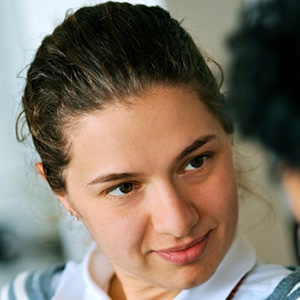
ERC Grantee: Elisabetta Collini
Department: Chemical Sciences
Total Contribution: Euro 1.479.480,00
Project Duration in months: 72
Start Date: 01/03/2012
End Date: 01/03/2018
Elisabetta Collini is Associate Professor of Physical Chemistry at the Department of Chemical Sciences.
She obtained her BSc (2003) and PhD (2007) degrees in Chemistry at the University of Padua. She was then postdoctoral fellow at the University of Padua from 2007 to 2012 and at the Institute for Optical Sciences and Centre for Quantum Information and Quantum Control of the University of Toronto (2008-2009). Her main research interests are focused on the study and characterization of nonlinear properties and excited state dynamics of multichromophoric systems with particular attention to energy transfer processes. In 2011 she was awarded an ERC Starting grant for the project QUENTRHEL (2012-2017), which is aimed to the development of new spectroscopic tools able to unveil the presence and the nature of vibrational modes acting during the energy migration and possibly driving coherent mechanisms of energy transfer in artificial helical systems. She was also involved as Local Coordinator in two collaborative projects (MULTI and PAPETS) funded by EU, devoted to the characterization of quantum effects in molecular logic and biological processes. Her research activity, proved by several papers published in high impact journals, was recently awarded several national and international awards (G. Borgia prize in Chemistry by the Accademia Nazionale dei Lincei; "Donne Talento ed Innovazione" prize by the M. Bellisario Foundation; P. Levi prize in Chemistry by the Italian Chemistry Society; European Young Chemist Award 2012 (gold medal) by EuChem, M.B. Ceolin prize by the University of Padua).
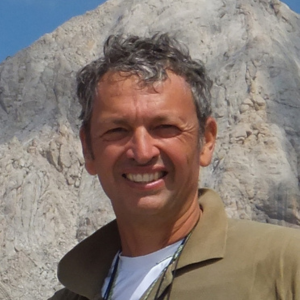
ERC Grantee: Giulio Di Toro
Department: Geosciences
Total Contribution: Euro 1.992.000,00
Project Duration in months: 60
Start Date: 01/06/2008
End Date: 01/06/2013
Giulio Di Toro is Full Professor of Structural Geology at the Department of Geosciences and Associate Researcher at the National Institute of Geophysics and Volcanology (INGV, Rome), and Full Professor at the University of Manchester (UK). He completed his Master degree in Geology (1999) and his PhD in Earth Sciences (2003) at the University of Padua. He was then a postdoctoral fellow at the University of Padua (2003-2005), a visiting researcher at Kyoto University (in 2005 and in 2006), a research consultant at INGV in Rome, an associate researcher for the National Research Centre (CNR; 2006-2009), and obtained a permanent position at the University of Padua in 2006. Before studying geology, he played volleyball in professional teams and with the Italian junior and senior national team (1987-1995). His research activity focuses on the study of earthquake mechanics and has been carried out in continuous collaboration with colleagues and young students and researchers with different backgrounds (geologists, rock experimentalists, engineers, physicists and seismologists). His research activities were supported by several national grants (e.g. the Italian Ministry of Education and Research, INGV, and Cariparo Foundation), as well as European and international grants, including a National Science Foundation project (USA: 2006-2008) and especially by two ERC grants: one Starting grant for the project USEMS: Uncovering the Secrets of an Earthquake: Multidisciplinary Study of Physico-Chemical Processes During the Seismic Cycle (2008-2013) and one Consolidator grant for the project NOFEAR: New Outlook on seismic faults: From EARthquake nucleation to arrest (2014-2019). He published 84 papers in peer-reviewed journals (total citations 3473, h-index 32 according to Google Scholar) and has been awarded several international prizes, including the Arne Richter Medal for Outstanding Young Scientists by the European Geosciences Union (2008), the Award for Tectonophysics Most Cited Article 2005 to 2010 by Elsevier (2010), and the International Award Prof. Luigi Tartufari for Geology by the Accademia dei Lincei (2010). He is a member of the Academia Europeae (from 2013) and of the Accademia Galileiana di Scienze, Lettere ed Arti in Padova (from 2014) for scientific merits.
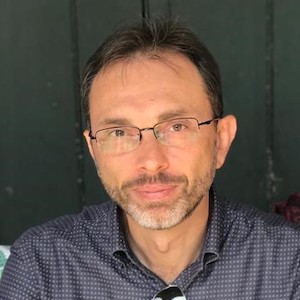
ERC Grantee: Fabrizio Mancin
Department: Chemical Sciences
Total Contribution: Euro 1.499.000,00
Project Duration in months: 60
Start Date: 01/12/2010
End Date: 01/12/2015
Fabrizio Mancin is Full Professor of Organic Chemistry at the Department of Chemical Sciences.
He completed his Master degree (1995) and his PhD (2000) in Chemistry at the University of Padua; he was then postdoctoral researcher at the University of Toronto (2001-2002). He received a University of Padua Young Researchers Grant (2003), a University of Padua Research Grant (2004-2005), a research contract on the synthesis of nanoparticles for toxicity investigations from Veneto Nanotech (2008-2009). He also received an ERC Starting grant (MOSAIC: Patterning the surface of monolayer-protected nanoparticles to obtain intelligent nanodevices) in 2010 and an ERC Proof of Concept grant (INSIGHT: New chemical detection methods based on NMR and nanoparticles) in 2014. In 2014, he was awarded with the Research Prize for Molecular Interactions by the Italian Chemical Society (SCI). His research interest is focused on supramolecular and nanochemistry, with particular interest in the exploitation of self-organization as strategy to design and realize chemical systems capable to perform complex functions. These include catalysis of hydrolytic reactions (in particular artificial metallonucleases), fluorescence and NMR-based chemosensors, and biomedical applications. He is co-author of about 75 scientific papers published in peer-reviewed journals, 5 book chapters and two patent applications. His current h-index is 28. Eu web site Final report summary (Eu web site)
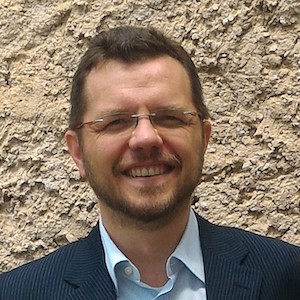
ERC Grantee: Tomas Morosinotto
Department: Biology
Total Contribution: Euro 1.257.600,00
Project Duration in months: 60
Start Date: 01/10/2012
End Date: 01/10/2017
Tomas Morosinotto is Full Professor of Biochemistry at the Department of Biology.
He completed his Master degree in Biotechnology (2001) at the University of Verona and his PhD in Environmental Biotechnology (2005) between University of Verona and the Université de la Méditerranée in Marseille. From 2005 to 2006 he worked in France, first as postdoctoral fellow at CEA Cadarache, and then as CNRS researcher at the LGBP (Laboratoire de Biophysique et Génétique des Plantes) at the Science Faculty of Marseille. In 2007 he returned to Italy to pursue his research activity at the University of Padua. His research focuses on the study of photosynthesis in different organisms investigating how evolution shaped the regulation of this metabolic process going from algae, mosses and plants, and how these organisms could be exploited for production of biomolecules and biofuels. His research activity has been funded by several national entities (e.g., Italian Ministry of Education and Research, Veneto Region), foundations (e.g., Cariparo foundation), private investors and by an ERC Starting grant for the project BioLEAP (2012-2017) which aims to improve algae efficiency in converting light into biomass. In 2010, he was awarded the Vincenzo Caglioti prize by the Accademia dei Lincei and of the Robin Hill award by the International Society of Photosynthesis Research and, in 2014, of the Baccarani-Melandri award from the Italian Society of Plant Biology. He published over 80 peer reviewed papers in international journals.
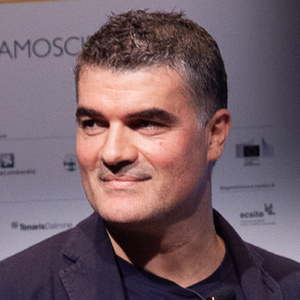
ERC Grantee: Fabrizio Nestola
Department: Geosciences
Total Contribution: Euro 1.423.464,00
Project Duration in months: 72
Start Date: 01/01/2013
End Date: 01/01/2019
Fabrizio Nestola is Full Professor of Mineralogy at the Department of Geosciences.
He completed his Master's degree in Geological Sciences at the University of Torino (1999) and his PhD in Mineralogy (2003) at the University of Modena. He was then an Alexander von Humboldt research fellow at the Bayerisches Geoinstitut in Germany (2004) and a postdoctoral researcher at Virginia Tech, USA (2005), and in 2006 obtained a permanent position at the University of Padua. His research interests focus on diamond and its mineral inclusions, and specifically on compressibility, thermal expansion, physical properties of minerals and crystalline compounds, and on crystal structure evolution under non-ambient conditions. In 2012, he obtained an ERC Starting Grant for the project INDIMEDEA (2013-2018), which aims to determine the depths and growth mechanisms of diamond formation by characterising the mineral inclusions in diamonds. He has published 196 papers in peer-reviewed journals (ISI Web of Science: total citations 1707, h-index 22) and has also been awarded a prize for the best PhD thesis by the Italian Society of Mineralogy and Petrology (2003), the Medal for Excellence in Research by the European Mineralogical Union (2010), and the Mario Nardelli Prize by the Italian Association of Crystallography (2011).

ERC Grantee: Leonard Jan Prins
Department: Chemical Sciences
Total Contribution: Euro 1.400.000,00
Project Duration in months: 60
Start Date: 01/10/2009
End Date: 01/10/2014
Leonard Jan Prins is Full Professor of Organic Chemistry at the Department of Chemical Sciences.
He completed his Master degree in Engineer and Chemical Technology (1997) and his PhD in Chemistry (2001) at the University of Tewnte, Enschede (NL). From October 2001 to September 2002 he was a postdoctoral fellow at the California Institute of Technology in Pasadena (USA), and from November 2002 to December 2003 at the University of Padova, where he obtained a permanent position in 2004. His research interests focus on the development of synthetic structures that have a size and complexity similar to those of proteins and on exploiting these structures for molecular recognition and catalysis. In 2009 he received an ERC Starting Grant for his project DYCOCA, which aimed to develop a new methodology for studying and utilising the non-covalent recognition between two molecular entities. He also participated as PI in WG1 (Catalysts) of the COST Action CM0905 on organocatalysis (2009-2014) and in the Management Committee of the COST Action CM1304 on the emergence and evolution of complex chemical systems, as PI in the Marie Curie ITN network READ (2011-2015) on replication and adaptation in molecular networks. At present, he is coordinator of the MSCA ITN network MULTI-APP (2015-2019) on innovative applications of multivalent molecular systems and supervisor of the MSCA IF NANOCARB (2015-2017) on self-selection of a multivalent nanosystem for carbohydrate recognition. For his research activity, he has received several national and international awards, including the H.J.-Backer price (2001) from the Dutch Royal Chemical Society (KNCV) for the best PhD thesis in organic chemistry, the European Young Chemist Award (2008) from the European Association for Chemical and Molecular Sciences (EuCheMs), and the 'Ciamician' medal (2009) from the Organic Chemistry Division of the Italian Chemical Society (SCI).
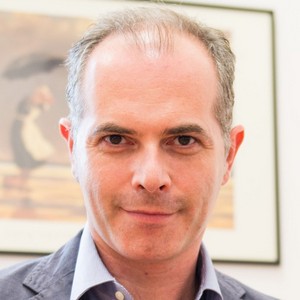
ERC Grantee: Luca Scorrano
Department: Biology
Total Contribution: Euro 1.499.995,00
Project Duration in months: 60
Start Date: 01/01/2012
End Date: 01/01/2017
Luca Scorrano is Full Professor of Biochemistry at the Department of Biology.
He completed his medical degree (1996) and his PhD in Molecular and Cellular Biology and Pathology (2000) at the University of Padua. From 2000 to 2003 he was an HFSP (Human Frontier Science Program) postdoctoral fellow at Dana-Farber Cancer Institute, Harvard Medical School in Boston (USA). In 2003 he was awarded an Assistant Scientist position at the Dulbecco-Telethon Institute; in 2006 he was recruited as Full Professor at the University of Geneva (Switzerland). In 2013 he moved to the University of Padua and since 2014 he has served as Scientific Director of the Venetian Institute of Molecular Medicine. His work has changed classical tenets in the field of apoptosis and mitochondrial pathophysiology. He discovered the process of mitochondrial cristae remodelling that allows complete cytochrome c release during apoptosis. Since 2004, his lab has discovered a “molecular staple” holding cristae junctions tight and exploited it in vivo to correct mitochondrial diseases and blunt tissue damage; the first molecular bridge between ER and mitochondria; how mitochondrial shape controls the outcome of autophagy; the link between cristae shape and mitochondrial respiration; and the essential role of mitochondrial fusion in heart development. He has received several prizes and awards (including the 2006 Eppendorf European Young Investigator, the 2011 Chiara D’Onofrio and the 2013 European Society for Clinical Investigation Award) and was elected an EMBO Member in 2011. His research is supported by national bodies and private foundations (e.g. Italian Ministry of Education and Research, Telethon, AIRC), by the ERC with the Starting (Consolidator category) grant ERMITO (2012-2017) on the molecular anatomy and pathophysiology of the endoplasmic reticulum-mitochondria connection; and by a European Commission reintegration grant (2013-2018). He is the European Coordinator of a Leducq Foundation Transatlantic Network of Excellence on Cardiovascular research grant on modulating autophagy to treat cardiovascular disease (2016-2020). He sits on several scientific advisory boards (e.g. Institut Necker Enfants Malades, Paris; FinMit Consortium, Helsinki), on review panels of the ERC, the Flemish Science Foundation (FWO), the Finnish Academy of Sciences and the EMBO. He is an Editorial Board member of EMBOJ, CDD, Cardiovasc Res, BBA-Mol Cell Res, Biol Open.
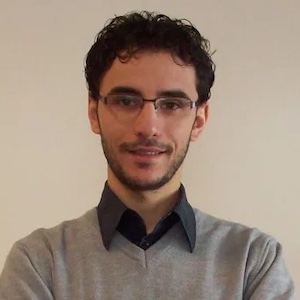
ERC Grantee: Antonino Vallesi
Department: Neuroscience
Total Contribution: Euro 1.425.000,00
Project Duration in months: 60
Start Date: 01/03/2013
End Date: 01/03/2018
Antonino Vallesi is an Associate Professor of Psychobiology and Physiological Psychology at the Department of Neuroscience.
He completed his Master degree in Psychology (2003, cum laude) at the University of Padua and his PhD in Neurosciences (2007, cum laude) at SISSA in Trieste. He worked as a postdoctoral fellow at Rotman Research Institute at Baycrest in Toronto (2007-2009) and then as a researcher at SISSA in Trieste (2009-2012), and finally obtained a permanent position at the University of Padua. His main scientific interests are executive functions, cognitive ageing, hemispheric asymmetries, frontal lobes, and spatial and temporal attention. For his research activity he received both national and European funding, including the ERC Starting Grant for the project LEX-MEA 313692 (2013-2018), which aims to unveil which neural and experiential factors shape two high-level functions (the ability to form new rules and the capacity for monitoring) across the lifespan, with a focus on hemispheric asymmetries. He also won the Bertelson Award by European Society for Cognitive Psychology and the TOYP Award by Junior Chamber International.

ERC Grantee: Marco Zorzi
Department: General Psychology
Total Contribution: Euro 492.200,00
Project Duration in months: 60
Start Date: 01/06/2008
End Date: 01/06/2013
Marco Zorzi is Full Professor of Cognitive Psychology and Artificial Intelligence at the Department of General Psychology and Senior Research Associate at IRCCS San Camillo Neurorehabilitation Hospital (Venice Lido). He completed his Master degree in Psychology (1994) at the University of Padova, his European Diploma in Cognitive Science (2007) at SISSA (International School for Advanced Studies) in Trieste, and his PhD in Experimental Psychology (1999) at the University of Trieste. He was then postdoctoral fellow at University College of London (1994-1998), visiting scientist at Macquarie University in Sydney (1998), postdoctoral fellow at the University of Padova (1999-2000), and obtained a permanent position in 2000, first at the University S. Raffaele in Milan and then at the University of Padova. He leads an interdisciplinary research laboratory (Computational Cognitive Neuroscience Lab) at the frontier between cognitive science, computer science and neuroscience. His research is focused on the computational bases of human cognition, from development to skilled performance and breakdowns of processing following brain damage. This research has been funded by public and private bodies, both national (e.g., the Italian Ministry of Education and Research, Cariparo Foundation, Compagnia di San Paolo Foundation) and international (e.g., European Commission, McDonnell Foundation USA, Wellcome Trust, Royal Society of London). He also coordinates a University of Padova Strategic Grant ("The cognitive neuroscience of attention in perception and cognition"; 2014-2017). His project supported by an ERC Starting grant for frontier research (2008-2013) has exploited recent advances in machine learning (deep unsupervised learning and probabilistic generative models) to develop a new generation of neural network models of learning and cognition. This work has produced realistic, large-scale models that explain key empirical phenomena both at the behavioral and neural level.