
"Models" Exhibition in Padua: Innovations for a More Inclusive Museum
05.11.2025
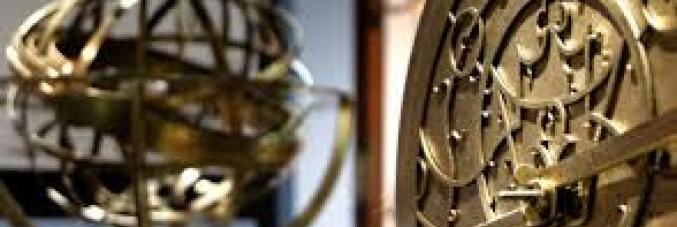
Starting from November, the University of Padua is introducing a groundbreaking approach to the exhibition "Models. Knowledge in Three Dimensions" at the Giovanni Poleni Museum, located in the Department of Physics and Astronomy in Padua. Recognising the various barriers that can make museum visits challenging for some people, the exhibition has been equipped with a series of innovations designed to enhance accessibility and inclusivity.
The main innovations include multilingual information panels in seven languages besides Italian: Arabic, Chinese, Hindi, Spanish, Urdu, Persian, and English. This unique feature aims to reach a broader audience, including international students, tourists, and local non-Italian-speaking residents. The exhibition offers multisensory and multimodal experiences to cater to the needs of diverse visitors. All content is accessible via the platform itinerariaccessibili.com, which complies with WCAG guidelines. The platform supports screen readers, keyboard navigation, and is designed for sensory, motor, and cognitive accessibility.
Each section of the exhibition is presented in Italian Sign Language (LIS) and includes audio descriptions. Easy-to-read guides and social stories are available to help visitors with cognitive disabilities navigate the exhibition. Captions are also provided in Augmentative and Alternative Communication (AAC). To enhance the visiting experience, a sensory bag has been provided, containing social stories, communication cards, stress-relief toys, and an interactive book. These tools support museum visitors who need clear and reassuring information or have communication difficulties.
Elena Santi, from the Accessibility and Inclusion Group of the University Centre for Museums, emphasises the collaborative nature of the project, which involved experts and representatives from the target audience. The Italian Union of the Blind and Partially Sighted (UICI) assisted in developing tactile materials, while the LIS videos were created with the help of deaf professionals. Materials for visitors with cognitive disabilities were prepared with the support of Ludovico Lancia, a writer with Asperger's syndrome who is undertaking an internship at the CAM.
Isabella Colpo, technical director of the University Centre for Museums, highlights how the initiative was developed internally with limited costs, demonstrating that accessible culture, as enshrined by the UN Convention on the Rights of Persons with Disabilities, is achievable for all institutions. The approach serves as a model for permanent and temporary exhibitions in university museums.
Sofia Talas, curator of the Poleni Museum, points out how multilingual translations allow the exhibition to welcome a diverse audience, including international students and local residents, and explains, "The translations were curated by students and PhD candidates from the University, who thus become protagonists of the activities that the University organises for local communities and society at large. The initiative is also in continuity with the project 'Science from the Islamic World to Europe Today', carried out in 2022-2023 by the Department of Physics and Astronomy. As part of this project, mixed working groups were created, composed of PhD students and research fellows from the DFA and members of the local community, mainly foreigners, who worked together to develop new scientific outreach projects on the multicultural aspects of science. In addition to captions in various languages and a treasure hunt on the multiculturality of science, the project led to the idea of a theatrical performance, 'Caravanserraglio,' which was presented to the public for the first time recently, with a repeat performance scheduled at the department on 29 November."
This initiative continues the University of Padua's commitment to promoting multicultural scientific communication, as demonstrated in previous projects.
The exhibition "Models. Knowledge in Three Dimensions," open until 3 May 2026, invites exploration of various scientific and humanistic disciplines through models used for teaching and research. Funded by the Third Mission and Open Science grants from the University of Padua, the exhibition is the result of collaboration between multiple departments and external partners and represents a significant step towards creating more inclusive and accessible museum experiences for everyone.