

Space: Unveiling the "Map" to Find Earth's Twin
17.02.2026
The hunt for a "second Earth" enters its most operational phase today: the scientific consortium of the ESA mission Plato (PLAnetary Transits and Oscillations of stars) has made the Plato Input Catalog (PIC) available to the Plato collaboration. This is the definitive list of stars that the satellite will observe in the coming years.
This is a fundamental step for the ESA mission and a result where Italy is at the forefront: the Space Science Data Centre of the Italian Space Agency (ASI – SSDC) is responsible for creating the Plato Input Catalog, selecting and characterising the stars according to the specifications dictated by the international consortium. Without this map, the satellite would not know where to look. The goal is ambitious: to identify rocky planets in the "habitable zone," that is, the range of distance from their star that allows for the existence of liquid water, an essential condition for life as we know it.
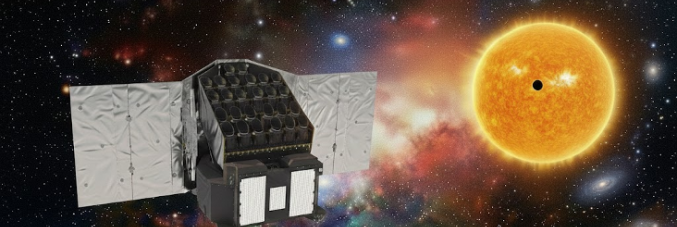
With its 26 telescopes, whose opto-mechanical parts were designed by INAF researchers and built by the Italian industry, from 2027 Plato will measure the brightness of the 290,000 stars in the PIC every 25 seconds for several years, observing a field (LOng-Pointing field South 2 - LOPS2) of about 2200 square degrees (to put this in perspective: a width similar to the portion of the sky that our eyes can see) in the southern celestial hemisphere. The satellite will look for imperceptible variations in light (less than 8 parts per thousand in the case of Earth passing in front of the Sun) caused by a planet transiting in front of its star. Estimates indicate that, during its four and a half years of activity, Plato will discover at least 5,000 new exoplanets, about 500 of which will be Earth-sized. Many of these are located in the habitable zone, and some could be Earth's twins.
The person responsible for the stellar map PIC for the PLATO mission is Giampaolo Piotto, professor at the Department of Physics and Astronomy at the University of Padua, and director of the Centre for Space Studies and Activities (CISAS). "The publication of the catalogue is an essential step for the PLATO mission," says Giampaolo Piotto. "Without this list, PLATO would not know where to look for Earth-like exoplanets. PLATO will discover thousands of new exoplanets, and some of these will be very similar to Earth."
In addition to the stars that will be monitored to find new exoplanets, the PIC also contains stars that will be used to maintain the satellite's stable position and stars that will be used to calibrate the onboard instruments and models to measure their mass, radius, and age.
The ESA satellite Plato (PLAnetary Transits and Oscillations of stars) will use 26 cameras to study Earth-sized exoplanets orbiting within the habitable zone of Sun-like stars.
Plato is a medium-class mission in ESA's Cosmic Vision programme.