

Unipd Research on Stress Situations: Better Not to Face Them Alone
16.02.2026
The study titled “Physical Proximity With Social Support Regulates Vigilance to Threat: Evidence From Startle Reactivity During Emotional Stress Induction”, published in Psychophysiology by a research team from the Departments of Developmental and Socialization Psychology and General Psychology at the University of Padua, in collaboration with Wake Forest University (USA), investigated the mechanisms governing the relationship between social support and stress.
Stress is an unavoidable component of our daily lives, but the ability to manage it does not solely depend on individual resources. Epidemiological research in psychological and medical fields suggests that social support is associated with better physical and mental health and greater longevity.
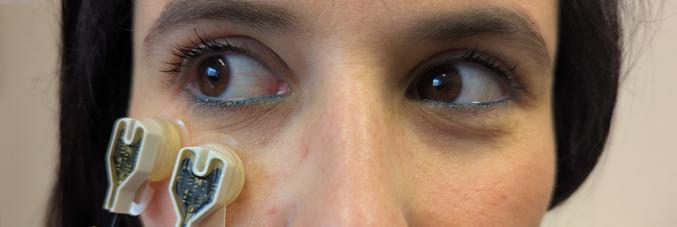
The research team (Antonio Maffei, Fiorella Del Popolo Cristaldi, Alessia Tecchio, Terry D. Blumenthal, Paola Sessa) monitored a primordial reflex, the startle response, when facing a stressful situation alone or in the company of others. The startle response is the rapid muscle contraction that follows a sudden noise: it is an automatic response, and in a threatening condition, this reflex is modulated by the brain to “prepare us for action.” If we feel in danger, the system “turns on” or “off” depending on the most suitable defensive strategies. But does anything change if we are alone or with others?
The sample examined consisted of 70 participants of the same sex (women) to minimise the effects of gender differences in affective reactivity. The subjects (divided into three groups) underwent the Trier Social Stress Test (TSST), a standardised protocol that induces stress through the simulation of a job interview conducted in front of an evaluation committee. In response to the same test, one group performed the task alone, a second with their partner, and the third with a stranger.
During the test, the researchers measured the participants' “level of alertness” through the startle reflex, an involuntary (primordial) muscle response produced by a sudden sound. This reflex increases progressively when our body perceives the surrounding environment as threatening.
The research reveals that in a stressful situation, when facing it alone, the brain is more alert compared to when the same critical context is faced with someone else: the startle reflex increased in those who faced the task alone and with a significantly higher threshold compared to those in company.
The interesting aspect is that this “social shield” effect was not limited to those accompanied by their partner but also included those who faced the test in the presence of a stranger. The presence of another person proved effective in providing protection on the nervous system reactivity of the participants: a “physiological regulator” capable of reducing the alertness of the nervous system during acute stress situations.
“Our data support the Social Baseline Theory, a recent theory suggesting that the human brain is optimised to work best when we are with others and not in isolation, especially when it comes to facing stressful situations,” explains Antonio Maffei, from the Department of Developmental and Socialization Psychology at the University of Padua and the study's lead author. “When we are alone, the nervous system has to entirely monitor the environment to prevent potential dangers, an activity that requires a greater amount of both cognitive and metabolic resources. The mere physical presence of another individual acts as a safety signal that allows the brain to optimise this investment of resources, regulating the stress response more efficiently, and thus acts as a ‘physiological regulator’ capable of reducing the alertness of the nervous system during acute stress situations.”
These results show how the social environment shapes our psychophysiological reaction to stressful situations. Furthermore, the research lays the foundation for future studies aimed at understanding the role individual differences play in enhancing these effects. The ultimate goal is to understand how to fully exploit the enormous potential that relationships have in improving our health and well-being.