

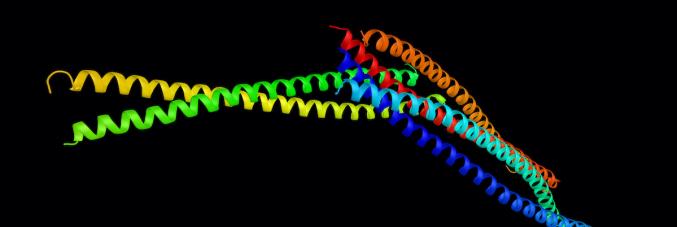
The protein Vimentin and its role in the spread of metastases
25.03.2026
A research group from the University of Padua has discovered how the protein vimentin promotes the spread of certain types of cancer. The results, achieved with the support of the AIRC Foundation for Cancer Research, have been published in the journal "Nucleic Acids Research" by Oxford University Press.
In some cancers, such as gastric and breast carcinoma, cells can start to produce high levels of vimentin. This protein forms a sort of mechanical skeleton that enables the cells to spread throughout the body and generate metastases. Moreover, vimentin is also present in the nucleus of these cells, where it stimulates the production of proteins needed by cancer cells to efficiently spread throughout the body.
"Recently, our research group demonstrated that this function depends on vimentin binding to particular three-dimensional DNA structures," explains Claudia Sissi, a professor in the Department of Pharmaceutical Sciences and corresponding author of the article. "In this new study, we have managed to identify the portion of the protein that enables it to attach to the genome. Additionally, we have confirmed that this portion of the protein is also necessary to create the mechanical support structure for metastatic cells, and is therefore a crucial element for tumour spread."
The collected data showed that the two functions of vimentin, seemingly different, actually work together to promote the formation and spread of metastases. "Since we have precisely identified the part of the protein responsible for these pro-metastatic actions, it will now be possible to design new drugs capable of targeting it with precision. In this way, it could be possible to neutralise the cells' ability to migrate and form new tumours away from the primary site. These therapies, which will need to be identified and tested in extensive preclinical and clinical studies, could be more effective and better tolerated by patients compared to those currently in use," concludes Claudia Sissi.