

Early spring: alpine conifers gain two weeks of growth in 200 years
18.02.2026
Climate warming is advancing the biological timelines of plants, especially in mountainous regions. A study on alpine conifers shows that the onset of new wood formation has advanced over the last two centuries, but less so compared to leaves and flowers.
The study "Phenological Shifts in Wood Formation Tracked by Frost Rings Across Two Centuries," published in the journal "Global Change Biology»" is the result of work by a team of researchers from the Department of Land, Environment, Agriculture, and Forestry (TeSAF) at the University of Padua, in collaboration with colleagues from the Institute of Atmospheric Sciences and Climate of the CNR in Bologna. The study was coordinated by Professor Marco Carrer from TeSAF.
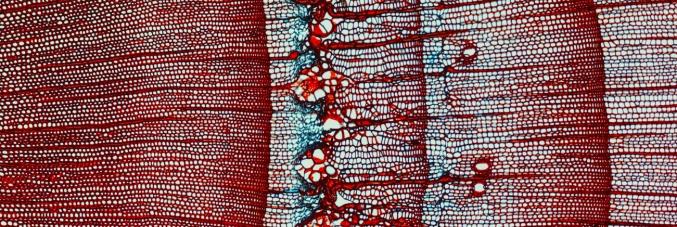
"Instead of directly monitoring the annual growth, which is impossible to carry out over very long periods, we adopted a retrospective approach. By studying the rings, we focused on the so-called 'frost rings,' small scars in the wood caused by sudden temperature drops during the active growth phase, which confirm that the tree was growing," explains Marco Carrer.
"By analysing over 4,000 individuals of larch, Swiss stone pine, and spruce in the Dolomites and comparing their frost rings with long historical series of daily temperatures (from 1774 to 2020), we reconstructed the moment when the trees started to grow. This moment has advanced by about 7 days every 100 years," adds Michele Brunetti from the CNR in Bologna.
"In practice, it was about identifying the past frost waves capable of causing damage in our forests, which typically occurred between May and June when the trees had already started to grow. These are the same events that can cause significant damage to agricultural crops," says Eugenia Mantovani, first author and PhD student at TeSAF.
The study highlights different responses to climate: buds and flowering have advanced by over a month, while wood growth has shifted more gradually. Since wood production affects the capacity to absorb carbon, the results help improve models and forecasts of forest ecosystems.