Nomina della Commissione valutatrice della Selezione n. 2025M39 (P.E.I.A.) - Allegato

Array ( [field_titolo_frontend_all] => Array ( [#theme] => field [#weight] => -4 [#title] => Titolo frontend [#access] => 1 [#label_display] => above [#view_mode] => teaser [#language] => und [#field_name] => field_titolo_frontend_all [#field_type] => text_long [#field_translatable] => 0 [#entity_type] => node [#bundle] => allegato [#object] => stdClass Object ( [vid] => 504953 [uid] => 29556 [title] => Nomina della Commissione valutatrice della Selezione n. 2025M39 (P.E.I.A.) - Allegato [log] => [status] => 1 [comment] => 0 [promote] => 1 [sticky] => 0 [nid] => 121673 [type] => allegato [language] => it [created] => 1761048428 [changed] => 1761048428 [tnid] => 0 [translate] => 0 [revision_timestamp] => 1761048428 [revision_uid] => 29556 [taxonomy_vocabulary_2] => Array ( ) [taxonomy_vocabulary_8] => Array ( ) [body] => Array ( ) [field_titolo_frontend_all] => Array ( [und] => Array ( [0] => Array ( [value] => Allegato [format] => [safe_value] => Allegato ) ) ) [field_allegato_file] => Array ( [und] => Array ( [0] => Array ( [fid] => 143544 [uid] => 29556 [filename] => Nomina Commissione - 2025M39.pdf [uri] => public://2025/Nomina Commissione - 2025M39.pdf [filemime] => application/pdf [filesize] => 192524 [status] => 1 [timestamp] => 1761048421 [type] => document [field_folder] => Array ( [und] => Array ( [0] => Array ( [tid] => 2664 ) ) ) [metadata] => Array ( ) [display] => 1 [description] => ) ) ) [name] => jessica.russo [picture] => 0 [data] => b:0; [num_revisions] => 1 [current_revision_id] => 504953 [is_current] => 1 [is_pending] => [revision_moderation] => [entity_view_prepared] => 1 ) [#items] => Array ( [0] => Array ( [value] => Allegato [format] => [safe_value] => Allegato ) ) [#formatter] => text_default [0] => Array ( [#markup] => Allegato ) ) [field_allegato_file] => Array ( [#theme] => field [#weight] => -3 [#title] => File [#access] => 1 [#label_display] => above [#view_mode] => teaser [#language] => und [#field_name] => field_allegato_file [#field_type] => file [#field_translatable] => 0 [#entity_type] => node [#bundle] => allegato [#object] => stdClass Object ( [vid] => 504953 [uid] => 29556 [title] => Nomina della Commissione valutatrice della Selezione n. 2025M39 (P.E.I.A.) - Allegato [log] => [status] => 1 [comment] => 0 [promote] => 1 [sticky] => 0 [nid] => 121673 [type] => allegato [language] => it [created] => 1761048428 [changed] => 1761048428 [tnid] => 0 [translate] => 0 [revision_timestamp] => 1761048428 [revision_uid] => 29556 [taxonomy_vocabulary_2] => Array ( ) [taxonomy_vocabulary_8] => Array ( ) [body] => Array ( ) [field_titolo_frontend_all] => Array ( [und] => Array ( [0] => Array ( [value] => Allegato [format] => [safe_value] => Allegato ) ) ) [field_allegato_file] => Array ( [und] => Array ( [0] => Array ( [fid] => 143544 [uid] => 29556 [filename] => Nomina Commissione - 2025M39.pdf [uri] => public://2025/Nomina Commissione - 2025M39.pdf [filemime] => application/pdf [filesize] => 192524 [status] => 1 [timestamp] => 1761048421 [type] => document [field_folder] => Array ( [und] => Array ( [0] => Array ( [tid] => 2664 ) ) ) [metadata] => Array ( ) [display] => 1 [description] => ) ) ) [name] => jessica.russo [picture] => 0 [data] => b:0; [num_revisions] => 1 [current_revision_id] => 504953 [is_current] => 1 [is_pending] => [revision_moderation] => [entity_view_prepared] => 1 ) [#items] => Array ( [0] => Array ( [fid] => 143544 [uid] => 29556 [filename] => Nomina Commissione - 2025M39.pdf [uri] => public://2025/Nomina Commissione - 2025M39.pdf [filemime] => application/pdf [filesize] => 192524 [status] => 1 [timestamp] => 1761048421 [type] => document [field_folder] => Array ( [und] => Array ( [0] => Array ( [tid] => 2664 ) ) ) [metadata] => Array ( ) [display] => 1 [description] => ) ) [#formatter] => file_default [0] => Array ( [#theme] => file_link [#file] => stdClass Object ( [fid] => 143544 [uid] => 29556 [filename] => Nomina Commissione - 2025M39.pdf [uri] => public://2025/Nomina Commissione - 2025M39.pdf [filemime] => application/pdf [filesize] => 192524 [status] => 1 [timestamp] => 1761048421 [type] => document [field_folder] => Array ( [und] => Array ( [0] => Array ( [tid] => 2664 ) ) ) [metadata] => Array ( ) [display] => 1 [description] => ) ) ) [links] => Array ( [#theme] => links__node [#pre_render] => Array ( [0] => drupal_pre_render_links ) [#attributes] => Array ( [class] => Array ( [0] => links [1] => inline ) ) [node] => Array ( [#theme] => links__node__node [#links] => Array ( [node-readmore] => Array ( [title] => Read more about Nomina della Commissione valutatrice della Selezione n. 2025M39 (P.E.I.A.) - Allegato [href] => node/121673 [html] => 1 [attributes] => Array ( [rel] => tag [title] => Nomina della Commissione valutatrice della Selezione n. 2025M39 (P.E.I.A.) - Allegato ) ) ) [#attributes] => Array ( [class] => Array ( [0] => links [1] => inline ) ) ) ) )

MASSONERIA E FASCISMO. Il libro di Fulvio Conti in Sala del Romanino

Array ( [field_luogo_area_stampa] => Array ( [#theme] => field [#weight] => -4 [#title] => Luogo [#access] => 1 [#label_display] => above [#view_mode] => teaser [#language] => und [#field_name] => field_luogo_area_stampa [#field_type] => text_long [#field_translatable] => 0 [#entity_type] => node [#bundle] => allegato_area_stampa [#object] => stdClass Object ( [vid] => 504952 [uid] => 8835 [title] => MASSONERIA E FASCISMO. Il libro di Fulvio Conti in Sala del Romanino [log] => [status] => 1 [comment] => 0 [promote] => 1 [sticky] => 0 [nid] => 121672 [type] => allegato_area_stampa [language] => und [created] => 1761048268 [changed] => 1761048268 [tnid] => 0 [translate] => 0 [revision_timestamp] => 1761048268 [revision_uid] => 8835 [body] => Array ( ) [field_allegato_area_stampa] => Array ( [und] => Array ( [0] => Array ( [fid] => 143543 [uid] => 8835 [filename] => Comunicato _MASSONERIA E FASCISMO.pdf [uri] => public://Comunicato _MASSONERIA E FASCISMO.pdf [filemime] => application/pdf [filesize] => 165267 [status] => 1 [timestamp] => 1761048268 [type] => document [field_folder] => Array ( [und] => Array ( [0] => Array ( [tid] => 2048 ) ) ) [metadata] => Array ( ) [display] => 1 [description] => ) ) ) [field_all_imm_area_stampa] => Array ( ) [field_data_area_stampa] => Array ( [und] => Array ( [0] => Array ( [value] => 2025-10-21 00:00:00 [timezone] => Europe/Paris [timezone_db] => Europe/Paris [date_type] => datetime ) ) ) [field_luogo_area_stampa] => Array ( [und] => Array ( [0] => Array ( [value] => Padova [format] => [safe_value] => Padova ) ) ) [name] => stampa [picture] => 0 [data] => b:0; [num_revisions] => 1 [current_revision_id] => 504952 [is_current] => 1 [is_pending] => [revision_moderation] => [entity_view_prepared] => 1 ) [#items] => Array ( [0] => Array ( [value] => Padova [format] => [safe_value] => Padova ) ) [#formatter] => text_default [0] => Array ( [#markup] => Padova ) ) [field_data_area_stampa] => Array ( [#theme] => field [#weight] => -3 [#title] => Data [#access] => 1 [#label_display] => above [#view_mode] => teaser [#language] => und [#field_name] => field_data_area_stampa [#field_type] => datetime [#field_translatable] => 0 [#entity_type] => node [#bundle] => allegato_area_stampa [#object] => stdClass Object ( [vid] => 504952 [uid] => 8835 [title] => MASSONERIA E FASCISMO. Il libro di Fulvio Conti in Sala del Romanino [log] => [status] => 1 [comment] => 0 [promote] => 1 [sticky] => 0 [nid] => 121672 [type] => allegato_area_stampa [language] => und [created] => 1761048268 [changed] => 1761048268 [tnid] => 0 [translate] => 0 [revision_timestamp] => 1761048268 [revision_uid] => 8835 [body] => Array ( ) [field_allegato_area_stampa] => Array ( [und] => Array ( [0] => Array ( [fid] => 143543 [uid] => 8835 [filename] => Comunicato _MASSONERIA E FASCISMO.pdf [uri] => public://Comunicato _MASSONERIA E FASCISMO.pdf [filemime] => application/pdf [filesize] => 165267 [status] => 1 [timestamp] => 1761048268 [type] => document [field_folder] => Array ( [und] => Array ( [0] => Array ( [tid] => 2048 ) ) ) [metadata] => Array ( ) [display] => 1 [description] => ) ) ) [field_all_imm_area_stampa] => Array ( ) [field_data_area_stampa] => Array ( [und] => Array ( [0] => Array ( [value] => 2025-10-21 00:00:00 [timezone] => Europe/Paris [timezone_db] => Europe/Paris [date_type] => datetime ) ) ) [field_luogo_area_stampa] => Array ( [und] => Array ( [0] => Array ( [value] => Padova [format] => [safe_value] => Padova ) ) ) [name] => stampa [picture] => 0 [data] => b:0; [num_revisions] => 1 [current_revision_id] => 504952 [is_current] => 1 [is_pending] => [revision_moderation] => [entity_view_prepared] => 1 ) [#items] => Array ( [0] => Array ( [value] => 2025-10-21 00:00:00 [timezone] => Europe/Paris [timezone_db] => Europe/Paris [date_type] => datetime ) ) [#formatter] => date_default [0] => Array ( [#markup] => Mar, 21/10/2025 ) ) [field_allegato_area_stampa] => Array ( [#theme] => field [#weight] => -2 [#title] => Allegato [#access] => 1 [#label_display] => above [#view_mode] => teaser [#language] => und [#field_name] => field_allegato_area_stampa [#field_type] => file [#field_translatable] => 0 [#entity_type] => node [#bundle] => allegato_area_stampa [#object] => stdClass Object ( [vid] => 504952 [uid] => 8835 [title] => MASSONERIA E FASCISMO. Il libro di Fulvio Conti in Sala del Romanino [log] => [status] => 1 [comment] => 0 [promote] => 1 [sticky] => 0 [nid] => 121672 [type] => allegato_area_stampa [language] => und [created] => 1761048268 [changed] => 1761048268 [tnid] => 0 [translate] => 0 [revision_timestamp] => 1761048268 [revision_uid] => 8835 [body] => Array ( ) [field_allegato_area_stampa] => Array ( [und] => Array ( [0] => Array ( [fid] => 143543 [uid] => 8835 [filename] => Comunicato _MASSONERIA E FASCISMO.pdf [uri] => public://Comunicato _MASSONERIA E FASCISMO.pdf [filemime] => application/pdf [filesize] => 165267 [status] => 1 [timestamp] => 1761048268 [type] => document [field_folder] => Array ( [und] => Array ( [0] => Array ( [tid] => 2048 ) ) ) [metadata] => Array ( ) [display] => 1 [description] => ) ) ) [field_all_imm_area_stampa] => Array ( ) [field_data_area_stampa] => Array ( [und] => Array ( [0] => Array ( [value] => 2025-10-21 00:00:00 [timezone] => Europe/Paris [timezone_db] => Europe/Paris [date_type] => datetime ) ) ) [field_luogo_area_stampa] => Array ( [und] => Array ( [0] => Array ( [value] => Padova [format] => [safe_value] => Padova ) ) ) [name] => stampa [picture] => 0 [data] => b:0; [num_revisions] => 1 [current_revision_id] => 504952 [is_current] => 1 [is_pending] => [revision_moderation] => [entity_view_prepared] => 1 ) [#items] => Array ( [0] => Array ( [fid] => 143543 [uid] => 8835 [filename] => Comunicato _MASSONERIA E FASCISMO.pdf [uri] => public://Comunicato _MASSONERIA E FASCISMO.pdf [filemime] => application/pdf [filesize] => 165267 [status] => 1 [timestamp] => 1761048268 [type] => document [field_folder] => Array ( [und] => Array ( [0] => Array ( [tid] => 2048 ) ) ) [metadata] => Array ( ) [display] => 1 [description] => ) ) [#formatter] => file_default [0] => Array ( [#theme] => file_link [#file] => stdClass Object ( [fid] => 143543 [uid] => 8835 [filename] => Comunicato _MASSONERIA E FASCISMO.pdf [uri] => public://Comunicato _MASSONERIA E FASCISMO.pdf [filemime] => application/pdf [filesize] => 165267 [status] => 1 [timestamp] => 1761048268 [type] => document [field_folder] => Array ( [und] => Array ( [0] => Array ( [tid] => 2048 ) ) ) [metadata] => Array ( ) [display] => 1 [description] => ) ) ) [links] => Array ( [#theme] => links__node [#pre_render] => Array ( [0] => drupal_pre_render_links ) [#attributes] => Array ( [class] => Array ( [0] => links [1] => inline ) ) [node] => Array ( [#theme] => links__node__node [#links] => Array ( [node-readmore] => Array ( [title] => Read more about MASSONERIA E FASCISMO. Il libro di Fulvio Conti in Sala del Romanino [href] => node/121672 [html] => 1 [attributes] => Array ( [rel] => tag [title] => MASSONERIA E FASCISMO. Il libro di Fulvio Conti in Sala del Romanino ) ) ) [#attributes] => Array ( [class] => Array ( [0] => links [1] => inline ) ) ) ) )

2025N27 - Link per accesso agli atti - prova scritta

Array ( [field_titolo_frontend_all] => Array ( [#theme] => field [#weight] => -4 [#title] => Titolo frontend [#access] => 1 [#label_display] => above [#view_mode] => teaser [#language] => und [#field_name] => field_titolo_frontend_all [#field_type] => text_long [#field_translatable] => 0 [#entity_type] => node [#bundle] => allegato [#object] => stdClass Object ( [vid] => 504948 [uid] => 29556 [title] => 2025N27 - Link per accesso agli atti - prova scritta [log] => [status] => 1 [comment] => 0 [promote] => 1 [sticky] => 0 [nid] => 121671 [type] => allegato [language] => it [created] => 1761047884 [changed] => 1761047884 [tnid] => 0 [translate] => 0 [revision_timestamp] => 1761047884 [revision_uid] => 29556 [taxonomy_vocabulary_2] => Array ( ) [taxonomy_vocabulary_8] => Array ( ) [body] => Array ( ) [field_titolo_frontend_all] => Array ( [und] => Array ( [0] => Array ( [value] =>

Link per accesso agli atti - prova scritta

[format] => [safe_value] => <p><a href="https://unipd.selezionidigitali.it/#/home">Link per accesso agli atti - prova scritta</a></p> ) ) ) [field_allegato_file] => Array ( ) [name] => jessica.russo [picture] => 0 [data] => b:0; [num_revisions] => 1 [current_revision_id] => 504948 [is_current] => 1 [is_pending] => [revision_moderation] => [entity_view_prepared] => 1 ) [#items] => Array ( [0] => Array ( [value] =>

Link per accesso agli atti - prova scritta

[format] => [safe_value] => <p><a href="https://unipd.selezionidigitali.it/#/home">Link per accesso agli atti - prova scritta</a></p> ) ) [#formatter] => text_default [0] => Array ( [#markup] => <p><a href="https://unipd.selezionidigitali.it/#/home">Link per accesso agli atti - prova scritta</a></p> ) ) [links] => Array ( [#theme] => links__node [#pre_render] => Array ( [0] => drupal_pre_render_links ) [#attributes] => Array ( [class] => Array ( [0] => links [1] => inline ) ) [node] => Array ( [#theme] => links__node__node [#links] => Array ( [node-readmore] => Array ( [title] => Read more about 2025N27 - Link per accesso agli atti - prova scritta [href] => node/121671 [html] => 1 [attributes] => Array ( [rel] => tag [title] => 2025N27 - Link per accesso agli atti - prova scritta ) ) ) [#attributes] => Array ( [class] => Array ( [0] => links [1] => inline ) ) ) ) )

2025N27 - Comunicazione calendario e sedi dei colloqui

Array ( [field_titolo_frontend_all] => Array ( [#theme] => field [#weight] => -4 [#title] => Titolo frontend [#access] => 1 [#label_display] => above [#view_mode] => teaser [#language] => und [#field_name] => field_titolo_frontend_all [#field_type] => text_long [#field_translatable] => 0 [#entity_type] => node [#bundle] => allegato [#object] => stdClass Object ( [vid] => 504947 [uid] => 29556 [title] => 2025N27 - Comunicazione calendario e sedi dei colloqui [log] => [status] => 1 [comment] => 0 [promote] => 1 [sticky] => 0 [nid] => 121670 [type] => allegato [language] => it [created] => 1761047756 [changed] => 1761047756 [tnid] => 0 [translate] => 0 [revision_timestamp] => 1761047756 [revision_uid] => 29556 [taxonomy_vocabulary_2] => Array ( ) [taxonomy_vocabulary_8] => Array ( ) [body] => Array ( ) [field_titolo_frontend_all] => Array ( [und] => Array ( [0] => Array ( [value] => Comunicazione calendario e sedi dei colloqui [format] => [safe_value] => Comunicazione calendario e sedi dei colloqui ) ) ) [field_allegato_file] => Array ( [und] => Array ( [0] => Array ( [fid] => 143541 [uid] => 29556 [filename] => Calendario colloquio - 2025N27.pdf [uri] => public://2025/Calendario colloquio - 2025N27.pdf [filemime] => application/pdf [filesize] => 268696 [status] => 1 [timestamp] => 1761047748 [type] => document [field_folder] => Array ( [und] => Array ( [0] => Array ( [tid] => 2664 ) ) ) [metadata] => Array ( ) [display] => 1 [description] => ) ) ) [name] => jessica.russo [picture] => 0 [data] => b:0; [num_revisions] => 1 [current_revision_id] => 504947 [is_current] => 1 [is_pending] => [revision_moderation] => [entity_view_prepared] => 1 ) [#items] => Array ( [0] => Array ( [value] => Comunicazione calendario e sedi dei colloqui [format] => [safe_value] => Comunicazione calendario e sedi dei colloqui ) ) [#formatter] => text_default [0] => Array ( [#markup] => Comunicazione calendario e sedi dei colloqui ) ) [field_allegato_file] => Array ( [#theme] => field [#weight] => -3 [#title] => File [#access] => 1 [#label_display] => above [#view_mode] => teaser [#language] => und [#field_name] => field_allegato_file [#field_type] => file [#field_translatable] => 0 [#entity_type] => node [#bundle] => allegato [#object] => stdClass Object ( [vid] => 504947 [uid] => 29556 [title] => 2025N27 - Comunicazione calendario e sedi dei colloqui [log] => [status] => 1 [comment] => 0 [promote] => 1 [sticky] => 0 [nid] => 121670 [type] => allegato [language] => it [created] => 1761047756 [changed] => 1761047756 [tnid] => 0 [translate] => 0 [revision_timestamp] => 1761047756 [revision_uid] => 29556 [taxonomy_vocabulary_2] => Array ( ) [taxonomy_vocabulary_8] => Array ( ) [body] => Array ( ) [field_titolo_frontend_all] => Array ( [und] => Array ( [0] => Array ( [value] => Comunicazione calendario e sedi dei colloqui [format] => [safe_value] => Comunicazione calendario e sedi dei colloqui ) ) ) [field_allegato_file] => Array ( [und] => Array ( [0] => Array ( [fid] => 143541 [uid] => 29556 [filename] => Calendario colloquio - 2025N27.pdf [uri] => public://2025/Calendario colloquio - 2025N27.pdf [filemime] => application/pdf [filesize] => 268696 [status] => 1 [timestamp] => 1761047748 [type] => document [field_folder] => Array ( [und] => Array ( [0] => Array ( [tid] => 2664 ) ) ) [metadata] => Array ( ) [display] => 1 [description] => ) ) ) [name] => jessica.russo [picture] => 0 [data] => b:0; [num_revisions] => 1 [current_revision_id] => 504947 [is_current] => 1 [is_pending] => [revision_moderation] => [entity_view_prepared] => 1 ) [#items] => Array ( [0] => Array ( [fid] => 143541 [uid] => 29556 [filename] => Calendario colloquio - 2025N27.pdf [uri] => public://2025/Calendario colloquio - 2025N27.pdf [filemime] => application/pdf [filesize] => 268696 [status] => 1 [timestamp] => 1761047748 [type] => document [field_folder] => Array ( [und] => Array ( [0] => Array ( [tid] => 2664 ) ) ) [metadata] => Array ( ) [display] => 1 [description] => ) ) [#formatter] => file_default [0] => Array ( [#theme] => file_link [#file] => stdClass Object ( [fid] => 143541 [uid] => 29556 [filename] => Calendario colloquio - 2025N27.pdf [uri] => public://2025/Calendario colloquio - 2025N27.pdf [filemime] => application/pdf [filesize] => 268696 [status] => 1 [timestamp] => 1761047748 [type] => document [field_folder] => Array ( [und] => Array ( [0] => Array ( [tid] => 2664 ) ) ) [metadata] => Array ( ) [display] => 1 [description] => ) ) ) [links] => Array ( [#theme] => links__node [#pre_render] => Array ( [0] => drupal_pre_render_links ) [#attributes] => Array ( [class] => Array ( [0] => links [1] => inline ) ) [node] => Array ( [#theme] => links__node__node [#links] => Array ( [node-readmore] => Array ( [title] => Read more about 2025N27 - Comunicazione calendario e sedi dei colloqui [href] => node/121670 [html] => 1 [attributes] => Array ( [rel] => tag [title] => 2025N27 - Comunicazione calendario e sedi dei colloqui ) ) ) [#attributes] => Array ( [class] => Array ( [0] => links [1] => inline ) ) ) ) )

2025N27 - Esito prova scritta

Array ( [field_titolo_frontend_all] => Array ( [#theme] => field [#weight] => -4 [#title] => Titolo frontend [#access] => 1 [#label_display] => above [#view_mode] => teaser [#language] => und [#field_name] => field_titolo_frontend_all [#field_type] => text_long [#field_translatable] => 0 [#entity_type] => node [#bundle] => allegato [#object] => stdClass Object ( [vid] => 504946 [uid] => 29556 [title] => 2025N27 - Esito prova scritta [log] => [status] => 1 [comment] => 0 [promote] => 1 [sticky] => 0 [nid] => 121669 [type] => allegato [language] => it [created] => 1761047696 [changed] => 1761047696 [tnid] => 0 [translate] => 0 [revision_timestamp] => 1761047696 [revision_uid] => 29556 [taxonomy_vocabulary_2] => Array ( ) [taxonomy_vocabulary_8] => Array ( ) [body] => Array ( ) [field_titolo_frontend_all] => Array ( [und] => Array ( [0] => Array ( [value] => Esito prova scritta [format] => [safe_value] => Esito prova scritta ) ) ) [field_allegato_file] => Array ( [und] => Array ( [0] => Array ( [fid] => 143540 [uid] => 29556 [filename] => Esito prova scritta - 2025N27.pdf [uri] => public://2025/Esito prova scritta - 2025N27.pdf [filemime] => application/pdf [filesize] => 501528 [status] => 1 [timestamp] => 1761047690 [type] => document [field_folder] => Array ( [und] => Array ( [0] => Array ( [tid] => 2664 ) ) ) [metadata] => Array ( ) [display] => 1 [description] => ) ) ) [name] => jessica.russo [picture] => 0 [data] => b:0; [num_revisions] => 1 [current_revision_id] => 504946 [is_current] => 1 [is_pending] => [revision_moderation] => [entity_view_prepared] => 1 ) [#items] => Array ( [0] => Array ( [value] => Esito prova scritta [format] => [safe_value] => Esito prova scritta ) ) [#formatter] => text_default [0] => Array ( [#markup] => Esito prova scritta ) ) [field_allegato_file] => Array ( [#theme] => field [#weight] => -3 [#title] => File [#access] => 1 [#label_display] => above [#view_mode] => teaser [#language] => und [#field_name] => field_allegato_file [#field_type] => file [#field_translatable] => 0 [#entity_type] => node [#bundle] => allegato [#object] => stdClass Object ( [vid] => 504946 [uid] => 29556 [title] => 2025N27 - Esito prova scritta [log] => [status] => 1 [comment] => 0 [promote] => 1 [sticky] => 0 [nid] => 121669 [type] => allegato [language] => it [created] => 1761047696 [changed] => 1761047696 [tnid] => 0 [translate] => 0 [revision_timestamp] => 1761047696 [revision_uid] => 29556 [taxonomy_vocabulary_2] => Array ( ) [taxonomy_vocabulary_8] => Array ( ) [body] => Array ( ) [field_titolo_frontend_all] => Array ( [und] => Array ( [0] => Array ( [value] => Esito prova scritta [format] => [safe_value] => Esito prova scritta ) ) ) [field_allegato_file] => Array ( [und] => Array ( [0] => Array ( [fid] => 143540 [uid] => 29556 [filename] => Esito prova scritta - 2025N27.pdf [uri] => public://2025/Esito prova scritta - 2025N27.pdf [filemime] => application/pdf [filesize] => 501528 [status] => 1 [timestamp] => 1761047690 [type] => document [field_folder] => Array ( [und] => Array ( [0] => Array ( [tid] => 2664 ) ) ) [metadata] => Array ( ) [display] => 1 [description] => ) ) ) [name] => jessica.russo [picture] => 0 [data] => b:0; [num_revisions] => 1 [current_revision_id] => 504946 [is_current] => 1 [is_pending] => [revision_moderation] => [entity_view_prepared] => 1 ) [#items] => Array ( [0] => Array ( [fid] => 143540 [uid] => 29556 [filename] => Esito prova scritta - 2025N27.pdf [uri] => public://2025/Esito prova scritta - 2025N27.pdf [filemime] => application/pdf [filesize] => 501528 [status] => 1 [timestamp] => 1761047690 [type] => document [field_folder] => Array ( [und] => Array ( [0] => Array ( [tid] => 2664 ) ) ) [metadata] => Array ( ) [display] => 1 [description] => ) ) [#formatter] => file_default [0] => Array ( [#theme] => file_link [#file] => stdClass Object ( [fid] => 143540 [uid] => 29556 [filename] => Esito prova scritta - 2025N27.pdf [uri] => public://2025/Esito prova scritta - 2025N27.pdf [filemime] => application/pdf [filesize] => 501528 [status] => 1 [timestamp] => 1761047690 [type] => document [field_folder] => Array ( [und] => Array ( [0] => Array ( [tid] => 2664 ) ) ) [metadata] => Array ( ) [display] => 1 [description] => ) ) ) [links] => Array ( [#theme] => links__node [#pre_render] => Array ( [0] => drupal_pre_render_links ) [#attributes] => Array ( [class] => Array ( [0] => links [1] => inline ) ) [node] => Array ( [#theme] => links__node__node [#links] => Array ( [node-readmore] => Array ( [title] => Read more about 2025N27 - Esito prova scritta [href] => node/121669 [html] => 1 [attributes] => Array ( [rel] => tag [title] => 2025N27 - Esito prova scritta ) ) ) [#attributes] => Array ( [class] => Array ( [0] => links [1] => inline ) ) ) ) )

Locandina vera gheno ruzante pd

Array ( [field_titolo_frontend_all] => Array ( [#theme] => field [#weight] => -4 [#title] => Titolo frontend [#access] => 1 [#label_display] => above [#view_mode] => teaser [#language] => und [#field_name] => field_titolo_frontend_all [#field_type] => text_long [#field_translatable] => 0 [#entity_type] => node [#bundle] => allegato [#object] => stdClass Object ( [vid] => 504941 [uid] => 26499 [title] => Locandina vera gheno ruzante pd [log] => [status] => 1 [comment] => 0 [promote] => 1 [sticky] => 0 [nid] => 121668 [type] => allegato [language] => it [created] => 1761042269 [changed] => 1761042269 [tnid] => 0 [translate] => 0 [revision_timestamp] => 1761042269 [revision_uid] => 26499 [taxonomy_vocabulary_2] => Array ( ) [taxonomy_vocabulary_8] => Array ( ) [body] => Array ( ) [field_titolo_frontend_all] => Array ( [und] => Array ( [0] => Array ( [value] => Locandina [format] => [safe_value] => Locandina ) ) ) [field_allegato_file] => Array ( [und] => Array ( [0] => Array ( [fid] => 143539 [uid] => 26499 [filename] => CUG Evento 30 ottobre Vera Gheno.pdf [uri] => public://2025/CUG Evento 30 ottobre Vera Gheno_0.pdf [filemime] => application/pdf [filesize] => 1478474 [status] => 1 [timestamp] => 1761042263 [type] => document [field_folder] => Array ( [und] => Array ( [0] => Array ( [tid] => 2664 ) ) ) [metadata] => Array ( ) [display] => 1 [description] => ) ) ) [name] => rossella.vezzosi [picture] => 0 [data] => b:0; [num_revisions] => 1 [current_revision_id] => 504941 [is_current] => 1 [is_pending] => [revision_moderation] => [entity_view_prepared] => 1 ) [#items] => Array ( [0] => Array ( [value] => Locandina [format] => [safe_value] => Locandina ) ) [#formatter] => text_default [0] => Array ( [#markup] => Locandina ) ) [field_allegato_file] => Array ( [#theme] => field [#weight] => -3 [#title] => File [#access] => 1 [#label_display] => above [#view_mode] => teaser [#language] => und [#field_name] => field_allegato_file [#field_type] => file [#field_translatable] => 0 [#entity_type] => node [#bundle] => allegato [#object] => stdClass Object ( [vid] => 504941 [uid] => 26499 [title] => Locandina vera gheno ruzante pd [log] => [status] => 1 [comment] => 0 [promote] => 1 [sticky] => 0 [nid] => 121668 [type] => allegato [language] => it [created] => 1761042269 [changed] => 1761042269 [tnid] => 0 [translate] => 0 [revision_timestamp] => 1761042269 [revision_uid] => 26499 [taxonomy_vocabulary_2] => Array ( ) [taxonomy_vocabulary_8] => Array ( ) [body] => Array ( ) [field_titolo_frontend_all] => Array ( [und] => Array ( [0] => Array ( [value] => Locandina [format] => [safe_value] => Locandina ) ) ) [field_allegato_file] => Array ( [und] => Array ( [0] => Array ( [fid] => 143539 [uid] => 26499 [filename] => CUG Evento 30 ottobre Vera Gheno.pdf [uri] => public://2025/CUG Evento 30 ottobre Vera Gheno_0.pdf [filemime] => application/pdf [filesize] => 1478474 [status] => 1 [timestamp] => 1761042263 [type] => document [field_folder] => Array ( [und] => Array ( [0] => Array ( [tid] => 2664 ) ) ) [metadata] => Array ( ) [display] => 1 [description] => ) ) ) [name] => rossella.vezzosi [picture] => 0 [data] => b:0; [num_revisions] => 1 [current_revision_id] => 504941 [is_current] => 1 [is_pending] => [revision_moderation] => [entity_view_prepared] => 1 ) [#items] => Array ( [0] => Array ( [fid] => 143539 [uid] => 26499 [filename] => CUG Evento 30 ottobre Vera Gheno.pdf [uri] => public://2025/CUG Evento 30 ottobre Vera Gheno_0.pdf [filemime] => application/pdf [filesize] => 1478474 [status] => 1 [timestamp] => 1761042263 [type] => document [field_folder] => Array ( [und] => Array ( [0] => Array ( [tid] => 2664 ) ) ) [metadata] => Array ( ) [display] => 1 [description] => ) ) [#formatter] => file_default [0] => Array ( [#theme] => file_link [#file] => stdClass Object ( [fid] => 143539 [uid] => 26499 [filename] => CUG Evento 30 ottobre Vera Gheno.pdf [uri] => public://2025/CUG Evento 30 ottobre Vera Gheno_0.pdf [filemime] => application/pdf [filesize] => 1478474 [status] => 1 [timestamp] => 1761042263 [type] => document [field_folder] => Array ( [und] => Array ( [0] => Array ( [tid] => 2664 ) ) ) [metadata] => Array ( ) [display] => 1 [description] => ) ) ) [links] => Array ( [#theme] => links__node [#pre_render] => Array ( [0] => drupal_pre_render_links ) [#attributes] => Array ( [class] => Array ( [0] => links [1] => inline ) ) [node] => Array ( [#theme] => links__node__node [#links] => Array ( [node-readmore] => Array ( [title] => Read more about Locandina vera gheno ruzante pd [href] => node/121668 [html] => 1 [attributes] => Array ( [rel] => tag [title] => Locandina vera gheno ruzante pd ) ) ) [#attributes] => Array ( [class] => Array ( [0] => links [1] => inline ) ) ) ) )

New discoveries from the excavations at Castelseprio

Array ( [body] => Array ( [#theme] => field [#weight] => 0 [#title] => Body [#access] => 1 [#label_display] => hidden [#view_mode] => teaser [#language] => und [#field_name] => body [#field_type] => text_with_summary [#field_translatable] => 0 [#entity_type] => node [#bundle] => box_lancio_news [#object] => stdClass Object ( [vid] => 504939 [uid] => 2032 [title] => New discoveries from the excavations at Castelseprio [log] => [status] => 1 [comment] => 0 [promote] => 1 [sticky] => 0 [nid] => 121667 [type] => box_lancio_news [language] => it [created] => 1761041268 [changed] => 1761041288 [tnid] => 0 [translate] => 0 [revision_timestamp] => 1761041288 [revision_uid] => 2032 [body] => Array ( [und] => Array ( [0] => Array ( [value] =>

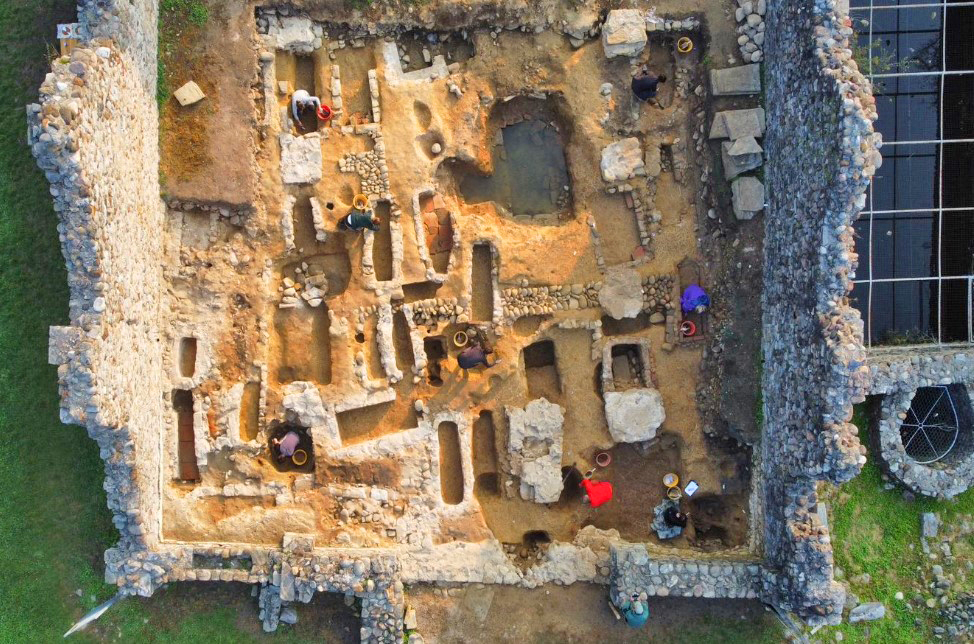
Excavations continue at the Archaeological Park of Castelseprio, the ancient fortified town in the province of Varese that was destroyed in 1287 during a war with Milan. The research, carried out by a team from the University of Padua led by Professor Alexandra Chavarria Arnau and composed of faculty members and students, is bringing to light new finds that add to those unearthed last summer — crucial for dating the origins of the settlement.

For several years, the Padua team has focused its investigations on the main place of worship of the ancient settlement: the Basilica of San Giovanni.

castelseprio excavations

Among the most significant discoveries is a Roman funerary inscription, reused in the Middle Ages to cover a burial and dedicated to a soldier who lived during the Imperial period. Similar finds had already been uncovered in the Park, and this new discovery will help scholars better understand the reasons for their presence in Castelseprio and the surrounding areas — a topic that has long been the subject of lively academic debate.

Archaeologists have also uncovered the remains of a 5th–6th century building with silos and traces of craft activities, predating the Lombard church. These structures provide valuable insights into the daily life of the people who inhabited the area at the dawn of the Middle Ages.

Particularly striking is the discovery of an Iron Age burial: a large pit containing an urn, fragments of pottery, and pieces of molten metal, dating back to the 6th century BC. This find confirms the ancient origins of human settlement in the area.

Together, these discoveries make it possible to reconstruct with greater precision the earliest phases of life at the site, where prehistoric, Roman, and early medieval memories intertwine in a fascinating and continuous narrative.

[summary] => [format] => 2 [safe_value] =>

Excavations continue at the Archaeological Park of Castelseprio, the ancient fortified town in the province of Varese that was destroyed in 1287 during a war with Milan. The research, carried out by a team from the University of Padua led by Professor Alexandra Chavarria Arnau and composed of faculty members and students, is bringing to light new finds that add to those unearthed last summer — crucial for dating the origins of the settlement.

For several years, the Padua team has focused its investigations on the main place of worship of the ancient settlement: the Basilica of San Giovanni.

castelseprio excavations

Among the most significant discoveries is a Roman funerary inscription, reused in the Middle Ages to cover a burial and dedicated to a soldier who lived during the Imperial period. Similar finds had already been uncovered in the Park, and this new discovery will help scholars better understand the reasons for their presence in Castelseprio and the surrounding areas — a topic that has long been the subject of lively academic debate.

Archaeologists have also uncovered the remains of a 5th–6th century building with silos and traces of craft activities, predating the Lombard church. These structures provide valuable insights into the daily life of the people who inhabited the area at the dawn of the Middle Ages.

Particularly striking is the discovery of an Iron Age burial: a large pit containing an urn, fragments of pottery, and pieces of molten metal, dating back to the 6th century BC. This find confirms the ancient origins of human settlement in the area.

Together, these discoveries make it possible to reconstruct with greater precision the earliest phases of life at the site, where prehistoric, Roman, and early medieval memories intertwine in a fascinating and continuous narrative.

[safe_summary] => ) ) ) [field_date_box_lancio_news] => Array ( [und] => Array ( [0] => Array ( [value] => 2025-10-21T00:00:00 [timezone] => Europe/Paris [timezone_db] => Europe/Paris [date_type] => date ) ) ) [field_etichetta_box_lancio_news] => Array ( ) [field_img_box_lancio_news] => Array ( [und] => Array ( [0] => Array ( [fid] => 143537 [uid] => 2032 [filename] => 01 2.jpg [uri] => public://01 2_0.jpg [filemime] => image/jpeg [filesize] => 165742 [status] => 1 [timestamp] => 1761041268 [type] => image [field_file_image_alt_text] => Array ( ) [field_file_image_title_text] => Array ( ) [field_folder] => Array ( [und] => Array ( [0] => Array ( [tid] => 2048 ) ) ) [metadata] => Array ( [height] => 383 [width] => 1182 ) [height] => 383 [width] => 1182 [alt] => excavations [title] => ) ) ) [field_link_alla_news] => Array ( ) [field_link_esterno_news] => Array ( ) [field_pagina_associata] => Array ( ) [field_link_etichetta] => Array ( ) [field_abstract_news] => Array ( [und] => Array ( [0] => Array ( [value] => Excavations continue at the Archaeological Park of Castelseprio, the ancient fortified town in the province of Varese that was destroyed in 1287 during a war with Milan. The research, carried out by a team from the University of Paduais bringing to light new finds that add to those unearthed last summer — crucial for dating the origins of the settlement [format] => [safe_value] => Excavations continue at the Archaeological Park of Castelseprio, the ancient fortified town in the province of Varese that was destroyed in 1287 during a war with Milan. The research, carried out by a team from the University of Paduais bringing to light new finds that add to those unearthed last summer — crucial for dating the origins of the settlement ) ) ) [field_allegato_news] => Array ( ) [field_categorie_news] => Array ( [und] => Array ( [0] => Array ( [tid] => 2296 ) ) ) [field_pub_date] => Array ( [und] => Array ( [0] => Array ( [value] => 2025-10-21T00:00:00 [value2] => 2026-10-21T00:00:00 [timezone] => Europe/Paris [timezone_db] => Europe/Paris [date_type] => date ) ) ) [field_layout_news] => Array ( [und] => Array ( [0] => Array ( [value] => single ) ) ) [field_testo_opzionale_news] => Array ( ) [field_url_en_page] => Array ( [und] => Array ( [0] => Array ( [value] => /news/nuove-scoperte-scavi-castelseprio [format] => [safe_value] => /news/nuove-scoperte-scavi-castelseprio ) ) ) [field_url_en_page_label] => Array ( [und] => Array ( [0] => Array ( [value] => Italian version [format] => [safe_value] => Italian version ) ) ) [path] => Array ( [pathauto] => 1 ) [name] => francesca.forzan [picture] => 0 [data] => b:0; [num_revisions] => 2 [current_revision_id] => 504939 [is_current] => 1 [is_pending] => [revision_moderation] => [entity_view_prepared] => 1 ) [#items] => Array ( [0] => Array ( [value] =>

Excavations continue at the Archaeological Park of Castelseprio, the ancient fortified town in the province of Varese that was destroyed in 1287 during a war with Milan. The research, carried out by a team from the University of Padua led by Professor Alexandra Chavarria Arnau and composed of faculty members and students, is bringing to light new finds that add to those unearthed last summer — crucial for dating the origins of the settlement.

For several years, the Padua team has focused its investigations on the main place of worship of the ancient settlement: the Basilica of San Giovanni.

castelseprio excavations

Among the most significant discoveries is a Roman funerary inscription, reused in the Middle Ages to cover a burial and dedicated to a soldier who lived during the Imperial period. Similar finds had already been uncovered in the Park, and this new discovery will help scholars better understand the reasons for their presence in Castelseprio and the surrounding areas — a topic that has long been the subject of lively academic debate.

Archaeologists have also uncovered the remains of a 5th–6th century building with silos and traces of craft activities, predating the Lombard church. These structures provide valuable insights into the daily life of the people who inhabited the area at the dawn of the Middle Ages.

Particularly striking is the discovery of an Iron Age burial: a large pit containing an urn, fragments of pottery, and pieces of molten metal, dating back to the 6th century BC. This find confirms the ancient origins of human settlement in the area.

Together, these discoveries make it possible to reconstruct with greater precision the earliest phases of life at the site, where prehistoric, Roman, and early medieval memories intertwine in a fascinating and continuous narrative.

[summary] => [format] => 2 [safe_value] =>

Excavations continue at the Archaeological Park of Castelseprio, the ancient fortified town in the province of Varese that was destroyed in 1287 during a war with Milan. The research, carried out by a team from the University of Padua led by Professor Alexandra Chavarria Arnau and composed of faculty members and students, is bringing to light new finds that add to those unearthed last summer — crucial for dating the origins of the settlement.

For several years, the Padua team has focused its investigations on the main place of worship of the ancient settlement: the Basilica of San Giovanni.

castelseprio excavations

Among the most significant discoveries is a Roman funerary inscription, reused in the Middle Ages to cover a burial and dedicated to a soldier who lived during the Imperial period. Similar finds had already been uncovered in the Park, and this new discovery will help scholars better understand the reasons for their presence in Castelseprio and the surrounding areas — a topic that has long been the subject of lively academic debate.

Archaeologists have also uncovered the remains of a 5th–6th century building with silos and traces of craft activities, predating the Lombard church. These structures provide valuable insights into the daily life of the people who inhabited the area at the dawn of the Middle Ages.

Particularly striking is the discovery of an Iron Age burial: a large pit containing an urn, fragments of pottery, and pieces of molten metal, dating back to the 6th century BC. This find confirms the ancient origins of human settlement in the area.

Together, these discoveries make it possible to reconstruct with greater precision the earliest phases of life at the site, where prehistoric, Roman, and early medieval memories intertwine in a fascinating and continuous narrative.

[safe_summary] => ) ) [#formatter] => text_summary_or_trimmed [0] => Array ( [#markup] =>

Excavations continue at the Archaeological Park of Castelseprio, the ancient fortified town in the province of Varese that was destroyed in 1287 during a war with Milan.

) ) [field_img_box_lancio_news] => Array ( [#theme] => field [#weight] => 0 [#title] => Immagine [#access] => 1 [#label_display] => above [#view_mode] => teaser [#language] => und [#field_name] => field_img_box_lancio_news [#field_type] => image [#field_translatable] => 0 [#entity_type] => node [#bundle] => box_lancio_news [#object] => stdClass Object ( [vid] => 504939 [uid] => 2032 [title] => New discoveries from the excavations at Castelseprio [log] => [status] => 1 [comment] => 0 [promote] => 1 [sticky] => 0 [nid] => 121667 [type] => box_lancio_news [language] => it [created] => 1761041268 [changed] => 1761041288 [tnid] => 0 [translate] => 0 [revision_timestamp] => 1761041288 [revision_uid] => 2032 [body] => Array ( [und] => Array ( [0] => Array ( [value] =>

Excavations continue at the Archaeological Park of Castelseprio, the ancient fortified town in the province of Varese that was destroyed in 1287 during a war with Milan. The research, carried out by a team from the University of Padua led by Professor Alexandra Chavarria Arnau and composed of faculty members and students, is bringing to light new finds that add to those unearthed last summer — crucial for dating the origins of the settlement.

For several years, the Padua team has focused its investigations on the main place of worship of the ancient settlement: the Basilica of San Giovanni.

castelseprio excavations

Among the most significant discoveries is a Roman funerary inscription, reused in the Middle Ages to cover a burial and dedicated to a soldier who lived during the Imperial period. Similar finds had already been uncovered in the Park, and this new discovery will help scholars better understand the reasons for their presence in Castelseprio and the surrounding areas — a topic that has long been the subject of lively academic debate.

Archaeologists have also uncovered the remains of a 5th–6th century building with silos and traces of craft activities, predating the Lombard church. These structures provide valuable insights into the daily life of the people who inhabited the area at the dawn of the Middle Ages.

Particularly striking is the discovery of an Iron Age burial: a large pit containing an urn, fragments of pottery, and pieces of molten metal, dating back to the 6th century BC. This find confirms the ancient origins of human settlement in the area.

Together, these discoveries make it possible to reconstruct with greater precision the earliest phases of life at the site, where prehistoric, Roman, and early medieval memories intertwine in a fascinating and continuous narrative.

[summary] => [format] => 2 [safe_value] =>

Excavations continue at the Archaeological Park of Castelseprio, the ancient fortified town in the province of Varese that was destroyed in 1287 during a war with Milan. The research, carried out by a team from the University of Padua led by Professor Alexandra Chavarria Arnau and composed of faculty members and students, is bringing to light new finds that add to those unearthed last summer — crucial for dating the origins of the settlement.

For several years, the Padua team has focused its investigations on the main place of worship of the ancient settlement: the Basilica of San Giovanni.

castelseprio excavations

Among the most significant discoveries is a Roman funerary inscription, reused in the Middle Ages to cover a burial and dedicated to a soldier who lived during the Imperial period. Similar finds had already been uncovered in the Park, and this new discovery will help scholars better understand the reasons for their presence in Castelseprio and the surrounding areas — a topic that has long been the subject of lively academic debate.

Archaeologists have also uncovered the remains of a 5th–6th century building with silos and traces of craft activities, predating the Lombard church. These structures provide valuable insights into the daily life of the people who inhabited the area at the dawn of the Middle Ages.

Particularly striking is the discovery of an Iron Age burial: a large pit containing an urn, fragments of pottery, and pieces of molten metal, dating back to the 6th century BC. This find confirms the ancient origins of human settlement in the area.

Together, these discoveries make it possible to reconstruct with greater precision the earliest phases of life at the site, where prehistoric, Roman, and early medieval memories intertwine in a fascinating and continuous narrative.

[safe_summary] => ) ) ) [field_date_box_lancio_news] => Array ( [und] => Array ( [0] => Array ( [value] => 2025-10-21T00:00:00 [timezone] => Europe/Paris [timezone_db] => Europe/Paris [date_type] => date ) ) ) [field_etichetta_box_lancio_news] => Array ( ) [field_img_box_lancio_news] => Array ( [und] => Array ( [0] => Array ( [fid] => 143537 [uid] => 2032 [filename] => 01 2.jpg [uri] => public://01 2_0.jpg [filemime] => image/jpeg [filesize] => 165742 [status] => 1 [timestamp] => 1761041268 [type] => image [field_file_image_alt_text] => Array ( ) [field_file_image_title_text] => Array ( ) [field_folder] => Array ( [und] => Array ( [0] => Array ( [tid] => 2048 ) ) ) [metadata] => Array ( [height] => 383 [width] => 1182 ) [height] => 383 [width] => 1182 [alt] => excavations [title] => ) ) ) [field_link_alla_news] => Array ( ) [field_link_esterno_news] => Array ( ) [field_pagina_associata] => Array ( ) [field_link_etichetta] => Array ( ) [field_abstract_news] => Array ( [und] => Array ( [0] => Array ( [value] => Excavations continue at the Archaeological Park of Castelseprio, the ancient fortified town in the province of Varese that was destroyed in 1287 during a war with Milan. The research, carried out by a team from the University of Paduais bringing to light new finds that add to those unearthed last summer — crucial for dating the origins of the settlement [format] => [safe_value] => Excavations continue at the Archaeological Park of Castelseprio, the ancient fortified town in the province of Varese that was destroyed in 1287 during a war with Milan. The research, carried out by a team from the University of Paduais bringing to light new finds that add to those unearthed last summer — crucial for dating the origins of the settlement ) ) ) [field_allegato_news] => Array ( ) [field_categorie_news] => Array ( [und] => Array ( [0] => Array ( [tid] => 2296 ) ) ) [field_pub_date] => Array ( [und] => Array ( [0] => Array ( [value] => 2025-10-21T00:00:00 [value2] => 2026-10-21T00:00:00 [timezone] => Europe/Paris [timezone_db] => Europe/Paris [date_type] => date ) ) ) [field_layout_news] => Array ( [und] => Array ( [0] => Array ( [value] => single ) ) ) [field_testo_opzionale_news] => Array ( ) [field_url_en_page] => Array ( [und] => Array ( [0] => Array ( [value] => /news/nuove-scoperte-scavi-castelseprio [format] => [safe_value] => /news/nuove-scoperte-scavi-castelseprio ) ) ) [field_url_en_page_label] => Array ( [und] => Array ( [0] => Array ( [value] => Italian version [format] => [safe_value] => Italian version ) ) ) [path] => Array ( [pathauto] => 1 ) [name] => francesca.forzan [picture] => 0 [data] => b:0; [num_revisions] => 2 [current_revision_id] => 504939 [is_current] => 1 [is_pending] => [revision_moderation] => [entity_view_prepared] => 1 ) [#items] => Array ( [0] => Array ( [fid] => 143537 [uid] => 2032 [filename] => 01 2.jpg [uri] => public://01 2_0.jpg [filemime] => image/jpeg [filesize] => 165742 [status] => 1 [timestamp] => 1761041268 [type] => image [field_file_image_alt_text] => Array ( ) [field_file_image_title_text] => Array ( ) [field_folder] => Array ( [und] => Array ( [0] => Array ( [tid] => 2048 ) ) ) [metadata] => Array ( [height] => 383 [width] => 1182 ) [height] => 383 [width] => 1182 [alt] => excavations [title] => ) ) [#formatter] => image [0] => Array ( [#theme] => image_formatter [#item] => Array ( [fid] => 143537 [uid] => 2032 [filename] => 01 2.jpg [uri] => public://01 2_0.jpg [filemime] => image/jpeg [filesize] => 165742 [status] => 1 [timestamp] => 1761041268 [type] => image [field_file_image_alt_text] => Array ( ) [field_file_image_title_text] => Array ( ) [field_folder] => Array ( [und] => Array ( [0] => Array ( [tid] => 2048 ) ) ) [metadata] => Array ( [height] => 383 [width] => 1182 ) [height] => 383 [width] => 1182 [alt] => excavations [title] => ) [#image_style] => [#path] => ) ) [field_abstract_news] => Array ( [#theme] => field [#weight] => 0 [#title] => Abstract [#access] => 1 [#label_display] => above [#view_mode] => teaser [#language] => und [#field_name] => field_abstract_news [#field_type] => text_long [#field_translatable] => 0 [#entity_type] => node [#bundle] => box_lancio_news [#object] => stdClass Object ( [vid] => 504939 [uid] => 2032 [title] => New discoveries from the excavations at Castelseprio [log] => [status] => 1 [comment] => 0 [promote] => 1 [sticky] => 0 [nid] => 121667 [type] => box_lancio_news [language] => it [created] => 1761041268 [changed] => 1761041288 [tnid] => 0 [translate] => 0 [revision_timestamp] => 1761041288 [revision_uid] => 2032 [body] => Array ( [und] => Array ( [0] => Array ( [value] =>

Excavations continue at the Archaeological Park of Castelseprio, the ancient fortified town in the province of Varese that was destroyed in 1287 during a war with Milan. The research, carried out by a team from the University of Padua led by Professor Alexandra Chavarria Arnau and composed of faculty members and students, is bringing to light new finds that add to those unearthed last summer — crucial for dating the origins of the settlement.

For several years, the Padua team has focused its investigations on the main place of worship of the ancient settlement: the Basilica of San Giovanni.

castelseprio excavations

Among the most significant discoveries is a Roman funerary inscription, reused in the Middle Ages to cover a burial and dedicated to a soldier who lived during the Imperial period. Similar finds had already been uncovered in the Park, and this new discovery will help scholars better understand the reasons for their presence in Castelseprio and the surrounding areas — a topic that has long been the subject of lively academic debate.

Archaeologists have also uncovered the remains of a 5th–6th century building with silos and traces of craft activities, predating the Lombard church. These structures provide valuable insights into the daily life of the people who inhabited the area at the dawn of the Middle Ages.

Particularly striking is the discovery of an Iron Age burial: a large pit containing an urn, fragments of pottery, and pieces of molten metal, dating back to the 6th century BC. This find confirms the ancient origins of human settlement in the area.

Together, these discoveries make it possible to reconstruct with greater precision the earliest phases of life at the site, where prehistoric, Roman, and early medieval memories intertwine in a fascinating and continuous narrative.

[summary] => [format] => 2 [safe_value] =>

Excavations continue at the Archaeological Park of Castelseprio, the ancient fortified town in the province of Varese that was destroyed in 1287 during a war with Milan. The research, carried out by a team from the University of Padua led by Professor Alexandra Chavarria Arnau and composed of faculty members and students, is bringing to light new finds that add to those unearthed last summer — crucial for dating the origins of the settlement.

For several years, the Padua team has focused its investigations on the main place of worship of the ancient settlement: the Basilica of San Giovanni.

castelseprio excavations

Among the most significant discoveries is a Roman funerary inscription, reused in the Middle Ages to cover a burial and dedicated to a soldier who lived during the Imperial period. Similar finds had already been uncovered in the Park, and this new discovery will help scholars better understand the reasons for their presence in Castelseprio and the surrounding areas — a topic that has long been the subject of lively academic debate.

Archaeologists have also uncovered the remains of a 5th–6th century building with silos and traces of craft activities, predating the Lombard church. These structures provide valuable insights into the daily life of the people who inhabited the area at the dawn of the Middle Ages.

Particularly striking is the discovery of an Iron Age burial: a large pit containing an urn, fragments of pottery, and pieces of molten metal, dating back to the 6th century BC. This find confirms the ancient origins of human settlement in the area.

Together, these discoveries make it possible to reconstruct with greater precision the earliest phases of life at the site, where prehistoric, Roman, and early medieval memories intertwine in a fascinating and continuous narrative.

[safe_summary] => ) ) ) [field_date_box_lancio_news] => Array ( [und] => Array ( [0] => Array ( [value] => 2025-10-21T00:00:00 [timezone] => Europe/Paris [timezone_db] => Europe/Paris [date_type] => date ) ) ) [field_etichetta_box_lancio_news] => Array ( ) [field_img_box_lancio_news] => Array ( [und] => Array ( [0] => Array ( [fid] => 143537 [uid] => 2032 [filename] => 01 2.jpg [uri] => public://01 2_0.jpg [filemime] => image/jpeg [filesize] => 165742 [status] => 1 [timestamp] => 1761041268 [type] => image [field_file_image_alt_text] => Array ( ) [field_file_image_title_text] => Array ( ) [field_folder] => Array ( [und] => Array ( [0] => Array ( [tid] => 2048 ) ) ) [metadata] => Array ( [height] => 383 [width] => 1182 ) [height] => 383 [width] => 1182 [alt] => excavations [title] => ) ) ) [field_link_alla_news] => Array ( ) [field_link_esterno_news] => Array ( ) [field_pagina_associata] => Array ( ) [field_link_etichetta] => Array ( ) [field_abstract_news] => Array ( [und] => Array ( [0] => Array ( [value] => Excavations continue at the Archaeological Park of Castelseprio, the ancient fortified town in the province of Varese that was destroyed in 1287 during a war with Milan. The research, carried out by a team from the University of Paduais bringing to light new finds that add to those unearthed last summer — crucial for dating the origins of the settlement [format] => [safe_value] => Excavations continue at the Archaeological Park of Castelseprio, the ancient fortified town in the province of Varese that was destroyed in 1287 during a war with Milan. The research, carried out by a team from the University of Paduais bringing to light new finds that add to those unearthed last summer — crucial for dating the origins of the settlement ) ) ) [field_allegato_news] => Array ( ) [field_categorie_news] => Array ( [und] => Array ( [0] => Array ( [tid] => 2296 ) ) ) [field_pub_date] => Array ( [und] => Array ( [0] => Array ( [value] => 2025-10-21T00:00:00 [value2] => 2026-10-21T00:00:00 [timezone] => Europe/Paris [timezone_db] => Europe/Paris [date_type] => date ) ) ) [field_layout_news] => Array ( [und] => Array ( [0] => Array ( [value] => single ) ) ) [field_testo_opzionale_news] => Array ( ) [field_url_en_page] => Array ( [und] => Array ( [0] => Array ( [value] => /news/nuove-scoperte-scavi-castelseprio [format] => [safe_value] => /news/nuove-scoperte-scavi-castelseprio ) ) ) [field_url_en_page_label] => Array ( [und] => Array ( [0] => Array ( [value] => Italian version [format] => [safe_value] => Italian version ) ) ) [path] => Array ( [pathauto] => 1 ) [name] => francesca.forzan [picture] => 0 [data] => b:0; [num_revisions] => 2 [current_revision_id] => 504939 [is_current] => 1 [is_pending] => [revision_moderation] => [entity_view_prepared] => 1 ) [#items] => Array ( [0] => Array ( [value] => Excavations continue at the Archaeological Park of Castelseprio, the ancient fortified town in the province of Varese that was destroyed in 1287 during a war with Milan. The research, carried out by a team from the University of Paduais bringing to light new finds that add to those unearthed last summer — crucial for dating the origins of the settlement [format] => [safe_value] => Excavations continue at the Archaeological Park of Castelseprio, the ancient fortified town in the province of Varese that was destroyed in 1287 during a war with Milan. The research, carried out by a team from the University of Paduais bringing to light new finds that add to those unearthed last summer — crucial for dating the origins of the settlement ) ) [#formatter] => text_default [0] => Array ( [#markup] => Excavations continue at the Archaeological Park of Castelseprio, the ancient fortified town in the province of Varese that was destroyed in 1287 during a war with Milan. The research, carried out by a team from the University of Paduais bringing to light new finds that add to those unearthed last summer — crucial for dating the origins of the settlement ) ) [links] => Array ( [#theme] => links__node [#pre_render] => Array ( [0] => drupal_pre_render_links ) [#attributes] => Array ( [class] => Array ( [0] => links [1] => inline ) ) [node] => Array ( [#theme] => links__node__node [#links] => Array ( [node-readmore] => Array ( [title] => Read more about New discoveries from the excavations at Castelseprio [href] => node/121667 [html] => 1 [attributes] => Array ( [rel] => tag [title] => New discoveries from the excavations at Castelseprio ) ) ) [#attributes] => Array ( [class] => Array ( [0] => links [1] => inline ) ) ) ) [field_date_box_lancio_news] => Array ( [#theme] => field [#weight] => 1 [#title] => Data [#access] => 1 [#label_display] => above [#view_mode] => teaser [#language] => und [#field_name] => field_date_box_lancio_news [#field_type] => date [#field_translatable] => 0 [#entity_type] => node [#bundle] => box_lancio_news [#object] => stdClass Object ( [vid] => 504939 [uid] => 2032 [title] => New discoveries from the excavations at Castelseprio [log] => [status] => 1 [comment] => 0 [promote] => 1 [sticky] => 0 [nid] => 121667 [type] => box_lancio_news [language] => it [created] => 1761041268 [changed] => 1761041288 [tnid] => 0 [translate] => 0 [revision_timestamp] => 1761041288 [revision_uid] => 2032 [body] => Array ( [und] => Array ( [0] => Array ( [value] =>

Excavations continue at the Archaeological Park of Castelseprio, the ancient fortified town in the province of Varese that was destroyed in 1287 during a war with Milan. The research, carried out by a team from the University of Padua led by Professor Alexandra Chavarria Arnau and composed of faculty members and students, is bringing to light new finds that add to those unearthed last summer — crucial for dating the origins of the settlement.

For several years, the Padua team has focused its investigations on the main place of worship of the ancient settlement: the Basilica of San Giovanni.

castelseprio excavations

Among the most significant discoveries is a Roman funerary inscription, reused in the Middle Ages to cover a burial and dedicated to a soldier who lived during the Imperial period. Similar finds had already been uncovered in the Park, and this new discovery will help scholars better understand the reasons for their presence in Castelseprio and the surrounding areas — a topic that has long been the subject of lively academic debate.

Archaeologists have also uncovered the remains of a 5th–6th century building with silos and traces of craft activities, predating the Lombard church. These structures provide valuable insights into the daily life of the people who inhabited the area at the dawn of the Middle Ages.

Particularly striking is the discovery of an Iron Age burial: a large pit containing an urn, fragments of pottery, and pieces of molten metal, dating back to the 6th century BC. This find confirms the ancient origins of human settlement in the area.

Together, these discoveries make it possible to reconstruct with greater precision the earliest phases of life at the site, where prehistoric, Roman, and early medieval memories intertwine in a fascinating and continuous narrative.

[summary] => [format] => 2 [safe_value] =>

Excavations continue at the Archaeological Park of Castelseprio, the ancient fortified town in the province of Varese that was destroyed in 1287 during a war with Milan. The research, carried out by a team from the University of Padua led by Professor Alexandra Chavarria Arnau and composed of faculty members and students, is bringing to light new finds that add to those unearthed last summer — crucial for dating the origins of the settlement.

For several years, the Padua team has focused its investigations on the main place of worship of the ancient settlement: the Basilica of San Giovanni.

castelseprio excavations

Among the most significant discoveries is a Roman funerary inscription, reused in the Middle Ages to cover a burial and dedicated to a soldier who lived during the Imperial period. Similar finds had already been uncovered in the Park, and this new discovery will help scholars better understand the reasons for their presence in Castelseprio and the surrounding areas — a topic that has long been the subject of lively academic debate.

Archaeologists have also uncovered the remains of a 5th–6th century building with silos and traces of craft activities, predating the Lombard church. These structures provide valuable insights into the daily life of the people who inhabited the area at the dawn of the Middle Ages.

Particularly striking is the discovery of an Iron Age burial: a large pit containing an urn, fragments of pottery, and pieces of molten metal, dating back to the 6th century BC. This find confirms the ancient origins of human settlement in the area.

Together, these discoveries make it possible to reconstruct with greater precision the earliest phases of life at the site, where prehistoric, Roman, and early medieval memories intertwine in a fascinating and continuous narrative.

[safe_summary] => ) ) ) [field_date_box_lancio_news] => Array ( [und] => Array ( [0] => Array ( [value] => 2025-10-21T00:00:00 [timezone] => Europe/Paris [timezone_db] => Europe/Paris [date_type] => date ) ) ) [field_etichetta_box_lancio_news] => Array ( ) [field_img_box_lancio_news] => Array ( [und] => Array ( [0] => Array ( [fid] => 143537 [uid] => 2032 [filename] => 01 2.jpg [uri] => public://01 2_0.jpg [filemime] => image/jpeg [filesize] => 165742 [status] => 1 [timestamp] => 1761041268 [type] => image [field_file_image_alt_text] => Array ( ) [field_file_image_title_text] => Array ( ) [field_folder] => Array ( [und] => Array ( [0] => Array ( [tid] => 2048 ) ) ) [metadata] => Array ( [height] => 383 [width] => 1182 ) [height] => 383 [width] => 1182 [alt] => excavations [title] => ) ) ) [field_link_alla_news] => Array ( ) [field_link_esterno_news] => Array ( ) [field_pagina_associata] => Array ( ) [field_link_etichetta] => Array ( ) [field_abstract_news] => Array ( [und] => Array ( [0] => Array ( [value] => Excavations continue at the Archaeological Park of Castelseprio, the ancient fortified town in the province of Varese that was destroyed in 1287 during a war with Milan. The research, carried out by a team from the University of Paduais bringing to light new finds that add to those unearthed last summer — crucial for dating the origins of the settlement [format] => [safe_value] => Excavations continue at the Archaeological Park of Castelseprio, the ancient fortified town in the province of Varese that was destroyed in 1287 during a war with Milan. The research, carried out by a team from the University of Paduais bringing to light new finds that add to those unearthed last summer — crucial for dating the origins of the settlement ) ) ) [field_allegato_news] => Array ( ) [field_categorie_news] => Array ( [und] => Array ( [0] => Array ( [tid] => 2296 ) ) ) [field_pub_date] => Array ( [und] => Array ( [0] => Array ( [value] => 2025-10-21T00:00:00 [value2] => 2026-10-21T00:00:00 [timezone] => Europe/Paris [timezone_db] => Europe/Paris [date_type] => date ) ) ) [field_layout_news] => Array ( [und] => Array ( [0] => Array ( [value] => single ) ) ) [field_testo_opzionale_news] => Array ( ) [field_url_en_page] => Array ( [und] => Array ( [0] => Array ( [value] => /news/nuove-scoperte-scavi-castelseprio [format] => [safe_value] => /news/nuove-scoperte-scavi-castelseprio ) ) ) [field_url_en_page_label] => Array ( [und] => Array ( [0] => Array ( [value] => Italian version [format] => [safe_value] => Italian version ) ) ) [path] => Array ( [pathauto] => 1 ) [name] => francesca.forzan [picture] => 0 [data] => b:0; [num_revisions] => 2 [current_revision_id] => 504939 [is_current] => 1 [is_pending] => [revision_moderation] => [entity_view_prepared] => 1 ) [#items] => Array ( [0] => Array ( [value] => 2025-10-21T00:00:00 [timezone] => Europe/Paris [timezone_db] => Europe/Paris [date_type] => date ) ) [#formatter] => date_default [0] => Array ( [#markup] => Mar, 21/10/2025 ) ) )

2025S35 - Esito colloquio

Array ( [field_titolo_frontend_all] => Array ( [#theme] => field [#weight] => -4 [#title] => Titolo frontend [#access] => 1 [#label_display] => above [#view_mode] => teaser [#language] => und [#field_name] => field_titolo_frontend_all [#field_type] => text_long [#field_translatable] => 0 [#entity_type] => node [#bundle] => allegato [#object] => stdClass Object ( [vid] => 504935 [uid] => 29556 [title] => 2025S35 - Esito colloquio [log] => [status] => 1 [comment] => 0 [promote] => 1 [sticky] => 0 [nid] => 121666 [type] => allegato [language] => it [created] => 1761041166 [changed] => 1761041166 [tnid] => 0 [translate] => 0 [revision_timestamp] => 1761041166 [revision_uid] => 29556 [taxonomy_vocabulary_2] => Array ( ) [taxonomy_vocabulary_8] => Array ( ) [body] => Array ( ) [field_titolo_frontend_all] => Array ( [und] => Array ( [0] => Array ( [value] => Esito colloquio [format] => [safe_value] => Esito colloquio ) ) ) [field_allegato_file] => Array ( [und] => Array ( [0] => Array ( [fid] => 143538 [uid] => 29556 [filename] => 22 esito colloquio 2025S35 web.pdf [uri] => public://2025/22 esito colloquio 2025S35 web.pdf [filemime] => application/pdf [filesize] => 65850 [status] => 1 [timestamp] => 1761041160 [type] => document [field_folder] => Array ( [und] => Array ( [0] => Array ( [tid] => 2664 ) ) ) [metadata] => Array ( ) [display] => 1 [description] => ) ) ) [name] => jessica.russo [picture] => 0 [data] => b:0; [num_revisions] => 1 [current_revision_id] => 504935 [is_current] => 1 [is_pending] => [revision_moderation] => [entity_view_prepared] => 1 ) [#items] => Array ( [0] => Array ( [value] => Esito colloquio [format] => [safe_value] => Esito colloquio ) ) [#formatter] => text_default [0] => Array ( [#markup] => Esito colloquio ) ) [field_allegato_file] => Array ( [#theme] => field [#weight] => -3 [#title] => File [#access] => 1 [#label_display] => above [#view_mode] => teaser [#language] => und [#field_name] => field_allegato_file [#field_type] => file [#field_translatable] => 0 [#entity_type] => node [#bundle] => allegato [#object] => stdClass Object ( [vid] => 504935 [uid] => 29556 [title] => 2025S35 - Esito colloquio [log] => [status] => 1 [comment] => 0 [promote] => 1 [sticky] => 0 [nid] => 121666 [type] => allegato [language] => it [created] => 1761041166 [changed] => 1761041166 [tnid] => 0 [translate] => 0 [revision_timestamp] => 1761041166 [revision_uid] => 29556 [taxonomy_vocabulary_2] => Array ( ) [taxonomy_vocabulary_8] => Array ( ) [body] => Array ( ) [field_titolo_frontend_all] => Array ( [und] => Array ( [0] => Array ( [value] => Esito colloquio [format] => [safe_value] => Esito colloquio ) ) ) [field_allegato_file] => Array ( [und] => Array ( [0] => Array ( [fid] => 143538 [uid] => 29556 [filename] => 22 esito colloquio 2025S35 web.pdf [uri] => public://2025/22 esito colloquio 2025S35 web.pdf [filemime] => application/pdf [filesize] => 65850 [status] => 1 [timestamp] => 1761041160 [type] => document [field_folder] => Array ( [und] => Array ( [0] => Array ( [tid] => 2664 ) ) ) [metadata] => Array ( ) [display] => 1 [description] => ) ) ) [name] => jessica.russo [picture] => 0 [data] => b:0; [num_revisions] => 1 [current_revision_id] => 504935 [is_current] => 1 [is_pending] => [revision_moderation] => [entity_view_prepared] => 1 ) [#items] => Array ( [0] => Array ( [fid] => 143538 [uid] => 29556 [filename] => 22 esito colloquio 2025S35 web.pdf [uri] => public://2025/22 esito colloquio 2025S35 web.pdf [filemime] => application/pdf [filesize] => 65850 [status] => 1 [timestamp] => 1761041160 [type] => document [field_folder] => Array ( [und] => Array ( [0] => Array ( [tid] => 2664 ) ) ) [metadata] => Array ( ) [display] => 1 [description] => ) ) [#formatter] => file_default [0] => Array ( [#theme] => file_link [#file] => stdClass Object ( [fid] => 143538 [uid] => 29556 [filename] => 22 esito colloquio 2025S35 web.pdf [uri] => public://2025/22 esito colloquio 2025S35 web.pdf [filemime] => application/pdf [filesize] => 65850 [status] => 1 [timestamp] => 1761041160 [type] => document [field_folder] => Array ( [und] => Array ( [0] => Array ( [tid] => 2664 ) ) ) [metadata] => Array ( ) [display] => 1 [description] => ) ) ) [links] => Array ( [#theme] => links__node [#pre_render] => Array ( [0] => drupal_pre_render_links ) [#attributes] => Array ( [class] => Array ( [0] => links [1] => inline ) ) [node] => Array ( [#theme] => links__node__node [#links] => Array ( [node-readmore] => Array ( [title] => Read more about 2025S35 - Esito colloquio [href] => node/121666 [html] => 1 [attributes] => Array ( [rel] => tag [title] => 2025S35 - Esito colloquio ) ) ) [#attributes] => Array ( [class] => Array ( [0] => links [1] => inline ) ) ) ) )

Nuove scoperte negli scavi di Castelseprio

Array ( [body] => Array ( [#theme] => field [#weight] => 0 [#title] => Body [#access] => 1 [#label_display] => hidden [#view_mode] => teaser [#language] => und [#field_name] => body [#field_type] => text_with_summary [#field_translatable] => 0 [#entity_type] => node [#bundle] => box_lancio_news [#object] => stdClass Object ( [vid] => 504940 [uid] => 2032 [title] => Nuove scoperte negli scavi di Castelseprio [log] => [status] => 1 [comment] => 0 [promote] => 1 [sticky] => 0 [nid] => 121665 [type] => box_lancio_news [language] => it [created] => 1761040427 [changed] => 1761041304 [tnid] => 0 [translate] => 0 [revision_timestamp] => 1761041304 [revision_uid] => 2032 [body] => Array ( [und] => Array ( [0] => Array ( [value] =>

Proseguono gli scavi al Parco Archeologico di Castelseprio, l’antica città fortificata in provincia di Varese distrutta nel 1287 durante una guerra con Milano. Dalle ricerche, condotte dall’équipe dell’Università di Padova guidata dalla professoressa Alexandra Chavarria Arnau e composta da docenti, studentesse e studenti, stanno emergendo nuovi reperti che si aggiungono a quelli rinvenuti la scorsa estate, fondamentali per datare le origini dell’insediamento.

Da alcuni anni il gruppo padovano concentra le proprie indagini sul principale edificio di culto dell’antico abitato: la basilica di San Giovanni.

scavi Castelseprio

Tra le scoperte più rilevanti figura un’iscrizione funeraria romana, riutilizzata in epoca medievale per coprire una sepoltura e dedicata a un soldato vissuto durante l’Impero. Nel Parco erano già stati trovati reperti simili, e questo nuovo ritrovamento contribuirà a chiarire le ragioni della loro presenza a Castelseprio e nei territori vicini — un tema al centro di un vivace dibattito scientifico.

Gli archeologi hanno inoltre portato alla luce i resti di un edificio del V-VI secolo, con silos e tracce di attività artigianali, più antico della chiesa longobarda. Queste strutture offrono preziose informazioni sulla vita quotidiana degli abitanti del luogo agli albori del Medioevo.

Particolarmente sorprendente è stata la scoperta di una sepoltura dell’età del Ferro: una grande fossa con un’urna, frammenti di ceramica e pezzi di metallo fuso, databile al VI secolo a.C.. Un ritrovamento che conferma quanto antiche siano le radici degli insediamenti in quest’area.

Queste nuove scoperte permettono di ricostruire con maggiore precisione le fasi più antiche della vita del sito, dove memorie protostoriche, romane e altomedievali si intrecciano in un racconto affascinante e continuo.

[summary] => [format] => 2 [safe_value] =>

Proseguono gli scavi al Parco Archeologico di Castelseprio, l’antica città fortificata in provincia di Varese distrutta nel 1287 durante una guerra con Milano. Dalle ricerche, condotte dall’équipe dell’Università di Padova guidata dalla professoressa Alexandra Chavarria Arnau e composta da docenti, studentesse e studenti, stanno emergendo nuovi reperti che si aggiungono a quelli rinvenuti la scorsa estate, fondamentali per datare le origini dell’insediamento.

Da alcuni anni il gruppo padovano concentra le proprie indagini sul principale edificio di culto dell’antico abitato: la basilica di San Giovanni.

scavi Castelseprio

Tra le scoperte più rilevanti figura un’iscrizione funeraria romana, riutilizzata in epoca medievale per coprire una sepoltura e dedicata a un soldato vissuto durante l’Impero. Nel Parco erano già stati trovati reperti simili, e questo nuovo ritrovamento contribuirà a chiarire le ragioni della loro presenza a Castelseprio e nei territori vicini — un tema al centro di un vivace dibattito scientifico.

Gli archeologi hanno inoltre portato alla luce i resti di un edificio del V-VI secolo, con silos e tracce di attività artigianali, più antico della chiesa longobarda. Queste strutture offrono preziose informazioni sulla vita quotidiana degli abitanti del luogo agli albori del Medioevo.

Particolarmente sorprendente è stata la scoperta di una sepoltura dell’età del Ferro: una grande fossa con un’urna, frammenti di ceramica e pezzi di metallo fuso, databile al VI secolo a.C.. Un ritrovamento che conferma quanto antiche siano le radici degli insediamenti in quest’area.

Queste nuove scoperte permettono di ricostruire con maggiore precisione le fasi più antiche della vita del sito, dove memorie protostoriche, romane e altomedievali si intrecciano in un racconto affascinante e continuo.

[safe_summary] => ) ) ) [field_date_box_lancio_news] => Array ( [und] => Array ( [0] => Array ( [value] => 2025-10-21T00:00:00 [timezone] => Europe/Paris [timezone_db] => Europe/Paris [date_type] => date ) ) ) [field_etichetta_box_lancio_news] => Array ( ) [field_img_box_lancio_news] => Array ( [und] => Array ( [0] => Array ( [fid] => 143534 [uid] => 2032 [filename] => 01 2.jpg [uri] => public://01 2.jpg [filemime] => image/jpeg [filesize] => 165742 [status] => 1 [timestamp] => 1761040427 [type] => image [field_file_image_alt_text] => Array ( ) [field_file_image_title_text] => Array ( ) [field_folder] => Array ( [und] => Array ( [0] => Array ( [tid] => 2048 ) ) ) [metadata] => Array ( [height] => 383 [width] => 1182 ) [height] => 383 [width] => 1182 [alt] => scavi Parco Archeologico di Castelseprio [title] => ) ) ) [field_link_alla_news] => Array ( ) [field_link_esterno_news] => Array ( ) [field_pagina_associata] => Array ( ) [field_link_etichetta] => Array ( ) [field_abstract_news] => Array ( [und] => Array ( [0] => Array ( [value] => Proseguono gli scavi al Parco Archeologico di Castelseprio, l’antica città fortificata in provincia di Varese distrutta nel 1287 durante una guerra con Milano. dalle ricerche, condotte dall’équipe dell’Università di Padova stanno emergendo nuovi reperti fondamentali per datare le origini dell’insediamento [format] => [safe_value] => Proseguono gli scavi al Parco Archeologico di Castelseprio, l’antica città fortificata in provincia di Varese distrutta nel 1287 durante una guerra con Milano. dalle ricerche, condotte dall’équipe dell’Università di Padova stanno emergendo nuovi reperti fondamentali per datare le origini dell’insediamento ) ) ) [field_allegato_news] => Array ( ) [field_categorie_news] => Array ( [und] => Array ( [0] => Array ( [tid] => 2264 ) [1] => Array ( [tid] => 2266 ) [2] => Array ( [tid] => 2267 ) [3] => Array ( [tid] => 2462 ) ) ) [field_pub_date] => Array ( [und] => Array ( [0] => Array ( [value] => 2025-10-21T00:00:00 [value2] => 2026-10-21T00:00:00 [timezone] => Europe/Paris [timezone_db] => Europe/Paris [date_type] => date ) ) ) [field_layout_news] => Array ( [und] => Array ( [0] => Array ( [value] => single ) ) ) [field_testo_opzionale_news] => Array ( ) [field_url_en_page] => Array ( [und] => Array ( [0] => Array ( [value] => /news/new-discoveries-excavations-castelseprio [format] => [safe_value] => /news/new-discoveries-excavations-castelseprio ) ) ) [field_url_en_page_label] => Array ( [und] => Array ( [0] => Array ( [value] => English version [format] => [safe_value] => English version ) ) ) [path] => Array ( [pathauto] => 1 ) [name] => francesca.forzan [picture] => 0 [data] => b:0; [num_revisions] => 3 [current_revision_id] => 504940 [is_current] => 1 [is_pending] => [revision_moderation] => [entity_view_prepared] => 1 ) [#items] => Array ( [0] => Array ( [value] =>

Proseguono gli scavi al Parco Archeologico di Castelseprio, l’antica città fortificata in provincia di Varese distrutta nel 1287 durante una guerra con Milano. Dalle ricerche, condotte dall’équipe dell’Università di Padova guidata dalla professoressa Alexandra Chavarria Arnau e composta da docenti, studentesse e studenti, stanno emergendo nuovi reperti che si aggiungono a quelli rinvenuti la scorsa estate, fondamentali per datare le origini dell’insediamento.

Da alcuni anni il gruppo padovano concentra le proprie indagini sul principale edificio di culto dell’antico abitato: la basilica di San Giovanni.

scavi Castelseprio

Tra le scoperte più rilevanti figura un’iscrizione funeraria romana, riutilizzata in epoca medievale per coprire una sepoltura e dedicata a un soldato vissuto durante l’Impero. Nel Parco erano già stati trovati reperti simili, e questo nuovo ritrovamento contribuirà a chiarire le ragioni della loro presenza a Castelseprio e nei territori vicini — un tema al centro di un vivace dibattito scientifico.

Gli archeologi hanno inoltre portato alla luce i resti di un edificio del V-VI secolo, con silos e tracce di attività artigianali, più antico della chiesa longobarda. Queste strutture offrono preziose informazioni sulla vita quotidiana degli abitanti del luogo agli albori del Medioevo.

Particolarmente sorprendente è stata la scoperta di una sepoltura dell’età del Ferro: una grande fossa con un’urna, frammenti di ceramica e pezzi di metallo fuso, databile al VI secolo a.C.. Un ritrovamento che conferma quanto antiche siano le radici degli insediamenti in quest’area.

Queste nuove scoperte permettono di ricostruire con maggiore precisione le fasi più antiche della vita del sito, dove memorie protostoriche, romane e altomedievali si intrecciano in un racconto affascinante e continuo.

[summary] => [format] => 2 [safe_value] =>

Proseguono gli scavi al Parco Archeologico di Castelseprio, l’antica città fortificata in provincia di Varese distrutta nel 1287 durante una guerra con Milano. Dalle ricerche, condotte dall’équipe dell’Università di Padova guidata dalla professoressa Alexandra Chavarria Arnau e composta da docenti, studentesse e studenti, stanno emergendo nuovi reperti che si aggiungono a quelli rinvenuti la scorsa estate, fondamentali per datare le origini dell’insediamento.

Da alcuni anni il gruppo padovano concentra le proprie indagini sul principale edificio di culto dell’antico abitato: la basilica di San Giovanni.

scavi Castelseprio

Tra le scoperte più rilevanti figura un’iscrizione funeraria romana, riutilizzata in epoca medievale per coprire una sepoltura e dedicata a un soldato vissuto durante l’Impero. Nel Parco erano già stati trovati reperti simili, e questo nuovo ritrovamento contribuirà a chiarire le ragioni della loro presenza a Castelseprio e nei territori vicini — un tema al centro di un vivace dibattito scientifico.

Gli archeologi hanno inoltre portato alla luce i resti di un edificio del V-VI secolo, con silos e tracce di attività artigianali, più antico della chiesa longobarda. Queste strutture offrono preziose informazioni sulla vita quotidiana degli abitanti del luogo agli albori del Medioevo.

Particolarmente sorprendente è stata la scoperta di una sepoltura dell’età del Ferro: una grande fossa con un’urna, frammenti di ceramica e pezzi di metallo fuso, databile al VI secolo a.C.. Un ritrovamento che conferma quanto antiche siano le radici degli insediamenti in quest’area.

Queste nuove scoperte permettono di ricostruire con maggiore precisione le fasi più antiche della vita del sito, dove memorie protostoriche, romane e altomedievali si intrecciano in un racconto affascinante e continuo.

[safe_summary] => ) ) [#formatter] => text_summary_or_trimmed [0] => Array ( [#markup] =>

Proseguono gli scavi al Parco Archeologico di Castelseprio, l’antica città fortificata in provincia di Varese distrutta nel 1287 durante una guerra con Milano.

) ) [field_img_box_lancio_news] => Array ( [#theme] => field [#weight] => 0 [#title] => Immagine [#access] => 1 [#label_display] => above [#view_mode] => teaser [#language] => und [#field_name] => field_img_box_lancio_news [#field_type] => image [#field_translatable] => 0 [#entity_type] => node [#bundle] => box_lancio_news [#object] => stdClass Object ( [vid] => 504940 [uid] => 2032 [title] => Nuove scoperte negli scavi di Castelseprio [log] => [status] => 1 [comment] => 0 [promote] => 1 [sticky] => 0 [nid] => 121665 [type] => box_lancio_news [language] => it [created] => 1761040427 [changed] => 1761041304 [tnid] => 0 [translate] => 0 [revision_timestamp] => 1761041304 [revision_uid] => 2032 [body] => Array ( [und] => Array ( [0] => Array ( [value] =>

Proseguono gli scavi al Parco Archeologico di Castelseprio, l’antica città fortificata in provincia di Varese distrutta nel 1287 durante una guerra con Milano. Dalle ricerche, condotte dall’équipe dell’Università di Padova guidata dalla professoressa Alexandra Chavarria Arnau e composta da docenti, studentesse e studenti, stanno emergendo nuovi reperti che si aggiungono a quelli rinvenuti la scorsa estate, fondamentali per datare le origini dell’insediamento.

Da alcuni anni il gruppo padovano concentra le proprie indagini sul principale edificio di culto dell’antico abitato: la basilica di San Giovanni.

scavi Castelseprio

Tra le scoperte più rilevanti figura un’iscrizione funeraria romana, riutilizzata in epoca medievale per coprire una sepoltura e dedicata a un soldato vissuto durante l’Impero. Nel Parco erano già stati trovati reperti simili, e questo nuovo ritrovamento contribuirà a chiarire le ragioni della loro presenza a Castelseprio e nei territori vicini — un tema al centro di un vivace dibattito scientifico.

Gli archeologi hanno inoltre portato alla luce i resti di un edificio del V-VI secolo, con silos e tracce di attività artigianali, più antico della chiesa longobarda. Queste strutture offrono preziose informazioni sulla vita quotidiana degli abitanti del luogo agli albori del Medioevo.

Particolarmente sorprendente è stata la scoperta di una sepoltura dell’età del Ferro: una grande fossa con un’urna, frammenti di ceramica e pezzi di metallo fuso, databile al VI secolo a.C.. Un ritrovamento che conferma quanto antiche siano le radici degli insediamenti in quest’area.

Queste nuove scoperte permettono di ricostruire con maggiore precisione le fasi più antiche della vita del sito, dove memorie protostoriche, romane e altomedievali si intrecciano in un racconto affascinante e continuo.

[summary] => [format] => 2 [safe_value] =>

Proseguono gli scavi al Parco Archeologico di Castelseprio, l’antica città fortificata in provincia di Varese distrutta nel 1287 durante una guerra con Milano. Dalle ricerche, condotte dall’équipe dell’Università di Padova guidata dalla professoressa Alexandra Chavarria Arnau e composta da docenti, studentesse e studenti, stanno emergendo nuovi reperti che si aggiungono a quelli rinvenuti la scorsa estate, fondamentali per datare le origini dell’insediamento.

Da alcuni anni il gruppo padovano concentra le proprie indagini sul principale edificio di culto dell’antico abitato: la basilica di San Giovanni.

scavi Castelseprio

Tra le scoperte più rilevanti figura un’iscrizione funeraria romana, riutilizzata in epoca medievale per coprire una sepoltura e dedicata a un soldato vissuto durante l’Impero. Nel Parco erano già stati trovati reperti simili, e questo nuovo ritrovamento contribuirà a chiarire le ragioni della loro presenza a Castelseprio e nei territori vicini — un tema al centro di un vivace dibattito scientifico.

Gli archeologi hanno inoltre portato alla luce i resti di un edificio del V-VI secolo, con silos e tracce di attività artigianali, più antico della chiesa longobarda. Queste strutture offrono preziose informazioni sulla vita quotidiana degli abitanti del luogo agli albori del Medioevo.

Particolarmente sorprendente è stata la scoperta di una sepoltura dell’età del Ferro: una grande fossa con un’urna, frammenti di ceramica e pezzi di metallo fuso, databile al VI secolo a.C.. Un ritrovamento che conferma quanto antiche siano le radici degli insediamenti in quest’area.

Queste nuove scoperte permettono di ricostruire con maggiore precisione le fasi più antiche della vita del sito, dove memorie protostoriche, romane e altomedievali si intrecciano in un racconto affascinante e continuo.

[safe_summary] => ) ) ) [field_date_box_lancio_news] => Array ( [und] => Array ( [0] => Array ( [value] => 2025-10-21T00:00:00 [timezone] => Europe/Paris [timezone_db] => Europe/Paris [date_type] => date ) ) ) [field_etichetta_box_lancio_news] => Array ( ) [field_img_box_lancio_news] => Array ( [und] => Array ( [0] => Array ( [fid] => 143534 [uid] => 2032 [filename] => 01 2.jpg [uri] => public://01 2.jpg [filemime] => image/jpeg [filesize] => 165742 [status] => 1 [timestamp] => 1761040427 [type] => image [field_file_image_alt_text] => Array ( ) [field_file_image_title_text] => Array ( ) [field_folder] => Array ( [und] => Array ( [0] => Array ( [tid] => 2048 ) ) ) [metadata] => Array ( [height] => 383 [width] => 1182 ) [height] => 383 [width] => 1182 [alt] => scavi Parco Archeologico di Castelseprio [title] => ) ) ) [field_link_alla_news] => Array ( ) [field_link_esterno_news] => Array ( ) [field_pagina_associata] => Array ( ) [field_link_etichetta] => Array ( ) [field_abstract_news] => Array ( [und] => Array ( [0] => Array ( [value] => Proseguono gli scavi al Parco Archeologico di Castelseprio, l’antica città fortificata in provincia di Varese distrutta nel 1287 durante una guerra con Milano. dalle ricerche, condotte dall’équipe dell’Università di Padova stanno emergendo nuovi reperti fondamentali per datare le origini dell’insediamento [format] => [safe_value] => Proseguono gli scavi al Parco Archeologico di Castelseprio, l’antica città fortificata in provincia di Varese distrutta nel 1287 durante una guerra con Milano. dalle ricerche, condotte dall’équipe dell’Università di Padova stanno emergendo nuovi reperti fondamentali per datare le origini dell’insediamento ) ) ) [field_allegato_news] => Array ( ) [field_categorie_news] => Array ( [und] => Array ( [0] => Array ( [tid] => 2264 ) [1] => Array ( [tid] => 2266 ) [2] => Array ( [tid] => 2267 ) [3] => Array ( [tid] => 2462 ) ) ) [field_pub_date] => Array ( [und] => Array ( [0] => Array ( [value] => 2025-10-21T00:00:00 [value2] => 2026-10-21T00:00:00 [timezone] => Europe/Paris [timezone_db] => Europe/Paris [date_type] => date ) ) ) [field_layout_news] => Array ( [und] => Array ( [0] => Array ( [value] => single ) ) ) [field_testo_opzionale_news] => Array ( ) [field_url_en_page] => Array ( [und] => Array ( [0] => Array ( [value] => /news/new-discoveries-excavations-castelseprio [format] => [safe_value] => /news/new-discoveries-excavations-castelseprio ) ) ) [field_url_en_page_label] => Array ( [und] => Array ( [0] => Array ( [value] => English version [format] => [safe_value] => English version ) ) ) [path] => Array ( [pathauto] => 1 ) [name] => francesca.forzan [picture] => 0 [data] => b:0; [num_revisions] => 3 [current_revision_id] => 504940 [is_current] => 1 [is_pending] => [revision_moderation] => [entity_view_prepared] => 1 ) [#items] => Array ( [0] => Array ( [fid] => 143534 [uid] => 2032 [filename] => 01 2.jpg [uri] => public://01 2.jpg [filemime] => image/jpeg [filesize] => 165742 [status] => 1 [timestamp] => 1761040427 [type] => image [field_file_image_alt_text] => Array ( ) [field_file_image_title_text] => Array ( ) [field_folder] => Array ( [und] => Array ( [0] => Array ( [tid] => 2048 ) ) ) [metadata] => Array ( [height] => 383 [width] => 1182 ) [height] => 383 [width] => 1182 [alt] => scavi Parco Archeologico di Castelseprio [title] => ) ) [#formatter] => image [0] => Array ( [#theme] => image_formatter [#item] => Array ( [fid] => 143534 [uid] => 2032 [filename] => 01 2.jpg [uri] => public://01 2.jpg [filemime] => image/jpeg [filesize] => 165742 [status] => 1 [timestamp] => 1761040427 [type] => image [field_file_image_alt_text] => Array ( ) [field_file_image_title_text] => Array ( ) [field_folder] => Array ( [und] => Array ( [0] => Array ( [tid] => 2048 ) ) ) [metadata] => Array ( [height] => 383 [width] => 1182 ) [height] => 383 [width] => 1182 [alt] => scavi Parco Archeologico di Castelseprio [title] => ) [#image_style] => [#path] => ) ) [field_abstract_news] => Array ( [#theme] => field [#weight] => 0 [#title] => Abstract [#access] => 1 [#label_display] => above [#view_mode] => teaser [#language] => und [#field_name] => field_abstract_news [#field_type] => text_long [#field_translatable] => 0 [#entity_type] => node [#bundle] => box_lancio_news [#object] => stdClass Object ( [vid] => 504940 [uid] => 2032 [title] => Nuove scoperte negli scavi di Castelseprio [log] => [status] => 1 [comment] => 0 [promote] => 1 [sticky] => 0 [nid] => 121665 [type] => box_lancio_news [language] => it [created] => 1761040427 [changed] => 1761041304 [tnid] => 0 [translate] => 0 [revision_timestamp] => 1761041304 [revision_uid] => 2032 [body] => Array ( [und] => Array ( [0] => Array ( [value] =>

Proseguono gli scavi al Parco Archeologico di Castelseprio, l’antica città fortificata in provincia di Varese distrutta nel 1287 durante una guerra con Milano. Dalle ricerche, condotte dall’équipe dell’Università di Padova guidata dalla professoressa Alexandra Chavarria Arnau e composta da docenti, studentesse e studenti, stanno emergendo nuovi reperti che si aggiungono a quelli rinvenuti la scorsa estate, fondamentali per datare le origini dell’insediamento.

Da alcuni anni il gruppo padovano concentra le proprie indagini sul principale edificio di culto dell’antico abitato: la basilica di San Giovanni.

scavi Castelseprio

Tra le scoperte più rilevanti figura un’iscrizione funeraria romana, riutilizzata in epoca medievale per coprire una sepoltura e dedicata a un soldato vissuto durante l’Impero. Nel Parco erano già stati trovati reperti simili, e questo nuovo ritrovamento contribuirà a chiarire le ragioni della loro presenza a Castelseprio e nei territori vicini — un tema al centro di un vivace dibattito scientifico.

Gli archeologi hanno inoltre portato alla luce i resti di un edificio del V-VI secolo, con silos e tracce di attività artigianali, più antico della chiesa longobarda. Queste strutture offrono preziose informazioni sulla vita quotidiana degli abitanti del luogo agli albori del Medioevo.

Particolarmente sorprendente è stata la scoperta di una sepoltura dell’età del Ferro: una grande fossa con un’urna, frammenti di ceramica e pezzi di metallo fuso, databile al VI secolo a.C.. Un ritrovamento che conferma quanto antiche siano le radici degli insediamenti in quest’area.

Queste nuove scoperte permettono di ricostruire con maggiore precisione le fasi più antiche della vita del sito, dove memorie protostoriche, romane e altomedievali si intrecciano in un racconto affascinante e continuo.

[summary] => [format] => 2 [safe_value] =>

Proseguono gli scavi al Parco Archeologico di Castelseprio, l’antica città fortificata in provincia di Varese distrutta nel 1287 durante una guerra con Milano. Dalle ricerche, condotte dall’équipe dell’Università di Padova guidata dalla professoressa Alexandra Chavarria Arnau e composta da docenti, studentesse e studenti, stanno emergendo nuovi reperti che si aggiungono a quelli rinvenuti la scorsa estate, fondamentali per datare le origini dell’insediamento.

Da alcuni anni il gruppo padovano concentra le proprie indagini sul principale edificio di culto dell’antico abitato: la basilica di San Giovanni.

scavi Castelseprio

Tra le scoperte più rilevanti figura un’iscrizione funeraria romana, riutilizzata in epoca medievale per coprire una sepoltura e dedicata a un soldato vissuto durante l’Impero. Nel Parco erano già stati trovati reperti simili, e questo nuovo ritrovamento contribuirà a chiarire le ragioni della loro presenza a Castelseprio e nei territori vicini — un tema al centro di un vivace dibattito scientifico.

Gli archeologi hanno inoltre portato alla luce i resti di un edificio del V-VI secolo, con silos e tracce di attività artigianali, più antico della chiesa longobarda. Queste strutture offrono preziose informazioni sulla vita quotidiana degli abitanti del luogo agli albori del Medioevo.

Particolarmente sorprendente è stata la scoperta di una sepoltura dell’età del Ferro: una grande fossa con un’urna, frammenti di ceramica e pezzi di metallo fuso, databile al VI secolo a.C.. Un ritrovamento che conferma quanto antiche siano le radici degli insediamenti in quest’area.

Queste nuove scoperte permettono di ricostruire con maggiore precisione le fasi più antiche della vita del sito, dove memorie protostoriche, romane e altomedievali si intrecciano in un racconto affascinante e continuo.

[safe_summary] => ) ) ) [field_date_box_lancio_news] => Array ( [und] => Array ( [0] => Array ( [value] => 2025-10-21T00:00:00 [timezone] => Europe/Paris [timezone_db] => Europe/Paris [date_type] => date ) ) ) [field_etichetta_box_lancio_news] => Array ( ) [field_img_box_lancio_news] => Array ( [und] => Array ( [0] => Array ( [fid] => 143534 [uid] => 2032 [filename] => 01 2.jpg [uri] => public://01 2.jpg [filemime] => image/jpeg [filesize] => 165742 [status] => 1 [timestamp] => 1761040427 [type] => image [field_file_image_alt_text] => Array ( ) [field_file_image_title_text] => Array ( ) [field_folder] => Array ( [und] => Array ( [0] => Array ( [tid] => 2048 ) ) ) [metadata] => Array ( [height] => 383 [width] => 1182 ) [height] => 383 [width] => 1182 [alt] => scavi Parco Archeologico di Castelseprio [title] => ) ) ) [field_link_alla_news] => Array ( ) [field_link_esterno_news] => Array ( ) [field_pagina_associata] => Array ( ) [field_link_etichetta] => Array ( ) [field_abstract_news] => Array ( [und] => Array ( [0] => Array ( [value] => Proseguono gli scavi al Parco Archeologico di Castelseprio, l’antica città fortificata in provincia di Varese distrutta nel 1287 durante una guerra con Milano. dalle ricerche, condotte dall’équipe dell’Università di Padova stanno emergendo nuovi reperti fondamentali per datare le origini dell’insediamento [format] => [safe_value] => Proseguono gli scavi al Parco Archeologico di Castelseprio, l’antica città fortificata in provincia di Varese distrutta nel 1287 durante una guerra con Milano. dalle ricerche, condotte dall’équipe dell’Università di Padova stanno emergendo nuovi reperti fondamentali per datare le origini dell’insediamento ) ) ) [field_allegato_news] => Array ( ) [field_categorie_news] => Array ( [und] => Array ( [0] => Array ( [tid] => 2264 ) [1] => Array ( [tid] => 2266 ) [2] => Array ( [tid] => 2267 ) [3] => Array ( [tid] => 2462 ) ) ) [field_pub_date] => Array ( [und] => Array ( [0] => Array ( [value] => 2025-10-21T00:00:00 [value2] => 2026-10-21T00:00:00 [timezone] => Europe/Paris [timezone_db] => Europe/Paris [date_type] => date ) ) ) [field_layout_news] => Array ( [und] => Array ( [0] => Array ( [value] => single ) ) ) [field_testo_opzionale_news] => Array ( ) [field_url_en_page] => Array ( [und] => Array ( [0] => Array ( [value] => /news/new-discoveries-excavations-castelseprio [format] => [safe_value] => /news/new-discoveries-excavations-castelseprio ) ) ) [field_url_en_page_label] => Array ( [und] => Array ( [0] => Array ( [value] => English version [format] => [safe_value] => English version ) ) ) [path] => Array ( [pathauto] => 1 ) [name] => francesca.forzan [picture] => 0 [data] => b:0; [num_revisions] => 3 [current_revision_id] => 504940 [is_current] => 1 [is_pending] => [revision_moderation] => [entity_view_prepared] => 1 ) [#items] => Array ( [0] => Array ( [value] => Proseguono gli scavi al Parco Archeologico di Castelseprio, l’antica città fortificata in provincia di Varese distrutta nel 1287 durante una guerra con Milano. dalle ricerche, condotte dall’équipe dell’Università di Padova stanno emergendo nuovi reperti fondamentali per datare le origini dell’insediamento [format] => [safe_value] => Proseguono gli scavi al Parco Archeologico di Castelseprio, l’antica città fortificata in provincia di Varese distrutta nel 1287 durante una guerra con Milano. dalle ricerche, condotte dall’équipe dell’Università di Padova stanno emergendo nuovi reperti fondamentali per datare le origini dell’insediamento ) ) [#formatter] => text_default [0] => Array ( [#markup] => Proseguono gli scavi al Parco Archeologico di Castelseprio, l’antica città fortificata in provincia di Varese distrutta nel 1287 durante una guerra con Milano. dalle ricerche, condotte dall’équipe dell’Università di Padova stanno emergendo nuovi reperti fondamentali per datare le origini dell’insediamento ) ) [links] => Array ( [#theme] => links__node [#pre_render] => Array ( [0] => drupal_pre_render_links ) [#attributes] => Array ( [class] => Array ( [0] => links [1] => inline ) ) [node] => Array ( [#theme] => links__node__node [#links] => Array ( [node-readmore] => Array ( [title] => Read more about Nuove scoperte negli scavi di Castelseprio [href] => node/121665 [html] => 1 [attributes] => Array ( [rel] => tag [title] => Nuove scoperte negli scavi di Castelseprio ) ) ) [#attributes] => Array ( [class] => Array ( [0] => links [1] => inline ) ) ) ) [field_date_box_lancio_news] => Array ( [#theme] => field [#weight] => 1 [#title] => Data [#access] => 1 [#label_display] => above [#view_mode] => teaser [#language] => und [#field_name] => field_date_box_lancio_news [#field_type] => date [#field_translatable] => 0 [#entity_type] => node [#bundle] => box_lancio_news [#object] => stdClass Object ( [vid] => 504940 [uid] => 2032 [title] => Nuove scoperte negli scavi di Castelseprio [log] => [status] => 1 [comment] => 0 [promote] => 1 [sticky] => 0 [nid] => 121665 [type] => box_lancio_news [language] => it [created] => 1761040427 [changed] => 1761041304 [tnid] => 0 [translate] => 0 [revision_timestamp] => 1761041304 [revision_uid] => 2032 [body] => Array ( [und] => Array ( [0] => Array ( [value] =>

Proseguono gli scavi al Parco Archeologico di Castelseprio, l’antica città fortificata in provincia di Varese distrutta nel 1287 durante una guerra con Milano. Dalle ricerche, condotte dall’équipe dell’Università di Padova guidata dalla professoressa Alexandra Chavarria Arnau e composta da docenti, studentesse e studenti, stanno emergendo nuovi reperti che si aggiungono a quelli rinvenuti la scorsa estate, fondamentali per datare le origini dell’insediamento.

Da alcuni anni il gruppo padovano concentra le proprie indagini sul principale edificio di culto dell’antico abitato: la basilica di San Giovanni.

scavi Castelseprio

Tra le scoperte più rilevanti figura un’iscrizione funeraria romana, riutilizzata in epoca medievale per coprire una sepoltura e dedicata a un soldato vissuto durante l’Impero. Nel Parco erano già stati trovati reperti simili, e questo nuovo ritrovamento contribuirà a chiarire le ragioni della loro presenza a Castelseprio e nei territori vicini — un tema al centro di un vivace dibattito scientifico.

Gli archeologi hanno inoltre portato alla luce i resti di un edificio del V-VI secolo, con silos e tracce di attività artigianali, più antico della chiesa longobarda. Queste strutture offrono preziose informazioni sulla vita quotidiana degli abitanti del luogo agli albori del Medioevo.

Particolarmente sorprendente è stata la scoperta di una sepoltura dell’età del Ferro: una grande fossa con un’urna, frammenti di ceramica e pezzi di metallo fuso, databile al VI secolo a.C.. Un ritrovamento che conferma quanto antiche siano le radici degli insediamenti in quest’area.

Queste nuove scoperte permettono di ricostruire con maggiore precisione le fasi più antiche della vita del sito, dove memorie protostoriche, romane e altomedievali si intrecciano in un racconto affascinante e continuo.

[summary] => [format] => 2 [safe_value] =>

Proseguono gli scavi al Parco Archeologico di Castelseprio, l’antica città fortificata in provincia di Varese distrutta nel 1287 durante una guerra con Milano. Dalle ricerche, condotte dall’équipe dell’Università di Padova guidata dalla professoressa Alexandra Chavarria Arnau e composta da docenti, studentesse e studenti, stanno emergendo nuovi reperti che si aggiungono a quelli rinvenuti la scorsa estate, fondamentali per datare le origini dell’insediamento.

Da alcuni anni il gruppo padovano concentra le proprie indagini sul principale edificio di culto dell’antico abitato: la basilica di San Giovanni.

scavi Castelseprio

Tra le scoperte più rilevanti figura un’iscrizione funeraria romana, riutilizzata in epoca medievale per coprire una sepoltura e dedicata a un soldato vissuto durante l’Impero. Nel Parco erano già stati trovati reperti simili, e questo nuovo ritrovamento contribuirà a chiarire le ragioni della loro presenza a Castelseprio e nei territori vicini — un tema al centro di un vivace dibattito scientifico.

Gli archeologi hanno inoltre portato alla luce i resti di un edificio del V-VI secolo, con silos e tracce di attività artigianali, più antico della chiesa longobarda. Queste strutture offrono preziose informazioni sulla vita quotidiana degli abitanti del luogo agli albori del Medioevo.

Particolarmente sorprendente è stata la scoperta di una sepoltura dell’età del Ferro: una grande fossa con un’urna, frammenti di ceramica e pezzi di metallo fuso, databile al VI secolo a.C.. Un ritrovamento che conferma quanto antiche siano le radici degli insediamenti in quest’area.

Queste nuove scoperte permettono di ricostruire con maggiore precisione le fasi più antiche della vita del sito, dove memorie protostoriche, romane e altomedievali si intrecciano in un racconto affascinante e continuo.

[safe_summary] => ) ) ) [field_date_box_lancio_news] => Array ( [und] => Array ( [0] => Array ( [value] => 2025-10-21T00:00:00 [timezone] => Europe/Paris [timezone_db] => Europe/Paris [date_type] => date ) ) ) [field_etichetta_box_lancio_news] => Array ( ) [field_img_box_lancio_news] => Array ( [und] => Array ( [0] => Array ( [fid] => 143534 [uid] => 2032 [filename] => 01 2.jpg [uri] => public://01 2.jpg [filemime] => image/jpeg [filesize] => 165742 [status] => 1 [timestamp] => 1761040427 [type] => image [field_file_image_alt_text] => Array ( ) [field_file_image_title_text] => Array ( ) [field_folder] => Array ( [und] => Array ( [0] => Array ( [tid] => 2048 ) ) ) [metadata] => Array ( [height] => 383 [width] => 1182 ) [height] => 383 [width] => 1182 [alt] => scavi Parco Archeologico di Castelseprio [title] => ) ) ) [field_link_alla_news] => Array ( ) [field_link_esterno_news] => Array ( ) [field_pagina_associata] => Array ( ) [field_link_etichetta] => Array ( ) [field_abstract_news] => Array ( [und] => Array ( [0] => Array ( [value] => Proseguono gli scavi al Parco Archeologico di Castelseprio, l’antica città fortificata in provincia di Varese distrutta nel 1287 durante una guerra con Milano. dalle ricerche, condotte dall’équipe dell’Università di Padova stanno emergendo nuovi reperti fondamentali per datare le origini dell’insediamento [format] => [safe_value] => Proseguono gli scavi al Parco Archeologico di Castelseprio, l’antica città fortificata in provincia di Varese distrutta nel 1287 durante una guerra con Milano. dalle ricerche, condotte dall’équipe dell’Università di Padova stanno emergendo nuovi reperti fondamentali per datare le origini dell’insediamento ) ) ) [field_allegato_news] => Array ( ) [field_categorie_news] => Array ( [und] => Array ( [0] => Array ( [tid] => 2264 ) [1] => Array ( [tid] => 2266 ) [2] => Array ( [tid] => 2267 ) [3] => Array ( [tid] => 2462 ) ) ) [field_pub_date] => Array ( [und] => Array ( [0] => Array ( [value] => 2025-10-21T00:00:00 [value2] => 2026-10-21T00:00:00 [timezone] => Europe/Paris [timezone_db] => Europe/Paris [date_type] => date ) ) ) [field_layout_news] => Array ( [und] => Array ( [0] => Array ( [value] => single ) ) ) [field_testo_opzionale_news] => Array ( ) [field_url_en_page] => Array ( [und] => Array ( [0] => Array ( [value] => /news/new-discoveries-excavations-castelseprio [format] => [safe_value] => /news/new-discoveries-excavations-castelseprio ) ) ) [field_url_en_page_label] => Array ( [und] => Array ( [0] => Array ( [value] => English version [format] => [safe_value] => English version ) ) ) [path] => Array ( [pathauto] => 1 ) [name] => francesca.forzan [picture] => 0 [data] => b:0; [num_revisions] => 3 [current_revision_id] => 504940 [is_current] => 1 [is_pending] => [revision_moderation] => [entity_view_prepared] => 1 ) [#items] => Array ( [0] => Array ( [value] => 2025-10-21T00:00:00 [timezone] => Europe/Paris [timezone_db] => Europe/Paris [date_type] => date ) ) [#formatter] => date_default [0] => Array ( [#markup] => Mar, 21/10/2025 ) ) )

ARCHIMEDE. GEOMETRIA DI UN GENIO. Domani la presentazione della graphic novel con gli autori al Dipartimento di Matematica

Array ( [field_luogo_area_stampa] => Array ( [#theme] => field [#weight] => -4 [#title] => Luogo [#access] => 1 [#label_display] => above [#view_mode] => teaser [#language] => und [#field_name] => field_luogo_area_stampa [#field_type] => text_long [#field_translatable] => 0 [#entity_type] => node [#bundle] => allegato_area_stampa [#object] => stdClass Object ( [vid] => 504925 [uid] => 8835 [title] => ARCHIMEDE. GEOMETRIA DI UN GENIO. Domani la presentazione della graphic novel con gli autori al Dipartimento di Matematica [log] => [status] => 1 [comment] => 0 [promote] => 1 [sticky] => 0 [nid] => 121664 [type] => allegato_area_stampa [language] => und [created] => 1761034766 [changed] => 1761034835 [tnid] => 0 [translate] => 0 [revision_timestamp] => 1761034835 [revision_uid] => 8835 [body] => Array ( ) [field_allegato_area_stampa] => Array ( [und] => Array ( [0] => Array ( [fid] => 143526 [uid] => 8835 [filename] => 2025-10-21_Archimede. Geometria di un genio.pdf [uri] => public://2025-10-21_Archimede. Geometria di un genio.pdf [filemime] => application/pdf [filesize] => 235129 [status] => 1 [timestamp] => 1761034766 [type] => document [field_folder] => Array ( [und] => Array ( [0] => Array ( [tid] => 2048 ) ) ) [metadata] => Array ( ) [display] => 1 [description] => ) ) ) [field_all_imm_area_stampa] => Array ( ) [field_data_area_stampa] => Array ( [und] => Array ( [0] => Array ( [value] => 2025-10-21 00:00:00 [timezone] => Europe/Paris [timezone_db] => Europe/Paris [date_type] => datetime ) ) ) [field_luogo_area_stampa] => Array ( [und] => Array ( [0] => Array ( [value] => Padova [format] => [safe_value] => Padova ) ) ) [name] => stampa [picture] => 0 [data] => b:0; [num_revisions] => 1 [current_revision_id] => 504925 [is_current] => 1 [is_pending] => [revision_moderation] => [entity_view_prepared] => 1 ) [#items] => Array ( [0] => Array ( [value] => Padova [format] => [safe_value] => Padova ) ) [#formatter] => text_default [0] => Array ( [#markup] => Padova ) ) [field_data_area_stampa] => Array ( [#theme] => field [#weight] => -3 [#title] => Data [#access] => 1 [#label_display] => above [#view_mode] => teaser [#language] => und [#field_name] => field_data_area_stampa [#field_type] => datetime [#field_translatable] => 0 [#entity_type] => node [#bundle] => allegato_area_stampa [#object] => stdClass Object ( [vid] => 504925 [uid] => 8835 [title] => ARCHIMEDE. GEOMETRIA DI UN GENIO. Domani la presentazione della graphic novel con gli autori al Dipartimento di Matematica [log] => [status] => 1 [comment] => 0 [promote] => 1 [sticky] => 0 [nid] => 121664 [type] => allegato_area_stampa [language] => und [created] => 1761034766 [changed] => 1761034835 [tnid] => 0 [translate] => 0 [revision_timestamp] => 1761034835 [revision_uid] => 8835 [body] => Array ( ) [field_allegato_area_stampa] => Array ( [und] => Array ( [0] => Array ( [fid] => 143526 [uid] => 8835 [filename] => 2025-10-21_Archimede. Geometria di un genio.pdf [uri] => public://2025-10-21_Archimede. Geometria di un genio.pdf [filemime] => application/pdf [filesize] => 235129 [status] => 1 [timestamp] => 1761034766 [type] => document [field_folder] => Array ( [und] => Array ( [0] => Array ( [tid] => 2048 ) ) ) [metadata] => Array ( ) [display] => 1 [description] => ) ) ) [field_all_imm_area_stampa] => Array ( ) [field_data_area_stampa] => Array ( [und] => Array ( [0] => Array ( [value] => 2025-10-21 00:00:00 [timezone] => Europe/Paris [timezone_db] => Europe/Paris [date_type] => datetime ) ) ) [field_luogo_area_stampa] => Array ( [und] => Array ( [0] => Array ( [value] => Padova [format] => [safe_value] => Padova ) ) ) [name] => stampa [picture] => 0 [data] => b:0; [num_revisions] => 1 [current_revision_id] => 504925 [is_current] => 1 [is_pending] => [revision_moderation] => [entity_view_prepared] => 1 ) [#items] => Array ( [0] => Array ( [value] => 2025-10-21 00:00:00 [timezone] => Europe/Paris [timezone_db] => Europe/Paris [date_type] => datetime ) ) [#formatter] => date_default [0] => Array ( [#markup] => Mar, 21/10/2025 ) ) [field_allegato_area_stampa] => Array ( [#theme] => field [#weight] => -2 [#title] => Allegato [#access] => 1 [#label_display] => above [#view_mode] => teaser [#language] => und [#field_name] => field_allegato_area_stampa [#field_type] => file [#field_translatable] => 0 [#entity_type] => node [#bundle] => allegato_area_stampa [#object] => stdClass Object ( [vid] => 504925 [uid] => 8835 [title] => ARCHIMEDE. GEOMETRIA DI UN GENIO. Domani la presentazione della graphic novel con gli autori al Dipartimento di Matematica [log] => [status] => 1 [comment] => 0 [promote] => 1 [sticky] => 0 [nid] => 121664 [type] => allegato_area_stampa [language] => und [created] => 1761034766 [changed] => 1761034835 [tnid] => 0 [translate] => 0 [revision_timestamp] => 1761034835 [revision_uid] => 8835 [body] => Array ( ) [field_allegato_area_stampa] => Array ( [und] => Array ( [0] => Array ( [fid] => 143526 [uid] => 8835 [filename] => 2025-10-21_Archimede. Geometria di un genio.pdf [uri] => public://2025-10-21_Archimede. Geometria di un genio.pdf [filemime] => application/pdf [filesize] => 235129 [status] => 1 [timestamp] => 1761034766 [type] => document [field_folder] => Array ( [und] => Array ( [0] => Array ( [tid] => 2048 ) ) ) [metadata] => Array ( ) [display] => 1 [description] => ) ) ) [field_all_imm_area_stampa] => Array ( ) [field_data_area_stampa] => Array ( [und] => Array ( [0] => Array ( [value] => 2025-10-21 00:00:00 [timezone] => Europe/Paris [timezone_db] => Europe/Paris [date_type] => datetime ) ) ) [field_luogo_area_stampa] => Array ( [und] => Array ( [0] => Array ( [value] => Padova [format] => [safe_value] => Padova ) ) ) [name] => stampa [picture] => 0 [data] => b:0; [num_revisions] => 1 [current_revision_id] => 504925 [is_current] => 1 [is_pending] => [revision_moderation] => [entity_view_prepared] => 1 ) [#items] => Array ( [0] => Array ( [fid] => 143526 [uid] => 8835 [filename] => 2025-10-21_Archimede. Geometria di un genio.pdf [uri] => public://2025-10-21_Archimede. Geometria di un genio.pdf [filemime] => application/pdf [filesize] => 235129 [status] => 1 [timestamp] => 1761034766 [type] => document [field_folder] => Array ( [und] => Array ( [0] => Array ( [tid] => 2048 ) ) ) [metadata] => Array ( ) [display] => 1 [description] => ) ) [#formatter] => file_default [0] => Array ( [#theme] => file_link [#file] => stdClass Object ( [fid] => 143526 [uid] => 8835 [filename] => 2025-10-21_Archimede. Geometria di un genio.pdf [uri] => public://2025-10-21_Archimede. Geometria di un genio.pdf [filemime] => application/pdf [filesize] => 235129 [status] => 1 [timestamp] => 1761034766 [type] => document [field_folder] => Array ( [und] => Array ( [0] => Array ( [tid] => 2048 ) ) ) [metadata] => Array ( ) [display] => 1 [description] => ) ) ) [links] => Array ( [#theme] => links__node [#pre_render] => Array ( [0] => drupal_pre_render_links ) [#attributes] => Array ( [class] => Array ( [0] => links [1] => inline ) ) [node] => Array ( [#theme] => links__node__node [#links] => Array ( [node-readmore] => Array ( [title] => Read more about ARCHIMEDE. GEOMETRIA DI UN GENIO. Domani la presentazione della graphic novel con gli autori al Dipartimento di Matematica [href] => node/121664 [html] => 1 [attributes] => Array ( [rel] => tag [title] => ARCHIMEDE. GEOMETRIA DI UN GENIO. Domani la presentazione della graphic novel con gli autori al Dipartimento di Matematica ) ) ) [#attributes] => Array ( [class] => Array ( [0] => links [1] => inline ) ) ) ) )

Pagine