Procedura valutativa per Professore di seconda fascia 2024PA585

Array ( [body] => Array ( [#theme] => field [#weight] => 0 [#title] => Body [#access] => 1 [#label_display] => hidden [#view_mode] => teaser [#language] => und [#field_name] => body [#field_type] => text_with_summary [#field_translatable] => 0 [#entity_type] => node [#bundle] => bandi [#object] => stdClass Object ( [vid] => 474680 [uid] => 32 [title] => Procedura valutativa per Professore di seconda fascia 2024PA585 [log] => [status] => 1 [comment] => 0 [promote] => 1 [sticky] => 0 [nid] => 114660 [type] => bandi [language] => it [created] => 1732712219 [changed] => 1732712219 [tnid] => 0 [translate] => 0 [revision_timestamp] => 1732712219 [revision_uid] => 32 [body] => Array ( [und] => Array ( [0] => Array ( [value] =>

l documento ufficiale è reperibile all’Albo on line di Ateneo

Scadenza: 18 dicembre 2024, alle ore 13

Domanda telematica

[summary] => [format] => 2 [safe_value] =>

l documento ufficiale è reperibile all’Albo on line di Ateneo

Scadenza: 18 dicembre 2024, alle ore 13

Domanda telematica

[safe_summary] => ) ) ) [field_bandi_chiave_web] => Array ( [und] => Array ( [0] => Array ( [value] => web_2024PA585 [format] => [safe_value] => web_2024PA585 ) ) ) [field_bandi_oggetto] => Array ( [und] => Array ( [0] => Array ( [value] =>

Procedura valutativa per la chiamata di un Professore di seconda fascia, ai sensi dell’art. 24, comma 5, Legge 30 dicembre 2010, n. 240, riservata a ricercatori a tempo determinato di cui all’art. 24 comma 3 lett. b) della Legge 30 dicembre 2010, n.240 nel terzo anno del contratto triennale di lavoro subordinato, a tempo determinato, stipulato con la medesima Università ed in possesso dell’Abilitazione Scientifica Nazionale ai sensi dell’art. 16 della Legge 30 dicembre 2010, n. 240 – 2024PA585 - Dipartimento di Scienze Cardio–Toraco–Vascolari e Sanità Pubblica – Gruppo scientifico-disciplinare 06/MEDS-07 - MALATTIE DELL'APPARATO CARDIOVASCOLARE E MALATTIE DELL'APPARATO RESPIRATORIO – Settore scientifico-disciplinare MEDS-07/B - MALATTIE DELL'APPARATO CARDIOVASCOLARE.

[format] => 2 [safe_value] =>

Procedura valutativa per la chiamata di un Professore di seconda fascia, ai sensi dell’art. 24, comma 5, Legge 30 dicembre 2010, n. 240, riservata a ricercatori a tempo determinato di cui all’art. 24 comma 3 lett. b) della Legge 30 dicembre 2010, n.240 nel terzo anno del contratto triennale di lavoro subordinato, a tempo determinato, stipulato con la medesima Università ed in possesso dell’Abilitazione Scientifica Nazionale ai sensi dell’art. 16 della Legge 30 dicembre 2010, n. 240 – 2024PA585 - Dipartimento di Scienze Cardio–Toraco–Vascolari e Sanità Pubblica – Gruppo scientifico-disciplinare 06/MEDS-07 - MALATTIE DELL'APPARATO CARDIOVASCOLARE E MALATTIE DELL'APPARATO RESPIRATORIO – Settore scientifico-disciplinare MEDS-07/B - MALATTIE DELL'APPARATO CARDIOVASCOLARE.

) ) ) [field_bandi_protocollo] => Array ( ) [field_bandi_scadenza] => Array ( [und] => Array ( [0] => Array ( [value] => 2024-12-18 13:00:00 [timezone] => Europe/Paris [timezone_db] => Europe/Paris [date_type] => datetime ) ) ) [field_foglia_semplice_allegato] => Array ( ) [field_bandi_data_pubblicazione] => Array ( [und] => Array ( [0] => Array ( [value] => 2024-11-28 13:00:00 [timezone] => Europe/Paris [timezone_db] => UTC [date_type] => datetime ) ) ) [field_bandi_qualifica] => Array ( [und] => Array ( [0] => Array ( [tid] => 2648 ) ) ) [field_foglia_complessa_accordion] => Array ( [und] => Array ( [0] => Array ( [nid] => 111440 [access] => 1 ) [1] => Array ( [nid] => 111441 [access] => 1 ) ) ) [field_bandi_stato] => Array ( [und] => Array ( [0] => Array ( [value] => Aperto ) ) ) [field_avviso] => Array ( ) [field_dettagli_blocco_bandi] => Array ( ) [path] => Array ( [pathauto] => 0 ) [name] => stefano.zampieri [picture] => 0 [data] => a:2:{s:13:"form_build_id";s:48:"form-WsCySmos4vAVlyFhG6gU5T7knfAyqco8LxlocSU_yIA";s:14:"wysiwyg_status";a:1:{i:1;i:1;}} [num_revisions] => 1 [current_revision_id] => 474680 [is_current] => 1 [is_pending] => [revision_moderation] => [entity_view_prepared] => 1 ) [#items] => Array ( [0] => Array ( [value] =>

l documento ufficiale è reperibile all’Albo on line di Ateneo

Scadenza: 18 dicembre 2024, alle ore 13

Domanda telematica

[summary] => [format] => 2 [safe_value] =>

l documento ufficiale è reperibile all’Albo on line di Ateneo

Scadenza: 18 dicembre 2024, alle ore 13

Domanda telematica

[safe_summary] => ) ) [#formatter] => text_summary_or_trimmed [0] => Array ( [#markup] =>

l documento ufficiale è reperibile all’Albo on line di Ateneo

Scadenza: 18 dicembre 2024, alle ore 13

Domanda telematica

) ) [links] => Array ( [#theme] => links__node [#pre_render] => Array ( [0] => drupal_pre_render_links ) [#attributes] => Array ( [class] => Array ( [0] => links [1] => inline ) ) [node] => Array ( [#theme] => links__node__node [#links] => Array ( [node-readmore] => Array ( [title] => Read more about Procedura valutativa per Professore di seconda fascia 2024PA585 [href] => node/114660 [html] => 1 [attributes] => Array ( [rel] => tag [title] => Procedura valutativa per Professore di seconda fascia 2024PA585 ) ) ) [#attributes] => Array ( [class] => Array ( [0] => links [1] => inline ) ) ) ) )

Mumble²!Comic Mathematics

Array ( [field_link_esterno_news] => Array ( [#theme] => field [#weight] => -1 [#title] => Link esterno news [#access] => 1 [#label_display] => above [#view_mode] => teaser [#language] => und [#field_name] => field_link_esterno_news [#field_type] => text_long [#field_translatable] => 0 [#entity_type] => node [#bundle] => box_lancio_news [#object] => stdClass Object ( [vid] => 474679 [uid] => 2032 [title] => Mumble²!Comic Mathematics [log] => [status] => 1 [comment] => 0 [promote] => 1 [sticky] => 0 [nid] => 114659 [type] => box_lancio_news [language] => it [created] => 1732711169 [changed] => 1732711169 [tnid] => 0 [translate] => 0 [revision_timestamp] => 1732711169 [revision_uid] => 2032 [body] => Array ( [und] => Array ( [0] => Array ( [value] =>

The Department of Mathematics at the University of Padua is organizing the exhibition “Mumble²! Mathematics in Comics” a graphic-novel journey through the history of mathematics, which will be open from November 29 to December 20, 2024, at the "Tullio Levi-Civita" Department of Mathematics in Padua.

From graphic novels to comic strips, mathematics and mathematicians have recently been central to comics. This artistic expression is increasingly recognized for its ability to convey content that is both graphic and narrative, and for its capacity to shift from playful and childlike registers (children's comics) to more abstract and conceptual ones (modern graphic novels with their wide variety of themes).

The exhibition retraces the history of mathematics through the adventures and discoveries of its protagonists. It is a journey spanning millennia, including the remarkable inventions made by Archimedes in the 3rd century BC, Galileo's scientific observations, the discoveries of Euler, Volterra, Hilbert, Levi-Civita, and many others up to the present day. These are narrated through comics dedicated to Maryam Mirzakhani and Alessio Figalli, prestigious Fields medalists.

The exhibition is open to the public from 9 AM to 7 PM, Monday through Friday. Guided tours are available for schools by reservation only.

[summary] => [format] => 2 [safe_value] =>

The Department of Mathematics at the University of Padua is organizing the exhibition “Mumble²! Mathematics in Comics” a graphic-novel journey through the history of mathematics, which will be open from November 29 to December 20, 2024, at the "Tullio Levi-Civita" Department of Mathematics in Padua.

From graphic novels to comic strips, mathematics and mathematicians have recently been central to comics. This artistic expression is increasingly recognized for its ability to convey content that is both graphic and narrative, and for its capacity to shift from playful and childlike registers (children's comics) to more abstract and conceptual ones (modern graphic novels with their wide variety of themes).

The exhibition retraces the history of mathematics through the adventures and discoveries of its protagonists. It is a journey spanning millennia, including the remarkable inventions made by Archimedes in the 3rd century BC, Galileo's scientific observations, the discoveries of Euler, Volterra, Hilbert, Levi-Civita, and many others up to the present day. These are narrated through comics dedicated to Maryam Mirzakhani and Alessio Figalli, prestigious Fields medalists.

The exhibition is open to the public from 9 AM to 7 PM, Monday through Friday. Guided tours are available for schools by reservation only.

[safe_summary] => ) ) ) [field_date_box_lancio_news] => Array ( [und] => Array ( [0] => Array ( [value] => 2024-11-27T00:00:00 [timezone] => Europe/Paris [timezone_db] => Europe/Paris [date_type] => date ) ) ) [field_etichetta_box_lancio_news] => Array ( ) [field_img_box_lancio_news] => Array ( [und] => Array ( [0] => Array ( [fid] => 135579 [uid] => 2032 [filename] => n_fumetti.jpg [uri] => public://n_fumetti_0.jpg [filemime] => image/jpeg [filesize] => 98531 [status] => 1 [timestamp] => 1732711169 [type] => image [field_file_image_alt_text] => Array ( ) [field_file_image_title_text] => Array ( ) [field_folder] => Array ( [und] => Array ( [0] => Array ( [tid] => 2048 ) ) ) [metadata] => Array ( [height] => 430 [width] => 653 ) [height] => 430 [width] => 653 [alt] => comics [title] => ) ) ) [field_link_alla_news] => Array ( ) [field_link_esterno_news] => Array ( [und] => Array ( [0] => Array ( [value] => [format] => [safe_value] => ) ) ) [field_pagina_associata] => Array ( ) [field_link_etichetta] => Array ( ) [field_abstract_news] => Array ( [und] => Array ( [0] => Array ( [value] => The Department of Mathematics at the University of Padua is organizing the exhibition “Mumble²! Mathematics in Comics” a graphic-novel journey through the history of mathematics, which will be open from November 29 to December 20, 2024, at the "Tullio Levi-Civita" Department of Mathematics in Padua [format] => [safe_value] => The Department of Mathematics at the University of Padua is organizing the exhibition “Mumble²! Mathematics in Comics” a graphic-novel journey through the history of mathematics, which will be open from November 29 to December 20, 2024, at the "Tullio Levi-Civita" Department of Mathematics in Padua ) ) ) [field_allegato_news] => Array ( ) [field_categorie_news] => Array ( [und] => Array ( [0] => Array ( [tid] => 2261 ) [1] => Array ( [tid] => 2296 ) ) ) [field_pub_date] => Array ( [und] => Array ( [0] => Array ( [value] => 2024-11-27T00:00:00 [value2] => 2025-11-27T00:00:00 [timezone] => Europe/Paris [timezone_db] => Europe/Paris [date_type] => date ) ) ) [field_layout_news] => Array ( [und] => Array ( [0] => Array ( [value] => single ) ) ) [field_testo_opzionale_news] => Array ( ) [field_url_en_page] => Array ( ) [field_url_en_page_label] => Array ( ) [path] => Array ( [pathauto] => 1 ) [name] => francesca.forzan [picture] => 0 [data] => b:0; [num_revisions] => 1 [current_revision_id] => 474679 [is_current] => 1 [is_pending] => [revision_moderation] => [entity_view_prepared] => 1 ) [#items] => Array ( [0] => Array ( [value] => [format] => [safe_value] => ) ) [#formatter] => text_default [0] => Array ( [#markup] => ) ) [body] => Array ( [#theme] => field [#weight] => 0 [#title] => Body [#access] => 1 [#label_display] => hidden [#view_mode] => teaser [#language] => und [#field_name] => body [#field_type] => text_with_summary [#field_translatable] => 0 [#entity_type] => node [#bundle] => box_lancio_news [#object] => stdClass Object ( [vid] => 474679 [uid] => 2032 [title] => Mumble²!Comic Mathematics [log] => [status] => 1 [comment] => 0 [promote] => 1 [sticky] => 0 [nid] => 114659 [type] => box_lancio_news [language] => it [created] => 1732711169 [changed] => 1732711169 [tnid] => 0 [translate] => 0 [revision_timestamp] => 1732711169 [revision_uid] => 2032 [body] => Array ( [und] => Array ( [0] => Array ( [value] =>

The Department of Mathematics at the University of Padua is organizing the exhibition “Mumble²! Mathematics in Comics” a graphic-novel journey through the history of mathematics, which will be open from November 29 to December 20, 2024, at the "Tullio Levi-Civita" Department of Mathematics in Padua.

From graphic novels to comic strips, mathematics and mathematicians have recently been central to comics. This artistic expression is increasingly recognized for its ability to convey content that is both graphic and narrative, and for its capacity to shift from playful and childlike registers (children's comics) to more abstract and conceptual ones (modern graphic novels with their wide variety of themes).

The exhibition retraces the history of mathematics through the adventures and discoveries of its protagonists. It is a journey spanning millennia, including the remarkable inventions made by Archimedes in the 3rd century BC, Galileo's scientific observations, the discoveries of Euler, Volterra, Hilbert, Levi-Civita, and many others up to the present day. These are narrated through comics dedicated to Maryam Mirzakhani and Alessio Figalli, prestigious Fields medalists.

The exhibition is open to the public from 9 AM to 7 PM, Monday through Friday. Guided tours are available for schools by reservation only.

[summary] => [format] => 2 [safe_value] =>

The Department of Mathematics at the University of Padua is organizing the exhibition “Mumble²! Mathematics in Comics” a graphic-novel journey through the history of mathematics, which will be open from November 29 to December 20, 2024, at the "Tullio Levi-Civita" Department of Mathematics in Padua.

From graphic novels to comic strips, mathematics and mathematicians have recently been central to comics. This artistic expression is increasingly recognized for its ability to convey content that is both graphic and narrative, and for its capacity to shift from playful and childlike registers (children's comics) to more abstract and conceptual ones (modern graphic novels with their wide variety of themes).

The exhibition retraces the history of mathematics through the adventures and discoveries of its protagonists. It is a journey spanning millennia, including the remarkable inventions made by Archimedes in the 3rd century BC, Galileo's scientific observations, the discoveries of Euler, Volterra, Hilbert, Levi-Civita, and many others up to the present day. These are narrated through comics dedicated to Maryam Mirzakhani and Alessio Figalli, prestigious Fields medalists.

The exhibition is open to the public from 9 AM to 7 PM, Monday through Friday. Guided tours are available for schools by reservation only.

[safe_summary] => ) ) ) [field_date_box_lancio_news] => Array ( [und] => Array ( [0] => Array ( [value] => 2024-11-27T00:00:00 [timezone] => Europe/Paris [timezone_db] => Europe/Paris [date_type] => date ) ) ) [field_etichetta_box_lancio_news] => Array ( ) [field_img_box_lancio_news] => Array ( [und] => Array ( [0] => Array ( [fid] => 135579 [uid] => 2032 [filename] => n_fumetti.jpg [uri] => public://n_fumetti_0.jpg [filemime] => image/jpeg [filesize] => 98531 [status] => 1 [timestamp] => 1732711169 [type] => image [field_file_image_alt_text] => Array ( ) [field_file_image_title_text] => Array ( ) [field_folder] => Array ( [und] => Array ( [0] => Array ( [tid] => 2048 ) ) ) [metadata] => Array ( [height] => 430 [width] => 653 ) [height] => 430 [width] => 653 [alt] => comics [title] => ) ) ) [field_link_alla_news] => Array ( ) [field_link_esterno_news] => Array ( [und] => Array ( [0] => Array ( [value] => [format] => [safe_value] => ) ) ) [field_pagina_associata] => Array ( ) [field_link_etichetta] => Array ( ) [field_abstract_news] => Array ( [und] => Array ( [0] => Array ( [value] => The Department of Mathematics at the University of Padua is organizing the exhibition “Mumble²! Mathematics in Comics” a graphic-novel journey through the history of mathematics, which will be open from November 29 to December 20, 2024, at the "Tullio Levi-Civita" Department of Mathematics in Padua [format] => [safe_value] => The Department of Mathematics at the University of Padua is organizing the exhibition “Mumble²! Mathematics in Comics” a graphic-novel journey through the history of mathematics, which will be open from November 29 to December 20, 2024, at the "Tullio Levi-Civita" Department of Mathematics in Padua ) ) ) [field_allegato_news] => Array ( ) [field_categorie_news] => Array ( [und] => Array ( [0] => Array ( [tid] => 2261 ) [1] => Array ( [tid] => 2296 ) ) ) [field_pub_date] => Array ( [und] => Array ( [0] => Array ( [value] => 2024-11-27T00:00:00 [value2] => 2025-11-27T00:00:00 [timezone] => Europe/Paris [timezone_db] => Europe/Paris [date_type] => date ) ) ) [field_layout_news] => Array ( [und] => Array ( [0] => Array ( [value] => single ) ) ) [field_testo_opzionale_news] => Array ( ) [field_url_en_page] => Array ( ) [field_url_en_page_label] => Array ( ) [path] => Array ( [pathauto] => 1 ) [name] => francesca.forzan [picture] => 0 [data] => b:0; [num_revisions] => 1 [current_revision_id] => 474679 [is_current] => 1 [is_pending] => [revision_moderation] => [entity_view_prepared] => 1 ) [#items] => Array ( [0] => Array ( [value] =>

The Department of Mathematics at the University of Padua is organizing the exhibition “Mumble²! Mathematics in Comics” a graphic-novel journey through the history of mathematics, which will be open from November 29 to December 20, 2024, at the "Tullio Levi-Civita" Department of Mathematics in Padua.

From graphic novels to comic strips, mathematics and mathematicians have recently been central to comics. This artistic expression is increasingly recognized for its ability to convey content that is both graphic and narrative, and for its capacity to shift from playful and childlike registers (children's comics) to more abstract and conceptual ones (modern graphic novels with their wide variety of themes).

The exhibition retraces the history of mathematics through the adventures and discoveries of its protagonists. It is a journey spanning millennia, including the remarkable inventions made by Archimedes in the 3rd century BC, Galileo's scientific observations, the discoveries of Euler, Volterra, Hilbert, Levi-Civita, and many others up to the present day. These are narrated through comics dedicated to Maryam Mirzakhani and Alessio Figalli, prestigious Fields medalists.

The exhibition is open to the public from 9 AM to 7 PM, Monday through Friday. Guided tours are available for schools by reservation only.

[summary] => [format] => 2 [safe_value] =>

The Department of Mathematics at the University of Padua is organizing the exhibition “Mumble²! Mathematics in Comics” a graphic-novel journey through the history of mathematics, which will be open from November 29 to December 20, 2024, at the "Tullio Levi-Civita" Department of Mathematics in Padua.

From graphic novels to comic strips, mathematics and mathematicians have recently been central to comics. This artistic expression is increasingly recognized for its ability to convey content that is both graphic and narrative, and for its capacity to shift from playful and childlike registers (children's comics) to more abstract and conceptual ones (modern graphic novels with their wide variety of themes).

The exhibition retraces the history of mathematics through the adventures and discoveries of its protagonists. It is a journey spanning millennia, including the remarkable inventions made by Archimedes in the 3rd century BC, Galileo's scientific observations, the discoveries of Euler, Volterra, Hilbert, Levi-Civita, and many others up to the present day. These are narrated through comics dedicated to Maryam Mirzakhani and Alessio Figalli, prestigious Fields medalists.

The exhibition is open to the public from 9 AM to 7 PM, Monday through Friday. Guided tours are available for schools by reservation only.

[safe_summary] => ) ) [#formatter] => text_summary_or_trimmed [0] => Array ( [#markup] =>

The Department of Mathematics at the University of Padua is organizing the exhibition “Mumble²! Mathematics in Comics” a graphic-novel journey through the history of mathematics, which will be open from November 29 to December 20, 2024, at the "Tullio Levi-Civita" Department of Mathematics in Padua.

) ) [field_img_box_lancio_news] => Array ( [#theme] => field [#weight] => 0 [#title] => Immagine [#access] => 1 [#label_display] => above [#view_mode] => teaser [#language] => und [#field_name] => field_img_box_lancio_news [#field_type] => image [#field_translatable] => 0 [#entity_type] => node [#bundle] => box_lancio_news [#object] => stdClass Object ( [vid] => 474679 [uid] => 2032 [title] => Mumble²!Comic Mathematics [log] => [status] => 1 [comment] => 0 [promote] => 1 [sticky] => 0 [nid] => 114659 [type] => box_lancio_news [language] => it [created] => 1732711169 [changed] => 1732711169 [tnid] => 0 [translate] => 0 [revision_timestamp] => 1732711169 [revision_uid] => 2032 [body] => Array ( [und] => Array ( [0] => Array ( [value] =>

The Department of Mathematics at the University of Padua is organizing the exhibition “Mumble²! Mathematics in Comics” a graphic-novel journey through the history of mathematics, which will be open from November 29 to December 20, 2024, at the "Tullio Levi-Civita" Department of Mathematics in Padua.

From graphic novels to comic strips, mathematics and mathematicians have recently been central to comics. This artistic expression is increasingly recognized for its ability to convey content that is both graphic and narrative, and for its capacity to shift from playful and childlike registers (children's comics) to more abstract and conceptual ones (modern graphic novels with their wide variety of themes).

The exhibition retraces the history of mathematics through the adventures and discoveries of its protagonists. It is a journey spanning millennia, including the remarkable inventions made by Archimedes in the 3rd century BC, Galileo's scientific observations, the discoveries of Euler, Volterra, Hilbert, Levi-Civita, and many others up to the present day. These are narrated through comics dedicated to Maryam Mirzakhani and Alessio Figalli, prestigious Fields medalists.

The exhibition is open to the public from 9 AM to 7 PM, Monday through Friday. Guided tours are available for schools by reservation only.

[summary] => [format] => 2 [safe_value] =>

The Department of Mathematics at the University of Padua is organizing the exhibition “Mumble²! Mathematics in Comics” a graphic-novel journey through the history of mathematics, which will be open from November 29 to December 20, 2024, at the "Tullio Levi-Civita" Department of Mathematics in Padua.

From graphic novels to comic strips, mathematics and mathematicians have recently been central to comics. This artistic expression is increasingly recognized for its ability to convey content that is both graphic and narrative, and for its capacity to shift from playful and childlike registers (children's comics) to more abstract and conceptual ones (modern graphic novels with their wide variety of themes).

The exhibition retraces the history of mathematics through the adventures and discoveries of its protagonists. It is a journey spanning millennia, including the remarkable inventions made by Archimedes in the 3rd century BC, Galileo's scientific observations, the discoveries of Euler, Volterra, Hilbert, Levi-Civita, and many others up to the present day. These are narrated through comics dedicated to Maryam Mirzakhani and Alessio Figalli, prestigious Fields medalists.

The exhibition is open to the public from 9 AM to 7 PM, Monday through Friday. Guided tours are available for schools by reservation only.

[safe_summary] => ) ) ) [field_date_box_lancio_news] => Array ( [und] => Array ( [0] => Array ( [value] => 2024-11-27T00:00:00 [timezone] => Europe/Paris [timezone_db] => Europe/Paris [date_type] => date ) ) ) [field_etichetta_box_lancio_news] => Array ( ) [field_img_box_lancio_news] => Array ( [und] => Array ( [0] => Array ( [fid] => 135579 [uid] => 2032 [filename] => n_fumetti.jpg [uri] => public://n_fumetti_0.jpg [filemime] => image/jpeg [filesize] => 98531 [status] => 1 [timestamp] => 1732711169 [type] => image [field_file_image_alt_text] => Array ( ) [field_file_image_title_text] => Array ( ) [field_folder] => Array ( [und] => Array ( [0] => Array ( [tid] => 2048 ) ) ) [metadata] => Array ( [height] => 430 [width] => 653 ) [height] => 430 [width] => 653 [alt] => comics [title] => ) ) ) [field_link_alla_news] => Array ( ) [field_link_esterno_news] => Array ( [und] => Array ( [0] => Array ( [value] => [format] => [safe_value] => ) ) ) [field_pagina_associata] => Array ( ) [field_link_etichetta] => Array ( ) [field_abstract_news] => Array ( [und] => Array ( [0] => Array ( [value] => The Department of Mathematics at the University of Padua is organizing the exhibition “Mumble²! Mathematics in Comics” a graphic-novel journey through the history of mathematics, which will be open from November 29 to December 20, 2024, at the "Tullio Levi-Civita" Department of Mathematics in Padua [format] => [safe_value] => The Department of Mathematics at the University of Padua is organizing the exhibition “Mumble²! Mathematics in Comics” a graphic-novel journey through the history of mathematics, which will be open from November 29 to December 20, 2024, at the "Tullio Levi-Civita" Department of Mathematics in Padua ) ) ) [field_allegato_news] => Array ( ) [field_categorie_news] => Array ( [und] => Array ( [0] => Array ( [tid] => 2261 ) [1] => Array ( [tid] => 2296 ) ) ) [field_pub_date] => Array ( [und] => Array ( [0] => Array ( [value] => 2024-11-27T00:00:00 [value2] => 2025-11-27T00:00:00 [timezone] => Europe/Paris [timezone_db] => Europe/Paris [date_type] => date ) ) ) [field_layout_news] => Array ( [und] => Array ( [0] => Array ( [value] => single ) ) ) [field_testo_opzionale_news] => Array ( ) [field_url_en_page] => Array ( ) [field_url_en_page_label] => Array ( ) [path] => Array ( [pathauto] => 1 ) [name] => francesca.forzan [picture] => 0 [data] => b:0; [num_revisions] => 1 [current_revision_id] => 474679 [is_current] => 1 [is_pending] => [revision_moderation] => [entity_view_prepared] => 1 ) [#items] => Array ( [0] => Array ( [fid] => 135579 [uid] => 2032 [filename] => n_fumetti.jpg [uri] => public://n_fumetti_0.jpg [filemime] => image/jpeg [filesize] => 98531 [status] => 1 [timestamp] => 1732711169 [type] => image [field_file_image_alt_text] => Array ( ) [field_file_image_title_text] => Array ( ) [field_folder] => Array ( [und] => Array ( [0] => Array ( [tid] => 2048 ) ) ) [metadata] => Array ( [height] => 430 [width] => 653 ) [height] => 430 [width] => 653 [alt] => comics [title] => ) ) [#formatter] => image [0] => Array ( [#theme] => image_formatter [#item] => Array ( [fid] => 135579 [uid] => 2032 [filename] => n_fumetti.jpg [uri] => public://n_fumetti_0.jpg [filemime] => image/jpeg [filesize] => 98531 [status] => 1 [timestamp] => 1732711169 [type] => image [field_file_image_alt_text] => Array ( ) [field_file_image_title_text] => Array ( ) [field_folder] => Array ( [und] => Array ( [0] => Array ( [tid] => 2048 ) ) ) [metadata] => Array ( [height] => 430 [width] => 653 ) [height] => 430 [width] => 653 [alt] => comics [title] => ) [#image_style] => [#path] => ) ) [field_abstract_news] => Array ( [#theme] => field [#weight] => 0 [#title] => Abstract [#access] => 1 [#label_display] => above [#view_mode] => teaser [#language] => und [#field_name] => field_abstract_news [#field_type] => text_long [#field_translatable] => 0 [#entity_type] => node [#bundle] => box_lancio_news [#object] => stdClass Object ( [vid] => 474679 [uid] => 2032 [title] => Mumble²!Comic Mathematics [log] => [status] => 1 [comment] => 0 [promote] => 1 [sticky] => 0 [nid] => 114659 [type] => box_lancio_news [language] => it [created] => 1732711169 [changed] => 1732711169 [tnid] => 0 [translate] => 0 [revision_timestamp] => 1732711169 [revision_uid] => 2032 [body] => Array ( [und] => Array ( [0] => Array ( [value] =>

The Department of Mathematics at the University of Padua is organizing the exhibition “Mumble²! Mathematics in Comics” a graphic-novel journey through the history of mathematics, which will be open from November 29 to December 20, 2024, at the "Tullio Levi-Civita" Department of Mathematics in Padua.

From graphic novels to comic strips, mathematics and mathematicians have recently been central to comics. This artistic expression is increasingly recognized for its ability to convey content that is both graphic and narrative, and for its capacity to shift from playful and childlike registers (children's comics) to more abstract and conceptual ones (modern graphic novels with their wide variety of themes).

The exhibition retraces the history of mathematics through the adventures and discoveries of its protagonists. It is a journey spanning millennia, including the remarkable inventions made by Archimedes in the 3rd century BC, Galileo's scientific observations, the discoveries of Euler, Volterra, Hilbert, Levi-Civita, and many others up to the present day. These are narrated through comics dedicated to Maryam Mirzakhani and Alessio Figalli, prestigious Fields medalists.

The exhibition is open to the public from 9 AM to 7 PM, Monday through Friday. Guided tours are available for schools by reservation only.

[summary] => [format] => 2 [safe_value] =>

The Department of Mathematics at the University of Padua is organizing the exhibition “Mumble²! Mathematics in Comics” a graphic-novel journey through the history of mathematics, which will be open from November 29 to December 20, 2024, at the "Tullio Levi-Civita" Department of Mathematics in Padua.

From graphic novels to comic strips, mathematics and mathematicians have recently been central to comics. This artistic expression is increasingly recognized for its ability to convey content that is both graphic and narrative, and for its capacity to shift from playful and childlike registers (children's comics) to more abstract and conceptual ones (modern graphic novels with their wide variety of themes).

The exhibition retraces the history of mathematics through the adventures and discoveries of its protagonists. It is a journey spanning millennia, including the remarkable inventions made by Archimedes in the 3rd century BC, Galileo's scientific observations, the discoveries of Euler, Volterra, Hilbert, Levi-Civita, and many others up to the present day. These are narrated through comics dedicated to Maryam Mirzakhani and Alessio Figalli, prestigious Fields medalists.

The exhibition is open to the public from 9 AM to 7 PM, Monday through Friday. Guided tours are available for schools by reservation only.

[safe_summary] => ) ) ) [field_date_box_lancio_news] => Array ( [und] => Array ( [0] => Array ( [value] => 2024-11-27T00:00:00 [timezone] => Europe/Paris [timezone_db] => Europe/Paris [date_type] => date ) ) ) [field_etichetta_box_lancio_news] => Array ( ) [field_img_box_lancio_news] => Array ( [und] => Array ( [0] => Array ( [fid] => 135579 [uid] => 2032 [filename] => n_fumetti.jpg [uri] => public://n_fumetti_0.jpg [filemime] => image/jpeg [filesize] => 98531 [status] => 1 [timestamp] => 1732711169 [type] => image [field_file_image_alt_text] => Array ( ) [field_file_image_title_text] => Array ( ) [field_folder] => Array ( [und] => Array ( [0] => Array ( [tid] => 2048 ) ) ) [metadata] => Array ( [height] => 430 [width] => 653 ) [height] => 430 [width] => 653 [alt] => comics [title] => ) ) ) [field_link_alla_news] => Array ( ) [field_link_esterno_news] => Array ( [und] => Array ( [0] => Array ( [value] => [format] => [safe_value] => ) ) ) [field_pagina_associata] => Array ( ) [field_link_etichetta] => Array ( ) [field_abstract_news] => Array ( [und] => Array ( [0] => Array ( [value] => The Department of Mathematics at the University of Padua is organizing the exhibition “Mumble²! Mathematics in Comics” a graphic-novel journey through the history of mathematics, which will be open from November 29 to December 20, 2024, at the "Tullio Levi-Civita" Department of Mathematics in Padua [format] => [safe_value] => The Department of Mathematics at the University of Padua is organizing the exhibition “Mumble²! Mathematics in Comics” a graphic-novel journey through the history of mathematics, which will be open from November 29 to December 20, 2024, at the "Tullio Levi-Civita" Department of Mathematics in Padua ) ) ) [field_allegato_news] => Array ( ) [field_categorie_news] => Array ( [und] => Array ( [0] => Array ( [tid] => 2261 ) [1] => Array ( [tid] => 2296 ) ) ) [field_pub_date] => Array ( [und] => Array ( [0] => Array ( [value] => 2024-11-27T00:00:00 [value2] => 2025-11-27T00:00:00 [timezone] => Europe/Paris [timezone_db] => Europe/Paris [date_type] => date ) ) ) [field_layout_news] => Array ( [und] => Array ( [0] => Array ( [value] => single ) ) ) [field_testo_opzionale_news] => Array ( ) [field_url_en_page] => Array ( ) [field_url_en_page_label] => Array ( ) [path] => Array ( [pathauto] => 1 ) [name] => francesca.forzan [picture] => 0 [data] => b:0; [num_revisions] => 1 [current_revision_id] => 474679 [is_current] => 1 [is_pending] => [revision_moderation] => [entity_view_prepared] => 1 ) [#items] => Array ( [0] => Array ( [value] => The Department of Mathematics at the University of Padua is organizing the exhibition “Mumble²! Mathematics in Comics” a graphic-novel journey through the history of mathematics, which will be open from November 29 to December 20, 2024, at the "Tullio Levi-Civita" Department of Mathematics in Padua [format] => [safe_value] => The Department of Mathematics at the University of Padua is organizing the exhibition “Mumble²! Mathematics in Comics” a graphic-novel journey through the history of mathematics, which will be open from November 29 to December 20, 2024, at the "Tullio Levi-Civita" Department of Mathematics in Padua ) ) [#formatter] => text_default [0] => Array ( [#markup] => The Department of Mathematics at the University of Padua is organizing the exhibition “Mumble²! Mathematics in Comics” a graphic-novel journey through the history of mathematics, which will be open from November 29 to December 20, 2024, at the "Tullio Levi-Civita" Department of Mathematics in Padua ) ) [links] => Array ( [#theme] => links__node [#pre_render] => Array ( [0] => drupal_pre_render_links ) [#attributes] => Array ( [class] => Array ( [0] => links [1] => inline ) ) [node] => Array ( [#theme] => links__node__node [#links] => Array ( [node-readmore] => Array ( [title] => Read more about Mumble²!Comic Mathematics [href] => node/114659 [html] => 1 [attributes] => Array ( [rel] => tag [title] => Mumble²!Comic Mathematics ) ) ) [#attributes] => Array ( [class] => Array ( [0] => links [1] => inline ) ) ) ) [field_date_box_lancio_news] => Array ( [#theme] => field [#weight] => 1 [#title] => Data [#access] => 1 [#label_display] => above [#view_mode] => teaser [#language] => und [#field_name] => field_date_box_lancio_news [#field_type] => date [#field_translatable] => 0 [#entity_type] => node [#bundle] => box_lancio_news [#object] => stdClass Object ( [vid] => 474679 [uid] => 2032 [title] => Mumble²!Comic Mathematics [log] => [status] => 1 [comment] => 0 [promote] => 1 [sticky] => 0 [nid] => 114659 [type] => box_lancio_news [language] => it [created] => 1732711169 [changed] => 1732711169 [tnid] => 0 [translate] => 0 [revision_timestamp] => 1732711169 [revision_uid] => 2032 [body] => Array ( [und] => Array ( [0] => Array ( [value] =>

The Department of Mathematics at the University of Padua is organizing the exhibition “Mumble²! Mathematics in Comics” a graphic-novel journey through the history of mathematics, which will be open from November 29 to December 20, 2024, at the "Tullio Levi-Civita" Department of Mathematics in Padua.

From graphic novels to comic strips, mathematics and mathematicians have recently been central to comics. This artistic expression is increasingly recognized for its ability to convey content that is both graphic and narrative, and for its capacity to shift from playful and childlike registers (children's comics) to more abstract and conceptual ones (modern graphic novels with their wide variety of themes).

The exhibition retraces the history of mathematics through the adventures and discoveries of its protagonists. It is a journey spanning millennia, including the remarkable inventions made by Archimedes in the 3rd century BC, Galileo's scientific observations, the discoveries of Euler, Volterra, Hilbert, Levi-Civita, and many others up to the present day. These are narrated through comics dedicated to Maryam Mirzakhani and Alessio Figalli, prestigious Fields medalists.

The exhibition is open to the public from 9 AM to 7 PM, Monday through Friday. Guided tours are available for schools by reservation only.

[summary] => [format] => 2 [safe_value] =>

The Department of Mathematics at the University of Padua is organizing the exhibition “Mumble²! Mathematics in Comics” a graphic-novel journey through the history of mathematics, which will be open from November 29 to December 20, 2024, at the "Tullio Levi-Civita" Department of Mathematics in Padua.

From graphic novels to comic strips, mathematics and mathematicians have recently been central to comics. This artistic expression is increasingly recognized for its ability to convey content that is both graphic and narrative, and for its capacity to shift from playful and childlike registers (children's comics) to more abstract and conceptual ones (modern graphic novels with their wide variety of themes).

The exhibition retraces the history of mathematics through the adventures and discoveries of its protagonists. It is a journey spanning millennia, including the remarkable inventions made by Archimedes in the 3rd century BC, Galileo's scientific observations, the discoveries of Euler, Volterra, Hilbert, Levi-Civita, and many others up to the present day. These are narrated through comics dedicated to Maryam Mirzakhani and Alessio Figalli, prestigious Fields medalists.

The exhibition is open to the public from 9 AM to 7 PM, Monday through Friday. Guided tours are available for schools by reservation only.

[safe_summary] => ) ) ) [field_date_box_lancio_news] => Array ( [und] => Array ( [0] => Array ( [value] => 2024-11-27T00:00:00 [timezone] => Europe/Paris [timezone_db] => Europe/Paris [date_type] => date ) ) ) [field_etichetta_box_lancio_news] => Array ( ) [field_img_box_lancio_news] => Array ( [und] => Array ( [0] => Array ( [fid] => 135579 [uid] => 2032 [filename] => n_fumetti.jpg [uri] => public://n_fumetti_0.jpg [filemime] => image/jpeg [filesize] => 98531 [status] => 1 [timestamp] => 1732711169 [type] => image [field_file_image_alt_text] => Array ( ) [field_file_image_title_text] => Array ( ) [field_folder] => Array ( [und] => Array ( [0] => Array ( [tid] => 2048 ) ) ) [metadata] => Array ( [height] => 430 [width] => 653 ) [height] => 430 [width] => 653 [alt] => comics [title] => ) ) ) [field_link_alla_news] => Array ( ) [field_link_esterno_news] => Array ( [und] => Array ( [0] => Array ( [value] => [format] => [safe_value] => ) ) ) [field_pagina_associata] => Array ( ) [field_link_etichetta] => Array ( ) [field_abstract_news] => Array ( [und] => Array ( [0] => Array ( [value] => The Department of Mathematics at the University of Padua is organizing the exhibition “Mumble²! Mathematics in Comics” a graphic-novel journey through the history of mathematics, which will be open from November 29 to December 20, 2024, at the "Tullio Levi-Civita" Department of Mathematics in Padua [format] => [safe_value] => The Department of Mathematics at the University of Padua is organizing the exhibition “Mumble²! Mathematics in Comics” a graphic-novel journey through the history of mathematics, which will be open from November 29 to December 20, 2024, at the "Tullio Levi-Civita" Department of Mathematics in Padua ) ) ) [field_allegato_news] => Array ( ) [field_categorie_news] => Array ( [und] => Array ( [0] => Array ( [tid] => 2261 ) [1] => Array ( [tid] => 2296 ) ) ) [field_pub_date] => Array ( [und] => Array ( [0] => Array ( [value] => 2024-11-27T00:00:00 [value2] => 2025-11-27T00:00:00 [timezone] => Europe/Paris [timezone_db] => Europe/Paris [date_type] => date ) ) ) [field_layout_news] => Array ( [und] => Array ( [0] => Array ( [value] => single ) ) ) [field_testo_opzionale_news] => Array ( ) [field_url_en_page] => Array ( ) [field_url_en_page_label] => Array ( ) [path] => Array ( [pathauto] => 1 ) [name] => francesca.forzan [picture] => 0 [data] => b:0; [num_revisions] => 1 [current_revision_id] => 474679 [is_current] => 1 [is_pending] => [revision_moderation] => [entity_view_prepared] => 1 ) [#items] => Array ( [0] => Array ( [value] => 2024-11-27T00:00:00 [timezone] => Europe/Paris [timezone_db] => Europe/Paris [date_type] => date ) ) [#formatter] => date_default [0] => Array ( [#markup] => Mer, 27/11/2024 ) ) )

Traces of Pozzolan Dust from the Phlegraean Fields Found in the Venetian Lagoon

Array ( [field_link_esterno_news] => Array ( [#theme] => field [#weight] => -1 [#title] => Link esterno news [#access] => 1 [#label_display] => above [#view_mode] => teaser [#language] => und [#field_name] => field_link_esterno_news [#field_type] => text_long [#field_translatable] => 0 [#entity_type] => node [#bundle] => box_lancio_news [#object] => stdClass Object ( [vid] => 474674 [uid] => 2032 [title] => Traces of Pozzolan Dust from the Phlegraean Fields Found in the Venetian Lagoon [log] => [status] => 1 [comment] => 0 [promote] => 1 [sticky] => 0 [nid] => 114658 [type] => box_lancio_news [language] => it [created] => 1732710007 [changed] => 1732710007 [tnid] => 0 [translate] => 0 [revision_timestamp] => 1732710007 [revision_uid] => 2032 [body] => Array ( [und] => Array ( [0] => Array ( [value] =>

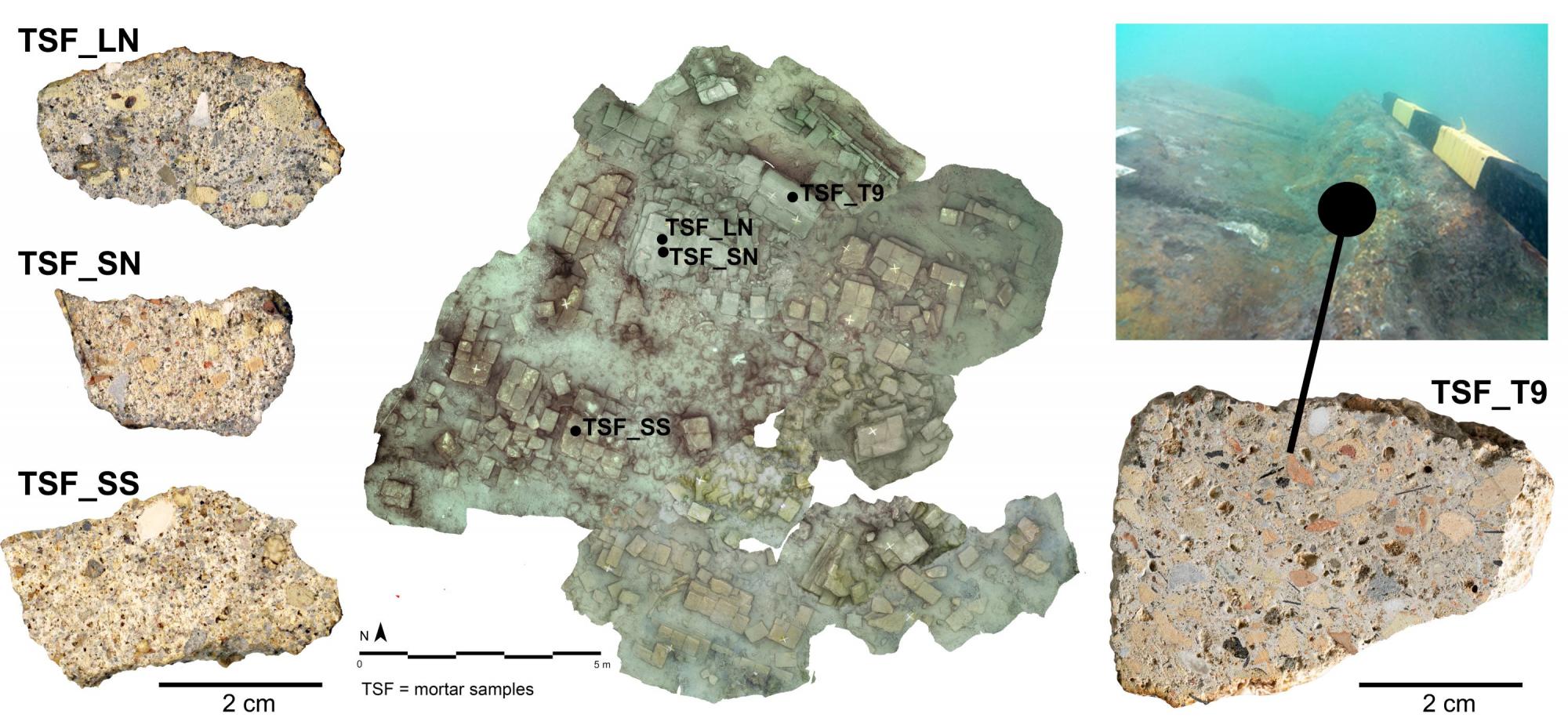
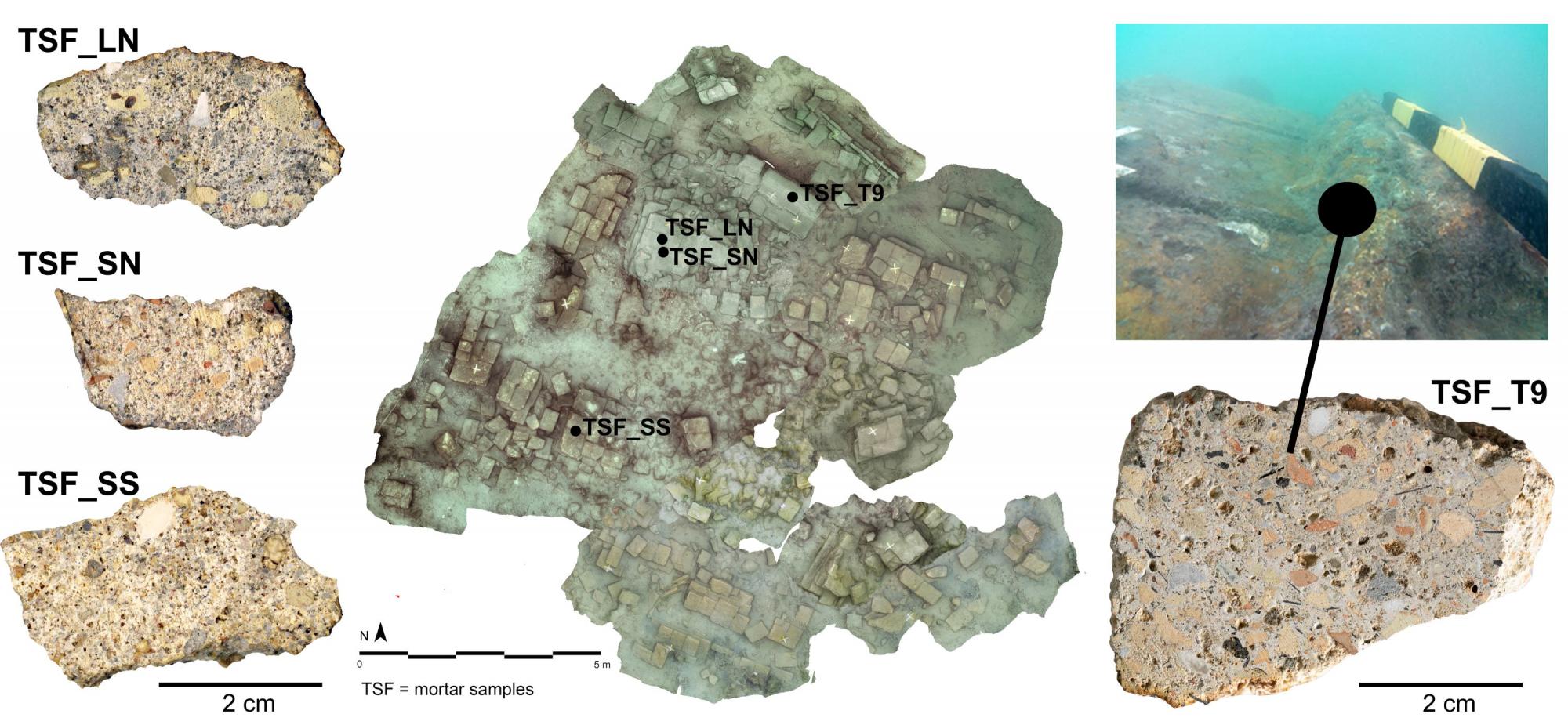
From Canale San Felice in the Venice Lagoon, a particular construction material used as an additive in the production of Roman concrete has emerged: this is documented for the first time by the study "Vitruvian binders in Venice: first evidence of Phlegraean pozzolans in an underwater Roman construction in the Venice Lagoon," published in the journal PLoS ONE and led by the Departments of Cultural Heritage and Geosciences of the University of Padua, in collaboration with the Ca' Foscari University of Venice and the University of Modena and Reggio Emilia. The study originates from the underwater investigations of Ca' Foscari University of Venice on a water conservation structure from the Roman era, dating back to the 1st century AD and known as the ancestor of the "Venetian well."

Thanks to the analysis of some samples of the mortars with which the structure, now submerged at more than three meters deep in the northern stretch of the Venetian lagoon, was bound and coated, researchers from the University of Padua detected the completely unexpected presence of volcanic pumice originating from the Phlegraean Fields in Naples.

This material is described in detail by architects and treatise writers Vitruvius and Pliny the Elder as a powder (pulvis) with extraordinary properties, enabling ancient mortars and concretes to solidify in anaerobic environments and even underwater. Extracted from the area around ancient Pozzuoli (Puteoli), Latin authors recommended its use in the construction of port infrastructures made of concrete poured directly into the sea. 1,800 years before the discovery of Portland cement, pulvis puteolana gave ancient concretes exceptional resistance to structural loads, weathering, and the aggressive submerged environment, ensuring extraordinary durability that has recently revived the "myth" of Roman concrete.
pomice

The remains of the submerged "Venetian well," documented thanks to underwater 3D surveys, and the mortar samples collected.

"Our study is multidisciplinary, conducted at the intersection of archaeology, materials engineering, and geology. It first and foremost testifies to the extensive distribution network of pulvis puteolana, one of the most high-performing and therefore most sought-after construction materials in ancient markets," comment Simone Dilaria, a Venetian archaeologist, the study's first author, and a researcher at the Department of Cultural Heritage of the University of Padua, along with Giulia Ricci and Michele Secco, researcher and lecturer at the University. "It also reveals previously unknown and unpublished commercial and cultural connections between different regions of the Mediterranean: far from being a peripheral reality, the Lagoon emerges as a commercial hub tightly integrated into complex pan-Mediterranean maritime networks about 1,000 years before Venice founded its mercantile empire."

"The Venetian well is a hydraulic work used since Roman times in the upper Adriatic territories for the capture and conservation of fresh water, which we managed to document and survey underwater thanks to innovative photogrammetric technologies," add Carlo Beltrame and Elisa Costa, lecturer and researcher at the Department of Humanities of Ca' Foscari University of Venice and authors of the underwater investigations carried out under a concession from the Ministry of Culture, with the high supervision of the Superintendency of Archaeology, Fine Arts, and Landscape for the Municipality of Venice and the Lagoon.

The determination of the origin of the pulvis was made possible through sophisticated microscopic and geochemical analyses, which until a few years ago were never performed on archaeological materials but can now be conducted on rocks and minerals even when finely ground into a micrometric-sized powder thanks to the most modern laboratory technologies.

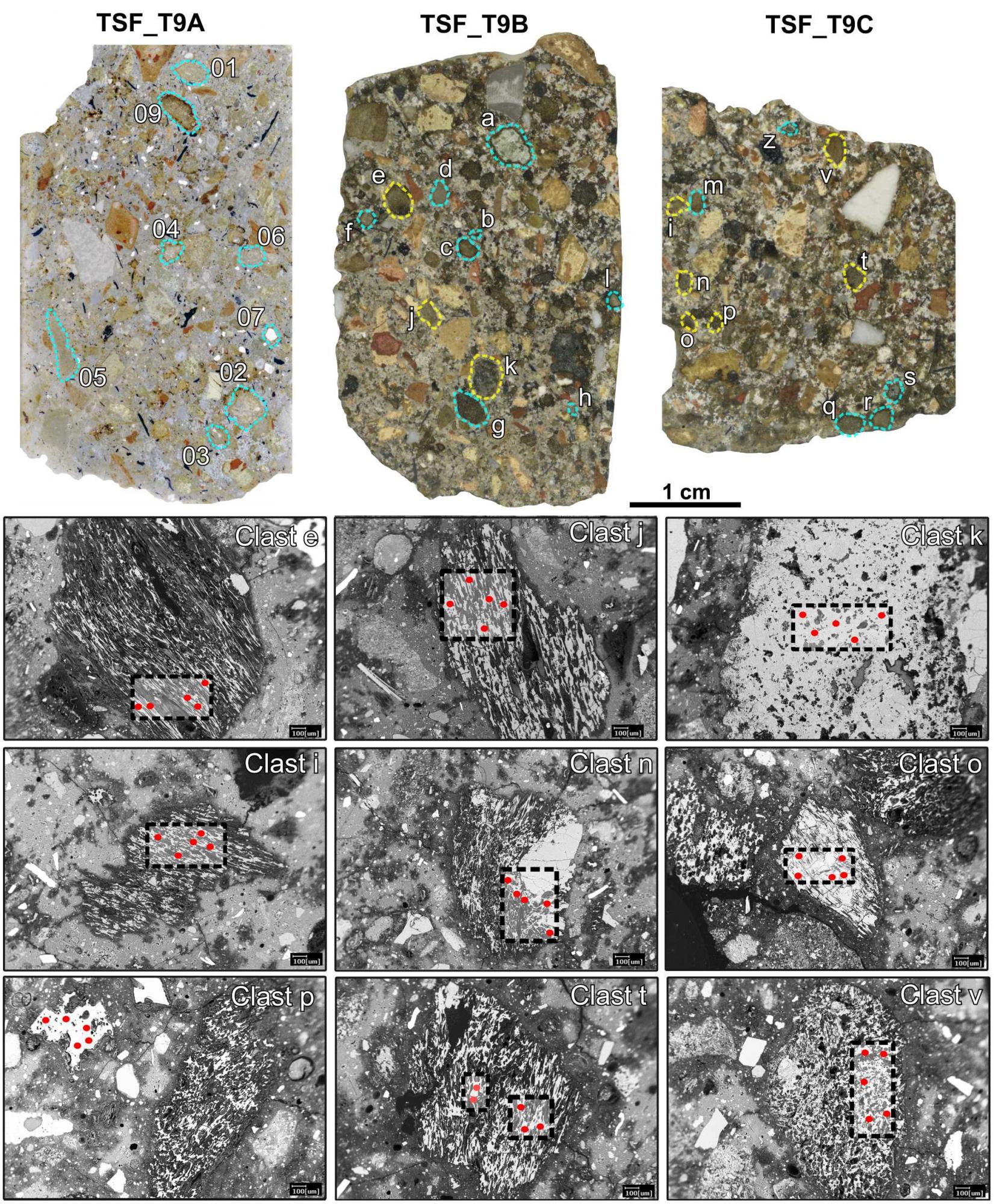
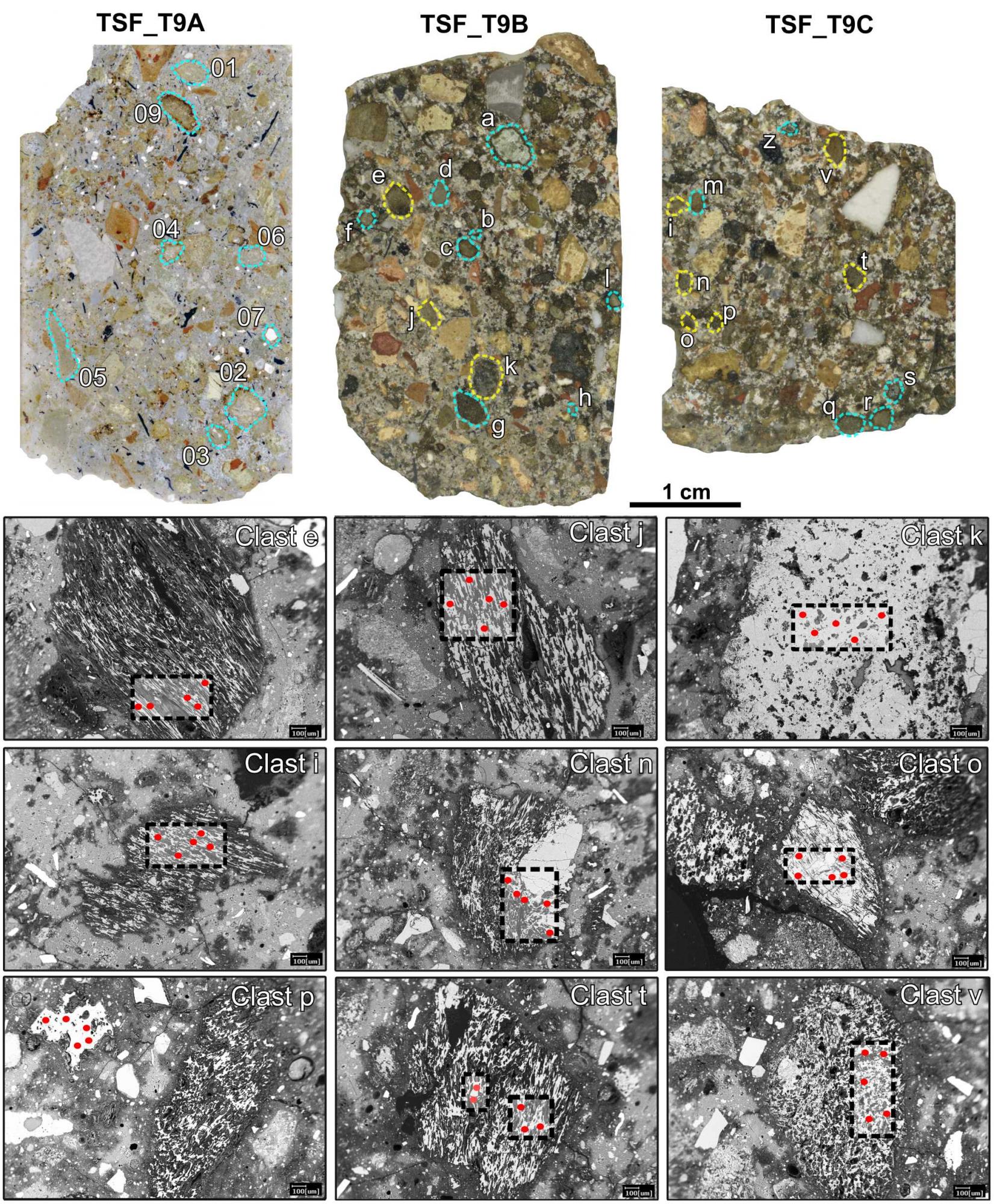
"The fingerprint of the volcanic pulvis," emphasizes Tommaso Giovanardi, a professor in the Department of Chemical and Geological Sciences at the University of Modena and Reggio Emilia, "was traced thanks to ultra-high-resolution instruments, such as Laser Ablation Inductively Coupled Plasma Mass Spectrometry, which allow us to obtain extremely detailed geochemical data even on very tiny fragments of geological material."

The profile of these small inclusions was then compared with a vast reference database created by researchers from the Departments of Cultural Heritage and Geosciences at the University of Padua, which gathers the compositional profiles of over 1,000 geological samples of compatible volcanic products. Through the comparison of chemical tracers, the compatibility with the volcanic dust from Campania was unequivocally certified.

"The research highlights, with growing attention and now consolidated awareness, the absolute centrality and indispensable necessity of exact sciences to rigorously understand and reconstruct the complex economic, commercial, and social dynamics of the ancient world," conclude Jacopo Bonetto and Gilberto Artioli, professors in the Departments of Cultural Heritage and Geosciences at the University of Padua.

While emphasizing the close connection between Northern Italy and the most advanced Roman engineering knowledge, the study finally underscores the great originality with which the ancestors of the Venetians adapted the high-profile Vitruvian architectural forms to the specific environmental and architectural needs of the Lagoon in its delicate balance between water and land.
pomice

Highlighted are the clasts of pulvis puteolana included in the mortar samples and analyzed with geochemical investigations.

[summary] => [format] => 2 [safe_value] =>

From Canale San Felice in the Venice Lagoon, a particular construction material used as an additive in the production of Roman concrete has emerged: this is documented for the first time by the study "Vitruvian binders in Venice: first evidence of Phlegraean pozzolans in an underwater Roman construction in the Venice Lagoon," published in the journal PLoS ONE and led by the Departments of Cultural Heritage and Geosciences of the University of Padua, in collaboration with the Ca' Foscari University of Venice and the University of Modena and Reggio Emilia. The study originates from the underwater investigations of Ca' Foscari University of Venice on a water conservation structure from the Roman era, dating back to the 1st century AD and known as the ancestor of the "Venetian well."

Thanks to the analysis of some samples of the mortars with which the structure, now submerged at more than three meters deep in the northern stretch of the Venetian lagoon, was bound and coated, researchers from the University of Padua detected the completely unexpected presence of volcanic pumice originating from the Phlegraean Fields in Naples.

This material is described in detail by architects and treatise writers Vitruvius and Pliny the Elder as a powder (pulvis) with extraordinary properties, enabling ancient mortars and concretes to solidify in anaerobic environments and even underwater. Extracted from the area around ancient Pozzuoli (Puteoli), Latin authors recommended its use in the construction of port infrastructures made of concrete poured directly into the sea. 1,800 years before the discovery of Portland cement, pulvis puteolana gave ancient concretes exceptional resistance to structural loads, weathering, and the aggressive submerged environment, ensuring extraordinary durability that has recently revived the "myth" of Roman concrete.

pomice

The remains of the submerged "Venetian well," documented thanks to underwater 3D surveys, and the mortar samples collected.

"Our study is multidisciplinary, conducted at the intersection of archaeology, materials engineering, and geology. It first and foremost testifies to the extensive distribution network of pulvis puteolana, one of the most high-performing and therefore most sought-after construction materials in ancient markets," comment Simone Dilaria, a Venetian archaeologist, the study's first author, and a researcher at the Department of Cultural Heritage of the University of Padua, along with Giulia Ricci and Michele Secco, researcher and lecturer at the University. "It also reveals previously unknown and unpublished commercial and cultural connections between different regions of the Mediterranean: far from being a peripheral reality, the Lagoon emerges as a commercial hub tightly integrated into complex pan-Mediterranean maritime networks about 1,000 years before Venice founded its mercantile empire."

"The Venetian well is a hydraulic work used since Roman times in the upper Adriatic territories for the capture and conservation of fresh water, which we managed to document and survey underwater thanks to innovative photogrammetric technologies," add Carlo Beltrame and Elisa Costa, lecturer and researcher at the Department of Humanities of Ca' Foscari University of Venice and authors of the underwater investigations carried out under a concession from the Ministry of Culture, with the high supervision of the Superintendency of Archaeology, Fine Arts, and Landscape for the Municipality of Venice and the Lagoon.

The determination of the origin of the pulvis was made possible through sophisticated microscopic and geochemical analyses, which until a few years ago were never performed on archaeological materials but can now be conducted on rocks and minerals even when finely ground into a micrometric-sized powder thanks to the most modern laboratory technologies.

"The fingerprint of the volcanic pulvis," emphasizes Tommaso Giovanardi, a professor in the Department of Chemical and Geological Sciences at the University of Modena and Reggio Emilia, "was traced thanks to ultra-high-resolution instruments, such as Laser Ablation Inductively Coupled Plasma Mass Spectrometry, which allow us to obtain extremely detailed geochemical data even on very tiny fragments of geological material."

The profile of these small inclusions was then compared with a vast reference database created by researchers from the Departments of Cultural Heritage and Geosciences at the University of Padua, which gathers the compositional profiles of over 1,000 geological samples of compatible volcanic products. Through the comparison of chemical tracers, the compatibility with the volcanic dust from Campania was unequivocally certified.

"The research highlights, with growing attention and now consolidated awareness, the absolute centrality and indispensable necessity of exact sciences to rigorously understand and reconstruct the complex economic, commercial, and social dynamics of the ancient world," conclude Jacopo Bonetto and Gilberto Artioli, professors in the Departments of Cultural Heritage and Geosciences at the University of Padua.

While emphasizing the close connection between Northern Italy and the most advanced Roman engineering knowledge, the study finally underscores the great originality with which the ancestors of the Venetians adapted the high-profile Vitruvian architectural forms to the specific environmental and architectural needs of the Lagoon in its delicate balance between water and land.

pomice

Highlighted are the clasts of pulvis puteolana included in the mortar samples and analyzed with geochemical investigations.

[safe_summary] => ) ) ) [field_date_box_lancio_news] => Array ( [und] => Array ( [0] => Array ( [value] => 2024-11-27T00:00:00 [timezone] => Europe/Paris [timezone_db] => Europe/Paris [date_type] => date ) ) ) [field_etichetta_box_lancio_news] => Array ( ) [field_img_box_lancio_news] => Array ( [und] => Array ( [0] => Array ( [fid] => 135577 [uid] => 2032 [filename] => n_venezia_barene_0.jpg [uri] => public://n_venezia_barene_0_0.jpg [filemime] => image/jpeg [filesize] => 26756 [status] => 1 [timestamp] => 1732710007 [type] => image [field_file_image_alt_text] => Array ( ) [field_file_image_title_text] => Array ( ) [field_folder] => Array ( [und] => Array ( [0] => Array ( [tid] => 2048 ) ) ) [metadata] => Array ( [height] => 227 [width] => 677 ) [height] => 227 [width] => 677 [alt] => venice [title] => ) ) ) [field_link_alla_news] => Array ( ) [field_link_esterno_news] => Array ( [und] => Array ( [0] => Array ( [value] => [format] => [safe_value] => ) ) ) [field_pagina_associata] => Array ( ) [field_link_etichetta] => Array ( ) [field_abstract_news] => Array ( [und] => Array ( [0] => Array ( [value] => In the Venice Lagoon, a particular construction material, pulvis puteolana, has emerged, which was used as an additive in the production of Roman concrete. The discovery was made thanks to a research team that also involved the University of Padua [format] => [safe_value] => In the Venice Lagoon, a particular construction material, pulvis puteolana, has emerged, which was used as an additive in the production of Roman concrete. The discovery was made thanks to a research team that also involved the University of Padua ) ) ) [field_allegato_news] => Array ( ) [field_categorie_news] => Array ( [und] => Array ( [0] => Array ( [tid] => 2296 ) ) ) [field_pub_date] => Array ( [und] => Array ( [0] => Array ( [value] => 2024-11-27T00:00:00 [value2] => 2025-11-27T00:00:00 [timezone] => Europe/Paris [timezone_db] => Europe/Paris [date_type] => date ) ) ) [field_layout_news] => Array ( [und] => Array ( [0] => Array ( [value] => single ) ) ) [field_testo_opzionale_news] => Array ( ) [field_url_en_page] => Array ( ) [field_url_en_page_label] => Array ( ) [path] => Array ( [pathauto] => 1 ) [name] => francesca.forzan [picture] => 0 [data] => b:0; [num_revisions] => 1 [current_revision_id] => 474674 [is_current] => 1 [is_pending] => [revision_moderation] => [entity_view_prepared] => 1 ) [#items] => Array ( [0] => Array ( [value] => [format] => [safe_value] => ) ) [#formatter] => text_default [0] => Array ( [#markup] => ) ) [body] => Array ( [#theme] => field [#weight] => 0 [#title] => Body [#access] => 1 [#label_display] => hidden [#view_mode] => teaser [#language] => und [#field_name] => body [#field_type] => text_with_summary [#field_translatable] => 0 [#entity_type] => node [#bundle] => box_lancio_news [#object] => stdClass Object ( [vid] => 474674 [uid] => 2032 [title] => Traces of Pozzolan Dust from the Phlegraean Fields Found in the Venetian Lagoon [log] => [status] => 1 [comment] => 0 [promote] => 1 [sticky] => 0 [nid] => 114658 [type] => box_lancio_news [language] => it [created] => 1732710007 [changed] => 1732710007 [tnid] => 0 [translate] => 0 [revision_timestamp] => 1732710007 [revision_uid] => 2032 [body] => Array ( [und] => Array ( [0] => Array ( [value] =>

From Canale San Felice in the Venice Lagoon, a particular construction material used as an additive in the production of Roman concrete has emerged: this is documented for the first time by the study "Vitruvian binders in Venice: first evidence of Phlegraean pozzolans in an underwater Roman construction in the Venice Lagoon," published in the journal PLoS ONE and led by the Departments of Cultural Heritage and Geosciences of the University of Padua, in collaboration with the Ca' Foscari University of Venice and the University of Modena and Reggio Emilia. The study originates from the underwater investigations of Ca' Foscari University of Venice on a water conservation structure from the Roman era, dating back to the 1st century AD and known as the ancestor of the "Venetian well."

Thanks to the analysis of some samples of the mortars with which the structure, now submerged at more than three meters deep in the northern stretch of the Venetian lagoon, was bound and coated, researchers from the University of Padua detected the completely unexpected presence of volcanic pumice originating from the Phlegraean Fields in Naples.

This material is described in detail by architects and treatise writers Vitruvius and Pliny the Elder as a powder (pulvis) with extraordinary properties, enabling ancient mortars and concretes to solidify in anaerobic environments and even underwater. Extracted from the area around ancient Pozzuoli (Puteoli), Latin authors recommended its use in the construction of port infrastructures made of concrete poured directly into the sea. 1,800 years before the discovery of Portland cement, pulvis puteolana gave ancient concretes exceptional resistance to structural loads, weathering, and the aggressive submerged environment, ensuring extraordinary durability that has recently revived the "myth" of Roman concrete.

pomice

The remains of the submerged "Venetian well," documented thanks to underwater 3D surveys, and the mortar samples collected.

"Our study is multidisciplinary, conducted at the intersection of archaeology, materials engineering, and geology. It first and foremost testifies to the extensive distribution network of pulvis puteolana, one of the most high-performing and therefore most sought-after construction materials in ancient markets," comment Simone Dilaria, a Venetian archaeologist, the study's first author, and a researcher at the Department of Cultural Heritage of the University of Padua, along with Giulia Ricci and Michele Secco, researcher and lecturer at the University. "It also reveals previously unknown and unpublished commercial and cultural connections between different regions of the Mediterranean: far from being a peripheral reality, the Lagoon emerges as a commercial hub tightly integrated into complex pan-Mediterranean maritime networks about 1,000 years before Venice founded its mercantile empire."

"The Venetian well is a hydraulic work used since Roman times in the upper Adriatic territories for the capture and conservation of fresh water, which we managed to document and survey underwater thanks to innovative photogrammetric technologies," add Carlo Beltrame and Elisa Costa, lecturer and researcher at the Department of Humanities of Ca' Foscari University of Venice and authors of the underwater investigations carried out under a concession from the Ministry of Culture, with the high supervision of the Superintendency of Archaeology, Fine Arts, and Landscape for the Municipality of Venice and the Lagoon.

The determination of the origin of the pulvis was made possible through sophisticated microscopic and geochemical analyses, which until a few years ago were never performed on archaeological materials but can now be conducted on rocks and minerals even when finely ground into a micrometric-sized powder thanks to the most modern laboratory technologies.

"The fingerprint of the volcanic pulvis," emphasizes Tommaso Giovanardi, a professor in the Department of Chemical and Geological Sciences at the University of Modena and Reggio Emilia, "was traced thanks to ultra-high-resolution instruments, such as Laser Ablation Inductively Coupled Plasma Mass Spectrometry, which allow us to obtain extremely detailed geochemical data even on very tiny fragments of geological material."

The profile of these small inclusions was then compared with a vast reference database created by researchers from the Departments of Cultural Heritage and Geosciences at the University of Padua, which gathers the compositional profiles of over 1,000 geological samples of compatible volcanic products. Through the comparison of chemical tracers, the compatibility with the volcanic dust from Campania was unequivocally certified.

"The research highlights, with growing attention and now consolidated awareness, the absolute centrality and indispensable necessity of exact sciences to rigorously understand and reconstruct the complex economic, commercial, and social dynamics of the ancient world," conclude Jacopo Bonetto and Gilberto Artioli, professors in the Departments of Cultural Heritage and Geosciences at the University of Padua.

While emphasizing the close connection between Northern Italy and the most advanced Roman engineering knowledge, the study finally underscores the great originality with which the ancestors of the Venetians adapted the high-profile Vitruvian architectural forms to the specific environmental and architectural needs of the Lagoon in its delicate balance between water and land.

pomice

Highlighted are the clasts of pulvis puteolana included in the mortar samples and analyzed with geochemical investigations.

[summary] => [format] => 2 [safe_value] =>

From Canale San Felice in the Venice Lagoon, a particular construction material used as an additive in the production of Roman concrete has emerged: this is documented for the first time by the study "Vitruvian binders in Venice: first evidence of Phlegraean pozzolans in an underwater Roman construction in the Venice Lagoon," published in the journal PLoS ONE and led by the Departments of Cultural Heritage and Geosciences of the University of Padua, in collaboration with the Ca' Foscari University of Venice and the University of Modena and Reggio Emilia. The study originates from the underwater investigations of Ca' Foscari University of Venice on a water conservation structure from the Roman era, dating back to the 1st century AD and known as the ancestor of the "Venetian well."

Thanks to the analysis of some samples of the mortars with which the structure, now submerged at more than three meters deep in the northern stretch of the Venetian lagoon, was bound and coated, researchers from the University of Padua detected the completely unexpected presence of volcanic pumice originating from the Phlegraean Fields in Naples.

This material is described in detail by architects and treatise writers Vitruvius and Pliny the Elder as a powder (pulvis) with extraordinary properties, enabling ancient mortars and concretes to solidify in anaerobic environments and even underwater. Extracted from the area around ancient Pozzuoli (Puteoli), Latin authors recommended its use in the construction of port infrastructures made of concrete poured directly into the sea. 1,800 years before the discovery of Portland cement, pulvis puteolana gave ancient concretes exceptional resistance to structural loads, weathering, and the aggressive submerged environment, ensuring extraordinary durability that has recently revived the "myth" of Roman concrete.

pomice

The remains of the submerged "Venetian well," documented thanks to underwater 3D surveys, and the mortar samples collected.

"Our study is multidisciplinary, conducted at the intersection of archaeology, materials engineering, and geology. It first and foremost testifies to the extensive distribution network of pulvis puteolana, one of the most high-performing and therefore most sought-after construction materials in ancient markets," comment Simone Dilaria, a Venetian archaeologist, the study's first author, and a researcher at the Department of Cultural Heritage of the University of Padua, along with Giulia Ricci and Michele Secco, researcher and lecturer at the University. "It also reveals previously unknown and unpublished commercial and cultural connections between different regions of the Mediterranean: far from being a peripheral reality, the Lagoon emerges as a commercial hub tightly integrated into complex pan-Mediterranean maritime networks about 1,000 years before Venice founded its mercantile empire."

"The Venetian well is a hydraulic work used since Roman times in the upper Adriatic territories for the capture and conservation of fresh water, which we managed to document and survey underwater thanks to innovative photogrammetric technologies," add Carlo Beltrame and Elisa Costa, lecturer and researcher at the Department of Humanities of Ca' Foscari University of Venice and authors of the underwater investigations carried out under a concession from the Ministry of Culture, with the high supervision of the Superintendency of Archaeology, Fine Arts, and Landscape for the Municipality of Venice and the Lagoon.

The determination of the origin of the pulvis was made possible through sophisticated microscopic and geochemical analyses, which until a few years ago were never performed on archaeological materials but can now be conducted on rocks and minerals even when finely ground into a micrometric-sized powder thanks to the most modern laboratory technologies.

"The fingerprint of the volcanic pulvis," emphasizes Tommaso Giovanardi, a professor in the Department of Chemical and Geological Sciences at the University of Modena and Reggio Emilia, "was traced thanks to ultra-high-resolution instruments, such as Laser Ablation Inductively Coupled Plasma Mass Spectrometry, which allow us to obtain extremely detailed geochemical data even on very tiny fragments of geological material."

The profile of these small inclusions was then compared with a vast reference database created by researchers from the Departments of Cultural Heritage and Geosciences at the University of Padua, which gathers the compositional profiles of over 1,000 geological samples of compatible volcanic products. Through the comparison of chemical tracers, the compatibility with the volcanic dust from Campania was unequivocally certified.

"The research highlights, with growing attention and now consolidated awareness, the absolute centrality and indispensable necessity of exact sciences to rigorously understand and reconstruct the complex economic, commercial, and social dynamics of the ancient world," conclude Jacopo Bonetto and Gilberto Artioli, professors in the Departments of Cultural Heritage and Geosciences at the University of Padua.

While emphasizing the close connection between Northern Italy and the most advanced Roman engineering knowledge, the study finally underscores the great originality with which the ancestors of the Venetians adapted the high-profile Vitruvian architectural forms to the specific environmental and architectural needs of the Lagoon in its delicate balance between water and land.

pomice

Highlighted are the clasts of pulvis puteolana included in the mortar samples and analyzed with geochemical investigations.

[safe_summary] => ) ) ) [field_date_box_lancio_news] => Array ( [und] => Array ( [0] => Array ( [value] => 2024-11-27T00:00:00 [timezone] => Europe/Paris [timezone_db] => Europe/Paris [date_type] => date ) ) ) [field_etichetta_box_lancio_news] => Array ( ) [field_img_box_lancio_news] => Array ( [und] => Array ( [0] => Array ( [fid] => 135577 [uid] => 2032 [filename] => n_venezia_barene_0.jpg [uri] => public://n_venezia_barene_0_0.jpg [filemime] => image/jpeg [filesize] => 26756 [status] => 1 [timestamp] => 1732710007 [type] => image [field_file_image_alt_text] => Array ( ) [field_file_image_title_text] => Array ( ) [field_folder] => Array ( [und] => Array ( [0] => Array ( [tid] => 2048 ) ) ) [metadata] => Array ( [height] => 227 [width] => 677 ) [height] => 227 [width] => 677 [alt] => venice [title] => ) ) ) [field_link_alla_news] => Array ( ) [field_link_esterno_news] => Array ( [und] => Array ( [0] => Array ( [value] => [format] => [safe_value] => ) ) ) [field_pagina_associata] => Array ( ) [field_link_etichetta] => Array ( ) [field_abstract_news] => Array ( [und] => Array ( [0] => Array ( [value] => In the Venice Lagoon, a particular construction material, pulvis puteolana, has emerged, which was used as an additive in the production of Roman concrete. The discovery was made thanks to a research team that also involved the University of Padua [format] => [safe_value] => In the Venice Lagoon, a particular construction material, pulvis puteolana, has emerged, which was used as an additive in the production of Roman concrete. The discovery was made thanks to a research team that also involved the University of Padua ) ) ) [field_allegato_news] => Array ( ) [field_categorie_news] => Array ( [und] => Array ( [0] => Array ( [tid] => 2296 ) ) ) [field_pub_date] => Array ( [und] => Array ( [0] => Array ( [value] => 2024-11-27T00:00:00 [value2] => 2025-11-27T00:00:00 [timezone] => Europe/Paris [timezone_db] => Europe/Paris [date_type] => date ) ) ) [field_layout_news] => Array ( [und] => Array ( [0] => Array ( [value] => single ) ) ) [field_testo_opzionale_news] => Array ( ) [field_url_en_page] => Array ( ) [field_url_en_page_label] => Array ( ) [path] => Array ( [pathauto] => 1 ) [name] => francesca.forzan [picture] => 0 [data] => b:0; [num_revisions] => 1 [current_revision_id] => 474674 [is_current] => 1 [is_pending] => [revision_moderation] => [entity_view_prepared] => 1 ) [#items] => Array ( [0] => Array ( [value] =>

From Canale San Felice in the Venice Lagoon, a particular construction material used as an additive in the production of Roman concrete has emerged: this is documented for the first time by the study "Vitruvian binders in Venice: first evidence of Phlegraean pozzolans in an underwater Roman construction in the Venice Lagoon," published in the journal PLoS ONE and led by the Departments of Cultural Heritage and Geosciences of the University of Padua, in collaboration with the Ca' Foscari University of Venice and the University of Modena and Reggio Emilia. The study originates from the underwater investigations of Ca' Foscari University of Venice on a water conservation structure from the Roman era, dating back to the 1st century AD and known as the ancestor of the "Venetian well."

Thanks to the analysis of some samples of the mortars with which the structure, now submerged at more than three meters deep in the northern stretch of the Venetian lagoon, was bound and coated, researchers from the University of Padua detected the completely unexpected presence of volcanic pumice originating from the Phlegraean Fields in Naples.

This material is described in detail by architects and treatise writers Vitruvius and Pliny the Elder as a powder (pulvis) with extraordinary properties, enabling ancient mortars and concretes to solidify in anaerobic environments and even underwater. Extracted from the area around ancient Pozzuoli (Puteoli), Latin authors recommended its use in the construction of port infrastructures made of concrete poured directly into the sea. 1,800 years before the discovery of Portland cement, pulvis puteolana gave ancient concretes exceptional resistance to structural loads, weathering, and the aggressive submerged environment, ensuring extraordinary durability that has recently revived the "myth" of Roman concrete.

pomice

The remains of the submerged "Venetian well," documented thanks to underwater 3D surveys, and the mortar samples collected.

"Our study is multidisciplinary, conducted at the intersection of archaeology, materials engineering, and geology. It first and foremost testifies to the extensive distribution network of pulvis puteolana, one of the most high-performing and therefore most sought-after construction materials in ancient markets," comment Simone Dilaria, a Venetian archaeologist, the study's first author, and a researcher at the Department of Cultural Heritage of the University of Padua, along with Giulia Ricci and Michele Secco, researcher and lecturer at the University. "It also reveals previously unknown and unpublished commercial and cultural connections between different regions of the Mediterranean: far from being a peripheral reality, the Lagoon emerges as a commercial hub tightly integrated into complex pan-Mediterranean maritime networks about 1,000 years before Venice founded its mercantile empire."

"The Venetian well is a hydraulic work used since Roman times in the upper Adriatic territories for the capture and conservation of fresh water, which we managed to document and survey underwater thanks to innovative photogrammetric technologies," add Carlo Beltrame and Elisa Costa, lecturer and researcher at the Department of Humanities of Ca' Foscari University of Venice and authors of the underwater investigations carried out under a concession from the Ministry of Culture, with the high supervision of the Superintendency of Archaeology, Fine Arts, and Landscape for the Municipality of Venice and the Lagoon.

The determination of the origin of the pulvis was made possible through sophisticated microscopic and geochemical analyses, which until a few years ago were never performed on archaeological materials but can now be conducted on rocks and minerals even when finely ground into a micrometric-sized powder thanks to the most modern laboratory technologies.

"The fingerprint of the volcanic pulvis," emphasizes Tommaso Giovanardi, a professor in the Department of Chemical and Geological Sciences at the University of Modena and Reggio Emilia, "was traced thanks to ultra-high-resolution instruments, such as Laser Ablation Inductively Coupled Plasma Mass Spectrometry, which allow us to obtain extremely detailed geochemical data even on very tiny fragments of geological material."

The profile of these small inclusions was then compared with a vast reference database created by researchers from the Departments of Cultural Heritage and Geosciences at the University of Padua, which gathers the compositional profiles of over 1,000 geological samples of compatible volcanic products. Through the comparison of chemical tracers, the compatibility with the volcanic dust from Campania was unequivocally certified.

"The research highlights, with growing attention and now consolidated awareness, the absolute centrality and indispensable necessity of exact sciences to rigorously understand and reconstruct the complex economic, commercial, and social dynamics of the ancient world," conclude Jacopo Bonetto and Gilberto Artioli, professors in the Departments of Cultural Heritage and Geosciences at the University of Padua.

While emphasizing the close connection between Northern Italy and the most advanced Roman engineering knowledge, the study finally underscores the great originality with which the ancestors of the Venetians adapted the high-profile Vitruvian architectural forms to the specific environmental and architectural needs of the Lagoon in its delicate balance between water and land.

pomice

Highlighted are the clasts of pulvis puteolana included in the mortar samples and analyzed with geochemical investigations.

[summary] => [format] => 2 [safe_value] =>

From Canale San Felice in the Venice Lagoon, a particular construction material used as an additive in the production of Roman concrete has emerged: this is documented for the first time by the study "Vitruvian binders in Venice: first evidence of Phlegraean pozzolans in an underwater Roman construction in the Venice Lagoon," published in the journal PLoS ONE and led by the Departments of Cultural Heritage and Geosciences of the University of Padua, in collaboration with the Ca' Foscari University of Venice and the University of Modena and Reggio Emilia. The study originates from the underwater investigations of Ca' Foscari University of Venice on a water conservation structure from the Roman era, dating back to the 1st century AD and known as the ancestor of the "Venetian well."

Thanks to the analysis of some samples of the mortars with which the structure, now submerged at more than three meters deep in the northern stretch of the Venetian lagoon, was bound and coated, researchers from the University of Padua detected the completely unexpected presence of volcanic pumice originating from the Phlegraean Fields in Naples.

This material is described in detail by architects and treatise writers Vitruvius and Pliny the Elder as a powder (pulvis) with extraordinary properties, enabling ancient mortars and concretes to solidify in anaerobic environments and even underwater. Extracted from the area around ancient Pozzuoli (Puteoli), Latin authors recommended its use in the construction of port infrastructures made of concrete poured directly into the sea. 1,800 years before the discovery of Portland cement, pulvis puteolana gave ancient concretes exceptional resistance to structural loads, weathering, and the aggressive submerged environment, ensuring extraordinary durability that has recently revived the "myth" of Roman concrete.

pomice

The remains of the submerged "Venetian well," documented thanks to underwater 3D surveys, and the mortar samples collected.

"Our study is multidisciplinary, conducted at the intersection of archaeology, materials engineering, and geology. It first and foremost testifies to the extensive distribution network of pulvis puteolana, one of the most high-performing and therefore most sought-after construction materials in ancient markets," comment Simone Dilaria, a Venetian archaeologist, the study's first author, and a researcher at the Department of Cultural Heritage of the University of Padua, along with Giulia Ricci and Michele Secco, researcher and lecturer at the University. "It also reveals previously unknown and unpublished commercial and cultural connections between different regions of the Mediterranean: far from being a peripheral reality, the Lagoon emerges as a commercial hub tightly integrated into complex pan-Mediterranean maritime networks about 1,000 years before Venice founded its mercantile empire."

"The Venetian well is a hydraulic work used since Roman times in the upper Adriatic territories for the capture and conservation of fresh water, which we managed to document and survey underwater thanks to innovative photogrammetric technologies," add Carlo Beltrame and Elisa Costa, lecturer and researcher at the Department of Humanities of Ca' Foscari University of Venice and authors of the underwater investigations carried out under a concession from the Ministry of Culture, with the high supervision of the Superintendency of Archaeology, Fine Arts, and Landscape for the Municipality of Venice and the Lagoon.

The determination of the origin of the pulvis was made possible through sophisticated microscopic and geochemical analyses, which until a few years ago were never performed on archaeological materials but can now be conducted on rocks and minerals even when finely ground into a micrometric-sized powder thanks to the most modern laboratory technologies.

"The fingerprint of the volcanic pulvis," emphasizes Tommaso Giovanardi, a professor in the Department of Chemical and Geological Sciences at the University of Modena and Reggio Emilia, "was traced thanks to ultra-high-resolution instruments, such as Laser Ablation Inductively Coupled Plasma Mass Spectrometry, which allow us to obtain extremely detailed geochemical data even on very tiny fragments of geological material."

The profile of these small inclusions was then compared with a vast reference database created by researchers from the Departments of Cultural Heritage and Geosciences at the University of Padua, which gathers the compositional profiles of over 1,000 geological samples of compatible volcanic products. Through the comparison of chemical tracers, the compatibility with the volcanic dust from Campania was unequivocally certified.

"The research highlights, with growing attention and now consolidated awareness, the absolute centrality and indispensable necessity of exact sciences to rigorously understand and reconstruct the complex economic, commercial, and social dynamics of the ancient world," conclude Jacopo Bonetto and Gilberto Artioli, professors in the Departments of Cultural Heritage and Geosciences at the University of Padua.

While emphasizing the close connection between Northern Italy and the most advanced Roman engineering knowledge, the study finally underscores the great originality with which the ancestors of the Venetians adapted the high-profile Vitruvian architectural forms to the specific environmental and architectural needs of the Lagoon in its delicate balance between water and land.

pomice

Highlighted are the clasts of pulvis puteolana included in the mortar samples and analyzed with geochemical investigations.

[safe_summary] => ) ) [#formatter] => text_summary_or_trimmed [0] => Array ( [#markup] =>

From Canale San Felice in the Venice Lagoon, a particular construction material used as an additive in the production of Roman concrete has emerged: this is documented for the first time by the study "Vitruvian binders in Venice: first evidence of Phlegraean pozzolans in an underwater Roman construction in the Venice Lagoon," published in the journal PLoS ONE and led by the Departments of Cultural Heritage and Geosciences of the University of Padua, i

) ) [field_img_box_lancio_news] => Array ( [#theme] => field [#weight] => 0 [#title] => Immagine [#access] => 1 [#label_display] => above [#view_mode] => teaser [#language] => und [#field_name] => field_img_box_lancio_news [#field_type] => image [#field_translatable] => 0 [#entity_type] => node [#bundle] => box_lancio_news [#object] => stdClass Object ( [vid] => 474674 [uid] => 2032 [title] => Traces of Pozzolan Dust from the Phlegraean Fields Found in the Venetian Lagoon [log] => [status] => 1 [comment] => 0 [promote] => 1 [sticky] => 0 [nid] => 114658 [type] => box_lancio_news [language] => it [created] => 1732710007 [changed] => 1732710007 [tnid] => 0 [translate] => 0 [revision_timestamp] => 1732710007 [revision_uid] => 2032 [body] => Array ( [und] => Array ( [0] => Array ( [value] =>

From Canale San Felice in the Venice Lagoon, a particular construction material used as an additive in the production of Roman concrete has emerged: this is documented for the first time by the study "Vitruvian binders in Venice: first evidence of Phlegraean pozzolans in an underwater Roman construction in the Venice Lagoon," published in the journal PLoS ONE and led by the Departments of Cultural Heritage and Geosciences of the University of Padua, in collaboration with the Ca' Foscari University of Venice and the University of Modena and Reggio Emilia. The study originates from the underwater investigations of Ca' Foscari University of Venice on a water conservation structure from the Roman era, dating back to the 1st century AD and known as the ancestor of the "Venetian well."

Thanks to the analysis of some samples of the mortars with which the structure, now submerged at more than three meters deep in the northern stretch of the Venetian lagoon, was bound and coated, researchers from the University of Padua detected the completely unexpected presence of volcanic pumice originating from the Phlegraean Fields in Naples.

This material is described in detail by architects and treatise writers Vitruvius and Pliny the Elder as a powder (pulvis) with extraordinary properties, enabling ancient mortars and concretes to solidify in anaerobic environments and even underwater. Extracted from the area around ancient Pozzuoli (Puteoli), Latin authors recommended its use in the construction of port infrastructures made of concrete poured directly into the sea. 1,800 years before the discovery of Portland cement, pulvis puteolana gave ancient concretes exceptional resistance to structural loads, weathering, and the aggressive submerged environment, ensuring extraordinary durability that has recently revived the "myth" of Roman concrete.

pomice

The remains of the submerged "Venetian well," documented thanks to underwater 3D surveys, and the mortar samples collected.

"Our study is multidisciplinary, conducted at the intersection of archaeology, materials engineering, and geology. It first and foremost testifies to the extensive distribution network of pulvis puteolana, one of the most high-performing and therefore most sought-after construction materials in ancient markets," comment Simone Dilaria, a Venetian archaeologist, the study's first author, and a researcher at the Department of Cultural Heritage of the University of Padua, along with Giulia Ricci and Michele Secco, researcher and lecturer at the University. "It also reveals previously unknown and unpublished commercial and cultural connections between different regions of the Mediterranean: far from being a peripheral reality, the Lagoon emerges as a commercial hub tightly integrated into complex pan-Mediterranean maritime networks about 1,000 years before Venice founded its mercantile empire."

"The Venetian well is a hydraulic work used since Roman times in the upper Adriatic territories for the capture and conservation of fresh water, which we managed to document and survey underwater thanks to innovative photogrammetric technologies," add Carlo Beltrame and Elisa Costa, lecturer and researcher at the Department of Humanities of Ca' Foscari University of Venice and authors of the underwater investigations carried out under a concession from the Ministry of Culture, with the high supervision of the Superintendency of Archaeology, Fine Arts, and Landscape for the Municipality of Venice and the Lagoon.

The determination of the origin of the pulvis was made possible through sophisticated microscopic and geochemical analyses, which until a few years ago were never performed on archaeological materials but can now be conducted on rocks and minerals even when finely ground into a micrometric-sized powder thanks to the most modern laboratory technologies.

"The fingerprint of the volcanic pulvis," emphasizes Tommaso Giovanardi, a professor in the Department of Chemical and Geological Sciences at the University of Modena and Reggio Emilia, "was traced thanks to ultra-high-resolution instruments, such as Laser Ablation Inductively Coupled Plasma Mass Spectrometry, which allow us to obtain extremely detailed geochemical data even on very tiny fragments of geological material."

The profile of these small inclusions was then compared with a vast reference database created by researchers from the Departments of Cultural Heritage and Geosciences at the University of Padua, which gathers the compositional profiles of over 1,000 geological samples of compatible volcanic products. Through the comparison of chemical tracers, the compatibility with the volcanic dust from Campania was unequivocally certified.

"The research highlights, with growing attention and now consolidated awareness, the absolute centrality and indispensable necessity of exact sciences to rigorously understand and reconstruct the complex economic, commercial, and social dynamics of the ancient world," conclude Jacopo Bonetto and Gilberto Artioli, professors in the Departments of Cultural Heritage and Geosciences at the University of Padua.

While emphasizing the close connection between Northern Italy and the most advanced Roman engineering knowledge, the study finally underscores the great originality with which the ancestors of the Venetians adapted the high-profile Vitruvian architectural forms to the specific environmental and architectural needs of the Lagoon in its delicate balance between water and land.

pomice

Highlighted are the clasts of pulvis puteolana included in the mortar samples and analyzed with geochemical investigations.

[summary] => [format] => 2 [safe_value] =>

From Canale San Felice in the Venice Lagoon, a particular construction material used as an additive in the production of Roman concrete has emerged: this is documented for the first time by the study "Vitruvian binders in Venice: first evidence of Phlegraean pozzolans in an underwater Roman construction in the Venice Lagoon," published in the journal PLoS ONE and led by the Departments of Cultural Heritage and Geosciences of the University of Padua, in collaboration with the Ca' Foscari University of Venice and the University of Modena and Reggio Emilia. The study originates from the underwater investigations of Ca' Foscari University of Venice on a water conservation structure from the Roman era, dating back to the 1st century AD and known as the ancestor of the "Venetian well."

Thanks to the analysis of some samples of the mortars with which the structure, now submerged at more than three meters deep in the northern stretch of the Venetian lagoon, was bound and coated, researchers from the University of Padua detected the completely unexpected presence of volcanic pumice originating from the Phlegraean Fields in Naples.

This material is described in detail by architects and treatise writers Vitruvius and Pliny the Elder as a powder (pulvis) with extraordinary properties, enabling ancient mortars and concretes to solidify in anaerobic environments and even underwater. Extracted from the area around ancient Pozzuoli (Puteoli), Latin authors recommended its use in the construction of port infrastructures made of concrete poured directly into the sea. 1,800 years before the discovery of Portland cement, pulvis puteolana gave ancient concretes exceptional resistance to structural loads, weathering, and the aggressive submerged environment, ensuring extraordinary durability that has recently revived the "myth" of Roman concrete.

pomice

The remains of the submerged "Venetian well," documented thanks to underwater 3D surveys, and the mortar samples collected.

"Our study is multidisciplinary, conducted at the intersection of archaeology, materials engineering, and geology. It first and foremost testifies to the extensive distribution network of pulvis puteolana, one of the most high-performing and therefore most sought-after construction materials in ancient markets," comment Simone Dilaria, a Venetian archaeologist, the study's first author, and a researcher at the Department of Cultural Heritage of the University of Padua, along with Giulia Ricci and Michele Secco, researcher and lecturer at the University. "It also reveals previously unknown and unpublished commercial and cultural connections between different regions of the Mediterranean: far from being a peripheral reality, the Lagoon emerges as a commercial hub tightly integrated into complex pan-Mediterranean maritime networks about 1,000 years before Venice founded its mercantile empire."

"The Venetian well is a hydraulic work used since Roman times in the upper Adriatic territories for the capture and conservation of fresh water, which we managed to document and survey underwater thanks to innovative photogrammetric technologies," add Carlo Beltrame and Elisa Costa, lecturer and researcher at the Department of Humanities of Ca' Foscari University of Venice and authors of the underwater investigations carried out under a concession from the Ministry of Culture, with the high supervision of the Superintendency of Archaeology, Fine Arts, and Landscape for the Municipality of Venice and the Lagoon.

The determination of the origin of the pulvis was made possible through sophisticated microscopic and geochemical analyses, which until a few years ago were never performed on archaeological materials but can now be conducted on rocks and minerals even when finely ground into a micrometric-sized powder thanks to the most modern laboratory technologies.

"The fingerprint of the volcanic pulvis," emphasizes Tommaso Giovanardi, a professor in the Department of Chemical and Geological Sciences at the University of Modena and Reggio Emilia, "was traced thanks to ultra-high-resolution instruments, such as Laser Ablation Inductively Coupled Plasma Mass Spectrometry, which allow us to obtain extremely detailed geochemical data even on very tiny fragments of geological material."

The profile of these small inclusions was then compared with a vast reference database created by researchers from the Departments of Cultural Heritage and Geosciences at the University of Padua, which gathers the compositional profiles of over 1,000 geological samples of compatible volcanic products. Through the comparison of chemical tracers, the compatibility with the volcanic dust from Campania was unequivocally certified.

"The research highlights, with growing attention and now consolidated awareness, the absolute centrality and indispensable necessity of exact sciences to rigorously understand and reconstruct the complex economic, commercial, and social dynamics of the ancient world," conclude Jacopo Bonetto and Gilberto Artioli, professors in the Departments of Cultural Heritage and Geosciences at the University of Padua.

While emphasizing the close connection between Northern Italy and the most advanced Roman engineering knowledge, the study finally underscores the great originality with which the ancestors of the Venetians adapted the high-profile Vitruvian architectural forms to the specific environmental and architectural needs of the Lagoon in its delicate balance between water and land.

pomice

Highlighted are the clasts of pulvis puteolana included in the mortar samples and analyzed with geochemical investigations.

[safe_summary] => ) ) ) [field_date_box_lancio_news] => Array ( [und] => Array ( [0] => Array ( [value] => 2024-11-27T00:00:00 [timezone] => Europe/Paris [timezone_db] => Europe/Paris [date_type] => date ) ) ) [field_etichetta_box_lancio_news] => Array ( ) [field_img_box_lancio_news] => Array ( [und] => Array ( [0] => Array ( [fid] => 135577 [uid] => 2032 [filename] => n_venezia_barene_0.jpg [uri] => public://n_venezia_barene_0_0.jpg [filemime] => image/jpeg [filesize] => 26756 [status] => 1 [timestamp] => 1732710007 [type] => image [field_file_image_alt_text] => Array ( ) [field_file_image_title_text] => Array ( ) [field_folder] => Array ( [und] => Array ( [0] => Array ( [tid] => 2048 ) ) ) [metadata] => Array ( [height] => 227 [width] => 677 ) [height] => 227 [width] => 677 [alt] => venice [title] => ) ) ) [field_link_alla_news] => Array ( ) [field_link_esterno_news] => Array ( [und] => Array ( [0] => Array ( [value] => [format] => [safe_value] => ) ) ) [field_pagina_associata] => Array ( ) [field_link_etichetta] => Array ( ) [field_abstract_news] => Array ( [und] => Array ( [0] => Array ( [value] => In the Venice Lagoon, a particular construction material, pulvis puteolana, has emerged, which was used as an additive in the production of Roman concrete. The discovery was made thanks to a research team that also involved the University of Padua [format] => [safe_value] => In the Venice Lagoon, a particular construction material, pulvis puteolana, has emerged, which was used as an additive in the production of Roman concrete. The discovery was made thanks to a research team that also involved the University of Padua ) ) ) [field_allegato_news] => Array ( ) [field_categorie_news] => Array ( [und] => Array ( [0] => Array ( [tid] => 2296 ) ) ) [field_pub_date] => Array ( [und] => Array ( [0] => Array ( [value] => 2024-11-27T00:00:00 [value2] => 2025-11-27T00:00:00 [timezone] => Europe/Paris [timezone_db] => Europe/Paris [date_type] => date ) ) ) [field_layout_news] => Array ( [und] => Array ( [0] => Array ( [value] => single ) ) ) [field_testo_opzionale_news] => Array ( ) [field_url_en_page] => Array ( ) [field_url_en_page_label] => Array ( ) [path] => Array ( [pathauto] => 1 ) [name] => francesca.forzan [picture] => 0 [data] => b:0; [num_revisions] => 1 [current_revision_id] => 474674 [is_current] => 1 [is_pending] => [revision_moderation] => [entity_view_prepared] => 1 ) [#items] => Array ( [0] => Array ( [fid] => 135577 [uid] => 2032 [filename] => n_venezia_barene_0.jpg [uri] => public://n_venezia_barene_0_0.jpg [filemime] => image/jpeg [filesize] => 26756 [status] => 1 [timestamp] => 1732710007 [type] => image [field_file_image_alt_text] => Array ( ) [field_file_image_title_text] => Array ( ) [field_folder] => Array ( [und] => Array ( [0] => Array ( [tid] => 2048 ) ) ) [metadata] => Array ( [height] => 227 [width] => 677 ) [height] => 227 [width] => 677 [alt] => venice [title] => ) ) [#formatter] => image [0] => Array ( [#theme] => image_formatter [#item] => Array ( [fid] => 135577 [uid] => 2032 [filename] => n_venezia_barene_0.jpg [uri] => public://n_venezia_barene_0_0.jpg [filemime] => image/jpeg [filesize] => 26756 [status] => 1 [timestamp] => 1732710007 [type] => image [field_file_image_alt_text] => Array ( ) [field_file_image_title_text] => Array ( ) [field_folder] => Array ( [und] => Array ( [0] => Array ( [tid] => 2048 ) ) ) [metadata] => Array ( [height] => 227 [width] => 677 ) [height] => 227 [width] => 677 [alt] => venice [title] => ) [#image_style] => [#path] => ) ) [field_abstract_news] => Array ( [#theme] => field [#weight] => 0 [#title] => Abstract [#access] => 1 [#label_display] => above [#view_mode] => teaser [#language] => und [#field_name] => field_abstract_news [#field_type] => text_long [#field_translatable] => 0 [#entity_type] => node [#bundle] => box_lancio_news [#object] => stdClass Object ( [vid] => 474674 [uid] => 2032 [title] => Traces of Pozzolan Dust from the Phlegraean Fields Found in the Venetian Lagoon [log] => [status] => 1 [comment] => 0 [promote] => 1 [sticky] => 0 [nid] => 114658 [type] => box_lancio_news [language] => it [created] => 1732710007 [changed] => 1732710007 [tnid] => 0 [translate] => 0 [revision_timestamp] => 1732710007 [revision_uid] => 2032 [body] => Array ( [und] => Array ( [0] => Array ( [value] =>

From Canale San Felice in the Venice Lagoon, a particular construction material used as an additive in the production of Roman concrete has emerged: this is documented for the first time by the study "Vitruvian binders in Venice: first evidence of Phlegraean pozzolans in an underwater Roman construction in the Venice Lagoon," published in the journal PLoS ONE and led by the Departments of Cultural Heritage and Geosciences of the University of Padua, in collaboration with the Ca' Foscari University of Venice and the University of Modena and Reggio Emilia. The study originates from the underwater investigations of Ca' Foscari University of Venice on a water conservation structure from the Roman era, dating back to the 1st century AD and known as the ancestor of the "Venetian well."

Thanks to the analysis of some samples of the mortars with which the structure, now submerged at more than three meters deep in the northern stretch of the Venetian lagoon, was bound and coated, researchers from the University of Padua detected the completely unexpected presence of volcanic pumice originating from the Phlegraean Fields in Naples.

This material is described in detail by architects and treatise writers Vitruvius and Pliny the Elder as a powder (pulvis) with extraordinary properties, enabling ancient mortars and concretes to solidify in anaerobic environments and even underwater. Extracted from the area around ancient Pozzuoli (Puteoli), Latin authors recommended its use in the construction of port infrastructures made of concrete poured directly into the sea. 1,800 years before the discovery of Portland cement, pulvis puteolana gave ancient concretes exceptional resistance to structural loads, weathering, and the aggressive submerged environment, ensuring extraordinary durability that has recently revived the "myth" of Roman concrete.

pomice

The remains of the submerged "Venetian well," documented thanks to underwater 3D surveys, and the mortar samples collected.

"Our study is multidisciplinary, conducted at the intersection of archaeology, materials engineering, and geology. It first and foremost testifies to the extensive distribution network of pulvis puteolana, one of the most high-performing and therefore most sought-after construction materials in ancient markets," comment Simone Dilaria, a Venetian archaeologist, the study's first author, and a researcher at the Department of Cultural Heritage of the University of Padua, along with Giulia Ricci and Michele Secco, researcher and lecturer at the University. "It also reveals previously unknown and unpublished commercial and cultural connections between different regions of the Mediterranean: far from being a peripheral reality, the Lagoon emerges as a commercial hub tightly integrated into complex pan-Mediterranean maritime networks about 1,000 years before Venice founded its mercantile empire."

"The Venetian well is a hydraulic work used since Roman times in the upper Adriatic territories for the capture and conservation of fresh water, which we managed to document and survey underwater thanks to innovative photogrammetric technologies," add Carlo Beltrame and Elisa Costa, lecturer and researcher at the Department of Humanities of Ca' Foscari University of Venice and authors of the underwater investigations carried out under a concession from the Ministry of Culture, with the high supervision of the Superintendency of Archaeology, Fine Arts, and Landscape for the Municipality of Venice and the Lagoon.

The determination of the origin of the pulvis was made possible through sophisticated microscopic and geochemical analyses, which until a few years ago were never performed on archaeological materials but can now be conducted on rocks and minerals even when finely ground into a micrometric-sized powder thanks to the most modern laboratory technologies.

"The fingerprint of the volcanic pulvis," emphasizes Tommaso Giovanardi, a professor in the Department of Chemical and Geological Sciences at the University of Modena and Reggio Emilia, "was traced thanks to ultra-high-resolution instruments, such as Laser Ablation Inductively Coupled Plasma Mass Spectrometry, which allow us to obtain extremely detailed geochemical data even on very tiny fragments of geological material."

The profile of these small inclusions was then compared with a vast reference database created by researchers from the Departments of Cultural Heritage and Geosciences at the University of Padua, which gathers the compositional profiles of over 1,000 geological samples of compatible volcanic products. Through the comparison of chemical tracers, the compatibility with the volcanic dust from Campania was unequivocally certified.

"The research highlights, with growing attention and now consolidated awareness, the absolute centrality and indispensable necessity of exact sciences to rigorously understand and reconstruct the complex economic, commercial, and social dynamics of the ancient world," conclude Jacopo Bonetto and Gilberto Artioli, professors in the Departments of Cultural Heritage and Geosciences at the University of Padua.

While emphasizing the close connection between Northern Italy and the most advanced Roman engineering knowledge, the study finally underscores the great originality with which the ancestors of the Venetians adapted the high-profile Vitruvian architectural forms to the specific environmental and architectural needs of the Lagoon in its delicate balance between water and land.

pomice

Highlighted are the clasts of pulvis puteolana included in the mortar samples and analyzed with geochemical investigations.

[summary] => [format] => 2 [safe_value] =>

From Canale San Felice in the Venice Lagoon, a particular construction material used as an additive in the production of Roman concrete has emerged: this is documented for the first time by the study "Vitruvian binders in Venice: first evidence of Phlegraean pozzolans in an underwater Roman construction in the Venice Lagoon," published in the journal PLoS ONE and led by the Departments of Cultural Heritage and Geosciences of the University of Padua, in collaboration with the Ca' Foscari University of Venice and the University of Modena and Reggio Emilia. The study originates from the underwater investigations of Ca' Foscari University of Venice on a water conservation structure from the Roman era, dating back to the 1st century AD and known as the ancestor of the "Venetian well."

Thanks to the analysis of some samples of the mortars with which the structure, now submerged at more than three meters deep in the northern stretch of the Venetian lagoon, was bound and coated, researchers from the University of Padua detected the completely unexpected presence of volcanic pumice originating from the Phlegraean Fields in Naples.

This material is described in detail by architects and treatise writers Vitruvius and Pliny the Elder as a powder (pulvis) with extraordinary properties, enabling ancient mortars and concretes to solidify in anaerobic environments and even underwater. Extracted from the area around ancient Pozzuoli (Puteoli), Latin authors recommended its use in the construction of port infrastructures made of concrete poured directly into the sea. 1,800 years before the discovery of Portland cement, pulvis puteolana gave ancient concretes exceptional resistance to structural loads, weathering, and the aggressive submerged environment, ensuring extraordinary durability that has recently revived the "myth" of Roman concrete.

pomice

The remains of the submerged "Venetian well," documented thanks to underwater 3D surveys, and the mortar samples collected.

"Our study is multidisciplinary, conducted at the intersection of archaeology, materials engineering, and geology. It first and foremost testifies to the extensive distribution network of pulvis puteolana, one of the most high-performing and therefore most sought-after construction materials in ancient markets," comment Simone Dilaria, a Venetian archaeologist, the study's first author, and a researcher at the Department of Cultural Heritage of the University of Padua, along with Giulia Ricci and Michele Secco, researcher and lecturer at the University. "It also reveals previously unknown and unpublished commercial and cultural connections between different regions of the Mediterranean: far from being a peripheral reality, the Lagoon emerges as a commercial hub tightly integrated into complex pan-Mediterranean maritime networks about 1,000 years before Venice founded its mercantile empire."

"The Venetian well is a hydraulic work used since Roman times in the upper Adriatic territories for the capture and conservation of fresh water, which we managed to document and survey underwater thanks to innovative photogrammetric technologies," add Carlo Beltrame and Elisa Costa, lecturer and researcher at the Department of Humanities of Ca' Foscari University of Venice and authors of the underwater investigations carried out under a concession from the Ministry of Culture, with the high supervision of the Superintendency of Archaeology, Fine Arts, and Landscape for the Municipality of Venice and the Lagoon.

The determination of the origin of the pulvis was made possible through sophisticated microscopic and geochemical analyses, which until a few years ago were never performed on archaeological materials but can now be conducted on rocks and minerals even when finely ground into a micrometric-sized powder thanks to the most modern laboratory technologies.

"The fingerprint of the volcanic pulvis," emphasizes Tommaso Giovanardi, a professor in the Department of Chemical and Geological Sciences at the University of Modena and Reggio Emilia, "was traced thanks to ultra-high-resolution instruments, such as Laser Ablation Inductively Coupled Plasma Mass Spectrometry, which allow us to obtain extremely detailed geochemical data even on very tiny fragments of geological material."

The profile of these small inclusions was then compared with a vast reference database created by researchers from the Departments of Cultural Heritage and Geosciences at the University of Padua, which gathers the compositional profiles of over 1,000 geological samples of compatible volcanic products. Through the comparison of chemical tracers, the compatibility with the volcanic dust from Campania was unequivocally certified.

"The research highlights, with growing attention and now consolidated awareness, the absolute centrality and indispensable necessity of exact sciences to rigorously understand and reconstruct the complex economic, commercial, and social dynamics of the ancient world," conclude Jacopo Bonetto and Gilberto Artioli, professors in the Departments of Cultural Heritage and Geosciences at the University of Padua.

While emphasizing the close connection between Northern Italy and the most advanced Roman engineering knowledge, the study finally underscores the great originality with which the ancestors of the Venetians adapted the high-profile Vitruvian architectural forms to the specific environmental and architectural needs of the Lagoon in its delicate balance between water and land.

pomice

Highlighted are the clasts of pulvis puteolana included in the mortar samples and analyzed with geochemical investigations.

[safe_summary] => ) ) ) [field_date_box_lancio_news] => Array ( [und] => Array ( [0] => Array ( [value] => 2024-11-27T00:00:00 [timezone] => Europe/Paris [timezone_db] => Europe/Paris [date_type] => date ) ) ) [field_etichetta_box_lancio_news] => Array ( ) [field_img_box_lancio_news] => Array ( [und] => Array ( [0] => Array ( [fid] => 135577 [uid] => 2032 [filename] => n_venezia_barene_0.jpg [uri] => public://n_venezia_barene_0_0.jpg [filemime] => image/jpeg [filesize] => 26756 [status] => 1 [timestamp] => 1732710007 [type] => image [field_file_image_alt_text] => Array ( ) [field_file_image_title_text] => Array ( ) [field_folder] => Array ( [und] => Array ( [0] => Array ( [tid] => 2048 ) ) ) [metadata] => Array ( [height] => 227 [width] => 677 ) [height] => 227 [width] => 677 [alt] => venice [title] => ) ) ) [field_link_alla_news] => Array ( ) [field_link_esterno_news] => Array ( [und] => Array ( [0] => Array ( [value] => [format] => [safe_value] => ) ) ) [field_pagina_associata] => Array ( ) [field_link_etichetta] => Array ( ) [field_abstract_news] => Array ( [und] => Array ( [0] => Array ( [value] => In the Venice Lagoon, a particular construction material, pulvis puteolana, has emerged, which was used as an additive in the production of Roman concrete. The discovery was made thanks to a research team that also involved the University of Padua [format] => [safe_value] => In the Venice Lagoon, a particular construction material, pulvis puteolana, has emerged, which was used as an additive in the production of Roman concrete. The discovery was made thanks to a research team that also involved the University of Padua ) ) ) [field_allegato_news] => Array ( ) [field_categorie_news] => Array ( [und] => Array ( [0] => Array ( [tid] => 2296 ) ) ) [field_pub_date] => Array ( [und] => Array ( [0] => Array ( [value] => 2024-11-27T00:00:00 [value2] => 2025-11-27T00:00:00 [timezone] => Europe/Paris [timezone_db] => Europe/Paris [date_type] => date ) ) ) [field_layout_news] => Array ( [und] => Array ( [0] => Array ( [value] => single ) ) ) [field_testo_opzionale_news] => Array ( ) [field_url_en_page] => Array ( ) [field_url_en_page_label] => Array ( ) [path] => Array ( [pathauto] => 1 ) [name] => francesca.forzan [picture] => 0 [data] => b:0; [num_revisions] => 1 [current_revision_id] => 474674 [is_current] => 1 [is_pending] => [revision_moderation] => [entity_view_prepared] => 1 ) [#items] => Array ( [0] => Array ( [value] => In the Venice Lagoon, a particular construction material, pulvis puteolana, has emerged, which was used as an additive in the production of Roman concrete. The discovery was made thanks to a research team that also involved the University of Padua [format] => [safe_value] => In the Venice Lagoon, a particular construction material, pulvis puteolana, has emerged, which was used as an additive in the production of Roman concrete. The discovery was made thanks to a research team that also involved the University of Padua ) ) [#formatter] => text_default [0] => Array ( [#markup] => In the Venice Lagoon, a particular construction material, pulvis puteolana, has emerged, which was used as an additive in the production of Roman concrete. The discovery was made thanks to a research team that also involved the University of Padua ) ) [links] => Array ( [#theme] => links__node [#pre_render] => Array ( [0] => drupal_pre_render_links ) [#attributes] => Array ( [class] => Array ( [0] => links [1] => inline ) ) [node] => Array ( [#theme] => links__node__node [#links] => Array ( [node-readmore] => Array ( [title] => Read more about Traces of Pozzolan Dust from the Phlegraean Fields Found in the Venetian Lagoon [href] => node/114658 [html] => 1 [attributes] => Array ( [rel] => tag [title] => Traces of Pozzolan Dust from the Phlegraean Fields Found in the Venetian Lagoon ) ) ) [#attributes] => Array ( [class] => Array ( [0] => links [1] => inline ) ) ) ) [field_date_box_lancio_news] => Array ( [#theme] => field [#weight] => 1 [#title] => Data [#access] => 1 [#label_display] => above [#view_mode] => teaser [#language] => und [#field_name] => field_date_box_lancio_news [#field_type] => date [#field_translatable] => 0 [#entity_type] => node [#bundle] => box_lancio_news [#object] => stdClass Object ( [vid] => 474674 [uid] => 2032 [title] => Traces of Pozzolan Dust from the Phlegraean Fields Found in the Venetian Lagoon [log] => [status] => 1 [comment] => 0 [promote] => 1 [sticky] => 0 [nid] => 114658 [type] => box_lancio_news [language] => it [created] => 1732710007 [changed] => 1732710007 [tnid] => 0 [translate] => 0 [revision_timestamp] => 1732710007 [revision_uid] => 2032 [body] => Array ( [und] => Array ( [0] => Array ( [value] =>

From Canale San Felice in the Venice Lagoon, a particular construction material used as an additive in the production of Roman concrete has emerged: this is documented for the first time by the study "Vitruvian binders in Venice: first evidence of Phlegraean pozzolans in an underwater Roman construction in the Venice Lagoon," published in the journal PLoS ONE and led by the Departments of Cultural Heritage and Geosciences of the University of Padua, in collaboration with the Ca' Foscari University of Venice and the University of Modena and Reggio Emilia. The study originates from the underwater investigations of Ca' Foscari University of Venice on a water conservation structure from the Roman era, dating back to the 1st century AD and known as the ancestor of the "Venetian well."

Thanks to the analysis of some samples of the mortars with which the structure, now submerged at more than three meters deep in the northern stretch of the Venetian lagoon, was bound and coated, researchers from the University of Padua detected the completely unexpected presence of volcanic pumice originating from the Phlegraean Fields in Naples.

This material is described in detail by architects and treatise writers Vitruvius and Pliny the Elder as a powder (pulvis) with extraordinary properties, enabling ancient mortars and concretes to solidify in anaerobic environments and even underwater. Extracted from the area around ancient Pozzuoli (Puteoli), Latin authors recommended its use in the construction of port infrastructures made of concrete poured directly into the sea. 1,800 years before the discovery of Portland cement, pulvis puteolana gave ancient concretes exceptional resistance to structural loads, weathering, and the aggressive submerged environment, ensuring extraordinary durability that has recently revived the "myth" of Roman concrete.

pomice

The remains of the submerged "Venetian well," documented thanks to underwater 3D surveys, and the mortar samples collected.

"Our study is multidisciplinary, conducted at the intersection of archaeology, materials engineering, and geology. It first and foremost testifies to the extensive distribution network of pulvis puteolana, one of the most high-performing and therefore most sought-after construction materials in ancient markets," comment Simone Dilaria, a Venetian archaeologist, the study's first author, and a researcher at the Department of Cultural Heritage of the University of Padua, along with Giulia Ricci and Michele Secco, researcher and lecturer at the University. "It also reveals previously unknown and unpublished commercial and cultural connections between different regions of the Mediterranean: far from being a peripheral reality, the Lagoon emerges as a commercial hub tightly integrated into complex pan-Mediterranean maritime networks about 1,000 years before Venice founded its mercantile empire."

"The Venetian well is a hydraulic work used since Roman times in the upper Adriatic territories for the capture and conservation of fresh water, which we managed to document and survey underwater thanks to innovative photogrammetric technologies," add Carlo Beltrame and Elisa Costa, lecturer and researcher at the Department of Humanities of Ca' Foscari University of Venice and authors of the underwater investigations carried out under a concession from the Ministry of Culture, with the high supervision of the Superintendency of Archaeology, Fine Arts, and Landscape for the Municipality of Venice and the Lagoon.

The determination of the origin of the pulvis was made possible through sophisticated microscopic and geochemical analyses, which until a few years ago were never performed on archaeological materials but can now be conducted on rocks and minerals even when finely ground into a micrometric-sized powder thanks to the most modern laboratory technologies.

"The fingerprint of the volcanic pulvis," emphasizes Tommaso Giovanardi, a professor in the Department of Chemical and Geological Sciences at the University of Modena and Reggio Emilia, "was traced thanks to ultra-high-resolution instruments, such as Laser Ablation Inductively Coupled Plasma Mass Spectrometry, which allow us to obtain extremely detailed geochemical data even on very tiny fragments of geological material."

The profile of these small inclusions was then compared with a vast reference database created by researchers from the Departments of Cultural Heritage and Geosciences at the University of Padua, which gathers the compositional profiles of over 1,000 geological samples of compatible volcanic products. Through the comparison of chemical tracers, the compatibility with the volcanic dust from Campania was unequivocally certified.

"The research highlights, with growing attention and now consolidated awareness, the absolute centrality and indispensable necessity of exact sciences to rigorously understand and reconstruct the complex economic, commercial, and social dynamics of the ancient world," conclude Jacopo Bonetto and Gilberto Artioli, professors in the Departments of Cultural Heritage and Geosciences at the University of Padua.

While emphasizing the close connection between Northern Italy and the most advanced Roman engineering knowledge, the study finally underscores the great originality with which the ancestors of the Venetians adapted the high-profile Vitruvian architectural forms to the specific environmental and architectural needs of the Lagoon in its delicate balance between water and land.

pomice

Highlighted are the clasts of pulvis puteolana included in the mortar samples and analyzed with geochemical investigations.

[summary] => [format] => 2 [safe_value] =>

From Canale San Felice in the Venice Lagoon, a particular construction material used as an additive in the production of Roman concrete has emerged: this is documented for the first time by the study "Vitruvian binders in Venice: first evidence of Phlegraean pozzolans in an underwater Roman construction in the Venice Lagoon," published in the journal PLoS ONE and led by the Departments of Cultural Heritage and Geosciences of the University of Padua, in collaboration with the Ca' Foscari University of Venice and the University of Modena and Reggio Emilia. The study originates from the underwater investigations of Ca' Foscari University of Venice on a water conservation structure from the Roman era, dating back to the 1st century AD and known as the ancestor of the "Venetian well."

Thanks to the analysis of some samples of the mortars with which the structure, now submerged at more than three meters deep in the northern stretch of the Venetian lagoon, was bound and coated, researchers from the University of Padua detected the completely unexpected presence of volcanic pumice originating from the Phlegraean Fields in Naples.

This material is described in detail by architects and treatise writers Vitruvius and Pliny the Elder as a powder (pulvis) with extraordinary properties, enabling ancient mortars and concretes to solidify in anaerobic environments and even underwater. Extracted from the area around ancient Pozzuoli (Puteoli), Latin authors recommended its use in the construction of port infrastructures made of concrete poured directly into the sea. 1,800 years before the discovery of Portland cement, pulvis puteolana gave ancient concretes exceptional resistance to structural loads, weathering, and the aggressive submerged environment, ensuring extraordinary durability that has recently revived the "myth" of Roman concrete.

pomice

The remains of the submerged "Venetian well," documented thanks to underwater 3D surveys, and the mortar samples collected.

"Our study is multidisciplinary, conducted at the intersection of archaeology, materials engineering, and geology. It first and foremost testifies to the extensive distribution network of pulvis puteolana, one of the most high-performing and therefore most sought-after construction materials in ancient markets," comment Simone Dilaria, a Venetian archaeologist, the study's first author, and a researcher at the Department of Cultural Heritage of the University of Padua, along with Giulia Ricci and Michele Secco, researcher and lecturer at the University. "It also reveals previously unknown and unpublished commercial and cultural connections between different regions of the Mediterranean: far from being a peripheral reality, the Lagoon emerges as a commercial hub tightly integrated into complex pan-Mediterranean maritime networks about 1,000 years before Venice founded its mercantile empire."

"The Venetian well is a hydraulic work used since Roman times in the upper Adriatic territories for the capture and conservation of fresh water, which we managed to document and survey underwater thanks to innovative photogrammetric technologies," add Carlo Beltrame and Elisa Costa, lecturer and researcher at the Department of Humanities of Ca' Foscari University of Venice and authors of the underwater investigations carried out under a concession from the Ministry of Culture, with the high supervision of the Superintendency of Archaeology, Fine Arts, and Landscape for the Municipality of Venice and the Lagoon.

The determination of the origin of the pulvis was made possible through sophisticated microscopic and geochemical analyses, which until a few years ago were never performed on archaeological materials but can now be conducted on rocks and minerals even when finely ground into a micrometric-sized powder thanks to the most modern laboratory technologies.

"The fingerprint of the volcanic pulvis," emphasizes Tommaso Giovanardi, a professor in the Department of Chemical and Geological Sciences at the University of Modena and Reggio Emilia, "was traced thanks to ultra-high-resolution instruments, such as Laser Ablation Inductively Coupled Plasma Mass Spectrometry, which allow us to obtain extremely detailed geochemical data even on very tiny fragments of geological material."

The profile of these small inclusions was then compared with a vast reference database created by researchers from the Departments of Cultural Heritage and Geosciences at the University of Padua, which gathers the compositional profiles of over 1,000 geological samples of compatible volcanic products. Through the comparison of chemical tracers, the compatibility with the volcanic dust from Campania was unequivocally certified.

"The research highlights, with growing attention and now consolidated awareness, the absolute centrality and indispensable necessity of exact sciences to rigorously understand and reconstruct the complex economic, commercial, and social dynamics of the ancient world," conclude Jacopo Bonetto and Gilberto Artioli, professors in the Departments of Cultural Heritage and Geosciences at the University of Padua.

While emphasizing the close connection between Northern Italy and the most advanced Roman engineering knowledge, the study finally underscores the great originality with which the ancestors of the Venetians adapted the high-profile Vitruvian architectural forms to the specific environmental and architectural needs of the Lagoon in its delicate balance between water and land.

pomice

Highlighted are the clasts of pulvis puteolana included in the mortar samples and analyzed with geochemical investigations.

[safe_summary] => ) ) ) [field_date_box_lancio_news] => Array ( [und] => Array ( [0] => Array ( [value] => 2024-11-27T00:00:00 [timezone] => Europe/Paris [timezone_db] => Europe/Paris [date_type] => date ) ) ) [field_etichetta_box_lancio_news] => Array ( ) [field_img_box_lancio_news] => Array ( [und] => Array ( [0] => Array ( [fid] => 135577 [uid] => 2032 [filename] => n_venezia_barene_0.jpg [uri] => public://n_venezia_barene_0_0.jpg [filemime] => image/jpeg [filesize] => 26756 [status] => 1 [timestamp] => 1732710007 [type] => image [field_file_image_alt_text] => Array ( ) [field_file_image_title_text] => Array ( ) [field_folder] => Array ( [und] => Array ( [0] => Array ( [tid] => 2048 ) ) ) [metadata] => Array ( [height] => 227 [width] => 677 ) [height] => 227 [width] => 677 [alt] => venice [title] => ) ) ) [field_link_alla_news] => Array ( ) [field_link_esterno_news] => Array ( [und] => Array ( [0] => Array ( [value] => [format] => [safe_value] => ) ) ) [field_pagina_associata] => Array ( ) [field_link_etichetta] => Array ( ) [field_abstract_news] => Array ( [und] => Array ( [0] => Array ( [value] => In the Venice Lagoon, a particular construction material, pulvis puteolana, has emerged, which was used as an additive in the production of Roman concrete. The discovery was made thanks to a research team that also involved the University of Padua [format] => [safe_value] => In the Venice Lagoon, a particular construction material, pulvis puteolana, has emerged, which was used as an additive in the production of Roman concrete. The discovery was made thanks to a research team that also involved the University of Padua ) ) ) [field_allegato_news] => Array ( ) [field_categorie_news] => Array ( [und] => Array ( [0] => Array ( [tid] => 2296 ) ) ) [field_pub_date] => Array ( [und] => Array ( [0] => Array ( [value] => 2024-11-27T00:00:00 [value2] => 2025-11-27T00:00:00 [timezone] => Europe/Paris [timezone_db] => Europe/Paris [date_type] => date ) ) ) [field_layout_news] => Array ( [und] => Array ( [0] => Array ( [value] => single ) ) ) [field_testo_opzionale_news] => Array ( ) [field_url_en_page] => Array ( ) [field_url_en_page_label] => Array ( ) [path] => Array ( [pathauto] => 1 ) [name] => francesca.forzan [picture] => 0 [data] => b:0; [num_revisions] => 1 [current_revision_id] => 474674 [is_current] => 1 [is_pending] => [revision_moderation] => [entity_view_prepared] => 1 ) [#items] => Array ( [0] => Array ( [value] => 2024-11-27T00:00:00 [timezone] => Europe/Paris [timezone_db] => Europe/Paris [date_type] => date ) ) [#formatter] => date_default [0] => Array ( [#markup] => Mer, 27/11/2024 ) ) )

UNIVERSITÀ DI PADOVA E ITALIA NOSTRA AL BEATO PELLEGRINO

Array ( [field_luogo_area_stampa] => Array ( [#theme] => field [#weight] => -4 [#title] => Luogo [#access] => 1 [#label_display] => above [#view_mode] => teaser [#language] => und [#field_name] => field_luogo_area_stampa [#field_type] => text_long [#field_translatable] => 0 [#entity_type] => node [#bundle] => allegato_area_stampa [#object] => stdClass Object ( [vid] => 474671 [uid] => 8835 [title] => UNIVERSITÀ DI PADOVA E ITALIA NOSTRA AL BEATO PELLEGRINO [log] => [status] => 1 [comment] => 0 [promote] => 1 [sticky] => 0 [nid] => 114657 [type] => allegato_area_stampa [language] => und [created] => 1732705536 [changed] => 1732705536 [tnid] => 0 [translate] => 0 [revision_timestamp] => 1732705536 [revision_uid] => 8835 [body] => Array ( ) [field_allegato_area_stampa] => Array ( [und] => Array ( [0] => Array ( [fid] => 135567 [uid] => 8835 [filename] => UNIVERSITÀ DI PADOVA E ITALIA NOSTRA AL BEATO PELLEGRINO completo.pdf [uri] => public://UNIVERSITÀ DI PADOVA E ITALIA NOSTRA AL BEATO PELLEGRINO completo.pdf [filemime] => application/pdf [filesize] => 806561 [status] => 1 [timestamp] => 1732705536 [type] => document [field_folder] => Array ( [und] => Array ( [0] => Array ( [tid] => 2048 ) ) ) [metadata] => Array ( ) [display] => 1 [description] => ) ) ) [field_all_imm_area_stampa] => Array ( ) [field_data_area_stampa] => Array ( [und] => Array ( [0] => Array ( [value] => 2024-11-27 00:00:00 [timezone] => Europe/Paris [timezone_db] => Europe/Paris [date_type] => datetime ) ) ) [field_luogo_area_stampa] => Array ( [und] => Array ( [0] => Array ( [value] => Padova [format] => [safe_value] => Padova ) ) ) [name] => stampa [picture] => 0 [data] => b:0; [num_revisions] => 1 [current_revision_id] => 474671 [is_current] => 1 [is_pending] => [revision_moderation] => [entity_view_prepared] => 1 ) [#items] => Array ( [0] => Array ( [value] => Padova [format] => [safe_value] => Padova ) ) [#formatter] => text_default [0] => Array ( [#markup] => Padova ) ) [field_data_area_stampa] => Array ( [#theme] => field [#weight] => -3 [#title] => Data [#access] => 1 [#label_display] => above [#view_mode] => teaser [#language] => und [#field_name] => field_data_area_stampa [#field_type] => datetime [#field_translatable] => 0 [#entity_type] => node [#bundle] => allegato_area_stampa [#object] => stdClass Object ( [vid] => 474671 [uid] => 8835 [title] => UNIVERSITÀ DI PADOVA E ITALIA NOSTRA AL BEATO PELLEGRINO [log] => [status] => 1 [comment] => 0 [promote] => 1 [sticky] => 0 [nid] => 114657 [type] => allegato_area_stampa [language] => und [created] => 1732705536 [changed] => 1732705536 [tnid] => 0 [translate] => 0 [revision_timestamp] => 1732705536 [revision_uid] => 8835 [body] => Array ( ) [field_allegato_area_stampa] => Array ( [und] => Array ( [0] => Array ( [fid] => 135567 [uid] => 8835 [filename] => UNIVERSITÀ DI PADOVA E ITALIA NOSTRA AL BEATO PELLEGRINO completo.pdf [uri] => public://UNIVERSITÀ DI PADOVA E ITALIA NOSTRA AL BEATO PELLEGRINO completo.pdf [filemime] => application/pdf [filesize] => 806561 [status] => 1 [timestamp] => 1732705536 [type] => document [field_folder] => Array ( [und] => Array ( [0] => Array ( [tid] => 2048 ) ) ) [metadata] => Array ( ) [display] => 1 [description] => ) ) ) [field_all_imm_area_stampa] => Array ( ) [field_data_area_stampa] => Array ( [und] => Array ( [0] => Array ( [value] => 2024-11-27 00:00:00 [timezone] => Europe/Paris [timezone_db] => Europe/Paris [date_type] => datetime ) ) ) [field_luogo_area_stampa] => Array ( [und] => Array ( [0] => Array ( [value] => Padova [format] => [safe_value] => Padova ) ) ) [name] => stampa [picture] => 0 [data] => b:0; [num_revisions] => 1 [current_revision_id] => 474671 [is_current] => 1 [is_pending] => [revision_moderation] => [entity_view_prepared] => 1 ) [#items] => Array ( [0] => Array ( [value] => 2024-11-27 00:00:00 [timezone] => Europe/Paris [timezone_db] => Europe/Paris [date_type] => datetime ) ) [#formatter] => date_default [0] => Array ( [#markup] => Mer, 27/11/2024 ) ) [field_allegato_area_stampa] => Array ( [#theme] => field [#weight] => -2 [#title] => Allegato [#access] => 1 [#label_display] => above [#view_mode] => teaser [#language] => und [#field_name] => field_allegato_area_stampa [#field_type] => file [#field_translatable] => 0 [#entity_type] => node [#bundle] => allegato_area_stampa [#object] => stdClass Object ( [vid] => 474671 [uid] => 8835 [title] => UNIVERSITÀ DI PADOVA E ITALIA NOSTRA AL BEATO PELLEGRINO [log] => [status] => 1 [comment] => 0 [promote] => 1 [sticky] => 0 [nid] => 114657 [type] => allegato_area_stampa [language] => und [created] => 1732705536 [changed] => 1732705536 [tnid] => 0 [translate] => 0 [revision_timestamp] => 1732705536 [revision_uid] => 8835 [body] => Array ( ) [field_allegato_area_stampa] => Array ( [und] => Array ( [0] => Array ( [fid] => 135567 [uid] => 8835 [filename] => UNIVERSITÀ DI PADOVA E ITALIA NOSTRA AL BEATO PELLEGRINO completo.pdf [uri] => public://UNIVERSITÀ DI PADOVA E ITALIA NOSTRA AL BEATO PELLEGRINO completo.pdf [filemime] => application/pdf [filesize] => 806561 [status] => 1 [timestamp] => 1732705536 [type] => document [field_folder] => Array ( [und] => Array ( [0] => Array ( [tid] => 2048 ) ) ) [metadata] => Array ( ) [display] => 1 [description] => ) ) ) [field_all_imm_area_stampa] => Array ( ) [field_data_area_stampa] => Array ( [und] => Array ( [0] => Array ( [value] => 2024-11-27 00:00:00 [timezone] => Europe/Paris [timezone_db] => Europe/Paris [date_type] => datetime ) ) ) [field_luogo_area_stampa] => Array ( [und] => Array ( [0] => Array ( [value] => Padova [format] => [safe_value] => Padova ) ) ) [name] => stampa [picture] => 0 [data] => b:0; [num_revisions] => 1 [current_revision_id] => 474671 [is_current] => 1 [is_pending] => [revision_moderation] => [entity_view_prepared] => 1 ) [#items] => Array ( [0] => Array ( [fid] => 135567 [uid] => 8835 [filename] => UNIVERSITÀ DI PADOVA E ITALIA NOSTRA AL BEATO PELLEGRINO completo.pdf [uri] => public://UNIVERSITÀ DI PADOVA E ITALIA NOSTRA AL BEATO PELLEGRINO completo.pdf [filemime] => application/pdf [filesize] => 806561 [status] => 1 [timestamp] => 1732705536 [type] => document [field_folder] => Array ( [und] => Array ( [0] => Array ( [tid] => 2048 ) ) ) [metadata] => Array ( ) [display] => 1 [description] => ) ) [#formatter] => file_default [0] => Array ( [#theme] => file_link [#file] => stdClass Object ( [fid] => 135567 [uid] => 8835 [filename] => UNIVERSITÀ DI PADOVA E ITALIA NOSTRA AL BEATO PELLEGRINO completo.pdf [uri] => public://UNIVERSITÀ DI PADOVA E ITALIA NOSTRA AL BEATO PELLEGRINO completo.pdf [filemime] => application/pdf [filesize] => 806561 [status] => 1 [timestamp] => 1732705536 [type] => document [field_folder] => Array ( [und] => Array ( [0] => Array ( [tid] => 2048 ) ) ) [metadata] => Array ( ) [display] => 1 [description] => ) ) ) [links] => Array ( [#theme] => links__node [#pre_render] => Array ( [0] => drupal_pre_render_links ) [#attributes] => Array ( [class] => Array ( [0] => links [1] => inline ) ) [node] => Array ( [#theme] => links__node__node [#links] => Array ( [node-readmore] => Array ( [title] => Read more about UNIVERSITÀ DI PADOVA E ITALIA NOSTRA AL BEATO PELLEGRINO [href] => node/114657 [html] => 1 [attributes] => Array ( [rel] => tag [title] => UNIVERSITÀ DI PADOVA E ITALIA NOSTRA AL BEATO PELLEGRINO ) ) ) [#attributes] => Array ( [class] => Array ( [0] => links [1] => inline ) ) ) ) )

Tracce di pulvis puteolana, proveniente dai Campi Flegrei, trovata nella laguna veneziana

Array ( [body] => Array ( [#theme] => field [#weight] => 0 [#title] => Body [#access] => 1 [#label_display] => hidden [#view_mode] => teaser [#language] => und [#field_name] => body [#field_type] => text_with_summary [#field_translatable] => 0 [#entity_type] => node [#bundle] => box_lancio_news [#object] => stdClass Object ( [vid] => 474670 [uid] => 2032 [title] => Tracce di pulvis puteolana, proveniente dai Campi Flegrei, trovata nella laguna veneziana [log] => [status] => 1 [comment] => 0 [promote] => 1 [sticky] => 0 [nid] => 114656 [type] => box_lancio_news [language] => it [created] => 1732703307 [changed] => 1732703799 [tnid] => 0 [translate] => 0 [revision_timestamp] => 1732703799 [revision_uid] => 2032 [body] => Array ( [und] => Array ( [0] => Array ( [value] =>

Da Canale San Felice nella Laguna di Venezia emerge un particolare materiale da costruzione impiegato come additivo nella produzione del calcestruzzo romano: è quanto ha documentato per la prima volta lo studio Vitruvian binders in Venice: first evidence of Phlegraean pozzolans in an underwater Roman construction in the Venice Lagoon pubblicato sulla rivista «PLoS ONE» e guidato dai Dipartimenti di Beni culturali e di Geoscienze dell’Università di Padova con la collaborazione dell’Università Ca’ Foscari Venezia e dell’Università di Modena e Reggio Emilia. Lo studio nasce dalle indagini subacquee dell’Università Ca’ Foscari Venezia di una struttura per la conservazione dell’acqua di età romana, risalente al I sec. d.C. e nota come l’antenata del “pozzo alla veneziana”.

Grazie alle analisi di alcuni campioni delle malte con cui era legata e rivestita la struttura, ormai sommersa a più di tre metri di profondità nel tratto nord della laguna veneziana, ricercatrici e ricercatori dell’Università di Padova hanno rilevato la presenza, del tutto inaspettata, di pomice vulcanica proveniente dai Campi Flegrei a Napoli.

Si tratta di un materiale descritto dettagliatamente dagli architetti e trattatisti Vitruvio e Plinio il Vecchio come una polvere (pulvis) dalle straordinarie proprietà, in quanto consentiva alle malte e ai calcestruzzi antichi di solidificare in ambiente anaerobico e persino sott’acqua. Estratta nel territorio attorno all’antica Pozzuoli (Puteoli), gli autori latini ne suggerivano l’uso nella costruzione di infrastrutture portuali realizzate in calcestruzzo gettato direttamente in mare. 1.800 anni prima della scoperta del cemento Portland, la pulvis puteolana conferiva infatti ai calcestruzzi antichi una resistenza eccezionale ai carichi strutturali, agli agenti atmosferici e all’aggressività dell’ambiente sommerso, garantendone una durabilità straordinaria tale da creare, in anni recenti, la rinascita del “mito” del calcestruzzo romano.

pulvis puteolana

I resti del “pozzo alla veneziana” sommerso, documentato grazie a rilievi 3D subacquei, e i campioni di malte prelevati

«Il nostro è uno studio multidisciplinare, condotto a cavallo tra archeologia, ingegneria dei materiali e geologia, che testimonia innanzitutto la capillare rete di distribuzione della pulvis puteolana, uno tra i materiali da costruzione più performanti e pertanto più ricercati nei mercati del mondo antico – commentano Simone Dilaria, archeologo veneziano, primo autore dello studio e ricercatore del Dipartimento di Beni Culturali dell’Università di Padova con Giulia Ricci e Michele Secco, ricercatrice e docente dell’Ateneo. Esso svela inoltre connessioni commerciali e culturali tra le diverse regioni del Mediterraneo finora sconosciute e inedite: lontana dall’essere una realtà periferica, la Laguna si pone infatti come hub commerciale strettamente integrato in articolate reti marittime pan-mediterranee circa 1.000 anni prima che Venezia fondasse il suo impero mercantile».

 «Il pozzo alla veneziana è un’opera idraulica utilizzata già dall’età romana nei territori altoadriatici per la captazione e la conservazione dell’acqua dolce che siamo riusciti a documentare e rilevare sott’acqua anche grazie a innovative tecnologie fotogrammetriche» aggiungono Carlo Beltrame ed Elisa Costa, docente e ricercatrice del Dipartimento di Studi Umanistici dell’Università Ca’ Foscari Venezia e autori delle indagini subacquee effettuate in regime di concessione da parte del Ministero della Cultura, con l’alta sorveglianza della Soprintendenza Archeologia Belle Arti e Paesaggio per il comune di Venezia e Laguna.

La definizione della provenienza della pulvis è stata resa possibile grazie a sofisticate analisi microscopiche e geochimiche, fino a pochi anni fa mai effettuate su materiali archeologici ma che oggi, grazie alle più moderne tecnologie di laboratorio, è possibile condurre su rocce e minerali anche se finemente macinati in una polvere di dimensione micrometrica.

«Il fingerprint della pulvis vulcanica – sottolinea Tommaso Giovanardi, docente presso il Dipartimento di Scienze chimiche e geologiche dell’Università di Modena e Reggio Emilia – è stato tracciato grazie a strumentazioni ad elevatissima risoluzione, come l’Ablazione Laser-Plasma accoppiato induttivamente con la Spettrometria di Massa, che permettono di ottenere dati geochimici estremamente dettagliati anche su frammenti di materiale geologico minutissimo».

Il profilo di questi piccoli inclusi è stato quindi confrontato con un vasto database di riferimento, creato dai ricercatori dei Dipartimenti di Beni Culturali e di Geoscienze dell’Ateneo patavino, che riunisce il profilo composizionale di oltre 1.000 campioni geologici di prodotti vulcanici compatibili: attraverso la comparazione dei traccianti chimici è stata certificata inequivocabilmente la compatibilità con la polvere vulcanica campana. 

«La ricerca mette in luce, con un’attenzione sempre crescente e una consapevolezza ormai consolidata, l’assoluta centralità e imprescindibile necessità delle scienze esatte per comprendere e ricostruire in modo rigoroso le complesse dinamiche economiche, commerciali e sociali del mondo antico» concludono Jacopo Bonetto e Gilberto Artioli, docenti dei Dipartimenti di Beni Culturali e di Geoscienze dell’Università di Padova.

Pur rimarcando la stretta connessione tra il Nord Italia e le più avanzate conoscenze ingegneristiche romane, lo studio sottolinea infine la grande originalità con cui gli antenati dei veneziani adattarono le forme del costruito vitruviano di più alto profilo alle specifiche esigenze ambientali e architettoniche della Laguna nel suo delicato equilibrio tra acqua e terra.

pulvis

In rilievo i clasti di pulvis puteolana inclusi nei campioni di malte e analizzati con indagini geochimiche


[summary] => [format] => 2 [safe_value] =>

Da Canale San Felice nella Laguna di Venezia emerge un particolare materiale da costruzione impiegato come additivo nella produzione del calcestruzzo romano: è quanto ha documentato per la prima volta lo studio Vitruvian binders in Venice: first evidence of Phlegraean pozzolans in an underwater Roman construction in the Venice Lagoon pubblicato sulla rivista «PLoS ONE» e guidato dai Dipartimenti di Beni culturali e di Geoscienze dell’Università di Padova con la collaborazione dell’Università Ca’ Foscari Venezia e dell’Università di Modena e Reggio Emilia. Lo studio nasce dalle indagini subacquee dell’Università Ca’ Foscari Venezia di una struttura per la conservazione dell’acqua di età romana, risalente al I sec. d.C. e nota come l’antenata del “pozzo alla veneziana”.

Grazie alle analisi di alcuni campioni delle malte con cui era legata e rivestita la struttura, ormai sommersa a più di tre metri di profondità nel tratto nord della laguna veneziana, ricercatrici e ricercatori dell’Università di Padova hanno rilevato la presenza, del tutto inaspettata, di pomice vulcanica proveniente dai Campi Flegrei a Napoli.

Si tratta di un materiale descritto dettagliatamente dagli architetti e trattatisti Vitruvio e Plinio il Vecchio come una polvere (pulvis) dalle straordinarie proprietà, in quanto consentiva alle malte e ai calcestruzzi antichi di solidificare in ambiente anaerobico e persino sott’acqua. Estratta nel territorio attorno all’antica Pozzuoli (Puteoli), gli autori latini ne suggerivano l’uso nella costruzione di infrastrutture portuali realizzate in calcestruzzo gettato direttamente in mare. 1.800 anni prima della scoperta del cemento Portland, la pulvis puteolana conferiva infatti ai calcestruzzi antichi una resistenza eccezionale ai carichi strutturali, agli agenti atmosferici e all’aggressività dell’ambiente sommerso, garantendone una durabilità straordinaria tale da creare, in anni recenti, la rinascita del “mito” del calcestruzzo romano.

pulvis puteolana

I resti del “pozzo alla veneziana” sommerso, documentato grazie a rilievi 3D subacquei, e i campioni di malte prelevati

«Il nostro è uno studio multidisciplinare, condotto a cavallo tra archeologia, ingegneria dei materiali e geologia, che testimonia innanzitutto la capillare rete di distribuzione della pulvis puteolana, uno tra i materiali da costruzione più performanti e pertanto più ricercati nei mercati del mondo antico – commentano Simone Dilaria, archeologo veneziano, primo autore dello studio e ricercatore del Dipartimento di Beni Culturali dell’Università di Padova con Giulia Ricci e Michele Secco, ricercatrice e docente dell’Ateneo. Esso svela inoltre connessioni commerciali e culturali tra le diverse regioni del Mediterraneo finora sconosciute e inedite: lontana dall’essere una realtà periferica, la Laguna si pone infatti come hub commerciale strettamente integrato in articolate reti marittime pan-mediterranee circa 1.000 anni prima che Venezia fondasse il suo impero mercantile».

 «Il pozzo alla veneziana è un’opera idraulica utilizzata già dall’età romana nei territori altoadriatici per la captazione e la conservazione dell’acqua dolce che siamo riusciti a documentare e rilevare sott’acqua anche grazie a innovative tecnologie fotogrammetriche» aggiungono Carlo Beltrame ed Elisa Costa, docente e ricercatrice del Dipartimento di Studi Umanistici dell’Università Ca’ Foscari Venezia e autori delle indagini subacquee effettuate in regime di concessione da parte del Ministero della Cultura, con l’alta sorveglianza della Soprintendenza Archeologia Belle Arti e Paesaggio per il comune di Venezia e Laguna.

La definizione della provenienza della pulvis è stata resa possibile grazie a sofisticate analisi microscopiche e geochimiche, fino a pochi anni fa mai effettuate su materiali archeologici ma che oggi, grazie alle più moderne tecnologie di laboratorio, è possibile condurre su rocce e minerali anche se finemente macinati in una polvere di dimensione micrometrica.

«Il fingerprint della pulvis vulcanica – sottolinea Tommaso Giovanardi, docente presso il Dipartimento di Scienze chimiche e geologiche dell’Università di Modena e Reggio Emilia – è stato tracciato grazie a strumentazioni ad elevatissima risoluzione, come l’Ablazione Laser-Plasma accoppiato induttivamente con la Spettrometria di Massa, che permettono di ottenere dati geochimici estremamente dettagliati anche su frammenti di materiale geologico minutissimo».

Il profilo di questi piccoli inclusi è stato quindi confrontato con un vasto database di riferimento, creato dai ricercatori dei Dipartimenti di Beni Culturali e di Geoscienze dell’Ateneo patavino, che riunisce il profilo composizionale di oltre 1.000 campioni geologici di prodotti vulcanici compatibili: attraverso la comparazione dei traccianti chimici è stata certificata inequivocabilmente la compatibilità con la polvere vulcanica campana. 

«La ricerca mette in luce, con un’attenzione sempre crescente e una consapevolezza ormai consolidata, l’assoluta centralità e imprescindibile necessità delle scienze esatte per comprendere e ricostruire in modo rigoroso le complesse dinamiche economiche, commerciali e sociali del mondo antico» concludono Jacopo Bonetto e Gilberto Artioli, docenti dei Dipartimenti di Beni Culturali e di Geoscienze dell’Università di Padova.

Pur rimarcando la stretta connessione tra il Nord Italia e le più avanzate conoscenze ingegneristiche romane, lo studio sottolinea infine la grande originalità con cui gli antenati dei veneziani adattarono le forme del costruito vitruviano di più alto profilo alle specifiche esigenze ambientali e architettoniche della Laguna nel suo delicato equilibrio tra acqua e terra.

pulvis

In rilievo i clasti di pulvis puteolana inclusi nei campioni di malte e analizzati con indagini geochimiche


[safe_summary] => ) ) ) [field_date_box_lancio_news] => Array ( [und] => Array ( [0] => Array ( [value] => 2024-11-27T00:00:00 [timezone] => Europe/Paris [timezone_db] => Europe/Paris [date_type] => date ) ) ) [field_etichetta_box_lancio_news] => Array ( ) [field_img_box_lancio_news] => Array ( [und] => Array ( [0] => Array ( [fid] => 135564 [uid] => 2032 [filename] => n_venezia_barene.jpg [uri] => public://n_venezia_barene_0.jpg [filemime] => image/jpeg [filesize] => 718746 [status] => 1 [timestamp] => 1732703757 [type] => image [field_file_image_alt_text] => Array ( ) [field_file_image_title_text] => Array ( ) [field_folder] => Array ( [und] => Array ( [0] => Array ( [tid] => 2048 ) ) ) [metadata] => Array ( [height] => 2175 [width] => 4142 ) [height] => 2175 [width] => 4142 [alt] => venice [title] => ) ) ) [field_link_alla_news] => Array ( ) [field_link_esterno_news] => Array ( ) [field_pagina_associata] => Array ( ) [field_link_etichetta] => Array ( ) [field_abstract_news] => Array ( [und] => Array ( [0] => Array ( [value] => Nella Laguna di Venezia emerge un particolare materiale da costruzione, pulvis puteolana,, impiegato come additivo nella produzione del calcestruzzo romano. La scoperta grazie a un team di ricerca che ha coinvolto anche l'Universtà di Padova [format] => [safe_value] => Nella Laguna di Venezia emerge un particolare materiale da costruzione, pulvis puteolana,, impiegato come additivo nella produzione del calcestruzzo romano. La scoperta grazie a un team di ricerca che ha coinvolto anche l'Universtà di Padova ) ) ) [field_allegato_news] => Array ( ) [field_categorie_news] => Array ( [und] => Array ( [0] => Array ( [tid] => 2264 ) [1] => Array ( [tid] => 2267 ) [2] => Array ( [tid] => 2462 ) ) ) [field_pub_date] => Array ( [und] => Array ( [0] => Array ( [value] => 2024-11-27T00:00:00 [value2] => 2025-11-27T00:00:00 [timezone] => Europe/Paris [timezone_db] => Europe/Paris [date_type] => date ) ) ) [field_layout_news] => Array ( [und] => Array ( [0] => Array ( [value] => single ) ) ) [field_testo_opzionale_news] => Array ( ) [field_url_en_page] => Array ( ) [field_url_en_page_label] => Array ( ) [path] => Array ( [pathauto] => 1 ) [name] => francesca.forzan [picture] => 0 [data] => b:0; [num_revisions] => 3 [current_revision_id] => 474670 [is_current] => 1 [is_pending] => [revision_moderation] => [entity_view_prepared] => 1 ) [#items] => Array ( [0] => Array ( [value] =>

Da Canale San Felice nella Laguna di Venezia emerge un particolare materiale da costruzione impiegato come additivo nella produzione del calcestruzzo romano: è quanto ha documentato per la prima volta lo studio Vitruvian binders in Venice: first evidence of Phlegraean pozzolans in an underwater Roman construction in the Venice Lagoon pubblicato sulla rivista «PLoS ONE» e guidato dai Dipartimenti di Beni culturali e di Geoscienze dell’Università di Padova con la collaborazione dell’Università Ca’ Foscari Venezia e dell’Università di Modena e Reggio Emilia. Lo studio nasce dalle indagini subacquee dell’Università Ca’ Foscari Venezia di una struttura per la conservazione dell’acqua di età romana, risalente al I sec. d.C. e nota come l’antenata del “pozzo alla veneziana”.

Grazie alle analisi di alcuni campioni delle malte con cui era legata e rivestita la struttura, ormai sommersa a più di tre metri di profondità nel tratto nord della laguna veneziana, ricercatrici e ricercatori dell’Università di Padova hanno rilevato la presenza, del tutto inaspettata, di pomice vulcanica proveniente dai Campi Flegrei a Napoli.

Si tratta di un materiale descritto dettagliatamente dagli architetti e trattatisti Vitruvio e Plinio il Vecchio come una polvere (pulvis) dalle straordinarie proprietà, in quanto consentiva alle malte e ai calcestruzzi antichi di solidificare in ambiente anaerobico e persino sott’acqua. Estratta nel territorio attorno all’antica Pozzuoli (Puteoli), gli autori latini ne suggerivano l’uso nella costruzione di infrastrutture portuali realizzate in calcestruzzo gettato direttamente in mare. 1.800 anni prima della scoperta del cemento Portland, la pulvis puteolana conferiva infatti ai calcestruzzi antichi una resistenza eccezionale ai carichi strutturali, agli agenti atmosferici e all’aggressività dell’ambiente sommerso, garantendone una durabilità straordinaria tale da creare, in anni recenti, la rinascita del “mito” del calcestruzzo romano.

pulvis puteolana

I resti del “pozzo alla veneziana” sommerso, documentato grazie a rilievi 3D subacquei, e i campioni di malte prelevati

«Il nostro è uno studio multidisciplinare, condotto a cavallo tra archeologia, ingegneria dei materiali e geologia, che testimonia innanzitutto la capillare rete di distribuzione della pulvis puteolana, uno tra i materiali da costruzione più performanti e pertanto più ricercati nei mercati del mondo antico – commentano Simone Dilaria, archeologo veneziano, primo autore dello studio e ricercatore del Dipartimento di Beni Culturali dell’Università di Padova con Giulia Ricci e Michele Secco, ricercatrice e docente dell’Ateneo. Esso svela inoltre connessioni commerciali e culturali tra le diverse regioni del Mediterraneo finora sconosciute e inedite: lontana dall’essere una realtà periferica, la Laguna si pone infatti come hub commerciale strettamente integrato in articolate reti marittime pan-mediterranee circa 1.000 anni prima che Venezia fondasse il suo impero mercantile».

 «Il pozzo alla veneziana è un’opera idraulica utilizzata già dall’età romana nei territori altoadriatici per la captazione e la conservazione dell’acqua dolce che siamo riusciti a documentare e rilevare sott’acqua anche grazie a innovative tecnologie fotogrammetriche» aggiungono Carlo Beltrame ed Elisa Costa, docente e ricercatrice del Dipartimento di Studi Umanistici dell’Università Ca’ Foscari Venezia e autori delle indagini subacquee effettuate in regime di concessione da parte del Ministero della Cultura, con l’alta sorveglianza della Soprintendenza Archeologia Belle Arti e Paesaggio per il comune di Venezia e Laguna.

La definizione della provenienza della pulvis è stata resa possibile grazie a sofisticate analisi microscopiche e geochimiche, fino a pochi anni fa mai effettuate su materiali archeologici ma che oggi, grazie alle più moderne tecnologie di laboratorio, è possibile condurre su rocce e minerali anche se finemente macinati in una polvere di dimensione micrometrica.

«Il fingerprint della pulvis vulcanica – sottolinea Tommaso Giovanardi, docente presso il Dipartimento di Scienze chimiche e geologiche dell’Università di Modena e Reggio Emilia – è stato tracciato grazie a strumentazioni ad elevatissima risoluzione, come l’Ablazione Laser-Plasma accoppiato induttivamente con la Spettrometria di Massa, che permettono di ottenere dati geochimici estremamente dettagliati anche su frammenti di materiale geologico minutissimo».

Il profilo di questi piccoli inclusi è stato quindi confrontato con un vasto database di riferimento, creato dai ricercatori dei Dipartimenti di Beni Culturali e di Geoscienze dell’Ateneo patavino, che riunisce il profilo composizionale di oltre 1.000 campioni geologici di prodotti vulcanici compatibili: attraverso la comparazione dei traccianti chimici è stata certificata inequivocabilmente la compatibilità con la polvere vulcanica campana. 

«La ricerca mette in luce, con un’attenzione sempre crescente e una consapevolezza ormai consolidata, l’assoluta centralità e imprescindibile necessità delle scienze esatte per comprendere e ricostruire in modo rigoroso le complesse dinamiche economiche, commerciali e sociali del mondo antico» concludono Jacopo Bonetto e Gilberto Artioli, docenti dei Dipartimenti di Beni Culturali e di Geoscienze dell’Università di Padova.

Pur rimarcando la stretta connessione tra il Nord Italia e le più avanzate conoscenze ingegneristiche romane, lo studio sottolinea infine la grande originalità con cui gli antenati dei veneziani adattarono le forme del costruito vitruviano di più alto profilo alle specifiche esigenze ambientali e architettoniche della Laguna nel suo delicato equilibrio tra acqua e terra.

pulvis

In rilievo i clasti di pulvis puteolana inclusi nei campioni di malte e analizzati con indagini geochimiche


[summary] => [format] => 2 [safe_value] =>

Da Canale San Felice nella Laguna di Venezia emerge un particolare materiale da costruzione impiegato come additivo nella produzione del calcestruzzo romano: è quanto ha documentato per la prima volta lo studio Vitruvian binders in Venice: first evidence of Phlegraean pozzolans in an underwater Roman construction in the Venice Lagoon pubblicato sulla rivista «PLoS ONE» e guidato dai Dipartimenti di Beni culturali e di Geoscienze dell’Università di Padova con la collaborazione dell’Università Ca’ Foscari Venezia e dell’Università di Modena e Reggio Emilia. Lo studio nasce dalle indagini subacquee dell’Università Ca’ Foscari Venezia di una struttura per la conservazione dell’acqua di età romana, risalente al I sec. d.C. e nota come l’antenata del “pozzo alla veneziana”.

Grazie alle analisi di alcuni campioni delle malte con cui era legata e rivestita la struttura, ormai sommersa a più di tre metri di profondità nel tratto nord della laguna veneziana, ricercatrici e ricercatori dell’Università di Padova hanno rilevato la presenza, del tutto inaspettata, di pomice vulcanica proveniente dai Campi Flegrei a Napoli.

Si tratta di un materiale descritto dettagliatamente dagli architetti e trattatisti Vitruvio e Plinio il Vecchio come una polvere (pulvis) dalle straordinarie proprietà, in quanto consentiva alle malte e ai calcestruzzi antichi di solidificare in ambiente anaerobico e persino sott’acqua. Estratta nel territorio attorno all’antica Pozzuoli (Puteoli), gli autori latini ne suggerivano l’uso nella costruzione di infrastrutture portuali realizzate in calcestruzzo gettato direttamente in mare. 1.800 anni prima della scoperta del cemento Portland, la pulvis puteolana conferiva infatti ai calcestruzzi antichi una resistenza eccezionale ai carichi strutturali, agli agenti atmosferici e all’aggressività dell’ambiente sommerso, garantendone una durabilità straordinaria tale da creare, in anni recenti, la rinascita del “mito” del calcestruzzo romano.

pulvis puteolana

I resti del “pozzo alla veneziana” sommerso, documentato grazie a rilievi 3D subacquei, e i campioni di malte prelevati

«Il nostro è uno studio multidisciplinare, condotto a cavallo tra archeologia, ingegneria dei materiali e geologia, che testimonia innanzitutto la capillare rete di distribuzione della pulvis puteolana, uno tra i materiali da costruzione più performanti e pertanto più ricercati nei mercati del mondo antico – commentano Simone Dilaria, archeologo veneziano, primo autore dello studio e ricercatore del Dipartimento di Beni Culturali dell’Università di Padova con Giulia Ricci e Michele Secco, ricercatrice e docente dell’Ateneo. Esso svela inoltre connessioni commerciali e culturali tra le diverse regioni del Mediterraneo finora sconosciute e inedite: lontana dall’essere una realtà periferica, la Laguna si pone infatti come hub commerciale strettamente integrato in articolate reti marittime pan-mediterranee circa 1.000 anni prima che Venezia fondasse il suo impero mercantile».

 «Il pozzo alla veneziana è un’opera idraulica utilizzata già dall’età romana nei territori altoadriatici per la captazione e la conservazione dell’acqua dolce che siamo riusciti a documentare e rilevare sott’acqua anche grazie a innovative tecnologie fotogrammetriche» aggiungono Carlo Beltrame ed Elisa Costa, docente e ricercatrice del Dipartimento di Studi Umanistici dell’Università Ca’ Foscari Venezia e autori delle indagini subacquee effettuate in regime di concessione da parte del Ministero della Cultura, con l’alta sorveglianza della Soprintendenza Archeologia Belle Arti e Paesaggio per il comune di Venezia e Laguna.

La definizione della provenienza della pulvis è stata resa possibile grazie a sofisticate analisi microscopiche e geochimiche, fino a pochi anni fa mai effettuate su materiali archeologici ma che oggi, grazie alle più moderne tecnologie di laboratorio, è possibile condurre su rocce e minerali anche se finemente macinati in una polvere di dimensione micrometrica.

«Il fingerprint della pulvis vulcanica – sottolinea Tommaso Giovanardi, docente presso il Dipartimento di Scienze chimiche e geologiche dell’Università di Modena e Reggio Emilia – è stato tracciato grazie a strumentazioni ad elevatissima risoluzione, come l’Ablazione Laser-Plasma accoppiato induttivamente con la Spettrometria di Massa, che permettono di ottenere dati geochimici estremamente dettagliati anche su frammenti di materiale geologico minutissimo».

Il profilo di questi piccoli inclusi è stato quindi confrontato con un vasto database di riferimento, creato dai ricercatori dei Dipartimenti di Beni Culturali e di Geoscienze dell’Ateneo patavino, che riunisce il profilo composizionale di oltre 1.000 campioni geologici di prodotti vulcanici compatibili: attraverso la comparazione dei traccianti chimici è stata certificata inequivocabilmente la compatibilità con la polvere vulcanica campana. 

«La ricerca mette in luce, con un’attenzione sempre crescente e una consapevolezza ormai consolidata, l’assoluta centralità e imprescindibile necessità delle scienze esatte per comprendere e ricostruire in modo rigoroso le complesse dinamiche economiche, commerciali e sociali del mondo antico» concludono Jacopo Bonetto e Gilberto Artioli, docenti dei Dipartimenti di Beni Culturali e di Geoscienze dell’Università di Padova.

Pur rimarcando la stretta connessione tra il Nord Italia e le più avanzate conoscenze ingegneristiche romane, lo studio sottolinea infine la grande originalità con cui gli antenati dei veneziani adattarono le forme del costruito vitruviano di più alto profilo alle specifiche esigenze ambientali e architettoniche della Laguna nel suo delicato equilibrio tra acqua e terra.

pulvis

In rilievo i clasti di pulvis puteolana inclusi nei campioni di malte e analizzati con indagini geochimiche


[safe_summary] => ) ) [#formatter] => text_summary_or_trimmed [0] => Array ( [#markup] =>

Da Canale San Felice nella Laguna di Venezia emerge un particolare materiale da costruzione impiegato come additivo nella produzione del calcestruzzo romano: è quanto ha documentato per la prima volta lo studio Vitruvian binders in Venice: first evidence of Phlegraean pozzolans in an underwater Roman construction in the Venice Lagoon pubblicato sulla rivista «PLoS ONE» e guidato dai Dipartimenti di Beni culturali e di Geoscienze dell’Università di Padova con la collaborazione de

) ) [field_img_box_lancio_news] => Array ( [#theme] => field [#weight] => 0 [#title] => Immagine [#access] => 1 [#label_display] => above [#view_mode] => teaser [#language] => und [#field_name] => field_img_box_lancio_news [#field_type] => image [#field_translatable] => 0 [#entity_type] => node [#bundle] => box_lancio_news [#object] => stdClass Object ( [vid] => 474670 [uid] => 2032 [title] => Tracce di pulvis puteolana, proveniente dai Campi Flegrei, trovata nella laguna veneziana [log] => [status] => 1 [comment] => 0 [promote] => 1 [sticky] => 0 [nid] => 114656 [type] => box_lancio_news [language] => it [created] => 1732703307 [changed] => 1732703799 [tnid] => 0 [translate] => 0 [revision_timestamp] => 1732703799 [revision_uid] => 2032 [body] => Array ( [und] => Array ( [0] => Array ( [value] =>

Da Canale San Felice nella Laguna di Venezia emerge un particolare materiale da costruzione impiegato come additivo nella produzione del calcestruzzo romano: è quanto ha documentato per la prima volta lo studio Vitruvian binders in Venice: first evidence of Phlegraean pozzolans in an underwater Roman construction in the Venice Lagoon pubblicato sulla rivista «PLoS ONE» e guidato dai Dipartimenti di Beni culturali e di Geoscienze dell’Università di Padova con la collaborazione dell’Università Ca’ Foscari Venezia e dell’Università di Modena e Reggio Emilia. Lo studio nasce dalle indagini subacquee dell’Università Ca’ Foscari Venezia di una struttura per la conservazione dell’acqua di età romana, risalente al I sec. d.C. e nota come l’antenata del “pozzo alla veneziana”.

Grazie alle analisi di alcuni campioni delle malte con cui era legata e rivestita la struttura, ormai sommersa a più di tre metri di profondità nel tratto nord della laguna veneziana, ricercatrici e ricercatori dell’Università di Padova hanno rilevato la presenza, del tutto inaspettata, di pomice vulcanica proveniente dai Campi Flegrei a Napoli.

Si tratta di un materiale descritto dettagliatamente dagli architetti e trattatisti Vitruvio e Plinio il Vecchio come una polvere (pulvis) dalle straordinarie proprietà, in quanto consentiva alle malte e ai calcestruzzi antichi di solidificare in ambiente anaerobico e persino sott’acqua. Estratta nel territorio attorno all’antica Pozzuoli (Puteoli), gli autori latini ne suggerivano l’uso nella costruzione di infrastrutture portuali realizzate in calcestruzzo gettato direttamente in mare. 1.800 anni prima della scoperta del cemento Portland, la pulvis puteolana conferiva infatti ai calcestruzzi antichi una resistenza eccezionale ai carichi strutturali, agli agenti atmosferici e all’aggressività dell’ambiente sommerso, garantendone una durabilità straordinaria tale da creare, in anni recenti, la rinascita del “mito” del calcestruzzo romano.

pulvis puteolana

I resti del “pozzo alla veneziana” sommerso, documentato grazie a rilievi 3D subacquei, e i campioni di malte prelevati

«Il nostro è uno studio multidisciplinare, condotto a cavallo tra archeologia, ingegneria dei materiali e geologia, che testimonia innanzitutto la capillare rete di distribuzione della pulvis puteolana, uno tra i materiali da costruzione più performanti e pertanto più ricercati nei mercati del mondo antico – commentano Simone Dilaria, archeologo veneziano, primo autore dello studio e ricercatore del Dipartimento di Beni Culturali dell’Università di Padova con Giulia Ricci e Michele Secco, ricercatrice e docente dell’Ateneo. Esso svela inoltre connessioni commerciali e culturali tra le diverse regioni del Mediterraneo finora sconosciute e inedite: lontana dall’essere una realtà periferica, la Laguna si pone infatti come hub commerciale strettamente integrato in articolate reti marittime pan-mediterranee circa 1.000 anni prima che Venezia fondasse il suo impero mercantile».

 «Il pozzo alla veneziana è un’opera idraulica utilizzata già dall’età romana nei territori altoadriatici per la captazione e la conservazione dell’acqua dolce che siamo riusciti a documentare e rilevare sott’acqua anche grazie a innovative tecnologie fotogrammetriche» aggiungono Carlo Beltrame ed Elisa Costa, docente e ricercatrice del Dipartimento di Studi Umanistici dell’Università Ca’ Foscari Venezia e autori delle indagini subacquee effettuate in regime di concessione da parte del Ministero della Cultura, con l’alta sorveglianza della Soprintendenza Archeologia Belle Arti e Paesaggio per il comune di Venezia e Laguna.

La definizione della provenienza della pulvis è stata resa possibile grazie a sofisticate analisi microscopiche e geochimiche, fino a pochi anni fa mai effettuate su materiali archeologici ma che oggi, grazie alle più moderne tecnologie di laboratorio, è possibile condurre su rocce e minerali anche se finemente macinati in una polvere di dimensione micrometrica.

«Il fingerprint della pulvis vulcanica – sottolinea Tommaso Giovanardi, docente presso il Dipartimento di Scienze chimiche e geologiche dell’Università di Modena e Reggio Emilia – è stato tracciato grazie a strumentazioni ad elevatissima risoluzione, come l’Ablazione Laser-Plasma accoppiato induttivamente con la Spettrometria di Massa, che permettono di ottenere dati geochimici estremamente dettagliati anche su frammenti di materiale geologico minutissimo».

Il profilo di questi piccoli inclusi è stato quindi confrontato con un vasto database di riferimento, creato dai ricercatori dei Dipartimenti di Beni Culturali e di Geoscienze dell’Ateneo patavino, che riunisce il profilo composizionale di oltre 1.000 campioni geologici di prodotti vulcanici compatibili: attraverso la comparazione dei traccianti chimici è stata certificata inequivocabilmente la compatibilità con la polvere vulcanica campana. 

«La ricerca mette in luce, con un’attenzione sempre crescente e una consapevolezza ormai consolidata, l’assoluta centralità e imprescindibile necessità delle scienze esatte per comprendere e ricostruire in modo rigoroso le complesse dinamiche economiche, commerciali e sociali del mondo antico» concludono Jacopo Bonetto e Gilberto Artioli, docenti dei Dipartimenti di Beni Culturali e di Geoscienze dell’Università di Padova.

Pur rimarcando la stretta connessione tra il Nord Italia e le più avanzate conoscenze ingegneristiche romane, lo studio sottolinea infine la grande originalità con cui gli antenati dei veneziani adattarono le forme del costruito vitruviano di più alto profilo alle specifiche esigenze ambientali e architettoniche della Laguna nel suo delicato equilibrio tra acqua e terra.

pulvis

In rilievo i clasti di pulvis puteolana inclusi nei campioni di malte e analizzati con indagini geochimiche


[summary] => [format] => 2 [safe_value] =>

Da Canale San Felice nella Laguna di Venezia emerge un particolare materiale da costruzione impiegato come additivo nella produzione del calcestruzzo romano: è quanto ha documentato per la prima volta lo studio Vitruvian binders in Venice: first evidence of Phlegraean pozzolans in an underwater Roman construction in the Venice Lagoon pubblicato sulla rivista «PLoS ONE» e guidato dai Dipartimenti di Beni culturali e di Geoscienze dell’Università di Padova con la collaborazione dell’Università Ca’ Foscari Venezia e dell’Università di Modena e Reggio Emilia. Lo studio nasce dalle indagini subacquee dell’Università Ca’ Foscari Venezia di una struttura per la conservazione dell’acqua di età romana, risalente al I sec. d.C. e nota come l’antenata del “pozzo alla veneziana”.

Grazie alle analisi di alcuni campioni delle malte con cui era legata e rivestita la struttura, ormai sommersa a più di tre metri di profondità nel tratto nord della laguna veneziana, ricercatrici e ricercatori dell’Università di Padova hanno rilevato la presenza, del tutto inaspettata, di pomice vulcanica proveniente dai Campi Flegrei a Napoli.

Si tratta di un materiale descritto dettagliatamente dagli architetti e trattatisti Vitruvio e Plinio il Vecchio come una polvere (pulvis) dalle straordinarie proprietà, in quanto consentiva alle malte e ai calcestruzzi antichi di solidificare in ambiente anaerobico e persino sott’acqua. Estratta nel territorio attorno all’antica Pozzuoli (Puteoli), gli autori latini ne suggerivano l’uso nella costruzione di infrastrutture portuali realizzate in calcestruzzo gettato direttamente in mare. 1.800 anni prima della scoperta del cemento Portland, la pulvis puteolana conferiva infatti ai calcestruzzi antichi una resistenza eccezionale ai carichi strutturali, agli agenti atmosferici e all’aggressività dell’ambiente sommerso, garantendone una durabilità straordinaria tale da creare, in anni recenti, la rinascita del “mito” del calcestruzzo romano.

pulvis puteolana

I resti del “pozzo alla veneziana” sommerso, documentato grazie a rilievi 3D subacquei, e i campioni di malte prelevati

«Il nostro è uno studio multidisciplinare, condotto a cavallo tra archeologia, ingegneria dei materiali e geologia, che testimonia innanzitutto la capillare rete di distribuzione della pulvis puteolana, uno tra i materiali da costruzione più performanti e pertanto più ricercati nei mercati del mondo antico – commentano Simone Dilaria, archeologo veneziano, primo autore dello studio e ricercatore del Dipartimento di Beni Culturali dell’Università di Padova con Giulia Ricci e Michele Secco, ricercatrice e docente dell’Ateneo. Esso svela inoltre connessioni commerciali e culturali tra le diverse regioni del Mediterraneo finora sconosciute e inedite: lontana dall’essere una realtà periferica, la Laguna si pone infatti come hub commerciale strettamente integrato in articolate reti marittime pan-mediterranee circa 1.000 anni prima che Venezia fondasse il suo impero mercantile».

 «Il pozzo alla veneziana è un’opera idraulica utilizzata già dall’età romana nei territori altoadriatici per la captazione e la conservazione dell’acqua dolce che siamo riusciti a documentare e rilevare sott’acqua anche grazie a innovative tecnologie fotogrammetriche» aggiungono Carlo Beltrame ed Elisa Costa, docente e ricercatrice del Dipartimento di Studi Umanistici dell’Università Ca’ Foscari Venezia e autori delle indagini subacquee effettuate in regime di concessione da parte del Ministero della Cultura, con l’alta sorveglianza della Soprintendenza Archeologia Belle Arti e Paesaggio per il comune di Venezia e Laguna.

La definizione della provenienza della pulvis è stata resa possibile grazie a sofisticate analisi microscopiche e geochimiche, fino a pochi anni fa mai effettuate su materiali archeologici ma che oggi, grazie alle più moderne tecnologie di laboratorio, è possibile condurre su rocce e minerali anche se finemente macinati in una polvere di dimensione micrometrica.

«Il fingerprint della pulvis vulcanica – sottolinea Tommaso Giovanardi, docente presso il Dipartimento di Scienze chimiche e geologiche dell’Università di Modena e Reggio Emilia – è stato tracciato grazie a strumentazioni ad elevatissima risoluzione, come l’Ablazione Laser-Plasma accoppiato induttivamente con la Spettrometria di Massa, che permettono di ottenere dati geochimici estremamente dettagliati anche su frammenti di materiale geologico minutissimo».

Il profilo di questi piccoli inclusi è stato quindi confrontato con un vasto database di riferimento, creato dai ricercatori dei Dipartimenti di Beni Culturali e di Geoscienze dell’Ateneo patavino, che riunisce il profilo composizionale di oltre 1.000 campioni geologici di prodotti vulcanici compatibili: attraverso la comparazione dei traccianti chimici è stata certificata inequivocabilmente la compatibilità con la polvere vulcanica campana. 

«La ricerca mette in luce, con un’attenzione sempre crescente e una consapevolezza ormai consolidata, l’assoluta centralità e imprescindibile necessità delle scienze esatte per comprendere e ricostruire in modo rigoroso le complesse dinamiche economiche, commerciali e sociali del mondo antico» concludono Jacopo Bonetto e Gilberto Artioli, docenti dei Dipartimenti di Beni Culturali e di Geoscienze dell’Università di Padova.

Pur rimarcando la stretta connessione tra il Nord Italia e le più avanzate conoscenze ingegneristiche romane, lo studio sottolinea infine la grande originalità con cui gli antenati dei veneziani adattarono le forme del costruito vitruviano di più alto profilo alle specifiche esigenze ambientali e architettoniche della Laguna nel suo delicato equilibrio tra acqua e terra.

pulvis

In rilievo i clasti di pulvis puteolana inclusi nei campioni di malte e analizzati con indagini geochimiche


[safe_summary] => ) ) ) [field_date_box_lancio_news] => Array ( [und] => Array ( [0] => Array ( [value] => 2024-11-27T00:00:00 [timezone] => Europe/Paris [timezone_db] => Europe/Paris [date_type] => date ) ) ) [field_etichetta_box_lancio_news] => Array ( ) [field_img_box_lancio_news] => Array ( [und] => Array ( [0] => Array ( [fid] => 135564 [uid] => 2032 [filename] => n_venezia_barene.jpg [uri] => public://n_venezia_barene_0.jpg [filemime] => image/jpeg [filesize] => 718746 [status] => 1 [timestamp] => 1732703757 [type] => image [field_file_image_alt_text] => Array ( ) [field_file_image_title_text] => Array ( ) [field_folder] => Array ( [und] => Array ( [0] => Array ( [tid] => 2048 ) ) ) [metadata] => Array ( [height] => 2175 [width] => 4142 ) [height] => 2175 [width] => 4142 [alt] => venice [title] => ) ) ) [field_link_alla_news] => Array ( ) [field_link_esterno_news] => Array ( ) [field_pagina_associata] => Array ( ) [field_link_etichetta] => Array ( ) [field_abstract_news] => Array ( [und] => Array ( [0] => Array ( [value] => Nella Laguna di Venezia emerge un particolare materiale da costruzione, pulvis puteolana,, impiegato come additivo nella produzione del calcestruzzo romano. La scoperta grazie a un team di ricerca che ha coinvolto anche l'Universtà di Padova [format] => [safe_value] => Nella Laguna di Venezia emerge un particolare materiale da costruzione, pulvis puteolana,, impiegato come additivo nella produzione del calcestruzzo romano. La scoperta grazie a un team di ricerca che ha coinvolto anche l'Universtà di Padova ) ) ) [field_allegato_news] => Array ( ) [field_categorie_news] => Array ( [und] => Array ( [0] => Array ( [tid] => 2264 ) [1] => Array ( [tid] => 2267 ) [2] => Array ( [tid] => 2462 ) ) ) [field_pub_date] => Array ( [und] => Array ( [0] => Array ( [value] => 2024-11-27T00:00:00 [value2] => 2025-11-27T00:00:00 [timezone] => Europe/Paris [timezone_db] => Europe/Paris [date_type] => date ) ) ) [field_layout_news] => Array ( [und] => Array ( [0] => Array ( [value] => single ) ) ) [field_testo_opzionale_news] => Array ( ) [field_url_en_page] => Array ( ) [field_url_en_page_label] => Array ( ) [path] => Array ( [pathauto] => 1 ) [name] => francesca.forzan [picture] => 0 [data] => b:0; [num_revisions] => 3 [current_revision_id] => 474670 [is_current] => 1 [is_pending] => [revision_moderation] => [entity_view_prepared] => 1 ) [#items] => Array ( [0] => Array ( [fid] => 135564 [uid] => 2032 [filename] => n_venezia_barene.jpg [uri] => public://n_venezia_barene_0.jpg [filemime] => image/jpeg [filesize] => 718746 [status] => 1 [timestamp] => 1732703757 [type] => image [field_file_image_alt_text] => Array ( ) [field_file_image_title_text] => Array ( ) [field_folder] => Array ( [und] => Array ( [0] => Array ( [tid] => 2048 ) ) ) [metadata] => Array ( [height] => 2175 [width] => 4142 ) [height] => 2175 [width] => 4142 [alt] => venice [title] => ) ) [#formatter] => image [0] => Array ( [#theme] => image_formatter [#item] => Array ( [fid] => 135564 [uid] => 2032 [filename] => n_venezia_barene.jpg [uri] => public://n_venezia_barene_0.jpg [filemime] => image/jpeg [filesize] => 718746 [status] => 1 [timestamp] => 1732703757 [type] => image [field_file_image_alt_text] => Array ( ) [field_file_image_title_text] => Array ( ) [field_folder] => Array ( [und] => Array ( [0] => Array ( [tid] => 2048 ) ) ) [metadata] => Array ( [height] => 2175 [width] => 4142 ) [height] => 2175 [width] => 4142 [alt] => venice [title] => ) [#image_style] => [#path] => ) ) [field_abstract_news] => Array ( [#theme] => field [#weight] => 0 [#title] => Abstract [#access] => 1 [#label_display] => above [#view_mode] => teaser [#language] => und [#field_name] => field_abstract_news [#field_type] => text_long [#field_translatable] => 0 [#entity_type] => node [#bundle] => box_lancio_news [#object] => stdClass Object ( [vid] => 474670 [uid] => 2032 [title] => Tracce di pulvis puteolana, proveniente dai Campi Flegrei, trovata nella laguna veneziana [log] => [status] => 1 [comment] => 0 [promote] => 1 [sticky] => 0 [nid] => 114656 [type] => box_lancio_news [language] => it [created] => 1732703307 [changed] => 1732703799 [tnid] => 0 [translate] => 0 [revision_timestamp] => 1732703799 [revision_uid] => 2032 [body] => Array ( [und] => Array ( [0] => Array ( [value] =>

Da Canale San Felice nella Laguna di Venezia emerge un particolare materiale da costruzione impiegato come additivo nella produzione del calcestruzzo romano: è quanto ha documentato per la prima volta lo studio Vitruvian binders in Venice: first evidence of Phlegraean pozzolans in an underwater Roman construction in the Venice Lagoon pubblicato sulla rivista «PLoS ONE» e guidato dai Dipartimenti di Beni culturali e di Geoscienze dell’Università di Padova con la collaborazione dell’Università Ca’ Foscari Venezia e dell’Università di Modena e Reggio Emilia. Lo studio nasce dalle indagini subacquee dell’Università Ca’ Foscari Venezia di una struttura per la conservazione dell’acqua di età romana, risalente al I sec. d.C. e nota come l’antenata del “pozzo alla veneziana”.

Grazie alle analisi di alcuni campioni delle malte con cui era legata e rivestita la struttura, ormai sommersa a più di tre metri di profondità nel tratto nord della laguna veneziana, ricercatrici e ricercatori dell’Università di Padova hanno rilevato la presenza, del tutto inaspettata, di pomice vulcanica proveniente dai Campi Flegrei a Napoli.

Si tratta di un materiale descritto dettagliatamente dagli architetti e trattatisti Vitruvio e Plinio il Vecchio come una polvere (pulvis) dalle straordinarie proprietà, in quanto consentiva alle malte e ai calcestruzzi antichi di solidificare in ambiente anaerobico e persino sott’acqua. Estratta nel territorio attorno all’antica Pozzuoli (Puteoli), gli autori latini ne suggerivano l’uso nella costruzione di infrastrutture portuali realizzate in calcestruzzo gettato direttamente in mare. 1.800 anni prima della scoperta del cemento Portland, la pulvis puteolana conferiva infatti ai calcestruzzi antichi una resistenza eccezionale ai carichi strutturali, agli agenti atmosferici e all’aggressività dell’ambiente sommerso, garantendone una durabilità straordinaria tale da creare, in anni recenti, la rinascita del “mito” del calcestruzzo romano.

pulvis puteolana

I resti del “pozzo alla veneziana” sommerso, documentato grazie a rilievi 3D subacquei, e i campioni di malte prelevati

«Il nostro è uno studio multidisciplinare, condotto a cavallo tra archeologia, ingegneria dei materiali e geologia, che testimonia innanzitutto la capillare rete di distribuzione della pulvis puteolana, uno tra i materiali da costruzione più performanti e pertanto più ricercati nei mercati del mondo antico – commentano Simone Dilaria, archeologo veneziano, primo autore dello studio e ricercatore del Dipartimento di Beni Culturali dell’Università di Padova con Giulia Ricci e Michele Secco, ricercatrice e docente dell’Ateneo. Esso svela inoltre connessioni commerciali e culturali tra le diverse regioni del Mediterraneo finora sconosciute e inedite: lontana dall’essere una realtà periferica, la Laguna si pone infatti come hub commerciale strettamente integrato in articolate reti marittime pan-mediterranee circa 1.000 anni prima che Venezia fondasse il suo impero mercantile».

 «Il pozzo alla veneziana è un’opera idraulica utilizzata già dall’età romana nei territori altoadriatici per la captazione e la conservazione dell’acqua dolce che siamo riusciti a documentare e rilevare sott’acqua anche grazie a innovative tecnologie fotogrammetriche» aggiungono Carlo Beltrame ed Elisa Costa, docente e ricercatrice del Dipartimento di Studi Umanistici dell’Università Ca’ Foscari Venezia e autori delle indagini subacquee effettuate in regime di concessione da parte del Ministero della Cultura, con l’alta sorveglianza della Soprintendenza Archeologia Belle Arti e Paesaggio per il comune di Venezia e Laguna.

La definizione della provenienza della pulvis è stata resa possibile grazie a sofisticate analisi microscopiche e geochimiche, fino a pochi anni fa mai effettuate su materiali archeologici ma che oggi, grazie alle più moderne tecnologie di laboratorio, è possibile condurre su rocce e minerali anche se finemente macinati in una polvere di dimensione micrometrica.

«Il fingerprint della pulvis vulcanica – sottolinea Tommaso Giovanardi, docente presso il Dipartimento di Scienze chimiche e geologiche dell’Università di Modena e Reggio Emilia – è stato tracciato grazie a strumentazioni ad elevatissima risoluzione, come l’Ablazione Laser-Plasma accoppiato induttivamente con la Spettrometria di Massa, che permettono di ottenere dati geochimici estremamente dettagliati anche su frammenti di materiale geologico minutissimo».

Il profilo di questi piccoli inclusi è stato quindi confrontato con un vasto database di riferimento, creato dai ricercatori dei Dipartimenti di Beni Culturali e di Geoscienze dell’Ateneo patavino, che riunisce il profilo composizionale di oltre 1.000 campioni geologici di prodotti vulcanici compatibili: attraverso la comparazione dei traccianti chimici è stata certificata inequivocabilmente la compatibilità con la polvere vulcanica campana. 

«La ricerca mette in luce, con un’attenzione sempre crescente e una consapevolezza ormai consolidata, l’assoluta centralità e imprescindibile necessità delle scienze esatte per comprendere e ricostruire in modo rigoroso le complesse dinamiche economiche, commerciali e sociali del mondo antico» concludono Jacopo Bonetto e Gilberto Artioli, docenti dei Dipartimenti di Beni Culturali e di Geoscienze dell’Università di Padova.

Pur rimarcando la stretta connessione tra il Nord Italia e le più avanzate conoscenze ingegneristiche romane, lo studio sottolinea infine la grande originalità con cui gli antenati dei veneziani adattarono le forme del costruito vitruviano di più alto profilo alle specifiche esigenze ambientali e architettoniche della Laguna nel suo delicato equilibrio tra acqua e terra.

pulvis

In rilievo i clasti di pulvis puteolana inclusi nei campioni di malte e analizzati con indagini geochimiche


[summary] => [format] => 2 [safe_value] =>

Da Canale San Felice nella Laguna di Venezia emerge un particolare materiale da costruzione impiegato come additivo nella produzione del calcestruzzo romano: è quanto ha documentato per la prima volta lo studio Vitruvian binders in Venice: first evidence of Phlegraean pozzolans in an underwater Roman construction in the Venice Lagoon pubblicato sulla rivista «PLoS ONE» e guidato dai Dipartimenti di Beni culturali e di Geoscienze dell’Università di Padova con la collaborazione dell’Università Ca’ Foscari Venezia e dell’Università di Modena e Reggio Emilia. Lo studio nasce dalle indagini subacquee dell’Università Ca’ Foscari Venezia di una struttura per la conservazione dell’acqua di età romana, risalente al I sec. d.C. e nota come l’antenata del “pozzo alla veneziana”.

Grazie alle analisi di alcuni campioni delle malte con cui era legata e rivestita la struttura, ormai sommersa a più di tre metri di profondità nel tratto nord della laguna veneziana, ricercatrici e ricercatori dell’Università di Padova hanno rilevato la presenza, del tutto inaspettata, di pomice vulcanica proveniente dai Campi Flegrei a Napoli.

Si tratta di un materiale descritto dettagliatamente dagli architetti e trattatisti Vitruvio e Plinio il Vecchio come una polvere (pulvis) dalle straordinarie proprietà, in quanto consentiva alle malte e ai calcestruzzi antichi di solidificare in ambiente anaerobico e persino sott’acqua. Estratta nel territorio attorno all’antica Pozzuoli (Puteoli), gli autori latini ne suggerivano l’uso nella costruzione di infrastrutture portuali realizzate in calcestruzzo gettato direttamente in mare. 1.800 anni prima della scoperta del cemento Portland, la pulvis puteolana conferiva infatti ai calcestruzzi antichi una resistenza eccezionale ai carichi strutturali, agli agenti atmosferici e all’aggressività dell’ambiente sommerso, garantendone una durabilità straordinaria tale da creare, in anni recenti, la rinascita del “mito” del calcestruzzo romano.

pulvis puteolana

I resti del “pozzo alla veneziana” sommerso, documentato grazie a rilievi 3D subacquei, e i campioni di malte prelevati

«Il nostro è uno studio multidisciplinare, condotto a cavallo tra archeologia, ingegneria dei materiali e geologia, che testimonia innanzitutto la capillare rete di distribuzione della pulvis puteolana, uno tra i materiali da costruzione più performanti e pertanto più ricercati nei mercati del mondo antico – commentano Simone Dilaria, archeologo veneziano, primo autore dello studio e ricercatore del Dipartimento di Beni Culturali dell’Università di Padova con Giulia Ricci e Michele Secco, ricercatrice e docente dell’Ateneo. Esso svela inoltre connessioni commerciali e culturali tra le diverse regioni del Mediterraneo finora sconosciute e inedite: lontana dall’essere una realtà periferica, la Laguna si pone infatti come hub commerciale strettamente integrato in articolate reti marittime pan-mediterranee circa 1.000 anni prima che Venezia fondasse il suo impero mercantile».

 «Il pozzo alla veneziana è un’opera idraulica utilizzata già dall’età romana nei territori altoadriatici per la captazione e la conservazione dell’acqua dolce che siamo riusciti a documentare e rilevare sott’acqua anche grazie a innovative tecnologie fotogrammetriche» aggiungono Carlo Beltrame ed Elisa Costa, docente e ricercatrice del Dipartimento di Studi Umanistici dell’Università Ca’ Foscari Venezia e autori delle indagini subacquee effettuate in regime di concessione da parte del Ministero della Cultura, con l’alta sorveglianza della Soprintendenza Archeologia Belle Arti e Paesaggio per il comune di Venezia e Laguna.

La definizione della provenienza della pulvis è stata resa possibile grazie a sofisticate analisi microscopiche e geochimiche, fino a pochi anni fa mai effettuate su materiali archeologici ma che oggi, grazie alle più moderne tecnologie di laboratorio, è possibile condurre su rocce e minerali anche se finemente macinati in una polvere di dimensione micrometrica.

«Il fingerprint della pulvis vulcanica – sottolinea Tommaso Giovanardi, docente presso il Dipartimento di Scienze chimiche e geologiche dell’Università di Modena e Reggio Emilia – è stato tracciato grazie a strumentazioni ad elevatissima risoluzione, come l’Ablazione Laser-Plasma accoppiato induttivamente con la Spettrometria di Massa, che permettono di ottenere dati geochimici estremamente dettagliati anche su frammenti di materiale geologico minutissimo».

Il profilo di questi piccoli inclusi è stato quindi confrontato con un vasto database di riferimento, creato dai ricercatori dei Dipartimenti di Beni Culturali e di Geoscienze dell’Ateneo patavino, che riunisce il profilo composizionale di oltre 1.000 campioni geologici di prodotti vulcanici compatibili: attraverso la comparazione dei traccianti chimici è stata certificata inequivocabilmente la compatibilità con la polvere vulcanica campana. 

«La ricerca mette in luce, con un’attenzione sempre crescente e una consapevolezza ormai consolidata, l’assoluta centralità e imprescindibile necessità delle scienze esatte per comprendere e ricostruire in modo rigoroso le complesse dinamiche economiche, commerciali e sociali del mondo antico» concludono Jacopo Bonetto e Gilberto Artioli, docenti dei Dipartimenti di Beni Culturali e di Geoscienze dell’Università di Padova.

Pur rimarcando la stretta connessione tra il Nord Italia e le più avanzate conoscenze ingegneristiche romane, lo studio sottolinea infine la grande originalità con cui gli antenati dei veneziani adattarono le forme del costruito vitruviano di più alto profilo alle specifiche esigenze ambientali e architettoniche della Laguna nel suo delicato equilibrio tra acqua e terra.

pulvis

In rilievo i clasti di pulvis puteolana inclusi nei campioni di malte e analizzati con indagini geochimiche


[safe_summary] => ) ) ) [field_date_box_lancio_news] => Array ( [und] => Array ( [0] => Array ( [value] => 2024-11-27T00:00:00 [timezone] => Europe/Paris [timezone_db] => Europe/Paris [date_type] => date ) ) ) [field_etichetta_box_lancio_news] => Array ( ) [field_img_box_lancio_news] => Array ( [und] => Array ( [0] => Array ( [fid] => 135564 [uid] => 2032 [filename] => n_venezia_barene.jpg [uri] => public://n_venezia_barene_0.jpg [filemime] => image/jpeg [filesize] => 718746 [status] => 1 [timestamp] => 1732703757 [type] => image [field_file_image_alt_text] => Array ( ) [field_file_image_title_text] => Array ( ) [field_folder] => Array ( [und] => Array ( [0] => Array ( [tid] => 2048 ) ) ) [metadata] => Array ( [height] => 2175 [width] => 4142 ) [height] => 2175 [width] => 4142 [alt] => venice [title] => ) ) ) [field_link_alla_news] => Array ( ) [field_link_esterno_news] => Array ( ) [field_pagina_associata] => Array ( ) [field_link_etichetta] => Array ( ) [field_abstract_news] => Array ( [und] => Array ( [0] => Array ( [value] => Nella Laguna di Venezia emerge un particolare materiale da costruzione, pulvis puteolana,, impiegato come additivo nella produzione del calcestruzzo romano. La scoperta grazie a un team di ricerca che ha coinvolto anche l'Universtà di Padova [format] => [safe_value] => Nella Laguna di Venezia emerge un particolare materiale da costruzione, pulvis puteolana,, impiegato come additivo nella produzione del calcestruzzo romano. La scoperta grazie a un team di ricerca che ha coinvolto anche l'Universtà di Padova ) ) ) [field_allegato_news] => Array ( ) [field_categorie_news] => Array ( [und] => Array ( [0] => Array ( [tid] => 2264 ) [1] => Array ( [tid] => 2267 ) [2] => Array ( [tid] => 2462 ) ) ) [field_pub_date] => Array ( [und] => Array ( [0] => Array ( [value] => 2024-11-27T00:00:00 [value2] => 2025-11-27T00:00:00 [timezone] => Europe/Paris [timezone_db] => Europe/Paris [date_type] => date ) ) ) [field_layout_news] => Array ( [und] => Array ( [0] => Array ( [value] => single ) ) ) [field_testo_opzionale_news] => Array ( ) [field_url_en_page] => Array ( ) [field_url_en_page_label] => Array ( ) [path] => Array ( [pathauto] => 1 ) [name] => francesca.forzan [picture] => 0 [data] => b:0; [num_revisions] => 3 [current_revision_id] => 474670 [is_current] => 1 [is_pending] => [revision_moderation] => [entity_view_prepared] => 1 ) [#items] => Array ( [0] => Array ( [value] => Nella Laguna di Venezia emerge un particolare materiale da costruzione, pulvis puteolana,, impiegato come additivo nella produzione del calcestruzzo romano. La scoperta grazie a un team di ricerca che ha coinvolto anche l'Universtà di Padova [format] => [safe_value] => Nella Laguna di Venezia emerge un particolare materiale da costruzione, pulvis puteolana,, impiegato come additivo nella produzione del calcestruzzo romano. La scoperta grazie a un team di ricerca che ha coinvolto anche l'Universtà di Padova ) ) [#formatter] => text_default [0] => Array ( [#markup] => Nella Laguna di Venezia emerge un particolare materiale da costruzione, pulvis puteolana,, impiegato come additivo nella produzione del calcestruzzo romano. La scoperta grazie a un team di ricerca che ha coinvolto anche l'Universtà di Padova ) ) [links] => Array ( [#theme] => links__node [#pre_render] => Array ( [0] => drupal_pre_render_links ) [#attributes] => Array ( [class] => Array ( [0] => links [1] => inline ) ) [node] => Array ( [#theme] => links__node__node [#links] => Array ( [node-readmore] => Array ( [title] => Read more about Tracce di pulvis puteolana, proveniente dai Campi Flegrei, trovata nella laguna veneziana [href] => node/114656 [html] => 1 [attributes] => Array ( [rel] => tag [title] => Tracce di pulvis puteolana, proveniente dai Campi Flegrei, trovata nella laguna veneziana ) ) ) [#attributes] => Array ( [class] => Array ( [0] => links [1] => inline ) ) ) ) [field_date_box_lancio_news] => Array ( [#theme] => field [#weight] => 1 [#title] => Data [#access] => 1 [#label_display] => above [#view_mode] => teaser [#language] => und [#field_name] => field_date_box_lancio_news [#field_type] => date [#field_translatable] => 0 [#entity_type] => node [#bundle] => box_lancio_news [#object] => stdClass Object ( [vid] => 474670 [uid] => 2032 [title] => Tracce di pulvis puteolana, proveniente dai Campi Flegrei, trovata nella laguna veneziana [log] => [status] => 1 [comment] => 0 [promote] => 1 [sticky] => 0 [nid] => 114656 [type] => box_lancio_news [language] => it [created] => 1732703307 [changed] => 1732703799 [tnid] => 0 [translate] => 0 [revision_timestamp] => 1732703799 [revision_uid] => 2032 [body] => Array ( [und] => Array ( [0] => Array ( [value] =>

Da Canale San Felice nella Laguna di Venezia emerge un particolare materiale da costruzione impiegato come additivo nella produzione del calcestruzzo romano: è quanto ha documentato per la prima volta lo studio Vitruvian binders in Venice: first evidence of Phlegraean pozzolans in an underwater Roman construction in the Venice Lagoon pubblicato sulla rivista «PLoS ONE» e guidato dai Dipartimenti di Beni culturali e di Geoscienze dell’Università di Padova con la collaborazione dell’Università Ca’ Foscari Venezia e dell’Università di Modena e Reggio Emilia. Lo studio nasce dalle indagini subacquee dell’Università Ca’ Foscari Venezia di una struttura per la conservazione dell’acqua di età romana, risalente al I sec. d.C. e nota come l’antenata del “pozzo alla veneziana”.

Grazie alle analisi di alcuni campioni delle malte con cui era legata e rivestita la struttura, ormai sommersa a più di tre metri di profondità nel tratto nord della laguna veneziana, ricercatrici e ricercatori dell’Università di Padova hanno rilevato la presenza, del tutto inaspettata, di pomice vulcanica proveniente dai Campi Flegrei a Napoli.

Si tratta di un materiale descritto dettagliatamente dagli architetti e trattatisti Vitruvio e Plinio il Vecchio come una polvere (pulvis) dalle straordinarie proprietà, in quanto consentiva alle malte e ai calcestruzzi antichi di solidificare in ambiente anaerobico e persino sott’acqua. Estratta nel territorio attorno all’antica Pozzuoli (Puteoli), gli autori latini ne suggerivano l’uso nella costruzione di infrastrutture portuali realizzate in calcestruzzo gettato direttamente in mare. 1.800 anni prima della scoperta del cemento Portland, la pulvis puteolana conferiva infatti ai calcestruzzi antichi una resistenza eccezionale ai carichi strutturali, agli agenti atmosferici e all’aggressività dell’ambiente sommerso, garantendone una durabilità straordinaria tale da creare, in anni recenti, la rinascita del “mito” del calcestruzzo romano.

pulvis puteolana

I resti del “pozzo alla veneziana” sommerso, documentato grazie a rilievi 3D subacquei, e i campioni di malte prelevati

«Il nostro è uno studio multidisciplinare, condotto a cavallo tra archeologia, ingegneria dei materiali e geologia, che testimonia innanzitutto la capillare rete di distribuzione della pulvis puteolana, uno tra i materiali da costruzione più performanti e pertanto più ricercati nei mercati del mondo antico – commentano Simone Dilaria, archeologo veneziano, primo autore dello studio e ricercatore del Dipartimento di Beni Culturali dell’Università di Padova con Giulia Ricci e Michele Secco, ricercatrice e docente dell’Ateneo. Esso svela inoltre connessioni commerciali e culturali tra le diverse regioni del Mediterraneo finora sconosciute e inedite: lontana dall’essere una realtà periferica, la Laguna si pone infatti come hub commerciale strettamente integrato in articolate reti marittime pan-mediterranee circa 1.000 anni prima che Venezia fondasse il suo impero mercantile».

 «Il pozzo alla veneziana è un’opera idraulica utilizzata già dall’età romana nei territori altoadriatici per la captazione e la conservazione dell’acqua dolce che siamo riusciti a documentare e rilevare sott’acqua anche grazie a innovative tecnologie fotogrammetriche» aggiungono Carlo Beltrame ed Elisa Costa, docente e ricercatrice del Dipartimento di Studi Umanistici dell’Università Ca’ Foscari Venezia e autori delle indagini subacquee effettuate in regime di concessione da parte del Ministero della Cultura, con l’alta sorveglianza della Soprintendenza Archeologia Belle Arti e Paesaggio per il comune di Venezia e Laguna.

La definizione della provenienza della pulvis è stata resa possibile grazie a sofisticate analisi microscopiche e geochimiche, fino a pochi anni fa mai effettuate su materiali archeologici ma che oggi, grazie alle più moderne tecnologie di laboratorio, è possibile condurre su rocce e minerali anche se finemente macinati in una polvere di dimensione micrometrica.

«Il fingerprint della pulvis vulcanica – sottolinea Tommaso Giovanardi, docente presso il Dipartimento di Scienze chimiche e geologiche dell’Università di Modena e Reggio Emilia – è stato tracciato grazie a strumentazioni ad elevatissima risoluzione, come l’Ablazione Laser-Plasma accoppiato induttivamente con la Spettrometria di Massa, che permettono di ottenere dati geochimici estremamente dettagliati anche su frammenti di materiale geologico minutissimo».

Il profilo di questi piccoli inclusi è stato quindi confrontato con un vasto database di riferimento, creato dai ricercatori dei Dipartimenti di Beni Culturali e di Geoscienze dell’Ateneo patavino, che riunisce il profilo composizionale di oltre 1.000 campioni geologici di prodotti vulcanici compatibili: attraverso la comparazione dei traccianti chimici è stata certificata inequivocabilmente la compatibilità con la polvere vulcanica campana. 

«La ricerca mette in luce, con un’attenzione sempre crescente e una consapevolezza ormai consolidata, l’assoluta centralità e imprescindibile necessità delle scienze esatte per comprendere e ricostruire in modo rigoroso le complesse dinamiche economiche, commerciali e sociali del mondo antico» concludono Jacopo Bonetto e Gilberto Artioli, docenti dei Dipartimenti di Beni Culturali e di Geoscienze dell’Università di Padova.

Pur rimarcando la stretta connessione tra il Nord Italia e le più avanzate conoscenze ingegneristiche romane, lo studio sottolinea infine la grande originalità con cui gli antenati dei veneziani adattarono le forme del costruito vitruviano di più alto profilo alle specifiche esigenze ambientali e architettoniche della Laguna nel suo delicato equilibrio tra acqua e terra.

pulvis

In rilievo i clasti di pulvis puteolana inclusi nei campioni di malte e analizzati con indagini geochimiche


[summary] => [format] => 2 [safe_value] =>

Da Canale San Felice nella Laguna di Venezia emerge un particolare materiale da costruzione impiegato come additivo nella produzione del calcestruzzo romano: è quanto ha documentato per la prima volta lo studio Vitruvian binders in Venice: first evidence of Phlegraean pozzolans in an underwater Roman construction in the Venice Lagoon pubblicato sulla rivista «PLoS ONE» e guidato dai Dipartimenti di Beni culturali e di Geoscienze dell’Università di Padova con la collaborazione dell’Università Ca’ Foscari Venezia e dell’Università di Modena e Reggio Emilia. Lo studio nasce dalle indagini subacquee dell’Università Ca’ Foscari Venezia di una struttura per la conservazione dell’acqua di età romana, risalente al I sec. d.C. e nota come l’antenata del “pozzo alla veneziana”.

Grazie alle analisi di alcuni campioni delle malte con cui era legata e rivestita la struttura, ormai sommersa a più di tre metri di profondità nel tratto nord della laguna veneziana, ricercatrici e ricercatori dell’Università di Padova hanno rilevato la presenza, del tutto inaspettata, di pomice vulcanica proveniente dai Campi Flegrei a Napoli.

Si tratta di un materiale descritto dettagliatamente dagli architetti e trattatisti Vitruvio e Plinio il Vecchio come una polvere (pulvis) dalle straordinarie proprietà, in quanto consentiva alle malte e ai calcestruzzi antichi di solidificare in ambiente anaerobico e persino sott’acqua. Estratta nel territorio attorno all’antica Pozzuoli (Puteoli), gli autori latini ne suggerivano l’uso nella costruzione di infrastrutture portuali realizzate in calcestruzzo gettato direttamente in mare. 1.800 anni prima della scoperta del cemento Portland, la pulvis puteolana conferiva infatti ai calcestruzzi antichi una resistenza eccezionale ai carichi strutturali, agli agenti atmosferici e all’aggressività dell’ambiente sommerso, garantendone una durabilità straordinaria tale da creare, in anni recenti, la rinascita del “mito” del calcestruzzo romano.

pulvis puteolana

I resti del “pozzo alla veneziana” sommerso, documentato grazie a rilievi 3D subacquei, e i campioni di malte prelevati

«Il nostro è uno studio multidisciplinare, condotto a cavallo tra archeologia, ingegneria dei materiali e geologia, che testimonia innanzitutto la capillare rete di distribuzione della pulvis puteolana, uno tra i materiali da costruzione più performanti e pertanto più ricercati nei mercati del mondo antico – commentano Simone Dilaria, archeologo veneziano, primo autore dello studio e ricercatore del Dipartimento di Beni Culturali dell’Università di Padova con Giulia Ricci e Michele Secco, ricercatrice e docente dell’Ateneo. Esso svela inoltre connessioni commerciali e culturali tra le diverse regioni del Mediterraneo finora sconosciute e inedite: lontana dall’essere una realtà periferica, la Laguna si pone infatti come hub commerciale strettamente integrato in articolate reti marittime pan-mediterranee circa 1.000 anni prima che Venezia fondasse il suo impero mercantile».

 «Il pozzo alla veneziana è un’opera idraulica utilizzata già dall’età romana nei territori altoadriatici per la captazione e la conservazione dell’acqua dolce che siamo riusciti a documentare e rilevare sott’acqua anche grazie a innovative tecnologie fotogrammetriche» aggiungono Carlo Beltrame ed Elisa Costa, docente e ricercatrice del Dipartimento di Studi Umanistici dell’Università Ca’ Foscari Venezia e autori delle indagini subacquee effettuate in regime di concessione da parte del Ministero della Cultura, con l’alta sorveglianza della Soprintendenza Archeologia Belle Arti e Paesaggio per il comune di Venezia e Laguna.

La definizione della provenienza della pulvis è stata resa possibile grazie a sofisticate analisi microscopiche e geochimiche, fino a pochi anni fa mai effettuate su materiali archeologici ma che oggi, grazie alle più moderne tecnologie di laboratorio, è possibile condurre su rocce e minerali anche se finemente macinati in una polvere di dimensione micrometrica.

«Il fingerprint della pulvis vulcanica – sottolinea Tommaso Giovanardi, docente presso il Dipartimento di Scienze chimiche e geologiche dell’Università di Modena e Reggio Emilia – è stato tracciato grazie a strumentazioni ad elevatissima risoluzione, come l’Ablazione Laser-Plasma accoppiato induttivamente con la Spettrometria di Massa, che permettono di ottenere dati geochimici estremamente dettagliati anche su frammenti di materiale geologico minutissimo».

Il profilo di questi piccoli inclusi è stato quindi confrontato con un vasto database di riferimento, creato dai ricercatori dei Dipartimenti di Beni Culturali e di Geoscienze dell’Ateneo patavino, che riunisce il profilo composizionale di oltre 1.000 campioni geologici di prodotti vulcanici compatibili: attraverso la comparazione dei traccianti chimici è stata certificata inequivocabilmente la compatibilità con la polvere vulcanica campana. 

«La ricerca mette in luce, con un’attenzione sempre crescente e una consapevolezza ormai consolidata, l’assoluta centralità e imprescindibile necessità delle scienze esatte per comprendere e ricostruire in modo rigoroso le complesse dinamiche economiche, commerciali e sociali del mondo antico» concludono Jacopo Bonetto e Gilberto Artioli, docenti dei Dipartimenti di Beni Culturali e di Geoscienze dell’Università di Padova.

Pur rimarcando la stretta connessione tra il Nord Italia e le più avanzate conoscenze ingegneristiche romane, lo studio sottolinea infine la grande originalità con cui gli antenati dei veneziani adattarono le forme del costruito vitruviano di più alto profilo alle specifiche esigenze ambientali e architettoniche della Laguna nel suo delicato equilibrio tra acqua e terra.

pulvis

In rilievo i clasti di pulvis puteolana inclusi nei campioni di malte e analizzati con indagini geochimiche


[safe_summary] => ) ) ) [field_date_box_lancio_news] => Array ( [und] => Array ( [0] => Array ( [value] => 2024-11-27T00:00:00 [timezone] => Europe/Paris [timezone_db] => Europe/Paris [date_type] => date ) ) ) [field_etichetta_box_lancio_news] => Array ( ) [field_img_box_lancio_news] => Array ( [und] => Array ( [0] => Array ( [fid] => 135564 [uid] => 2032 [filename] => n_venezia_barene.jpg [uri] => public://n_venezia_barene_0.jpg [filemime] => image/jpeg [filesize] => 718746 [status] => 1 [timestamp] => 1732703757 [type] => image [field_file_image_alt_text] => Array ( ) [field_file_image_title_text] => Array ( ) [field_folder] => Array ( [und] => Array ( [0] => Array ( [tid] => 2048 ) ) ) [metadata] => Array ( [height] => 2175 [width] => 4142 ) [height] => 2175 [width] => 4142 [alt] => venice [title] => ) ) ) [field_link_alla_news] => Array ( ) [field_link_esterno_news] => Array ( ) [field_pagina_associata] => Array ( ) [field_link_etichetta] => Array ( ) [field_abstract_news] => Array ( [und] => Array ( [0] => Array ( [value] => Nella Laguna di Venezia emerge un particolare materiale da costruzione, pulvis puteolana,, impiegato come additivo nella produzione del calcestruzzo romano. La scoperta grazie a un team di ricerca che ha coinvolto anche l'Universtà di Padova [format] => [safe_value] => Nella Laguna di Venezia emerge un particolare materiale da costruzione, pulvis puteolana,, impiegato come additivo nella produzione del calcestruzzo romano. La scoperta grazie a un team di ricerca che ha coinvolto anche l'Universtà di Padova ) ) ) [field_allegato_news] => Array ( ) [field_categorie_news] => Array ( [und] => Array ( [0] => Array ( [tid] => 2264 ) [1] => Array ( [tid] => 2267 ) [2] => Array ( [tid] => 2462 ) ) ) [field_pub_date] => Array ( [und] => Array ( [0] => Array ( [value] => 2024-11-27T00:00:00 [value2] => 2025-11-27T00:00:00 [timezone] => Europe/Paris [timezone_db] => Europe/Paris [date_type] => date ) ) ) [field_layout_news] => Array ( [und] => Array ( [0] => Array ( [value] => single ) ) ) [field_testo_opzionale_news] => Array ( ) [field_url_en_page] => Array ( ) [field_url_en_page_label] => Array ( ) [path] => Array ( [pathauto] => 1 ) [name] => francesca.forzan [picture] => 0 [data] => b:0; [num_revisions] => 3 [current_revision_id] => 474670 [is_current] => 1 [is_pending] => [revision_moderation] => [entity_view_prepared] => 1 ) [#items] => Array ( [0] => Array ( [value] => 2024-11-27T00:00:00 [timezone] => Europe/Paris [timezone_db] => Europe/Paris [date_type] => date ) ) [#formatter] => date_default [0] => Array ( [#markup] => Mer, 27/11/2024 ) ) )

Assegnazione dei posti vacanti candidate e candidati che hanno sostenuto il test presso altri Atenei Graduatoria Infermieristica - sede di Rovigo

Array ( [field_titolo_frontend_all] => Array ( [#theme] => field [#weight] => -4 [#title] => Titolo frontend [#access] => 1 [#label_display] => above [#view_mode] => teaser [#language] => und [#field_name] => field_titolo_frontend_all [#field_type] => text_long [#field_translatable] => 0 [#entity_type] => node [#bundle] => allegato [#object] => stdClass Object ( [vid] => 474666 [uid] => 26525 [title] => Assegnazione dei posti vacanti candidate e candidati che hanno sostenuto il test presso altri Atenei Graduatoria Infermieristica - sede di Rovigo [log] => [status] => 1 [comment] => 0 [promote] => 1 [sticky] => 0 [nid] => 114655 [type] => allegato [language] => it [created] => 1732702365 [changed] => 1745480656 [tnid] => 0 [translate] => 0 [revision_timestamp] => 1745480656 [revision_uid] => 26525 [taxonomy_vocabulary_2] => Array ( ) [taxonomy_vocabulary_8] => Array ( ) [body] => Array ( ) [field_titolo_frontend_all] => Array ( [und] => Array ( [0] => Array ( [value] => Assegnazione dei posti vacanti
candidate e candidati che hanno sostenuto il test presso altri Atenei
Graduatoria Infermieristica - sede di Rovigo [format] => [safe_value] => Assegnazione dei posti vacanti<br> candidate e candidati che hanno sostenuto il test presso altri Atenei<br> Graduatoria Infermieristica - sede di Rovigo ) ) ) [field_allegato_file] => Array ( ) [name] => alessandro.galeone [picture] => 0 [data] => b:0; [num_revisions] => 1 [current_revision_id] => 474666 [is_current] => 1 [is_pending] => [revision_moderation] => [entity_view_prepared] => 1 ) [#items] => Array ( [0] => Array ( [value] => Assegnazione dei posti vacanti
candidate e candidati che hanno sostenuto il test presso altri Atenei
Graduatoria Infermieristica - sede di Rovigo [format] => [safe_value] => Assegnazione dei posti vacanti<br> candidate e candidati che hanno sostenuto il test presso altri Atenei<br> Graduatoria Infermieristica - sede di Rovigo ) ) [#formatter] => text_default [0] => Array ( [#markup] => Assegnazione dei posti vacanti<br> candidate e candidati che hanno sostenuto il test presso altri Atenei<br> Graduatoria Infermieristica - sede di Rovigo ) ) [links] => Array ( [#theme] => links__node [#pre_render] => Array ( [0] => drupal_pre_render_links ) [#attributes] => Array ( [class] => Array ( [0] => links [1] => inline ) ) [node] => Array ( [#theme] => links__node__node [#links] => Array ( [node-readmore] => Array ( [title] => Read more about Assegnazione dei posti vacanti candidate e candidati che hanno sostenuto il test presso altri Atenei Graduatoria Infermieristica - sede di Rovigo [href] => node/114655 [html] => 1 [attributes] => Array ( [rel] => tag [title] => Assegnazione dei posti vacanti candidate e candidati che hanno sostenuto il test presso altri Atenei Graduatoria Infermieristica - sede di Rovigo ) ) ) [#attributes] => Array ( [class] => Array ( [0] => links [1] => inline ) ) ) ) )

2024N58 Esito colloquio

Array ( [field_titolo_frontend_all] => Array ( [#theme] => field [#weight] => -4 [#title] => Titolo frontend [#access] => 1 [#label_display] => above [#view_mode] => teaser [#language] => und [#field_name] => field_titolo_frontend_all [#field_type] => text_long [#field_translatable] => 0 [#entity_type] => node [#bundle] => allegato [#object] => stdClass Object ( [vid] => 474663 [uid] => 4 [title] => 2024N58 Esito colloquio [log] => [status] => 1 [comment] => 0 [promote] => 1 [sticky] => 0 [nid] => 114654 [type] => allegato [language] => it [created] => 1732700916 [changed] => 1732700916 [tnid] => 0 [translate] => 0 [revision_timestamp] => 1732700916 [revision_uid] => 4 [taxonomy_vocabulary_2] => Array ( ) [taxonomy_vocabulary_8] => Array ( ) [body] => Array ( ) [field_titolo_frontend_all] => Array ( [und] => Array ( [0] => Array ( [value] => Esito colloquio [format] => [safe_value] => Esito colloquio ) ) ) [field_allegato_file] => Array ( [und] => Array ( [0] => Array ( [fid] => 135560 [uid] => 4 [filename] => 17.Esito_colloquio_2024N58_WEB.pdf [uri] => public://2024/17.Esito_colloquio_2024N58_WEB.pdf [filemime] => application/pdf [filesize] => 63097 [status] => 1 [timestamp] => 1732700908 [type] => document [field_folder] => Array ( [und] => Array ( [0] => Array ( [tid] => 2614 ) ) ) [metadata] => Array ( ) [display] => 1 [description] => ) ) ) [name] => simonetta.capparotto [picture] => 0 [data] => a:2:{s:13:"form_build_id";s:37:"form-fe5ebd9e5e240c4294455b6b42fa6a76";s:14:"wysiwyg_status";a:1:{i:1;i:1;}} [num_revisions] => 1 [current_revision_id] => 474663 [is_current] => 1 [is_pending] => [revision_moderation] => [entity_view_prepared] => 1 ) [#items] => Array ( [0] => Array ( [value] => Esito colloquio [format] => [safe_value] => Esito colloquio ) ) [#formatter] => text_default [0] => Array ( [#markup] => Esito colloquio ) ) [field_allegato_file] => Array ( [#theme] => field [#weight] => -3 [#title] => File [#access] => 1 [#label_display] => above [#view_mode] => teaser [#language] => und [#field_name] => field_allegato_file [#field_type] => file [#field_translatable] => 0 [#entity_type] => node [#bundle] => allegato [#object] => stdClass Object ( [vid] => 474663 [uid] => 4 [title] => 2024N58 Esito colloquio [log] => [status] => 1 [comment] => 0 [promote] => 1 [sticky] => 0 [nid] => 114654 [type] => allegato [language] => it [created] => 1732700916 [changed] => 1732700916 [tnid] => 0 [translate] => 0 [revision_timestamp] => 1732700916 [revision_uid] => 4 [taxonomy_vocabulary_2] => Array ( ) [taxonomy_vocabulary_8] => Array ( ) [body] => Array ( ) [field_titolo_frontend_all] => Array ( [und] => Array ( [0] => Array ( [value] => Esito colloquio [format] => [safe_value] => Esito colloquio ) ) ) [field_allegato_file] => Array ( [und] => Array ( [0] => Array ( [fid] => 135560 [uid] => 4 [filename] => 17.Esito_colloquio_2024N58_WEB.pdf [uri] => public://2024/17.Esito_colloquio_2024N58_WEB.pdf [filemime] => application/pdf [filesize] => 63097 [status] => 1 [timestamp] => 1732700908 [type] => document [field_folder] => Array ( [und] => Array ( [0] => Array ( [tid] => 2614 ) ) ) [metadata] => Array ( ) [display] => 1 [description] => ) ) ) [name] => simonetta.capparotto [picture] => 0 [data] => a:2:{s:13:"form_build_id";s:37:"form-fe5ebd9e5e240c4294455b6b42fa6a76";s:14:"wysiwyg_status";a:1:{i:1;i:1;}} [num_revisions] => 1 [current_revision_id] => 474663 [is_current] => 1 [is_pending] => [revision_moderation] => [entity_view_prepared] => 1 ) [#items] => Array ( [0] => Array ( [fid] => 135560 [uid] => 4 [filename] => 17.Esito_colloquio_2024N58_WEB.pdf [uri] => public://2024/17.Esito_colloquio_2024N58_WEB.pdf [filemime] => application/pdf [filesize] => 63097 [status] => 1 [timestamp] => 1732700908 [type] => document [field_folder] => Array ( [und] => Array ( [0] => Array ( [tid] => 2614 ) ) ) [metadata] => Array ( ) [display] => 1 [description] => ) ) [#formatter] => file_default [0] => Array ( [#theme] => file_link [#file] => stdClass Object ( [fid] => 135560 [uid] => 4 [filename] => 17.Esito_colloquio_2024N58_WEB.pdf [uri] => public://2024/17.Esito_colloquio_2024N58_WEB.pdf [filemime] => application/pdf [filesize] => 63097 [status] => 1 [timestamp] => 1732700908 [type] => document [field_folder] => Array ( [und] => Array ( [0] => Array ( [tid] => 2614 ) ) ) [metadata] => Array ( ) [display] => 1 [description] => ) ) ) [links] => Array ( [#theme] => links__node [#pre_render] => Array ( [0] => drupal_pre_render_links ) [#attributes] => Array ( [class] => Array ( [0] => links [1] => inline ) ) [node] => Array ( [#theme] => links__node__node [#links] => Array ( [node-readmore] => Array ( [title] => Read more about 2024N58 Esito colloquio [href] => node/114654 [html] => 1 [attributes] => Array ( [rel] => tag [title] => 2024N58 Esito colloquio ) ) ) [#attributes] => Array ( [class] => Array ( [0] => links [1] => inline ) ) ) ) )

RICERCA - TROVATA LA PULVIS VULCANICA DI VITRUVIO NELLA LAGUNA DI VENEZIA

Array ( [field_luogo_area_stampa] => Array ( [#theme] => field [#weight] => -4 [#title] => Luogo [#access] => 1 [#label_display] => above [#view_mode] => teaser [#language] => und [#field_name] => field_luogo_area_stampa [#field_type] => text_long [#field_translatable] => 0 [#entity_type] => node [#bundle] => allegato_area_stampa [#object] => stdClass Object ( [vid] => 474661 [uid] => 8835 [title] => RICERCA - TROVATA LA PULVIS VULCANICA DI VITRUVIO NELLA LAGUNA DI VENEZIA [log] => [status] => 1 [comment] => 0 [promote] => 1 [sticky] => 0 [nid] => 114653 [type] => allegato_area_stampa [language] => und [created] => 1732700037 [changed] => 1732700037 [tnid] => 0 [translate] => 0 [revision_timestamp] => 1732700037 [revision_uid] => 8835 [body] => Array ( ) [field_allegato_area_stampa] => Array ( [und] => Array ( [0] => Array ( [fid] => 135558 [uid] => 8835 [filename] => 2024-11-27_RICERCA - POMICE VULCANICA ANTICA NELLA LAGUNA DI VENEZIA_logo unipd.pdf [uri] => public://2024-11-27_RICERCA - POMICE VULCANICA ANTICA NELLA LAGUNA DI VENEZIA_logo unipd.pdf [filemime] => application/pdf [filesize] => 355497 [status] => 1 [timestamp] => 1732700037 [type] => document [field_folder] => Array ( [und] => Array ( [0] => Array ( [tid] => 2048 ) ) ) [metadata] => Array ( ) [display] => 1 [description] => ) ) ) [field_all_imm_area_stampa] => Array ( [und] => Array ( [0] => Array ( [fid] => 135559 [uid] => 8835 [filename] => Foto pulvis.zip [uri] => public://Foto pulvis.zip [filemime] => application/zip [filesize] => 1866412 [status] => 1 [timestamp] => 1732700037 [type] => undefined [metadata] => Array ( ) [display] => 1 [description] => ) ) ) [field_data_area_stampa] => Array ( [und] => Array ( [0] => Array ( [value] => 2024-11-27 00:00:00 [timezone] => Europe/Paris [timezone_db] => Europe/Paris [date_type] => datetime ) ) ) [field_luogo_area_stampa] => Array ( [und] => Array ( [0] => Array ( [value] => Padova [format] => [safe_value] => Padova ) ) ) [name] => stampa [picture] => 0 [data] => b:0; [num_revisions] => 1 [current_revision_id] => 474661 [is_current] => 1 [is_pending] => [revision_moderation] => [entity_view_prepared] => 1 ) [#items] => Array ( [0] => Array ( [value] => Padova [format] => [safe_value] => Padova ) ) [#formatter] => text_default [0] => Array ( [#markup] => Padova ) ) [field_data_area_stampa] => Array ( [#theme] => field [#weight] => -3 [#title] => Data [#access] => 1 [#label_display] => above [#view_mode] => teaser [#language] => und [#field_name] => field_data_area_stampa [#field_type] => datetime [#field_translatable] => 0 [#entity_type] => node [#bundle] => allegato_area_stampa [#object] => stdClass Object ( [vid] => 474661 [uid] => 8835 [title] => RICERCA - TROVATA LA PULVIS VULCANICA DI VITRUVIO NELLA LAGUNA DI VENEZIA [log] => [status] => 1 [comment] => 0 [promote] => 1 [sticky] => 0 [nid] => 114653 [type] => allegato_area_stampa [language] => und [created] => 1732700037 [changed] => 1732700037 [tnid] => 0 [translate] => 0 [revision_timestamp] => 1732700037 [revision_uid] => 8835 [body] => Array ( ) [field_allegato_area_stampa] => Array ( [und] => Array ( [0] => Array ( [fid] => 135558 [uid] => 8835 [filename] => 2024-11-27_RICERCA - POMICE VULCANICA ANTICA NELLA LAGUNA DI VENEZIA_logo unipd.pdf [uri] => public://2024-11-27_RICERCA - POMICE VULCANICA ANTICA NELLA LAGUNA DI VENEZIA_logo unipd.pdf [filemime] => application/pdf [filesize] => 355497 [status] => 1 [timestamp] => 1732700037 [type] => document [field_folder] => Array ( [und] => Array ( [0] => Array ( [tid] => 2048 ) ) ) [metadata] => Array ( ) [display] => 1 [description] => ) ) ) [field_all_imm_area_stampa] => Array ( [und] => Array ( [0] => Array ( [fid] => 135559 [uid] => 8835 [filename] => Foto pulvis.zip [uri] => public://Foto pulvis.zip [filemime] => application/zip [filesize] => 1866412 [status] => 1 [timestamp] => 1732700037 [type] => undefined [metadata] => Array ( ) [display] => 1 [description] => ) ) ) [field_data_area_stampa] => Array ( [und] => Array ( [0] => Array ( [value] => 2024-11-27 00:00:00 [timezone] => Europe/Paris [timezone_db] => Europe/Paris [date_type] => datetime ) ) ) [field_luogo_area_stampa] => Array ( [und] => Array ( [0] => Array ( [value] => Padova [format] => [safe_value] => Padova ) ) ) [name] => stampa [picture] => 0 [data] => b:0; [num_revisions] => 1 [current_revision_id] => 474661 [is_current] => 1 [is_pending] => [revision_moderation] => [entity_view_prepared] => 1 ) [#items] => Array ( [0] => Array ( [value] => 2024-11-27 00:00:00 [timezone] => Europe/Paris [timezone_db] => Europe/Paris [date_type] => datetime ) ) [#formatter] => date_default [0] => Array ( [#markup] => Mer, 27/11/2024 ) ) [field_allegato_area_stampa] => Array ( [#theme] => field [#weight] => -2 [#title] => Allegato [#access] => 1 [#label_display] => above [#view_mode] => teaser [#language] => und [#field_name] => field_allegato_area_stampa [#field_type] => file [#field_translatable] => 0 [#entity_type] => node [#bundle] => allegato_area_stampa [#object] => stdClass Object ( [vid] => 474661 [uid] => 8835 [title] => RICERCA - TROVATA LA PULVIS VULCANICA DI VITRUVIO NELLA LAGUNA DI VENEZIA [log] => [status] => 1 [comment] => 0 [promote] => 1 [sticky] => 0 [nid] => 114653 [type] => allegato_area_stampa [language] => und [created] => 1732700037 [changed] => 1732700037 [tnid] => 0 [translate] => 0 [revision_timestamp] => 1732700037 [revision_uid] => 8835 [body] => Array ( ) [field_allegato_area_stampa] => Array ( [und] => Array ( [0] => Array ( [fid] => 135558 [uid] => 8835 [filename] => 2024-11-27_RICERCA - POMICE VULCANICA ANTICA NELLA LAGUNA DI VENEZIA_logo unipd.pdf [uri] => public://2024-11-27_RICERCA - POMICE VULCANICA ANTICA NELLA LAGUNA DI VENEZIA_logo unipd.pdf [filemime] => application/pdf [filesize] => 355497 [status] => 1 [timestamp] => 1732700037 [type] => document [field_folder] => Array ( [und] => Array ( [0] => Array ( [tid] => 2048 ) ) ) [metadata] => Array ( ) [display] => 1 [description] => ) ) ) [field_all_imm_area_stampa] => Array ( [und] => Array ( [0] => Array ( [fid] => 135559 [uid] => 8835 [filename] => Foto pulvis.zip [uri] => public://Foto pulvis.zip [filemime] => application/zip [filesize] => 1866412 [status] => 1 [timestamp] => 1732700037 [type] => undefined [metadata] => Array ( ) [display] => 1 [description] => ) ) ) [field_data_area_stampa] => Array ( [und] => Array ( [0] => Array ( [value] => 2024-11-27 00:00:00 [timezone] => Europe/Paris [timezone_db] => Europe/Paris [date_type] => datetime ) ) ) [field_luogo_area_stampa] => Array ( [und] => Array ( [0] => Array ( [value] => Padova [format] => [safe_value] => Padova ) ) ) [name] => stampa [picture] => 0 [data] => b:0; [num_revisions] => 1 [current_revision_id] => 474661 [is_current] => 1 [is_pending] => [revision_moderation] => [entity_view_prepared] => 1 ) [#items] => Array ( [0] => Array ( [fid] => 135558 [uid] => 8835 [filename] => 2024-11-27_RICERCA - POMICE VULCANICA ANTICA NELLA LAGUNA DI VENEZIA_logo unipd.pdf [uri] => public://2024-11-27_RICERCA - POMICE VULCANICA ANTICA NELLA LAGUNA DI VENEZIA_logo unipd.pdf [filemime] => application/pdf [filesize] => 355497 [status] => 1 [timestamp] => 1732700037 [type] => document [field_folder] => Array ( [und] => Array ( [0] => Array ( [tid] => 2048 ) ) ) [metadata] => Array ( ) [display] => 1 [description] => ) ) [#formatter] => file_default [0] => Array ( [#theme] => file_link [#file] => stdClass Object ( [fid] => 135558 [uid] => 8835 [filename] => 2024-11-27_RICERCA - POMICE VULCANICA ANTICA NELLA LAGUNA DI VENEZIA_logo unipd.pdf [uri] => public://2024-11-27_RICERCA - POMICE VULCANICA ANTICA NELLA LAGUNA DI VENEZIA_logo unipd.pdf [filemime] => application/pdf [filesize] => 355497 [status] => 1 [timestamp] => 1732700037 [type] => document [field_folder] => Array ( [und] => Array ( [0] => Array ( [tid] => 2048 ) ) ) [metadata] => Array ( ) [display] => 1 [description] => ) ) ) [field_all_imm_area_stampa] => Array ( [#theme] => field [#weight] => -1 [#title] => Allegato immagini [#access] => 1 [#label_display] => above [#view_mode] => teaser [#language] => und [#field_name] => field_all_imm_area_stampa [#field_type] => file [#field_translatable] => 0 [#entity_type] => node [#bundle] => allegato_area_stampa [#object] => stdClass Object ( [vid] => 474661 [uid] => 8835 [title] => RICERCA - TROVATA LA PULVIS VULCANICA DI VITRUVIO NELLA LAGUNA DI VENEZIA [log] => [status] => 1 [comment] => 0 [promote] => 1 [sticky] => 0 [nid] => 114653 [type] => allegato_area_stampa [language] => und [created] => 1732700037 [changed] => 1732700037 [tnid] => 0 [translate] => 0 [revision_timestamp] => 1732700037 [revision_uid] => 8835 [body] => Array ( ) [field_allegato_area_stampa] => Array ( [und] => Array ( [0] => Array ( [fid] => 135558 [uid] => 8835 [filename] => 2024-11-27_RICERCA - POMICE VULCANICA ANTICA NELLA LAGUNA DI VENEZIA_logo unipd.pdf [uri] => public://2024-11-27_RICERCA - POMICE VULCANICA ANTICA NELLA LAGUNA DI VENEZIA_logo unipd.pdf [filemime] => application/pdf [filesize] => 355497 [status] => 1 [timestamp] => 1732700037 [type] => document [field_folder] => Array ( [und] => Array ( [0] => Array ( [tid] => 2048 ) ) ) [metadata] => Array ( ) [display] => 1 [description] => ) ) ) [field_all_imm_area_stampa] => Array ( [und] => Array ( [0] => Array ( [fid] => 135559 [uid] => 8835 [filename] => Foto pulvis.zip [uri] => public://Foto pulvis.zip [filemime] => application/zip [filesize] => 1866412 [status] => 1 [timestamp] => 1732700037 [type] => undefined [metadata] => Array ( ) [display] => 1 [description] => ) ) ) [field_data_area_stampa] => Array ( [und] => Array ( [0] => Array ( [value] => 2024-11-27 00:00:00 [timezone] => Europe/Paris [timezone_db] => Europe/Paris [date_type] => datetime ) ) ) [field_luogo_area_stampa] => Array ( [und] => Array ( [0] => Array ( [value] => Padova [format] => [safe_value] => Padova ) ) ) [name] => stampa [picture] => 0 [data] => b:0; [num_revisions] => 1 [current_revision_id] => 474661 [is_current] => 1 [is_pending] => [revision_moderation] => [entity_view_prepared] => 1 ) [#items] => Array ( [0] => Array ( [fid] => 135559 [uid] => 8835 [filename] => Foto pulvis.zip [uri] => public://Foto pulvis.zip [filemime] => application/zip [filesize] => 1866412 [status] => 1 [timestamp] => 1732700037 [type] => undefined [metadata] => Array ( ) [display] => 1 [description] => ) ) [#formatter] => file_default [0] => Array ( [#theme] => file_link [#file] => stdClass Object ( [fid] => 135559 [uid] => 8835 [filename] => Foto pulvis.zip [uri] => public://Foto pulvis.zip [filemime] => application/zip [filesize] => 1866412 [status] => 1 [timestamp] => 1732700037 [type] => undefined [metadata] => Array ( ) [display] => 1 [description] => ) ) ) [links] => Array ( [#theme] => links__node [#pre_render] => Array ( [0] => drupal_pre_render_links ) [#attributes] => Array ( [class] => Array ( [0] => links [1] => inline ) ) [node] => Array ( [#theme] => links__node__node [#links] => Array ( [node-readmore] => Array ( [title] => Read more about RICERCA - TROVATA LA PULVIS VULCANICA DI VITRUVIO NELLA LAGUNA DI VENEZIA [href] => node/114653 [html] => 1 [attributes] => Array ( [rel] => tag [title] => RICERCA - TROVATA LA PULVIS VULCANICA DI VITRUVIO NELLA LAGUNA DI VENEZIA ) ) ) [#attributes] => Array ( [class] => Array ( [0] => links [1] => inline ) ) ) ) )

bcg group locandina

Array ( [field_titolo_frontend_all] => Array ( [#theme] => field [#weight] => -4 [#title] => Titolo frontend [#access] => 1 [#label_display] => above [#view_mode] => teaser [#language] => und [#field_name] => field_titolo_frontend_all [#field_type] => text_long [#field_translatable] => 0 [#entity_type] => node [#bundle] => allegato [#object] => stdClass Object ( [vid] => 474653 [uid] => 2032 [title] => bcg group locandina [log] => [status] => 1 [comment] => 0 [promote] => 1 [sticky] => 0 [nid] => 114652 [type] => allegato [language] => it [created] => 1732698915 [changed] => 1732698915 [tnid] => 0 [translate] => 0 [revision_timestamp] => 1732698915 [revision_uid] => 2032 [taxonomy_vocabulary_2] => Array ( ) [taxonomy_vocabulary_8] => Array ( ) [body] => Array ( ) [field_titolo_frontend_all] => Array ( [und] => Array ( [0] => Array ( [value] => Locandina [format] => [safe_value] => Locandina ) ) ) [field_allegato_file] => Array ( [und] => Array ( [0] => Array ( [fid] => 135556 [uid] => 2032 [filename] => Locandina BCG.pdf [uri] => public://2024/Locandina BCG_0.pdf [filemime] => application/pdf [filesize] => 322688 [status] => 1 [timestamp] => 1732698875 [type] => document [field_folder] => Array ( [und] => Array ( [0] => Array ( [tid] => 2614 ) ) ) [metadata] => Array ( ) [display] => 1 [description] => ) ) ) [name] => francesca.forzan [picture] => 0 [data] => b:0; [num_revisions] => 1 [current_revision_id] => 474653 [is_current] => 1 [is_pending] => [revision_moderation] => [entity_view_prepared] => 1 ) [#items] => Array ( [0] => Array ( [value] => Locandina [format] => [safe_value] => Locandina ) ) [#formatter] => text_default [0] => Array ( [#markup] => Locandina ) ) [field_allegato_file] => Array ( [#theme] => field [#weight] => -3 [#title] => File [#access] => 1 [#label_display] => above [#view_mode] => teaser [#language] => und [#field_name] => field_allegato_file [#field_type] => file [#field_translatable] => 0 [#entity_type] => node [#bundle] => allegato [#object] => stdClass Object ( [vid] => 474653 [uid] => 2032 [title] => bcg group locandina [log] => [status] => 1 [comment] => 0 [promote] => 1 [sticky] => 0 [nid] => 114652 [type] => allegato [language] => it [created] => 1732698915 [changed] => 1732698915 [tnid] => 0 [translate] => 0 [revision_timestamp] => 1732698915 [revision_uid] => 2032 [taxonomy_vocabulary_2] => Array ( ) [taxonomy_vocabulary_8] => Array ( ) [body] => Array ( ) [field_titolo_frontend_all] => Array ( [und] => Array ( [0] => Array ( [value] => Locandina [format] => [safe_value] => Locandina ) ) ) [field_allegato_file] => Array ( [und] => Array ( [0] => Array ( [fid] => 135556 [uid] => 2032 [filename] => Locandina BCG.pdf [uri] => public://2024/Locandina BCG_0.pdf [filemime] => application/pdf [filesize] => 322688 [status] => 1 [timestamp] => 1732698875 [type] => document [field_folder] => Array ( [und] => Array ( [0] => Array ( [tid] => 2614 ) ) ) [metadata] => Array ( ) [display] => 1 [description] => ) ) ) [name] => francesca.forzan [picture] => 0 [data] => b:0; [num_revisions] => 1 [current_revision_id] => 474653 [is_current] => 1 [is_pending] => [revision_moderation] => [entity_view_prepared] => 1 ) [#items] => Array ( [0] => Array ( [fid] => 135556 [uid] => 2032 [filename] => Locandina BCG.pdf [uri] => public://2024/Locandina BCG_0.pdf [filemime] => application/pdf [filesize] => 322688 [status] => 1 [timestamp] => 1732698875 [type] => document [field_folder] => Array ( [und] => Array ( [0] => Array ( [tid] => 2614 ) ) ) [metadata] => Array ( ) [display] => 1 [description] => ) ) [#formatter] => file_default [0] => Array ( [#theme] => file_link [#file] => stdClass Object ( [fid] => 135556 [uid] => 2032 [filename] => Locandina BCG.pdf [uri] => public://2024/Locandina BCG_0.pdf [filemime] => application/pdf [filesize] => 322688 [status] => 1 [timestamp] => 1732698875 [type] => document [field_folder] => Array ( [und] => Array ( [0] => Array ( [tid] => 2614 ) ) ) [metadata] => Array ( ) [display] => 1 [description] => ) ) ) [links] => Array ( [#theme] => links__node [#pre_render] => Array ( [0] => drupal_pre_render_links ) [#attributes] => Array ( [class] => Array ( [0] => links [1] => inline ) ) [node] => Array ( [#theme] => links__node__node [#links] => Array ( [node-readmore] => Array ( [title] => Read more about bcg group locandina [href] => node/114652 [html] => 1 [attributes] => Array ( [rel] => tag [title] => bcg group locandina ) ) ) [#attributes] => Array ( [class] => Array ( [0] => links [1] => inline ) ) ) ) )

Non solo 25 novembre. Le iniziative dell’Università di Padova al Cubo di Rovigo in occasione della Giornata internazionale per l'eliminazione della violenza contro le donne

Array ( [field_luogo_area_stampa] => Array ( [#theme] => field [#weight] => -4 [#title] => Luogo [#access] => 1 [#label_display] => above [#view_mode] => teaser [#language] => und [#field_name] => field_luogo_area_stampa [#field_type] => text_long [#field_translatable] => 0 [#entity_type] => node [#bundle] => allegato_area_stampa [#object] => stdClass Object ( [vid] => 474650 [uid] => 8835 [title] => Non solo 25 novembre. Le iniziative dell’Università di Padova al Cubo di Rovigo in occasione della Giornata internazionale per l'eliminazione della violenza contro le donne [log] => [status] => 1 [comment] => 0 [promote] => 1 [sticky] => 0 [nid] => 114650 [type] => allegato_area_stampa [language] => und [created] => 1732698399 [changed] => 1732698399 [tnid] => 0 [translate] => 0 [revision_timestamp] => 1732698399 [revision_uid] => 8835 [body] => Array ( ) [field_allegato_area_stampa] => Array ( [und] => Array ( [0] => Array ( [fid] => 135554 [uid] => 8835 [filename] => Comunicato _NON SOLO 25 NOVEMBRE A ROVIGO_.pdf [uri] => public://Comunicato _NON SOLO 25 NOVEMBRE A ROVIGO_.pdf [filemime] => application/pdf [filesize] => 64582 [status] => 1 [timestamp] => 1732698399 [type] => document [field_folder] => Array ( [und] => Array ( [0] => Array ( [tid] => 2048 ) ) ) [metadata] => Array ( ) [display] => 1 [description] => ) ) ) [field_all_imm_area_stampa] => Array ( [und] => Array ( [0] => Array ( [fid] => 135555 [uid] => 8835 [filename] => Press Unipd Rovigo corso_autodifesa_25_11_gruppo.zip [uri] => public://Press Unipd Rovigo corso_autodifesa_25_11_gruppo.zip [filemime] => application/zip [filesize] => 1107365 [status] => 1 [timestamp] => 1732698399 [type] => undefined [metadata] => Array ( ) [display] => 1 [description] => ) ) ) [field_data_area_stampa] => Array ( [und] => Array ( [0] => Array ( [value] => 2024-11-27 00:00:00 [timezone] => Europe/Paris [timezone_db] => Europe/Paris [date_type] => datetime ) ) ) [field_luogo_area_stampa] => Array ( [und] => Array ( [0] => Array ( [value] => Padova [format] => [safe_value] => Padova ) ) ) [name] => stampa [picture] => 0 [data] => b:0; [num_revisions] => 1 [current_revision_id] => 474650 [is_current] => 1 [is_pending] => [revision_moderation] => [entity_view_prepared] => 1 ) [#items] => Array ( [0] => Array ( [value] => Padova [format] => [safe_value] => Padova ) ) [#formatter] => text_default [0] => Array ( [#markup] => Padova ) ) [field_data_area_stampa] => Array ( [#theme] => field [#weight] => -3 [#title] => Data [#access] => 1 [#label_display] => above [#view_mode] => teaser [#language] => und [#field_name] => field_data_area_stampa [#field_type] => datetime [#field_translatable] => 0 [#entity_type] => node [#bundle] => allegato_area_stampa [#object] => stdClass Object ( [vid] => 474650 [uid] => 8835 [title] => Non solo 25 novembre. Le iniziative dell’Università di Padova al Cubo di Rovigo in occasione della Giornata internazionale per l'eliminazione della violenza contro le donne [log] => [status] => 1 [comment] => 0 [promote] => 1 [sticky] => 0 [nid] => 114650 [type] => allegato_area_stampa [language] => und [created] => 1732698399 [changed] => 1732698399 [tnid] => 0 [translate] => 0 [revision_timestamp] => 1732698399 [revision_uid] => 8835 [body] => Array ( ) [field_allegato_area_stampa] => Array ( [und] => Array ( [0] => Array ( [fid] => 135554 [uid] => 8835 [filename] => Comunicato _NON SOLO 25 NOVEMBRE A ROVIGO_.pdf [uri] => public://Comunicato _NON SOLO 25 NOVEMBRE A ROVIGO_.pdf [filemime] => application/pdf [filesize] => 64582 [status] => 1 [timestamp] => 1732698399 [type] => document [field_folder] => Array ( [und] => Array ( [0] => Array ( [tid] => 2048 ) ) ) [metadata] => Array ( ) [display] => 1 [description] => ) ) ) [field_all_imm_area_stampa] => Array ( [und] => Array ( [0] => Array ( [fid] => 135555 [uid] => 8835 [filename] => Press Unipd Rovigo corso_autodifesa_25_11_gruppo.zip [uri] => public://Press Unipd Rovigo corso_autodifesa_25_11_gruppo.zip [filemime] => application/zip [filesize] => 1107365 [status] => 1 [timestamp] => 1732698399 [type] => undefined [metadata] => Array ( ) [display] => 1 [description] => ) ) ) [field_data_area_stampa] => Array ( [und] => Array ( [0] => Array ( [value] => 2024-11-27 00:00:00 [timezone] => Europe/Paris [timezone_db] => Europe/Paris [date_type] => datetime ) ) ) [field_luogo_area_stampa] => Array ( [und] => Array ( [0] => Array ( [value] => Padova [format] => [safe_value] => Padova ) ) ) [name] => stampa [picture] => 0 [data] => b:0; [num_revisions] => 1 [current_revision_id] => 474650 [is_current] => 1 [is_pending] => [revision_moderation] => [entity_view_prepared] => 1 ) [#items] => Array ( [0] => Array ( [value] => 2024-11-27 00:00:00 [timezone] => Europe/Paris [timezone_db] => Europe/Paris [date_type] => datetime ) ) [#formatter] => date_default [0] => Array ( [#markup] => Mer, 27/11/2024 ) ) [field_allegato_area_stampa] => Array ( [#theme] => field [#weight] => -2 [#title] => Allegato [#access] => 1 [#label_display] => above [#view_mode] => teaser [#language] => und [#field_name] => field_allegato_area_stampa [#field_type] => file [#field_translatable] => 0 [#entity_type] => node [#bundle] => allegato_area_stampa [#object] => stdClass Object ( [vid] => 474650 [uid] => 8835 [title] => Non solo 25 novembre. Le iniziative dell’Università di Padova al Cubo di Rovigo in occasione della Giornata internazionale per l'eliminazione della violenza contro le donne [log] => [status] => 1 [comment] => 0 [promote] => 1 [sticky] => 0 [nid] => 114650 [type] => allegato_area_stampa [language] => und [created] => 1732698399 [changed] => 1732698399 [tnid] => 0 [translate] => 0 [revision_timestamp] => 1732698399 [revision_uid] => 8835 [body] => Array ( ) [field_allegato_area_stampa] => Array ( [und] => Array ( [0] => Array ( [fid] => 135554 [uid] => 8835 [filename] => Comunicato _NON SOLO 25 NOVEMBRE A ROVIGO_.pdf [uri] => public://Comunicato _NON SOLO 25 NOVEMBRE A ROVIGO_.pdf [filemime] => application/pdf [filesize] => 64582 [status] => 1 [timestamp] => 1732698399 [type] => document [field_folder] => Array ( [und] => Array ( [0] => Array ( [tid] => 2048 ) ) ) [metadata] => Array ( ) [display] => 1 [description] => ) ) ) [field_all_imm_area_stampa] => Array ( [und] => Array ( [0] => Array ( [fid] => 135555 [uid] => 8835 [filename] => Press Unipd Rovigo corso_autodifesa_25_11_gruppo.zip [uri] => public://Press Unipd Rovigo corso_autodifesa_25_11_gruppo.zip [filemime] => application/zip [filesize] => 1107365 [status] => 1 [timestamp] => 1732698399 [type] => undefined [metadata] => Array ( ) [display] => 1 [description] => ) ) ) [field_data_area_stampa] => Array ( [und] => Array ( [0] => Array ( [value] => 2024-11-27 00:00:00 [timezone] => Europe/Paris [timezone_db] => Europe/Paris [date_type] => datetime ) ) ) [field_luogo_area_stampa] => Array ( [und] => Array ( [0] => Array ( [value] => Padova [format] => [safe_value] => Padova ) ) ) [name] => stampa [picture] => 0 [data] => b:0; [num_revisions] => 1 [current_revision_id] => 474650 [is_current] => 1 [is_pending] => [revision_moderation] => [entity_view_prepared] => 1 ) [#items] => Array ( [0] => Array ( [fid] => 135554 [uid] => 8835 [filename] => Comunicato _NON SOLO 25 NOVEMBRE A ROVIGO_.pdf [uri] => public://Comunicato _NON SOLO 25 NOVEMBRE A ROVIGO_.pdf [filemime] => application/pdf [filesize] => 64582 [status] => 1 [timestamp] => 1732698399 [type] => document [field_folder] => Array ( [und] => Array ( [0] => Array ( [tid] => 2048 ) ) ) [metadata] => Array ( ) [display] => 1 [description] => ) ) [#formatter] => file_default [0] => Array ( [#theme] => file_link [#file] => stdClass Object ( [fid] => 135554 [uid] => 8835 [filename] => Comunicato _NON SOLO 25 NOVEMBRE A ROVIGO_.pdf [uri] => public://Comunicato _NON SOLO 25 NOVEMBRE A ROVIGO_.pdf [filemime] => application/pdf [filesize] => 64582 [status] => 1 [timestamp] => 1732698399 [type] => document [field_folder] => Array ( [und] => Array ( [0] => Array ( [tid] => 2048 ) ) ) [metadata] => Array ( ) [display] => 1 [description] => ) ) ) [field_all_imm_area_stampa] => Array ( [#theme] => field [#weight] => -1 [#title] => Allegato immagini [#access] => 1 [#label_display] => above [#view_mode] => teaser [#language] => und [#field_name] => field_all_imm_area_stampa [#field_type] => file [#field_translatable] => 0 [#entity_type] => node [#bundle] => allegato_area_stampa [#object] => stdClass Object ( [vid] => 474650 [uid] => 8835 [title] => Non solo 25 novembre. Le iniziative dell’Università di Padova al Cubo di Rovigo in occasione della Giornata internazionale per l'eliminazione della violenza contro le donne [log] => [status] => 1 [comment] => 0 [promote] => 1 [sticky] => 0 [nid] => 114650 [type] => allegato_area_stampa [language] => und [created] => 1732698399 [changed] => 1732698399 [tnid] => 0 [translate] => 0 [revision_timestamp] => 1732698399 [revision_uid] => 8835 [body] => Array ( ) [field_allegato_area_stampa] => Array ( [und] => Array ( [0] => Array ( [fid] => 135554 [uid] => 8835 [filename] => Comunicato _NON SOLO 25 NOVEMBRE A ROVIGO_.pdf [uri] => public://Comunicato _NON SOLO 25 NOVEMBRE A ROVIGO_.pdf [filemime] => application/pdf [filesize] => 64582 [status] => 1 [timestamp] => 1732698399 [type] => document [field_folder] => Array ( [und] => Array ( [0] => Array ( [tid] => 2048 ) ) ) [metadata] => Array ( ) [display] => 1 [description] => ) ) ) [field_all_imm_area_stampa] => Array ( [und] => Array ( [0] => Array ( [fid] => 135555 [uid] => 8835 [filename] => Press Unipd Rovigo corso_autodifesa_25_11_gruppo.zip [uri] => public://Press Unipd Rovigo corso_autodifesa_25_11_gruppo.zip [filemime] => application/zip [filesize] => 1107365 [status] => 1 [timestamp] => 1732698399 [type] => undefined [metadata] => Array ( ) [display] => 1 [description] => ) ) ) [field_data_area_stampa] => Array ( [und] => Array ( [0] => Array ( [value] => 2024-11-27 00:00:00 [timezone] => Europe/Paris [timezone_db] => Europe/Paris [date_type] => datetime ) ) ) [field_luogo_area_stampa] => Array ( [und] => Array ( [0] => Array ( [value] => Padova [format] => [safe_value] => Padova ) ) ) [name] => stampa [picture] => 0 [data] => b:0; [num_revisions] => 1 [current_revision_id] => 474650 [is_current] => 1 [is_pending] => [revision_moderation] => [entity_view_prepared] => 1 ) [#items] => Array ( [0] => Array ( [fid] => 135555 [uid] => 8835 [filename] => Press Unipd Rovigo corso_autodifesa_25_11_gruppo.zip [uri] => public://Press Unipd Rovigo corso_autodifesa_25_11_gruppo.zip [filemime] => application/zip [filesize] => 1107365 [status] => 1 [timestamp] => 1732698399 [type] => undefined [metadata] => Array ( ) [display] => 1 [description] => ) ) [#formatter] => file_default [0] => Array ( [#theme] => file_link [#file] => stdClass Object ( [fid] => 135555 [uid] => 8835 [filename] => Press Unipd Rovigo corso_autodifesa_25_11_gruppo.zip [uri] => public://Press Unipd Rovigo corso_autodifesa_25_11_gruppo.zip [filemime] => application/zip [filesize] => 1107365 [status] => 1 [timestamp] => 1732698399 [type] => undefined [metadata] => Array ( ) [display] => 1 [description] => ) ) ) [links] => Array ( [#theme] => links__node [#pre_render] => Array ( [0] => drupal_pre_render_links ) [#attributes] => Array ( [class] => Array ( [0] => links [1] => inline ) ) [node] => Array ( [#theme] => links__node__node [#links] => Array ( [node-readmore] => Array ( [title] => Read more about Non solo 25 novembre. Le iniziative dell’Università di Padova al Cubo di Rovigo in occasione della Giornata internazionale per l'eliminazione della violenza contro le donne [href] => node/114650 [html] => 1 [attributes] => Array ( [rel] => tag [title] => Non solo 25 novembre. Le iniziative dell’Università di Padova al Cubo di Rovigo in occasione della Giornata internazionale per l'eliminazione della violenza contro le donne ) ) ) [#attributes] => Array ( [class] => Array ( [0] => links [1] => inline ) ) ) ) )

Pagine