
Our testimonials: Isabella

Our testimonials: Isabella

Meet Isabella from Russia
Student of Techniques and Methods in Psychological Science
"I have decided to study psychology, but since my Italian wasn't B2, I've started to look for programmes in English. This is how I found the University of Padua. Its history and ranking position, combined with the academic offer, left no chance to any other university"
About myself
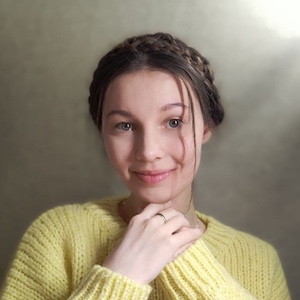
Hi! My name is Isabella, I'm half Russian, half Romanian. I was born and raised in a small Russian city, and a couple of years ago I moved to Italy.
In Padua, I'm studying Techniques and Methods in Psychological Science. This bachelor's degree is the first step in my career path. Although before moving to Italy I'd tried journalism, aviation, and medicine, in the end, psychology has become the choice that suited me the best, since I have always wanted to help people.
Apart of studying, I dedicate a certain amount of time to creative activities, like dance and handicraft. Maybe in my future career, both my professional and amateur interests will intertwine to create something new to help people and improve their quality of life.
Why did you choose the University of Padua and our degree programme in Techniques and Methods in Psychological Science? How did you learn about our institution?
At a certain moment in my life, I thought about studying abroad. I was looking for something related to my previous background, but in another sphere. In that time, a close friend of mine started learning Italian, so she somehow evoked my interest towards Italy.
I have decided to study psychology, but since my Italian wasn’t B2, I’ve started to look for programmes in English. This is how I found the University of Padua. Its history and ranking position, combined with the academic offer, left no chance to any other university. It’s a place where innovations were born, so I couldn’t imagine a better start for my career.
Later, I applied for both offline and online programmes and successfully passed the entry test for both of them. At the end, my choice was the online one, because it gave me an opportunity to study from any place, hence I could also continue to live my life to the fullest and pursue my goals without sacrificing my studies.
Even now, some people say that an online course cannot give you the same level of education as an offline one does, but I strongly disagree with that. During my 1st year, I spent nearly 35 hours per week studying, and at the end, it gave its benefits, so the quality of education depends on a person’s attitude and not on its format.
What are the main features of your degree programme?
Among the main features, I would name the possibility to combine your own life and studying. Even though it’s a complicated degree and it might take a certain effort, it doesn’t deprive you of your pace of life and your activities. You may be in any part of the world, any time zone, and still have an opportunity to get an excellent education.
Another particular feature of my programme is its multiculturalism. Hence, we do not need to be in Padua, we have plenty of students from all over the world. We can share our experiences, exchange ideas, and discuss various points of view. In such a subject as psychology, cultural background plays a crucial role. Thanks to our degree format, we can better understand how it shapes the way people think, why they make certain conclusions, and what can be done to help them.
Is there any class/subject that has stood out to you so far?
I have at least one from each year! Especially for the first year, it would be difficult to choose only one, because we had such an intense and interesting study plan that we were fully emerged into psychology.
If I had to choose only one from all 3 years, I would say “Basic concepts of neurophysiology”. It sounds like a complicated subject (and it is), but for me it was a challenge combined with information which can be used in our future practical work. I especially remember the lesson when our prof. (Prof. Megighian) virtually took us to a laboratory and we could have a look at how the neural impulse is studied. When we talk about online classes, this part, a practical one, is often missed. So I was so grateful to the professor that he somehow managed to insert this offline part into our online course.
What advice would you give to prospective students when it comes to preparing for the entry test?
Read. Seriously, read carefully. First of all, look through the call of application, find the part with the entry test requirements, and read it. Every topic can be your test question. Another thing, when you prepare your room for the test, please read the instructions. It would save you a lot of time during the test without making you nervous even more! And of course, during the test, read the questions. It’s something I usually miss, trying to save time, but in the end, it may lead to wrong answers and deductions.
How has your experience in Padua been so far? What does the city have to offer?
Padua is not the first Italian city where I have lived, so I somehow compare it not only to my hometown but also to another city in Italy. Honestly, I would say that Padua is a perfect place for students. There are always some university-related events, which are connected to your academic interests, and not only! The university organisations also announce some events of interest, like guided tours, board game evenings, outdoor yoga, etc. Moreover, a lot of Erasmus students choose Padua, so you can also participate in international events and meet new people from all over the world!
Talking a part from the university experience, I’d mention the strategic position of Padua: a well-connected train station, 2 airports near Padua, plus some airports in a 2-3 hour ride, a seaside and mountains accessible by bus. It’s a perfect place to get to know more about the Italian culture and visit historical places even within the city (Palazzo della Ragione, Cappella degli Scrovegni, Palazzo Liviano, Palazzo Zabarella, etc.), and students have discounts or even free entry to many museums. There are parks and places to stay outdoors, and the nightlife is also very vibrant here.
The only problem I have faced here is the humidity, so prepare your hair for being fuzzy from time to time :)
What do you do when you’re not studying? How do you like to spend your free time?
I’m an introverted person, so I prefer to spend my free time in Padua calmly. I have a couple of places I enjoy going to, so I can relax and reflect on something. Some exhibitions and museum also help me to reconnect with myself.
Last year I used to dance, which was a wonderful way to let go all emotions, improve my health, and reduce back pain (we all are students and we have to sit a lot!).
Besides, I’m a keen traveller. I adore explore small cities, find something unusual and hidden from a tourist view. Thanks to Padua’s position, I can choose almost any city not only in Italy but in Europe, and depart for a weekend or holidays.
Another part of my Padua life chapter is volunteering. Here in Padua there are so many opportunities to do it, as at the university, as outside. If it’s something you have always wanted to try, it’s a good place to start.
MEET OUR TESTIMONIALS
Many students shared their experiences at the University of Padua.
Find out their stories!