concentus - Coro di canto medievale

Array ( [field_titolo_frontend] => Array ( [#theme] => field [#weight] => -4 [#title] => Titolo frontend [#access] => 1 [#label_display] => above [#view_mode] => teaser [#language] => und [#field_name] => field_titolo_frontend [#field_type] => text_long [#field_translatable] => 0 [#entity_type] => node [#bundle] => elemento_accordion [#object] => stdClass Object ( [vid] => 470709 [uid] => 32 [title] => concentus - Coro di canto medievale [log] => [status] => 1 [comment] => 0 [promote] => 1 [sticky] => 0 [nid] => 113746 [type] => elemento_accordion [language] => it [created] => 1728465652 [changed] => 1752758778 [tnid] => 0 [translate] => 0 [revision_timestamp] => 1752758778 [revision_uid] => 13 [taxonomy_vocabulary_8] => Array ( ) [body] => Array ( [und] => Array ( [0] => Array ( [value] =>

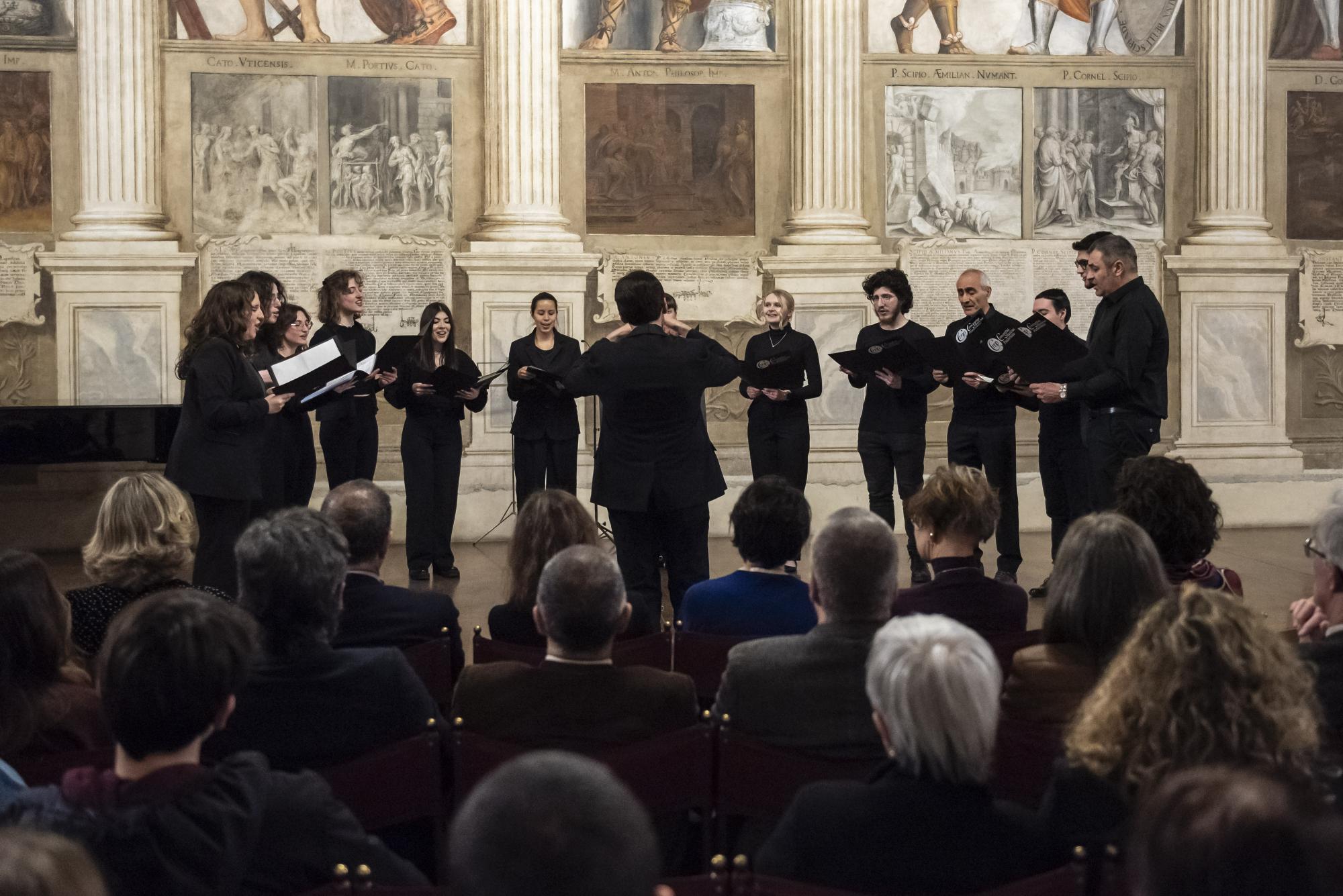
Il Coro di canto medievale del Concentus Musicus Patavinus, diretto dal M° Massimo Bisson e nato dall’esperienza del gruppo di Canto Gregoriano, intende fornire ai partecipanti una formazione di base sui vari repertori vocali del Medioevo (sia sacri che profani). 

Il coro è composto da studentesse e studenti e, dalla sua fondazione, si è esibito in vari concerti, sia in ambito universitario che in festival e rassegne nazionali. Unicum nel panorama universitario nazionale, il coro di canto medievale si prefigge di fornire ai partecipanti un’alfabetizzazione di base sul repertorio vocale antico dell’Occidente, affrontando questioni riguardanti la storia e la diffusione dei canti, insieme all’approfondimento di tecniche esecutive ed interpretative. 

Il Coro di canto medievale del Concentus Musicus Patavinus riprende l’attività per l’anno accademico 2024/25 e invita studenti e studentesse a partecipare a partire da venerdì 18 ottobre alle 16.30, in aula AIS2 del Capitanio.

Le prove si tengono il venerdì dalle ore 16.30 alle ore 19, in Aula AIS2 del Capitanio con cadenza settimanale.

Per partecipare scrivere una email a: massimo.bisson@unipd.it 

I canali social:
Facebook

Direttore: M° Massimo Bisson 

concentus

[summary] => [format] => 2 [safe_value] =>

Il Coro di canto medievale del Concentus Musicus Patavinus, diretto dal M° Massimo Bisson e nato dall’esperienza del gruppo di Canto Gregoriano, intende fornire ai partecipanti una formazione di base sui vari repertori vocali del Medioevo (sia sacri che profani). 

Il coro è composto da studentesse e studenti e, dalla sua fondazione, si è esibito in vari concerti, sia in ambito universitario che in festival e rassegne nazionali. Unicum nel panorama universitario nazionale, il coro di canto medievale si prefigge di fornire ai partecipanti un’alfabetizzazione di base sul repertorio vocale antico dell’Occidente, affrontando questioni riguardanti la storia e la diffusione dei canti, insieme all’approfondimento di tecniche esecutive ed interpretative. 

Il Coro di canto medievale del Concentus Musicus Patavinus riprende l’attività per l’anno accademico 2024/25 e invita studenti e studentesse a partecipare a partire da venerdì 18 ottobre alle 16.30, in aula AIS2 del Capitanio.

Le prove si tengono il venerdì dalle ore 16.30 alle ore 19, in Aula AIS2 del Capitanio con cadenza settimanale.

Per partecipare scrivere una email a: massimo.bisson@unipd.it 

I canali social:
Facebook

Direttore: M° Massimo Bisson 

concentus

[safe_summary] => ) ) ) [field_accordion_state] => Array ( [und] => Array ( [0] => Array ( [value] => chiuso ) ) ) [field_allegato_element] => Array ( ) [field_outline_level] => Array ( [und] => Array ( [0] => Array ( [value] => h3 ) ) ) [field_titolo_frontend] => Array ( [und] => Array ( [0] => Array ( [value] => Coro di canto medievale [format] => [safe_value] => Coro di canto medievale ) ) ) [name] => stefano.zampieri [picture] => 0 [data] => a:2:{s:13:"form_build_id";s:48:"form-WsCySmos4vAVlyFhG6gU5T7knfAyqco8LxlocSU_yIA";s:14:"wysiwyg_status";a:1:{i:1;i:1;}} [num_revisions] => 1 [current_revision_id] => 470709 [is_current] => 1 [is_pending] => [revision_moderation] => [entity_view_prepared] => 1 ) [#items] => Array ( [0] => Array ( [value] => Coro di canto medievale [format] => [safe_value] => Coro di canto medievale ) ) [#formatter] => text_default [0] => Array ( [#markup] => Coro di canto medievale ) ) [body] => Array ( [#theme] => field [#weight] => -3 [#title] => Body [#access] => 1 [#label_display] => hidden [#view_mode] => teaser [#language] => und [#field_name] => body [#field_type] => text_with_summary [#field_translatable] => 0 [#entity_type] => node [#bundle] => elemento_accordion [#object] => stdClass Object ( [vid] => 470709 [uid] => 32 [title] => concentus - Coro di canto medievale [log] => [status] => 1 [comment] => 0 [promote] => 1 [sticky] => 0 [nid] => 113746 [type] => elemento_accordion [language] => it [created] => 1728465652 [changed] => 1752758778 [tnid] => 0 [translate] => 0 [revision_timestamp] => 1752758778 [revision_uid] => 13 [taxonomy_vocabulary_8] => Array ( ) [body] => Array ( [und] => Array ( [0] => Array ( [value] =>

Il Coro di canto medievale del Concentus Musicus Patavinus, diretto dal M° Massimo Bisson e nato dall’esperienza del gruppo di Canto Gregoriano, intende fornire ai partecipanti una formazione di base sui vari repertori vocali del Medioevo (sia sacri che profani). 

Il coro è composto da studentesse e studenti e, dalla sua fondazione, si è esibito in vari concerti, sia in ambito universitario che in festival e rassegne nazionali. Unicum nel panorama universitario nazionale, il coro di canto medievale si prefigge di fornire ai partecipanti un’alfabetizzazione di base sul repertorio vocale antico dell’Occidente, affrontando questioni riguardanti la storia e la diffusione dei canti, insieme all’approfondimento di tecniche esecutive ed interpretative. 

Il Coro di canto medievale del Concentus Musicus Patavinus riprende l’attività per l’anno accademico 2024/25 e invita studenti e studentesse a partecipare a partire da venerdì 18 ottobre alle 16.30, in aula AIS2 del Capitanio.

Le prove si tengono il venerdì dalle ore 16.30 alle ore 19, in Aula AIS2 del Capitanio con cadenza settimanale.

Per partecipare scrivere una email a: massimo.bisson@unipd.it 

I canali social:
Facebook

Direttore: M° Massimo Bisson 

concentus

[summary] => [format] => 2 [safe_value] =>

Il Coro di canto medievale del Concentus Musicus Patavinus, diretto dal M° Massimo Bisson e nato dall’esperienza del gruppo di Canto Gregoriano, intende fornire ai partecipanti una formazione di base sui vari repertori vocali del Medioevo (sia sacri che profani). 

Il coro è composto da studentesse e studenti e, dalla sua fondazione, si è esibito in vari concerti, sia in ambito universitario che in festival e rassegne nazionali. Unicum nel panorama universitario nazionale, il coro di canto medievale si prefigge di fornire ai partecipanti un’alfabetizzazione di base sul repertorio vocale antico dell’Occidente, affrontando questioni riguardanti la storia e la diffusione dei canti, insieme all’approfondimento di tecniche esecutive ed interpretative. 

Il Coro di canto medievale del Concentus Musicus Patavinus riprende l’attività per l’anno accademico 2024/25 e invita studenti e studentesse a partecipare a partire da venerdì 18 ottobre alle 16.30, in aula AIS2 del Capitanio.

Le prove si tengono il venerdì dalle ore 16.30 alle ore 19, in Aula AIS2 del Capitanio con cadenza settimanale.

Per partecipare scrivere una email a: massimo.bisson@unipd.it 

I canali social:
Facebook

Direttore: M° Massimo Bisson 

concentus

[safe_summary] => ) ) ) [field_accordion_state] => Array ( [und] => Array ( [0] => Array ( [value] => chiuso ) ) ) [field_allegato_element] => Array ( ) [field_outline_level] => Array ( [und] => Array ( [0] => Array ( [value] => h3 ) ) ) [field_titolo_frontend] => Array ( [und] => Array ( [0] => Array ( [value] => Coro di canto medievale [format] => [safe_value] => Coro di canto medievale ) ) ) [name] => stefano.zampieri [picture] => 0 [data] => a:2:{s:13:"form_build_id";s:48:"form-WsCySmos4vAVlyFhG6gU5T7knfAyqco8LxlocSU_yIA";s:14:"wysiwyg_status";a:1:{i:1;i:1;}} [num_revisions] => 1 [current_revision_id] => 470709 [is_current] => 1 [is_pending] => [revision_moderation] => [entity_view_prepared] => 1 ) [#items] => Array ( [0] => Array ( [value] =>

Il Coro di canto medievale del Concentus Musicus Patavinus, diretto dal M° Massimo Bisson e nato dall’esperienza del gruppo di Canto Gregoriano, intende fornire ai partecipanti una formazione di base sui vari repertori vocali del Medioevo (sia sacri che profani). 

Il coro è composto da studentesse e studenti e, dalla sua fondazione, si è esibito in vari concerti, sia in ambito universitario che in festival e rassegne nazionali. Unicum nel panorama universitario nazionale, il coro di canto medievale si prefigge di fornire ai partecipanti un’alfabetizzazione di base sul repertorio vocale antico dell’Occidente, affrontando questioni riguardanti la storia e la diffusione dei canti, insieme all’approfondimento di tecniche esecutive ed interpretative. 

Il Coro di canto medievale del Concentus Musicus Patavinus riprende l’attività per l’anno accademico 2024/25 e invita studenti e studentesse a partecipare a partire da venerdì 18 ottobre alle 16.30, in aula AIS2 del Capitanio.

Le prove si tengono il venerdì dalle ore 16.30 alle ore 19, in Aula AIS2 del Capitanio con cadenza settimanale.

Per partecipare scrivere una email a: massimo.bisson@unipd.it 

I canali social:
Facebook

Direttore: M° Massimo Bisson 

concentus

[summary] => [format] => 2 [safe_value] =>

Il Coro di canto medievale del Concentus Musicus Patavinus, diretto dal M° Massimo Bisson e nato dall’esperienza del gruppo di Canto Gregoriano, intende fornire ai partecipanti una formazione di base sui vari repertori vocali del Medioevo (sia sacri che profani). 

Il coro è composto da studentesse e studenti e, dalla sua fondazione, si è esibito in vari concerti, sia in ambito universitario che in festival e rassegne nazionali. Unicum nel panorama universitario nazionale, il coro di canto medievale si prefigge di fornire ai partecipanti un’alfabetizzazione di base sul repertorio vocale antico dell’Occidente, affrontando questioni riguardanti la storia e la diffusione dei canti, insieme all’approfondimento di tecniche esecutive ed interpretative. 

Il Coro di canto medievale del Concentus Musicus Patavinus riprende l’attività per l’anno accademico 2024/25 e invita studenti e studentesse a partecipare a partire da venerdì 18 ottobre alle 16.30, in aula AIS2 del Capitanio.

Le prove si tengono il venerdì dalle ore 16.30 alle ore 19, in Aula AIS2 del Capitanio con cadenza settimanale.

Per partecipare scrivere una email a: massimo.bisson@unipd.it 

I canali social:
Facebook

Direttore: M° Massimo Bisson 

concentus

[safe_summary] => ) ) [#formatter] => text_summary_or_trimmed [0] => Array ( [#markup] =>

Il Coro di canto medievale del Concentus Musicus Patavinus, diretto dal M° Massimo Bisson e nato dall’esperienza del gruppo di Canto Gregoriano, intende fornire ai partecipanti una formazione di base sui vari repertori vocali del Medioevo (sia sacri che profani). 

) ) [field_accordion_state] => Array ( [#theme] => field [#weight] => -1 [#title] => Aperto/Chiuso [#access] => 1 [#label_display] => above [#view_mode] => teaser [#language] => und [#field_name] => field_accordion_state [#field_type] => list_text [#field_translatable] => 0 [#entity_type] => node [#bundle] => elemento_accordion [#object] => stdClass Object ( [vid] => 470709 [uid] => 32 [title] => concentus - Coro di canto medievale [log] => [status] => 1 [comment] => 0 [promote] => 1 [sticky] => 0 [nid] => 113746 [type] => elemento_accordion [language] => it [created] => 1728465652 [changed] => 1752758778 [tnid] => 0 [translate] => 0 [revision_timestamp] => 1752758778 [revision_uid] => 13 [taxonomy_vocabulary_8] => Array ( ) [body] => Array ( [und] => Array ( [0] => Array ( [value] =>

Il Coro di canto medievale del Concentus Musicus Patavinus, diretto dal M° Massimo Bisson e nato dall’esperienza del gruppo di Canto Gregoriano, intende fornire ai partecipanti una formazione di base sui vari repertori vocali del Medioevo (sia sacri che profani). 

Il coro è composto da studentesse e studenti e, dalla sua fondazione, si è esibito in vari concerti, sia in ambito universitario che in festival e rassegne nazionali. Unicum nel panorama universitario nazionale, il coro di canto medievale si prefigge di fornire ai partecipanti un’alfabetizzazione di base sul repertorio vocale antico dell’Occidente, affrontando questioni riguardanti la storia e la diffusione dei canti, insieme all’approfondimento di tecniche esecutive ed interpretative. 

Il Coro di canto medievale del Concentus Musicus Patavinus riprende l’attività per l’anno accademico 2024/25 e invita studenti e studentesse a partecipare a partire da venerdì 18 ottobre alle 16.30, in aula AIS2 del Capitanio.

Le prove si tengono il venerdì dalle ore 16.30 alle ore 19, in Aula AIS2 del Capitanio con cadenza settimanale.

Per partecipare scrivere una email a: massimo.bisson@unipd.it 

I canali social:
Facebook

Direttore: M° Massimo Bisson 

concentus

[summary] => [format] => 2 [safe_value] =>

Il Coro di canto medievale del Concentus Musicus Patavinus, diretto dal M° Massimo Bisson e nato dall’esperienza del gruppo di Canto Gregoriano, intende fornire ai partecipanti una formazione di base sui vari repertori vocali del Medioevo (sia sacri che profani). 

Il coro è composto da studentesse e studenti e, dalla sua fondazione, si è esibito in vari concerti, sia in ambito universitario che in festival e rassegne nazionali. Unicum nel panorama universitario nazionale, il coro di canto medievale si prefigge di fornire ai partecipanti un’alfabetizzazione di base sul repertorio vocale antico dell’Occidente, affrontando questioni riguardanti la storia e la diffusione dei canti, insieme all’approfondimento di tecniche esecutive ed interpretative. 

Il Coro di canto medievale del Concentus Musicus Patavinus riprende l’attività per l’anno accademico 2024/25 e invita studenti e studentesse a partecipare a partire da venerdì 18 ottobre alle 16.30, in aula AIS2 del Capitanio.

Le prove si tengono il venerdì dalle ore 16.30 alle ore 19, in Aula AIS2 del Capitanio con cadenza settimanale.

Per partecipare scrivere una email a: massimo.bisson@unipd.it 

I canali social:
Facebook

Direttore: M° Massimo Bisson 

concentus

[safe_summary] => ) ) ) [field_accordion_state] => Array ( [und] => Array ( [0] => Array ( [value] => chiuso ) ) ) [field_allegato_element] => Array ( ) [field_outline_level] => Array ( [und] => Array ( [0] => Array ( [value] => h3 ) ) ) [field_titolo_frontend] => Array ( [und] => Array ( [0] => Array ( [value] => Coro di canto medievale [format] => [safe_value] => Coro di canto medievale ) ) ) [name] => stefano.zampieri [picture] => 0 [data] => a:2:{s:13:"form_build_id";s:48:"form-WsCySmos4vAVlyFhG6gU5T7knfAyqco8LxlocSU_yIA";s:14:"wysiwyg_status";a:1:{i:1;i:1;}} [num_revisions] => 1 [current_revision_id] => 470709 [is_current] => 1 [is_pending] => [revision_moderation] => [entity_view_prepared] => 1 ) [#items] => Array ( [0] => Array ( [value] => chiuso ) ) [#formatter] => text_default [0] => Array ( [#markup] => chiuso ) ) [links] => Array ( [#theme] => links__node [#pre_render] => Array ( [0] => drupal_pre_render_links ) [#attributes] => Array ( [class] => Array ( [0] => links [1] => inline ) ) [node] => Array ( [#theme] => links__node__node [#links] => Array ( [node-readmore] => Array ( [title] => Read more about concentus - Coro di canto medievale [href] => node/113746 [html] => 1 [attributes] => Array ( [rel] => tag [title] => concentus - Coro di canto medievale ) ) ) [#attributes] => Array ( [class] => Array ( [0] => links [1] => inline ) ) ) ) [field_outline_level] => Array ( [#theme] => field [#weight] => 31 [#title] => Livello outline [#access] => 1 [#label_display] => above [#view_mode] => teaser [#language] => und [#field_name] => field_outline_level [#field_type] => list_text [#field_translatable] => 0 [#entity_type] => node [#bundle] => elemento_accordion [#object] => stdClass Object ( [vid] => 470709 [uid] => 32 [title] => concentus - Coro di canto medievale [log] => [status] => 1 [comment] => 0 [promote] => 1 [sticky] => 0 [nid] => 113746 [type] => elemento_accordion [language] => it [created] => 1728465652 [changed] => 1752758778 [tnid] => 0 [translate] => 0 [revision_timestamp] => 1752758778 [revision_uid] => 13 [taxonomy_vocabulary_8] => Array ( ) [body] => Array ( [und] => Array ( [0] => Array ( [value] =>

Il Coro di canto medievale del Concentus Musicus Patavinus, diretto dal M° Massimo Bisson e nato dall’esperienza del gruppo di Canto Gregoriano, intende fornire ai partecipanti una formazione di base sui vari repertori vocali del Medioevo (sia sacri che profani). 

Il coro è composto da studentesse e studenti e, dalla sua fondazione, si è esibito in vari concerti, sia in ambito universitario che in festival e rassegne nazionali. Unicum nel panorama universitario nazionale, il coro di canto medievale si prefigge di fornire ai partecipanti un’alfabetizzazione di base sul repertorio vocale antico dell’Occidente, affrontando questioni riguardanti la storia e la diffusione dei canti, insieme all’approfondimento di tecniche esecutive ed interpretative. 

Il Coro di canto medievale del Concentus Musicus Patavinus riprende l’attività per l’anno accademico 2024/25 e invita studenti e studentesse a partecipare a partire da venerdì 18 ottobre alle 16.30, in aula AIS2 del Capitanio.

Le prove si tengono il venerdì dalle ore 16.30 alle ore 19, in Aula AIS2 del Capitanio con cadenza settimanale.

Per partecipare scrivere una email a: massimo.bisson@unipd.it 

I canali social:
Facebook

Direttore: M° Massimo Bisson 

concentus

[summary] => [format] => 2 [safe_value] =>

Il Coro di canto medievale del Concentus Musicus Patavinus, diretto dal M° Massimo Bisson e nato dall’esperienza del gruppo di Canto Gregoriano, intende fornire ai partecipanti una formazione di base sui vari repertori vocali del Medioevo (sia sacri che profani). 

Il coro è composto da studentesse e studenti e, dalla sua fondazione, si è esibito in vari concerti, sia in ambito universitario che in festival e rassegne nazionali. Unicum nel panorama universitario nazionale, il coro di canto medievale si prefigge di fornire ai partecipanti un’alfabetizzazione di base sul repertorio vocale antico dell’Occidente, affrontando questioni riguardanti la storia e la diffusione dei canti, insieme all’approfondimento di tecniche esecutive ed interpretative. 

Il Coro di canto medievale del Concentus Musicus Patavinus riprende l’attività per l’anno accademico 2024/25 e invita studenti e studentesse a partecipare a partire da venerdì 18 ottobre alle 16.30, in aula AIS2 del Capitanio.

Le prove si tengono il venerdì dalle ore 16.30 alle ore 19, in Aula AIS2 del Capitanio con cadenza settimanale.

Per partecipare scrivere una email a: massimo.bisson@unipd.it 

I canali social:
Facebook

Direttore: M° Massimo Bisson 

concentus

[safe_summary] => ) ) ) [field_accordion_state] => Array ( [und] => Array ( [0] => Array ( [value] => chiuso ) ) ) [field_allegato_element] => Array ( ) [field_outline_level] => Array ( [und] => Array ( [0] => Array ( [value] => h3 ) ) ) [field_titolo_frontend] => Array ( [und] => Array ( [0] => Array ( [value] => Coro di canto medievale [format] => [safe_value] => Coro di canto medievale ) ) ) [name] => stefano.zampieri [picture] => 0 [data] => a:2:{s:13:"form_build_id";s:48:"form-WsCySmos4vAVlyFhG6gU5T7knfAyqco8LxlocSU_yIA";s:14:"wysiwyg_status";a:1:{i:1;i:1;}} [num_revisions] => 1 [current_revision_id] => 470709 [is_current] => 1 [is_pending] => [revision_moderation] => [entity_view_prepared] => 1 ) [#items] => Array ( [0] => Array ( [value] => h3 ) ) [#formatter] => text_default [0] => Array ( [#markup] => h3 ) ) )

2024PO183 - Allegato 3 Verbale 2 - Elenco candidati

Array ( [field_titolo_frontend_all] => Array ( [#theme] => field [#weight] => -4 [#title] => Titolo frontend [#access] => 1 [#label_display] => above [#view_mode] => teaser [#language] => und [#field_name] => field_titolo_frontend_all [#field_type] => text_long [#field_translatable] => 0 [#entity_type] => node [#bundle] => allegato [#object] => stdClass Object ( [vid] => 470706 [uid] => 4 [title] => 2024PO183 - Allegato 3 Verbale 2 - Elenco candidati [log] => [status] => 1 [comment] => 0 [promote] => 1 [sticky] => 0 [nid] => 113745 [type] => allegato [language] => it [created] => 1728465634 [changed] => 1728465634 [tnid] => 0 [translate] => 0 [revision_timestamp] => 1728465634 [revision_uid] => 4 [taxonomy_vocabulary_2] => Array ( ) [taxonomy_vocabulary_8] => Array ( ) [body] => Array ( ) [field_titolo_frontend_all] => Array ( [und] => Array ( [0] => Array ( [value] => Verbale 2 - Elenco candidati [format] => [safe_value] => Verbale 2 - Elenco candidati ) ) ) [field_allegato_file] => Array ( [und] => Array ( [0] => Array ( [fid] => 134445 [uid] => 4 [filename] => Verbale2.pdf [uri] => public://2024/Verbale2.pdf [filemime] => application/pdf [filesize] => 354833 [status] => 1 [timestamp] => 1728465621 [type] => document [field_folder] => Array ( [und] => Array ( [0] => Array ( [tid] => 2614 ) ) ) [metadata] => Array ( ) [display] => 1 [description] => ) ) ) [name] => simonetta.capparotto [picture] => 0 [data] => a:2:{s:13:"form_build_id";s:37:"form-fe5ebd9e5e240c4294455b6b42fa6a76";s:14:"wysiwyg_status";a:1:{i:1;i:1;}} [num_revisions] => 1 [current_revision_id] => 470706 [is_current] => 1 [is_pending] => [revision_moderation] => [entity_view_prepared] => 1 ) [#items] => Array ( [0] => Array ( [value] => Verbale 2 - Elenco candidati [format] => [safe_value] => Verbale 2 - Elenco candidati ) ) [#formatter] => text_default [0] => Array ( [#markup] => Verbale 2 - Elenco candidati ) ) [field_allegato_file] => Array ( [#theme] => field [#weight] => -3 [#title] => File [#access] => 1 [#label_display] => above [#view_mode] => teaser [#language] => und [#field_name] => field_allegato_file [#field_type] => file [#field_translatable] => 0 [#entity_type] => node [#bundle] => allegato [#object] => stdClass Object ( [vid] => 470706 [uid] => 4 [title] => 2024PO183 - Allegato 3 Verbale 2 - Elenco candidati [log] => [status] => 1 [comment] => 0 [promote] => 1 [sticky] => 0 [nid] => 113745 [type] => allegato [language] => it [created] => 1728465634 [changed] => 1728465634 [tnid] => 0 [translate] => 0 [revision_timestamp] => 1728465634 [revision_uid] => 4 [taxonomy_vocabulary_2] => Array ( ) [taxonomy_vocabulary_8] => Array ( ) [body] => Array ( ) [field_titolo_frontend_all] => Array ( [und] => Array ( [0] => Array ( [value] => Verbale 2 - Elenco candidati [format] => [safe_value] => Verbale 2 - Elenco candidati ) ) ) [field_allegato_file] => Array ( [und] => Array ( [0] => Array ( [fid] => 134445 [uid] => 4 [filename] => Verbale2.pdf [uri] => public://2024/Verbale2.pdf [filemime] => application/pdf [filesize] => 354833 [status] => 1 [timestamp] => 1728465621 [type] => document [field_folder] => Array ( [und] => Array ( [0] => Array ( [tid] => 2614 ) ) ) [metadata] => Array ( ) [display] => 1 [description] => ) ) ) [name] => simonetta.capparotto [picture] => 0 [data] => a:2:{s:13:"form_build_id";s:37:"form-fe5ebd9e5e240c4294455b6b42fa6a76";s:14:"wysiwyg_status";a:1:{i:1;i:1;}} [num_revisions] => 1 [current_revision_id] => 470706 [is_current] => 1 [is_pending] => [revision_moderation] => [entity_view_prepared] => 1 ) [#items] => Array ( [0] => Array ( [fid] => 134445 [uid] => 4 [filename] => Verbale2.pdf [uri] => public://2024/Verbale2.pdf [filemime] => application/pdf [filesize] => 354833 [status] => 1 [timestamp] => 1728465621 [type] => document [field_folder] => Array ( [und] => Array ( [0] => Array ( [tid] => 2614 ) ) ) [metadata] => Array ( ) [display] => 1 [description] => ) ) [#formatter] => file_default [0] => Array ( [#theme] => file_link [#file] => stdClass Object ( [fid] => 134445 [uid] => 4 [filename] => Verbale2.pdf [uri] => public://2024/Verbale2.pdf [filemime] => application/pdf [filesize] => 354833 [status] => 1 [timestamp] => 1728465621 [type] => document [field_folder] => Array ( [und] => Array ( [0] => Array ( [tid] => 2614 ) ) ) [metadata] => Array ( ) [display] => 1 [description] => ) ) ) [links] => Array ( [#theme] => links__node [#pre_render] => Array ( [0] => drupal_pre_render_links ) [#attributes] => Array ( [class] => Array ( [0] => links [1] => inline ) ) [node] => Array ( [#theme] => links__node__node [#links] => Array ( [node-readmore] => Array ( [title] => Read more about 2024PO183 - Allegato 3 Verbale 2 - Elenco candidati [href] => node/113745 [html] => 1 [attributes] => Array ( [rel] => tag [title] => 2024PO183 - Allegato 3 Verbale 2 - Elenco candidati ) ) ) [#attributes] => Array ( [class] => Array ( [0] => links [1] => inline ) ) ) ) )

Rinnovo delle rappresentanze di studentesse e studenti per il biennio accademico 2024-2026

Array ( [body] => Array ( [#theme] => field [#weight] => 0 [#title] => Body [#access] => 1 [#label_display] => hidden [#view_mode] => teaser [#language] => und [#field_name] => body [#field_type] => text_with_summary [#field_translatable] => 0 [#entity_type] => node [#bundle] => box_lancio_news [#object] => stdClass Object ( [vid] => 470713 [uid] => 2032 [title] => Rinnovo delle rappresentanze di studentesse e studenti per il biennio accademico 2024-2026 [log] => [status] => 1 [comment] => 0 [promote] => 1 [sticky] => 0 [nid] => 113744 [type] => box_lancio_news [language] => it [created] => 1728465103 [changed] => 1728466033 [tnid] => 0 [translate] => 0 [revision_timestamp] => 1728466033 [revision_uid] => 2032 [body] => Array ( [und] => Array ( [0] => Array ( [value] =>

Si svolgeranno con modalità di voto elettronica il 3 e il 4 dicembre 2024, le elezioni delle rappresentanze studentesche negli organi dell’Università.

È possibile candidarsi nel Comitato per lo sport universitario che coordina le attività sportive dedicate alla comunità universitaria e segue gli indirizzi di gestione degli impianti sportivi e i programmi di sviluppo e promozione delle attività sportive, nel Consiglio di amministrazione dell’Azienda Regionale per il Diritto allo studio universitario e nel Consiglio degli studenti, organo di rappresentanza degli studenti e delle studentesse a livello di Ateneo e di coordinamento delle rappresentanze studentesche nelle strutture centrali e periferiche.

Il termine per la presentazione delle candidature è fissato alle ore 13 del giorno 30 ottobre 2024.

[summary] => [format] => 2 [safe_value] =>

Si svolgeranno con modalità di voto elettronica il 3 e il 4 dicembre 2024, le elezioni delle rappresentanze studentesche negli organi dell’Università.

È possibile candidarsi nel Comitato per lo sport universitario che coordina le attività sportive dedicate alla comunità universitaria e segue gli indirizzi di gestione degli impianti sportivi e i programmi di sviluppo e promozione delle attività sportive, nel Consiglio di amministrazione dell’Azienda Regionale per il Diritto allo studio universitario e nel Consiglio degli studenti, organo di rappresentanza degli studenti e delle studentesse a livello di Ateneo e di coordinamento delle rappresentanze studentesche nelle strutture centrali e periferiche.

Il termine per la presentazione delle candidature è fissato alle ore 13 del giorno 30 ottobre 2024.

[safe_summary] => ) ) ) [field_date_box_lancio_news] => Array ( [und] => Array ( [0] => Array ( [value] => 2024-10-09T00:00:00 [timezone] => Europe/Paris [timezone_db] => Europe/Paris [date_type] => date ) ) ) [field_etichetta_box_lancio_news] => Array ( ) [field_img_box_lancio_news] => Array ( [und] => Array ( [0] => Array ( [fid] => 134446 [uid] => 2032 [filename] => n_stud_lezione.jpg [uri] => public://n_stud_lezione_3.jpg [filemime] => image/jpeg [filesize] => 26784 [status] => 1 [timestamp] => 1728465974 [type] => image [field_file_image_alt_text] => Array ( ) [field_file_image_title_text] => Array ( ) [field_folder] => Array ( [und] => Array ( [0] => Array ( [tid] => 2048 ) ) ) [metadata] => Array ( [height] => 227 [width] => 677 ) [height] => 227 [width] => 677 [alt] => studenti [title] => ) ) ) [field_link_alla_news] => Array ( ) [field_link_esterno_news] => Array ( ) [field_pagina_associata] => Array ( ) [field_link_etichetta] => Array ( ) [field_abstract_news] => Array ( [und] => Array ( [0] => Array ( [value] => C'è tempo fino al 30 ottobre per candidarsi alle elezioni delle rappresentanze studentesche negli organi dell’Università, nel Comitato per lo sport universitario, nel Consiglio di Amministrazione dell’Azienda Regionale per il Diritto allo studio universitario, nel Consiglio degli Studenti [format] => [safe_value] => C'è tempo fino al 30 ottobre per candidarsi alle elezioni delle rappresentanze studentesche negli organi dell’Università, nel Comitato per lo sport universitario, nel Consiglio di Amministrazione dell’Azienda Regionale per il Diritto allo studio universitario, nel Consiglio degli Studenti ) ) ) [field_allegato_news] => Array ( ) [field_categorie_news] => Array ( [und] => Array ( [0] => Array ( [tid] => 2264 ) [1] => Array ( [tid] => 2266 ) [2] => Array ( [tid] => 2267 ) [3] => Array ( [tid] => 2462 ) ) ) [field_pub_date] => Array ( [und] => Array ( [0] => Array ( [value] => 2024-10-09T00:00:00 [value2] => 2024-12-09T00:00:00 [timezone] => Europe/Paris [timezone_db] => Europe/Paris [date_type] => date ) ) ) [field_layout_news] => Array ( [und] => Array ( [0] => Array ( [value] => single ) ) ) [field_testo_opzionale_news] => Array ( ) [field_url_en_page] => Array ( ) [field_url_en_page_label] => Array ( ) [path] => Array ( [pathauto] => 1 ) [name] => francesca.forzan [picture] => 0 [data] => b:0; [num_revisions] => 3 [current_revision_id] => 470713 [is_current] => 1 [is_pending] => [revision_moderation] => [entity_view_prepared] => 1 ) [#items] => Array ( [0] => Array ( [value] =>

Si svolgeranno con modalità di voto elettronica il 3 e il 4 dicembre 2024, le elezioni delle rappresentanze studentesche negli organi dell’Università.

È possibile candidarsi nel Comitato per lo sport universitario che coordina le attività sportive dedicate alla comunità universitaria e segue gli indirizzi di gestione degli impianti sportivi e i programmi di sviluppo e promozione delle attività sportive, nel Consiglio di amministrazione dell’Azienda Regionale per il Diritto allo studio universitario e nel Consiglio degli studenti, organo di rappresentanza degli studenti e delle studentesse a livello di Ateneo e di coordinamento delle rappresentanze studentesche nelle strutture centrali e periferiche.

Il termine per la presentazione delle candidature è fissato alle ore 13 del giorno 30 ottobre 2024.

[summary] => [format] => 2 [safe_value] =>

Si svolgeranno con modalità di voto elettronica il 3 e il 4 dicembre 2024, le elezioni delle rappresentanze studentesche negli organi dell’Università.

È possibile candidarsi nel Comitato per lo sport universitario che coordina le attività sportive dedicate alla comunità universitaria e segue gli indirizzi di gestione degli impianti sportivi e i programmi di sviluppo e promozione delle attività sportive, nel Consiglio di amministrazione dell’Azienda Regionale per il Diritto allo studio universitario e nel Consiglio degli studenti, organo di rappresentanza degli studenti e delle studentesse a livello di Ateneo e di coordinamento delle rappresentanze studentesche nelle strutture centrali e periferiche.

Il termine per la presentazione delle candidature è fissato alle ore 13 del giorno 30 ottobre 2024.

[safe_summary] => ) ) [#formatter] => text_summary_or_trimmed [0] => Array ( [#markup] =>

Si svolgeranno con modalità di voto elettronica il 3 e il 4 dicembre 2024, le elezioni delle rappresentanze studentesche negli organi dell’Università.

) ) [field_img_box_lancio_news] => Array ( [#theme] => field [#weight] => 0 [#title] => Immagine [#access] => 1 [#label_display] => above [#view_mode] => teaser [#language] => und [#field_name] => field_img_box_lancio_news [#field_type] => image [#field_translatable] => 0 [#entity_type] => node [#bundle] => box_lancio_news [#object] => stdClass Object ( [vid] => 470713 [uid] => 2032 [title] => Rinnovo delle rappresentanze di studentesse e studenti per il biennio accademico 2024-2026 [log] => [status] => 1 [comment] => 0 [promote] => 1 [sticky] => 0 [nid] => 113744 [type] => box_lancio_news [language] => it [created] => 1728465103 [changed] => 1728466033 [tnid] => 0 [translate] => 0 [revision_timestamp] => 1728466033 [revision_uid] => 2032 [body] => Array ( [und] => Array ( [0] => Array ( [value] =>

Si svolgeranno con modalità di voto elettronica il 3 e il 4 dicembre 2024, le elezioni delle rappresentanze studentesche negli organi dell’Università.

È possibile candidarsi nel Comitato per lo sport universitario che coordina le attività sportive dedicate alla comunità universitaria e segue gli indirizzi di gestione degli impianti sportivi e i programmi di sviluppo e promozione delle attività sportive, nel Consiglio di amministrazione dell’Azienda Regionale per il Diritto allo studio universitario e nel Consiglio degli studenti, organo di rappresentanza degli studenti e delle studentesse a livello di Ateneo e di coordinamento delle rappresentanze studentesche nelle strutture centrali e periferiche.

Il termine per la presentazione delle candidature è fissato alle ore 13 del giorno 30 ottobre 2024.

[summary] => [format] => 2 [safe_value] =>

Si svolgeranno con modalità di voto elettronica il 3 e il 4 dicembre 2024, le elezioni delle rappresentanze studentesche negli organi dell’Università.

È possibile candidarsi nel Comitato per lo sport universitario che coordina le attività sportive dedicate alla comunità universitaria e segue gli indirizzi di gestione degli impianti sportivi e i programmi di sviluppo e promozione delle attività sportive, nel Consiglio di amministrazione dell’Azienda Regionale per il Diritto allo studio universitario e nel Consiglio degli studenti, organo di rappresentanza degli studenti e delle studentesse a livello di Ateneo e di coordinamento delle rappresentanze studentesche nelle strutture centrali e periferiche.

Il termine per la presentazione delle candidature è fissato alle ore 13 del giorno 30 ottobre 2024.

[safe_summary] => ) ) ) [field_date_box_lancio_news] => Array ( [und] => Array ( [0] => Array ( [value] => 2024-10-09T00:00:00 [timezone] => Europe/Paris [timezone_db] => Europe/Paris [date_type] => date ) ) ) [field_etichetta_box_lancio_news] => Array ( ) [field_img_box_lancio_news] => Array ( [und] => Array ( [0] => Array ( [fid] => 134446 [uid] => 2032 [filename] => n_stud_lezione.jpg [uri] => public://n_stud_lezione_3.jpg [filemime] => image/jpeg [filesize] => 26784 [status] => 1 [timestamp] => 1728465974 [type] => image [field_file_image_alt_text] => Array ( ) [field_file_image_title_text] => Array ( ) [field_folder] => Array ( [und] => Array ( [0] => Array ( [tid] => 2048 ) ) ) [metadata] => Array ( [height] => 227 [width] => 677 ) [height] => 227 [width] => 677 [alt] => studenti [title] => ) ) ) [field_link_alla_news] => Array ( ) [field_link_esterno_news] => Array ( ) [field_pagina_associata] => Array ( ) [field_link_etichetta] => Array ( ) [field_abstract_news] => Array ( [und] => Array ( [0] => Array ( [value] => C'è tempo fino al 30 ottobre per candidarsi alle elezioni delle rappresentanze studentesche negli organi dell’Università, nel Comitato per lo sport universitario, nel Consiglio di Amministrazione dell’Azienda Regionale per il Diritto allo studio universitario, nel Consiglio degli Studenti [format] => [safe_value] => C'è tempo fino al 30 ottobre per candidarsi alle elezioni delle rappresentanze studentesche negli organi dell’Università, nel Comitato per lo sport universitario, nel Consiglio di Amministrazione dell’Azienda Regionale per il Diritto allo studio universitario, nel Consiglio degli Studenti ) ) ) [field_allegato_news] => Array ( ) [field_categorie_news] => Array ( [und] => Array ( [0] => Array ( [tid] => 2264 ) [1] => Array ( [tid] => 2266 ) [2] => Array ( [tid] => 2267 ) [3] => Array ( [tid] => 2462 ) ) ) [field_pub_date] => Array ( [und] => Array ( [0] => Array ( [value] => 2024-10-09T00:00:00 [value2] => 2024-12-09T00:00:00 [timezone] => Europe/Paris [timezone_db] => Europe/Paris [date_type] => date ) ) ) [field_layout_news] => Array ( [und] => Array ( [0] => Array ( [value] => single ) ) ) [field_testo_opzionale_news] => Array ( ) [field_url_en_page] => Array ( ) [field_url_en_page_label] => Array ( ) [path] => Array ( [pathauto] => 1 ) [name] => francesca.forzan [picture] => 0 [data] => b:0; [num_revisions] => 3 [current_revision_id] => 470713 [is_current] => 1 [is_pending] => [revision_moderation] => [entity_view_prepared] => 1 ) [#items] => Array ( [0] => Array ( [fid] => 134446 [uid] => 2032 [filename] => n_stud_lezione.jpg [uri] => public://n_stud_lezione_3.jpg [filemime] => image/jpeg [filesize] => 26784 [status] => 1 [timestamp] => 1728465974 [type] => image [field_file_image_alt_text] => Array ( ) [field_file_image_title_text] => Array ( ) [field_folder] => Array ( [und] => Array ( [0] => Array ( [tid] => 2048 ) ) ) [metadata] => Array ( [height] => 227 [width] => 677 ) [height] => 227 [width] => 677 [alt] => studenti [title] => ) ) [#formatter] => image [0] => Array ( [#theme] => image_formatter [#item] => Array ( [fid] => 134446 [uid] => 2032 [filename] => n_stud_lezione.jpg [uri] => public://n_stud_lezione_3.jpg [filemime] => image/jpeg [filesize] => 26784 [status] => 1 [timestamp] => 1728465974 [type] => image [field_file_image_alt_text] => Array ( ) [field_file_image_title_text] => Array ( ) [field_folder] => Array ( [und] => Array ( [0] => Array ( [tid] => 2048 ) ) ) [metadata] => Array ( [height] => 227 [width] => 677 ) [height] => 227 [width] => 677 [alt] => studenti [title] => ) [#image_style] => [#path] => ) ) [field_abstract_news] => Array ( [#theme] => field [#weight] => 0 [#title] => Abstract [#access] => 1 [#label_display] => above [#view_mode] => teaser [#language] => und [#field_name] => field_abstract_news [#field_type] => text_long [#field_translatable] => 0 [#entity_type] => node [#bundle] => box_lancio_news [#object] => stdClass Object ( [vid] => 470713 [uid] => 2032 [title] => Rinnovo delle rappresentanze di studentesse e studenti per il biennio accademico 2024-2026 [log] => [status] => 1 [comment] => 0 [promote] => 1 [sticky] => 0 [nid] => 113744 [type] => box_lancio_news [language] => it [created] => 1728465103 [changed] => 1728466033 [tnid] => 0 [translate] => 0 [revision_timestamp] => 1728466033 [revision_uid] => 2032 [body] => Array ( [und] => Array ( [0] => Array ( [value] =>

Si svolgeranno con modalità di voto elettronica il 3 e il 4 dicembre 2024, le elezioni delle rappresentanze studentesche negli organi dell’Università.

È possibile candidarsi nel Comitato per lo sport universitario che coordina le attività sportive dedicate alla comunità universitaria e segue gli indirizzi di gestione degli impianti sportivi e i programmi di sviluppo e promozione delle attività sportive, nel Consiglio di amministrazione dell’Azienda Regionale per il Diritto allo studio universitario e nel Consiglio degli studenti, organo di rappresentanza degli studenti e delle studentesse a livello di Ateneo e di coordinamento delle rappresentanze studentesche nelle strutture centrali e periferiche.

Il termine per la presentazione delle candidature è fissato alle ore 13 del giorno 30 ottobre 2024.

[summary] => [format] => 2 [safe_value] =>

Si svolgeranno con modalità di voto elettronica il 3 e il 4 dicembre 2024, le elezioni delle rappresentanze studentesche negli organi dell’Università.

È possibile candidarsi nel Comitato per lo sport universitario che coordina le attività sportive dedicate alla comunità universitaria e segue gli indirizzi di gestione degli impianti sportivi e i programmi di sviluppo e promozione delle attività sportive, nel Consiglio di amministrazione dell’Azienda Regionale per il Diritto allo studio universitario e nel Consiglio degli studenti, organo di rappresentanza degli studenti e delle studentesse a livello di Ateneo e di coordinamento delle rappresentanze studentesche nelle strutture centrali e periferiche.

Il termine per la presentazione delle candidature è fissato alle ore 13 del giorno 30 ottobre 2024.

[safe_summary] => ) ) ) [field_date_box_lancio_news] => Array ( [und] => Array ( [0] => Array ( [value] => 2024-10-09T00:00:00 [timezone] => Europe/Paris [timezone_db] => Europe/Paris [date_type] => date ) ) ) [field_etichetta_box_lancio_news] => Array ( ) [field_img_box_lancio_news] => Array ( [und] => Array ( [0] => Array ( [fid] => 134446 [uid] => 2032 [filename] => n_stud_lezione.jpg [uri] => public://n_stud_lezione_3.jpg [filemime] => image/jpeg [filesize] => 26784 [status] => 1 [timestamp] => 1728465974 [type] => image [field_file_image_alt_text] => Array ( ) [field_file_image_title_text] => Array ( ) [field_folder] => Array ( [und] => Array ( [0] => Array ( [tid] => 2048 ) ) ) [metadata] => Array ( [height] => 227 [width] => 677 ) [height] => 227 [width] => 677 [alt] => studenti [title] => ) ) ) [field_link_alla_news] => Array ( ) [field_link_esterno_news] => Array ( ) [field_pagina_associata] => Array ( ) [field_link_etichetta] => Array ( ) [field_abstract_news] => Array ( [und] => Array ( [0] => Array ( [value] => C'è tempo fino al 30 ottobre per candidarsi alle elezioni delle rappresentanze studentesche negli organi dell’Università, nel Comitato per lo sport universitario, nel Consiglio di Amministrazione dell’Azienda Regionale per il Diritto allo studio universitario, nel Consiglio degli Studenti [format] => [safe_value] => C'è tempo fino al 30 ottobre per candidarsi alle elezioni delle rappresentanze studentesche negli organi dell’Università, nel Comitato per lo sport universitario, nel Consiglio di Amministrazione dell’Azienda Regionale per il Diritto allo studio universitario, nel Consiglio degli Studenti ) ) ) [field_allegato_news] => Array ( ) [field_categorie_news] => Array ( [und] => Array ( [0] => Array ( [tid] => 2264 ) [1] => Array ( [tid] => 2266 ) [2] => Array ( [tid] => 2267 ) [3] => Array ( [tid] => 2462 ) ) ) [field_pub_date] => Array ( [und] => Array ( [0] => Array ( [value] => 2024-10-09T00:00:00 [value2] => 2024-12-09T00:00:00 [timezone] => Europe/Paris [timezone_db] => Europe/Paris [date_type] => date ) ) ) [field_layout_news] => Array ( [und] => Array ( [0] => Array ( [value] => single ) ) ) [field_testo_opzionale_news] => Array ( ) [field_url_en_page] => Array ( ) [field_url_en_page_label] => Array ( ) [path] => Array ( [pathauto] => 1 ) [name] => francesca.forzan [picture] => 0 [data] => b:0; [num_revisions] => 3 [current_revision_id] => 470713 [is_current] => 1 [is_pending] => [revision_moderation] => [entity_view_prepared] => 1 ) [#items] => Array ( [0] => Array ( [value] => C'è tempo fino al 30 ottobre per candidarsi alle elezioni delle rappresentanze studentesche negli organi dell’Università, nel Comitato per lo sport universitario, nel Consiglio di Amministrazione dell’Azienda Regionale per il Diritto allo studio universitario, nel Consiglio degli Studenti [format] => [safe_value] => C'è tempo fino al 30 ottobre per candidarsi alle elezioni delle rappresentanze studentesche negli organi dell’Università, nel Comitato per lo sport universitario, nel Consiglio di Amministrazione dell’Azienda Regionale per il Diritto allo studio universitario, nel Consiglio degli Studenti ) ) [#formatter] => text_default [0] => Array ( [#markup] => C'è tempo fino al 30 ottobre per candidarsi alle elezioni delle rappresentanze studentesche negli organi dell’Università, nel Comitato per lo sport universitario, nel Consiglio di Amministrazione dell’Azienda Regionale per il Diritto allo studio universitario, nel Consiglio degli Studenti ) ) [links] => Array ( [#theme] => links__node [#pre_render] => Array ( [0] => drupal_pre_render_links ) [#attributes] => Array ( [class] => Array ( [0] => links [1] => inline ) ) [node] => Array ( [#theme] => links__node__node [#links] => Array ( [node-readmore] => Array ( [title] => Read more about Rinnovo delle rappresentanze di studentesse e studenti per il biennio accademico 2024-2026 [href] => node/113744 [html] => 1 [attributes] => Array ( [rel] => tag [title] => Rinnovo delle rappresentanze di studentesse e studenti per il biennio accademico 2024-2026 ) ) ) [#attributes] => Array ( [class] => Array ( [0] => links [1] => inline ) ) ) ) [field_date_box_lancio_news] => Array ( [#theme] => field [#weight] => 1 [#title] => Data [#access] => 1 [#label_display] => above [#view_mode] => teaser [#language] => und [#field_name] => field_date_box_lancio_news [#field_type] => date [#field_translatable] => 0 [#entity_type] => node [#bundle] => box_lancio_news [#object] => stdClass Object ( [vid] => 470713 [uid] => 2032 [title] => Rinnovo delle rappresentanze di studentesse e studenti per il biennio accademico 2024-2026 [log] => [status] => 1 [comment] => 0 [promote] => 1 [sticky] => 0 [nid] => 113744 [type] => box_lancio_news [language] => it [created] => 1728465103 [changed] => 1728466033 [tnid] => 0 [translate] => 0 [revision_timestamp] => 1728466033 [revision_uid] => 2032 [body] => Array ( [und] => Array ( [0] => Array ( [value] =>

Si svolgeranno con modalità di voto elettronica il 3 e il 4 dicembre 2024, le elezioni delle rappresentanze studentesche negli organi dell’Università.

È possibile candidarsi nel Comitato per lo sport universitario che coordina le attività sportive dedicate alla comunità universitaria e segue gli indirizzi di gestione degli impianti sportivi e i programmi di sviluppo e promozione delle attività sportive, nel Consiglio di amministrazione dell’Azienda Regionale per il Diritto allo studio universitario e nel Consiglio degli studenti, organo di rappresentanza degli studenti e delle studentesse a livello di Ateneo e di coordinamento delle rappresentanze studentesche nelle strutture centrali e periferiche.

Il termine per la presentazione delle candidature è fissato alle ore 13 del giorno 30 ottobre 2024.

[summary] => [format] => 2 [safe_value] =>

Si svolgeranno con modalità di voto elettronica il 3 e il 4 dicembre 2024, le elezioni delle rappresentanze studentesche negli organi dell’Università.

È possibile candidarsi nel Comitato per lo sport universitario che coordina le attività sportive dedicate alla comunità universitaria e segue gli indirizzi di gestione degli impianti sportivi e i programmi di sviluppo e promozione delle attività sportive, nel Consiglio di amministrazione dell’Azienda Regionale per il Diritto allo studio universitario e nel Consiglio degli studenti, organo di rappresentanza degli studenti e delle studentesse a livello di Ateneo e di coordinamento delle rappresentanze studentesche nelle strutture centrali e periferiche.

Il termine per la presentazione delle candidature è fissato alle ore 13 del giorno 30 ottobre 2024.

[safe_summary] => ) ) ) [field_date_box_lancio_news] => Array ( [und] => Array ( [0] => Array ( [value] => 2024-10-09T00:00:00 [timezone] => Europe/Paris [timezone_db] => Europe/Paris [date_type] => date ) ) ) [field_etichetta_box_lancio_news] => Array ( ) [field_img_box_lancio_news] => Array ( [und] => Array ( [0] => Array ( [fid] => 134446 [uid] => 2032 [filename] => n_stud_lezione.jpg [uri] => public://n_stud_lezione_3.jpg [filemime] => image/jpeg [filesize] => 26784 [status] => 1 [timestamp] => 1728465974 [type] => image [field_file_image_alt_text] => Array ( ) [field_file_image_title_text] => Array ( ) [field_folder] => Array ( [und] => Array ( [0] => Array ( [tid] => 2048 ) ) ) [metadata] => Array ( [height] => 227 [width] => 677 ) [height] => 227 [width] => 677 [alt] => studenti [title] => ) ) ) [field_link_alla_news] => Array ( ) [field_link_esterno_news] => Array ( ) [field_pagina_associata] => Array ( ) [field_link_etichetta] => Array ( ) [field_abstract_news] => Array ( [und] => Array ( [0] => Array ( [value] => C'è tempo fino al 30 ottobre per candidarsi alle elezioni delle rappresentanze studentesche negli organi dell’Università, nel Comitato per lo sport universitario, nel Consiglio di Amministrazione dell’Azienda Regionale per il Diritto allo studio universitario, nel Consiglio degli Studenti [format] => [safe_value] => C'è tempo fino al 30 ottobre per candidarsi alle elezioni delle rappresentanze studentesche negli organi dell’Università, nel Comitato per lo sport universitario, nel Consiglio di Amministrazione dell’Azienda Regionale per il Diritto allo studio universitario, nel Consiglio degli Studenti ) ) ) [field_allegato_news] => Array ( ) [field_categorie_news] => Array ( [und] => Array ( [0] => Array ( [tid] => 2264 ) [1] => Array ( [tid] => 2266 ) [2] => Array ( [tid] => 2267 ) [3] => Array ( [tid] => 2462 ) ) ) [field_pub_date] => Array ( [und] => Array ( [0] => Array ( [value] => 2024-10-09T00:00:00 [value2] => 2024-12-09T00:00:00 [timezone] => Europe/Paris [timezone_db] => Europe/Paris [date_type] => date ) ) ) [field_layout_news] => Array ( [und] => Array ( [0] => Array ( [value] => single ) ) ) [field_testo_opzionale_news] => Array ( ) [field_url_en_page] => Array ( ) [field_url_en_page_label] => Array ( ) [path] => Array ( [pathauto] => 1 ) [name] => francesca.forzan [picture] => 0 [data] => b:0; [num_revisions] => 3 [current_revision_id] => 470713 [is_current] => 1 [is_pending] => [revision_moderation] => [entity_view_prepared] => 1 ) [#items] => Array ( [0] => Array ( [value] => 2024-10-09T00:00:00 [timezone] => Europe/Paris [timezone_db] => Europe/Paris [date_type] => date ) ) [#formatter] => date_default [0] => Array ( [#markup] => Mer, 09/10/2024 ) ) )
Primo accordion - Concentus Musicus Patavinus

Array ( [field_accordion_titolo_fro] => Array ( [#theme] => field [#weight] => -4 [#title] => Titolo frontend [#access] => 1 [#label_display] => above [#view_mode] => teaser [#language] => und [#field_name] => field_accordion_titolo_fro [#field_type] => text_long [#field_translatable] => 0 [#entity_type] => node [#bundle] => accordion [#object] => stdClass Object ( [vid] => 503568 [uid] => 32 [title] => Primo accordion - Concentus Musicus Patavinus [log] => [status] => 1 [comment] => 0 [promote] => 1 [sticky] => 0 [nid] => 113743 [type] => accordion [language] => it [created] => 1728463903 [changed] => 1759763849 [tnid] => 0 [translate] => 0 [revision_timestamp] => 1759763849 [revision_uid] => 32 [taxonomy_vocabulary_8] => Array ( ) [body] => Array ( [und] => Array ( [0] => Array ( [value] =>

Il Concentus Musicus Patavinus dell’Università di Padova riprende l’attività musicale per l’anno accademico 2025-2026 e invita tutta la comunità universitaria e cittadina a partecipare alle diverse componenti che compongono il CMP: coro da camera, coro di canto medievale, coro Gaudeamus, orchestra sinfonica e Big band.

Audizioni, attività, sedi e orari sono visibili all'interno dei singoli gruppi.

[summary] => [format] => 2 [safe_value] =>

Il Concentus Musicus Patavinus dell’Università di Padova riprende l’attività musicale per l’anno accademico 2025-2026 e invita tutta la comunità universitaria e cittadina a partecipare alle diverse componenti che compongono il CMP: coro da camera, coro di canto medievale, coro Gaudeamus, orchestra sinfonica e Big band.

Audizioni, attività, sedi e orari sono visibili all'interno dei singoli gruppi.

[safe_summary] => ) ) ) [field_accordion_element] => Array ( ) [field_accordion_sottotitolo] => Array ( ) [field_accordion_titolo_fro] => Array ( [und] => Array ( [0] => Array ( [value] =>

Anno accademico 2025-2026

[format] => 1 [safe_value] =>

Anno accademico 2025-2026

) ) ) [field_allegato_element] => Array ( ) [name] => stefano.zampieri [picture] => 0 [data] => a:2:{s:13:"form_build_id";s:48:"form-WsCySmos4vAVlyFhG6gU5T7knfAyqco8LxlocSU_yIA";s:14:"wysiwyg_status";a:1:{i:1;i:1;}} [num_revisions] => 15 [current_revision_id] => 503568 [is_current] => 1 [is_pending] => [revision_moderation] => [entity_view_prepared] => 1 ) [#items] => Array ( [0] => Array ( [value] =>

Anno accademico 2025-2026

[format] => 1 [safe_value] =>

Anno accademico 2025-2026

) ) [#formatter] => text_default [0] => Array ( [#markup] =>

Anno accademico 2025-2026

) ) [body] => Array ( [#theme] => field [#weight] => -2 [#title] => Body [#access] => 1 [#label_display] => hidden [#view_mode] => teaser [#language] => und [#field_name] => body [#field_type] => text_with_summary [#field_translatable] => 0 [#entity_type] => node [#bundle] => accordion [#object] => stdClass Object ( [vid] => 503568 [uid] => 32 [title] => Primo accordion - Concentus Musicus Patavinus [log] => [status] => 1 [comment] => 0 [promote] => 1 [sticky] => 0 [nid] => 113743 [type] => accordion [language] => it [created] => 1728463903 [changed] => 1759763849 [tnid] => 0 [translate] => 0 [revision_timestamp] => 1759763849 [revision_uid] => 32 [taxonomy_vocabulary_8] => Array ( ) [body] => Array ( [und] => Array ( [0] => Array ( [value] =>

Il Concentus Musicus Patavinus dell’Università di Padova riprende l’attività musicale per l’anno accademico 2025-2026 e invita tutta la comunità universitaria e cittadina a partecipare alle diverse componenti che compongono il CMP: coro da camera, coro di canto medievale, coro Gaudeamus, orchestra sinfonica e Big band.

Audizioni, attività, sedi e orari sono visibili all'interno dei singoli gruppi.

[summary] => [format] => 2 [safe_value] =>

Il Concentus Musicus Patavinus dell’Università di Padova riprende l’attività musicale per l’anno accademico 2025-2026 e invita tutta la comunità universitaria e cittadina a partecipare alle diverse componenti che compongono il CMP: coro da camera, coro di canto medievale, coro Gaudeamus, orchestra sinfonica e Big band.

Audizioni, attività, sedi e orari sono visibili all'interno dei singoli gruppi.

[safe_summary] => ) ) ) [field_accordion_element] => Array ( ) [field_accordion_sottotitolo] => Array ( ) [field_accordion_titolo_fro] => Array ( [und] => Array ( [0] => Array ( [value] =>

Anno accademico 2025-2026

[format] => 1 [safe_value] =>

Anno accademico 2025-2026

) ) ) [field_allegato_element] => Array ( ) [name] => stefano.zampieri [picture] => 0 [data] => a:2:{s:13:"form_build_id";s:48:"form-WsCySmos4vAVlyFhG6gU5T7knfAyqco8LxlocSU_yIA";s:14:"wysiwyg_status";a:1:{i:1;i:1;}} [num_revisions] => 15 [current_revision_id] => 503568 [is_current] => 1 [is_pending] => [revision_moderation] => [entity_view_prepared] => 1 ) [#items] => Array ( [0] => Array ( [value] =>

Il Concentus Musicus Patavinus dell’Università di Padova riprende l’attività musicale per l’anno accademico 2025-2026 e invita tutta la comunità universitaria e cittadina a partecipare alle diverse componenti che compongono il CMP: coro da camera, coro di canto medievale, coro Gaudeamus, orchestra sinfonica e Big band.

Audizioni, attività, sedi e orari sono visibili all'interno dei singoli gruppi.

[summary] => [format] => 2 [safe_value] =>

Il Concentus Musicus Patavinus dell’Università di Padova riprende l’attività musicale per l’anno accademico 2025-2026 e invita tutta la comunità universitaria e cittadina a partecipare alle diverse componenti che compongono il CMP: coro da camera, coro di canto medievale, coro Gaudeamus, orchestra sinfonica e Big band.

Audizioni, attività, sedi e orari sono visibili all'interno dei singoli gruppi.

[safe_summary] => ) ) [#formatter] => text_summary_or_trimmed [0] => Array ( [#markup] =>

Il Concentus Musicus Patavinus dell’Università di Padova riprende l’attività musicale per l’anno accademico 2025-2026 e invita tutta la comunità universitaria e cittadina a partecipare alle diverse componenti che compongono il CMP: coro da camera, coro di canto medievale, coro Gaudeamus, orchestra sinfonica e Big band.

Audizioni, attività, sedi e orari sono visibili all'interno dei singoli gruppi.

) ) [links] => Array ( [#theme] => links__node [#pre_render] => Array ( [0] => drupal_pre_render_links ) [#attributes] => Array ( [class] => Array ( [0] => links [1] => inline ) ) [node] => Array ( [#theme] => links__node__node [#links] => Array ( [node-readmore] => Array ( [title] => Read more about Primo accordion - Concentus Musicus Patavinus [href] => node/113743 [html] => 1 [attributes] => Array ( [rel] => tag [title] => Primo accordion - Concentus Musicus Patavinus ) ) ) [#attributes] => Array ( [class] => Array ( [0] => links [1] => inline ) ) ) ) )

Locandina - Tirocinio retribuito alla Banca Centrale Europea nell'ambito della sicurezza informatica - scadenza 21 ottobre 2024

Array ( [field_titolo_frontend_all] => Array ( [#theme] => field [#weight] => -4 [#title] => Titolo frontend [#access] => 1 [#label_display] => above [#view_mode] => teaser [#language] => und [#field_name] => field_titolo_frontend_all [#field_type] => text_long [#field_translatable] => 0 [#entity_type] => node [#bundle] => allegato [#object] => stdClass Object ( [vid] => 470685 [uid] => 32 [title] => Locandina - Tirocinio retribuito alla Banca Centrale Europea nell'ambito della sicurezza informatica - scadenza 21 ottobre 2024 [log] => [status] => 1 [comment] => 0 [promote] => 1 [sticky] => 0 [nid] => 113741 [type] => allegato [language] => it [created] => 1728463746 [changed] => 1728463746 [tnid] => 0 [translate] => 0 [revision_timestamp] => 1728463746 [revision_uid] => 32 [taxonomy_vocabulary_2] => Array ( ) [taxonomy_vocabulary_8] => Array ( ) [body] => Array ( ) [field_titolo_frontend_all] => Array ( [und] => Array ( [0] => Array ( [value] => Locandina [format] => [safe_value] => Locandina ) ) ) [field_allegato_file] => Array ( [und] => Array ( [0] => Array ( [fid] => 134443 [uid] => 32 [filename] => ITSecurityTraineeshipFlyer.pdf [uri] => public://2024/ITSecurityTraineeshipFlyer.pdf [filemime] => application/pdf [filesize] => 290918 [status] => 1 [timestamp] => 1728463742 [type] => document [field_folder] => Array ( [und] => Array ( [0] => Array ( [tid] => 2614 ) ) ) [metadata] => Array ( ) [display] => 1 [description] => ) ) ) [name] => stefano.zampieri [picture] => 0 [data] => a:2:{s:13:"form_build_id";s:48:"form-WsCySmos4vAVlyFhG6gU5T7knfAyqco8LxlocSU_yIA";s:14:"wysiwyg_status";a:1:{i:1;i:1;}} [num_revisions] => 1 [current_revision_id] => 470685 [is_current] => 1 [is_pending] => [revision_moderation] => [entity_view_prepared] => 1 ) [#items] => Array ( [0] => Array ( [value] => Locandina [format] => [safe_value] => Locandina ) ) [#formatter] => text_default [0] => Array ( [#markup] => Locandina ) ) [field_allegato_file] => Array ( [#theme] => field [#weight] => -3 [#title] => File [#access] => 1 [#label_display] => above [#view_mode] => teaser [#language] => und [#field_name] => field_allegato_file [#field_type] => file [#field_translatable] => 0 [#entity_type] => node [#bundle] => allegato [#object] => stdClass Object ( [vid] => 470685 [uid] => 32 [title] => Locandina - Tirocinio retribuito alla Banca Centrale Europea nell'ambito della sicurezza informatica - scadenza 21 ottobre 2024 [log] => [status] => 1 [comment] => 0 [promote] => 1 [sticky] => 0 [nid] => 113741 [type] => allegato [language] => it [created] => 1728463746 [changed] => 1728463746 [tnid] => 0 [translate] => 0 [revision_timestamp] => 1728463746 [revision_uid] => 32 [taxonomy_vocabulary_2] => Array ( ) [taxonomy_vocabulary_8] => Array ( ) [body] => Array ( ) [field_titolo_frontend_all] => Array ( [und] => Array ( [0] => Array ( [value] => Locandina [format] => [safe_value] => Locandina ) ) ) [field_allegato_file] => Array ( [und] => Array ( [0] => Array ( [fid] => 134443 [uid] => 32 [filename] => ITSecurityTraineeshipFlyer.pdf [uri] => public://2024/ITSecurityTraineeshipFlyer.pdf [filemime] => application/pdf [filesize] => 290918 [status] => 1 [timestamp] => 1728463742 [type] => document [field_folder] => Array ( [und] => Array ( [0] => Array ( [tid] => 2614 ) ) ) [metadata] => Array ( ) [display] => 1 [description] => ) ) ) [name] => stefano.zampieri [picture] => 0 [data] => a:2:{s:13:"form_build_id";s:48:"form-WsCySmos4vAVlyFhG6gU5T7knfAyqco8LxlocSU_yIA";s:14:"wysiwyg_status";a:1:{i:1;i:1;}} [num_revisions] => 1 [current_revision_id] => 470685 [is_current] => 1 [is_pending] => [revision_moderation] => [entity_view_prepared] => 1 ) [#items] => Array ( [0] => Array ( [fid] => 134443 [uid] => 32 [filename] => ITSecurityTraineeshipFlyer.pdf [uri] => public://2024/ITSecurityTraineeshipFlyer.pdf [filemime] => application/pdf [filesize] => 290918 [status] => 1 [timestamp] => 1728463742 [type] => document [field_folder] => Array ( [und] => Array ( [0] => Array ( [tid] => 2614 ) ) ) [metadata] => Array ( ) [display] => 1 [description] => ) ) [#formatter] => file_default [0] => Array ( [#theme] => file_link [#file] => stdClass Object ( [fid] => 134443 [uid] => 32 [filename] => ITSecurityTraineeshipFlyer.pdf [uri] => public://2024/ITSecurityTraineeshipFlyer.pdf [filemime] => application/pdf [filesize] => 290918 [status] => 1 [timestamp] => 1728463742 [type] => document [field_folder] => Array ( [und] => Array ( [0] => Array ( [tid] => 2614 ) ) ) [metadata] => Array ( ) [display] => 1 [description] => ) ) ) [links] => Array ( [#theme] => links__node [#pre_render] => Array ( [0] => drupal_pre_render_links ) [#attributes] => Array ( [class] => Array ( [0] => links [1] => inline ) ) [node] => Array ( [#theme] => links__node__node [#links] => Array ( [node-readmore] => Array ( [title] => Read more about Locandina - Tirocinio retribuito alla Banca Centrale Europea nell'ambito della sicurezza informatica - scadenza 21 ottobre 2024 [href] => node/113741 [html] => 1 [attributes] => Array ( [rel] => tag [title] => Locandina - Tirocinio retribuito alla Banca Centrale Europea nell'ambito della sicurezza informatica - scadenza 21 ottobre 2024 ) ) ) [#attributes] => Array ( [class] => Array ( [0] => links [1] => inline ) ) ) ) )

Webinar Road to: Germany - 21 ottobre 2024

Array ( [field_titolo_frontend] => Array ( [#theme] => field [#weight] => -4 [#title] => Titolo frontend [#access] => 1 [#label_display] => above [#view_mode] => teaser [#language] => und [#field_name] => field_titolo_frontend [#field_type] => text_long [#field_translatable] => 0 [#entity_type] => node [#bundle] => elemento_accordion [#object] => stdClass Object ( [vid] => 470677 [uid] => 4 [title] => Webinar Road to: Germany - 21 ottobre 2024 [log] => [status] => 1 [comment] => 0 [promote] => 1 [sticky] => 0 [nid] => 113740 [type] => elemento_accordion [language] => it [created] => 1728462799 [changed] => 1728463290 [tnid] => 0 [translate] => 0 [revision_timestamp] => 1728463290 [revision_uid] => 4 [taxonomy_vocabulary_8] => Array ( ) [body] => Array ( [und] => Array ( [0] => Array ( [value] =>

Road to: Germany è un webinar pensato dal Career Service in collaborazione con Camera di Commercio Italo-Germanica (AHK Italien), Bundesagentur für Arbeit ed EURES, durante il quale ti farai un’idea sulla situazione socio-economica e sul mercato del lavoro tedesco. 

A CHI SI RIVOLGE
L’incontro ha carattere formativo ed informativo ed è aperto a persone iscritte, laureande e neolaureate di tutti i corsi di studio.

PROGRAMMA
L'incontro si tiene online su Zoom lunedì 21 ottobre 2024 dalle ore 11:00 alle ore 12:30.

MODALITÀ DI PARTECIPAZIONE
Per partecipare è necessario registrarsi entro domenica 20 ottobre 2024 al seguente link: www.unipd.it/road2de.

Il link per l’accesso all’incontro online è inviato all'indirizzo mail con cui è stata effettuata la registrazione all'evento.

L’evento si tiene in lingua inglese.

[summary] => [format] => 2 [safe_value] =>

Road to: Germany è un webinar pensato dal Career Service in collaborazione con Camera di Commercio Italo-Germanica (AHK Italien), Bundesagentur für Arbeit ed EURES, durante il quale ti farai un’idea sulla situazione socio-economica e sul mercato del lavoro tedesco. 

A CHI SI RIVOLGE
L’incontro ha carattere formativo ed informativo ed è aperto a persone iscritte, laureande e neolaureate di tutti i corsi di studio.

PROGRAMMA
L'incontro si tiene online su Zoom lunedì 21 ottobre 2024 dalle ore 11:00 alle ore 12:30.

MODALITÀ DI PARTECIPAZIONE
Per partecipare è necessario registrarsi entro domenica 20 ottobre 2024 al seguente link: www.unipd.it/road2de.

Il link per l’accesso all’incontro online è inviato all'indirizzo mail con cui è stata effettuata la registrazione all'evento.

L’evento si tiene in lingua inglese.

[safe_summary] => ) ) ) [field_accordion_state] => Array ( [und] => Array ( [0] => Array ( [value] => chiuso ) ) ) [field_allegato_element] => Array ( [und] => Array ( [0] => Array ( [nid] => 113739 [access] => 1 [node] => stdClass Object ( [vid] => 470676 [uid] => 4 [title] => Webinar Road to: Germany [log] => [status] => 1 [comment] => 0 [promote] => 1 [sticky] => 0 [nid] => 113739 [type] => allegato [language] => it [created] => 1728462799 [changed] => 1728463084 [tnid] => 0 [translate] => 0 [revision_timestamp] => 1728463084 [revision_uid] => 4 [taxonomy_vocabulary_2] => Array ( ) [taxonomy_vocabulary_8] => Array ( ) [body] => Array ( ) [field_titolo_frontend_all] => Array ( [und] => Array ( [0] => Array ( [value] => Locandina [format] => [safe_value] => Locandina ) ) ) [field_allegato_file] => Array ( [und] => Array ( [0] => Array ( [fid] => 134442 [uid] => 4 [filename] => Locandina Road to Germany.pdf [uri] => public://2024/Locandina Road to Germany.pdf [filemime] => application/pdf [filesize] => 181619 [status] => 1 [timestamp] => 1728462785 [type] => document [field_folder] => Array ( [und] => Array ( [0] => Array ( [tid] => 2614 ) ) ) [metadata] => Array ( ) [display] => 1 [description] => ) ) ) [name] => simonetta.capparotto [picture] => 0 [data] => a:2:{s:13:"form_build_id";s:37:"form-fe5ebd9e5e240c4294455b6b42fa6a76";s:14:"wysiwyg_status";a:1:{i:1;i:1;}} [num_revisions] => 1 [current_revision_id] => 470676 [is_current] => 1 [is_pending] => [revision_moderation] => [entity_view_prepared] => 1 ) ) ) ) [field_outline_level] => Array ( [und] => Array ( [0] => Array ( [value] => h3 ) ) ) [field_titolo_frontend] => Array ( [und] => Array ( [0] => Array ( [value] => Webinar Road to: Germany - 21 ottobre 2024 [format] => [safe_value] => Webinar Road to: Germany - 21 ottobre 2024 ) ) ) [name] => simonetta.capparotto [picture] => 0 [data] => a:2:{s:13:"form_build_id";s:37:"form-fe5ebd9e5e240c4294455b6b42fa6a76";s:14:"wysiwyg_status";a:1:{i:1;i:1;}} [num_revisions] => 1 [current_revision_id] => 470677 [is_current] => 1 [is_pending] => [revision_moderation] => [entity_view_prepared] => 1 ) [#items] => Array ( [0] => Array ( [value] => Webinar Road to: Germany - 21 ottobre 2024 [format] => [safe_value] => Webinar Road to: Germany - 21 ottobre 2024 ) ) [#formatter] => text_default [0] => Array ( [#markup] => Webinar Road to: Germany - 21 ottobre 2024 ) ) [body] => Array ( [#theme] => field [#weight] => -3 [#title] => Body [#access] => 1 [#label_display] => hidden [#view_mode] => teaser [#language] => und [#field_name] => body [#field_type] => text_with_summary [#field_translatable] => 0 [#entity_type] => node [#bundle] => elemento_accordion [#object] => stdClass Object ( [vid] => 470677 [uid] => 4 [title] => Webinar Road to: Germany - 21 ottobre 2024 [log] => [status] => 1 [comment] => 0 [promote] => 1 [sticky] => 0 [nid] => 113740 [type] => elemento_accordion [language] => it [created] => 1728462799 [changed] => 1728463290 [tnid] => 0 [translate] => 0 [revision_timestamp] => 1728463290 [revision_uid] => 4 [taxonomy_vocabulary_8] => Array ( ) [body] => Array ( [und] => Array ( [0] => Array ( [value] =>

Road to: Germany è un webinar pensato dal Career Service in collaborazione con Camera di Commercio Italo-Germanica (AHK Italien), Bundesagentur für Arbeit ed EURES, durante il quale ti farai un’idea sulla situazione socio-economica e sul mercato del lavoro tedesco. 

A CHI SI RIVOLGE
L’incontro ha carattere formativo ed informativo ed è aperto a persone iscritte, laureande e neolaureate di tutti i corsi di studio.

PROGRAMMA
L'incontro si tiene online su Zoom lunedì 21 ottobre 2024 dalle ore 11:00 alle ore 12:30.

MODALITÀ DI PARTECIPAZIONE
Per partecipare è necessario registrarsi entro domenica 20 ottobre 2024 al seguente link: www.unipd.it/road2de.

Il link per l’accesso all’incontro online è inviato all'indirizzo mail con cui è stata effettuata la registrazione all'evento.

L’evento si tiene in lingua inglese.

[summary] => [format] => 2 [safe_value] =>

Road to: Germany è un webinar pensato dal Career Service in collaborazione con Camera di Commercio Italo-Germanica (AHK Italien), Bundesagentur für Arbeit ed EURES, durante il quale ti farai un’idea sulla situazione socio-economica e sul mercato del lavoro tedesco. 

A CHI SI RIVOLGE
L’incontro ha carattere formativo ed informativo ed è aperto a persone iscritte, laureande e neolaureate di tutti i corsi di studio.

PROGRAMMA
L'incontro si tiene online su Zoom lunedì 21 ottobre 2024 dalle ore 11:00 alle ore 12:30.

MODALITÀ DI PARTECIPAZIONE
Per partecipare è necessario registrarsi entro domenica 20 ottobre 2024 al seguente link: www.unipd.it/road2de.

Il link per l’accesso all’incontro online è inviato all'indirizzo mail con cui è stata effettuata la registrazione all'evento.

L’evento si tiene in lingua inglese.

[safe_summary] => ) ) ) [field_accordion_state] => Array ( [und] => Array ( [0] => Array ( [value] => chiuso ) ) ) [field_allegato_element] => Array ( [und] => Array ( [0] => Array ( [nid] => 113739 [access] => 1 [node] => stdClass Object ( [vid] => 470676 [uid] => 4 [title] => Webinar Road to: Germany [log] => [status] => 1 [comment] => 0 [promote] => 1 [sticky] => 0 [nid] => 113739 [type] => allegato [language] => it [created] => 1728462799 [changed] => 1728463084 [tnid] => 0 [translate] => 0 [revision_timestamp] => 1728463084 [revision_uid] => 4 [taxonomy_vocabulary_2] => Array ( ) [taxonomy_vocabulary_8] => Array ( ) [body] => Array ( ) [field_titolo_frontend_all] => Array ( [und] => Array ( [0] => Array ( [value] => Locandina [format] => [safe_value] => Locandina ) ) ) [field_allegato_file] => Array ( [und] => Array ( [0] => Array ( [fid] => 134442 [uid] => 4 [filename] => Locandina Road to Germany.pdf [uri] => public://2024/Locandina Road to Germany.pdf [filemime] => application/pdf [filesize] => 181619 [status] => 1 [timestamp] => 1728462785 [type] => document [field_folder] => Array ( [und] => Array ( [0] => Array ( [tid] => 2614 ) ) ) [metadata] => Array ( ) [display] => 1 [description] => ) ) ) [name] => simonetta.capparotto [picture] => 0 [data] => a:2:{s:13:"form_build_id";s:37:"form-fe5ebd9e5e240c4294455b6b42fa6a76";s:14:"wysiwyg_status";a:1:{i:1;i:1;}} [num_revisions] => 1 [current_revision_id] => 470676 [is_current] => 1 [is_pending] => [revision_moderation] => [entity_view_prepared] => 1 ) ) ) ) [field_outline_level] => Array ( [und] => Array ( [0] => Array ( [value] => h3 ) ) ) [field_titolo_frontend] => Array ( [und] => Array ( [0] => Array ( [value] => Webinar Road to: Germany - 21 ottobre 2024 [format] => [safe_value] => Webinar Road to: Germany - 21 ottobre 2024 ) ) ) [name] => simonetta.capparotto [picture] => 0 [data] => a:2:{s:13:"form_build_id";s:37:"form-fe5ebd9e5e240c4294455b6b42fa6a76";s:14:"wysiwyg_status";a:1:{i:1;i:1;}} [num_revisions] => 1 [current_revision_id] => 470677 [is_current] => 1 [is_pending] => [revision_moderation] => [entity_view_prepared] => 1 ) [#items] => Array ( [0] => Array ( [value] =>

Road to: Germany è un webinar pensato dal Career Service in collaborazione con Camera di Commercio Italo-Germanica (AHK Italien), Bundesagentur für Arbeit ed EURES, durante il quale ti farai un’idea sulla situazione socio-economica e sul mercato del lavoro tedesco. 

A CHI SI RIVOLGE
L’incontro ha carattere formativo ed informativo ed è aperto a persone iscritte, laureande e neolaureate di tutti i corsi di studio.

PROGRAMMA
L'incontro si tiene online su Zoom lunedì 21 ottobre 2024 dalle ore 11:00 alle ore 12:30.

MODALITÀ DI PARTECIPAZIONE
Per partecipare è necessario registrarsi entro domenica 20 ottobre 2024 al seguente link: www.unipd.it/road2de.

Il link per l’accesso all’incontro online è inviato all'indirizzo mail con cui è stata effettuata la registrazione all'evento.

L’evento si tiene in lingua inglese.

[summary] => [format] => 2 [safe_value] =>

Road to: Germany è un webinar pensato dal Career Service in collaborazione con Camera di Commercio Italo-Germanica (AHK Italien), Bundesagentur für Arbeit ed EURES, durante il quale ti farai un’idea sulla situazione socio-economica e sul mercato del lavoro tedesco. 

A CHI SI RIVOLGE
L’incontro ha carattere formativo ed informativo ed è aperto a persone iscritte, laureande e neolaureate di tutti i corsi di studio.

PROGRAMMA
L'incontro si tiene online su Zoom lunedì 21 ottobre 2024 dalle ore 11:00 alle ore 12:30.

MODALITÀ DI PARTECIPAZIONE
Per partecipare è necessario registrarsi entro domenica 20 ottobre 2024 al seguente link: www.unipd.it/road2de.

Il link per l’accesso all’incontro online è inviato all'indirizzo mail con cui è stata effettuata la registrazione all'evento.

L’evento si tiene in lingua inglese.

[safe_summary] => ) ) [#formatter] => text_summary_or_trimmed [0] => Array ( [#markup] =>

Road to: Germany è un webinar pensato dal Career Service in collaborazione con Camera di Commercio Italo-Germanica (AHK Italien), Bundesagentur für Arbeit ed EURES, durante il quale ti farai un’idea sulla situazione socio-economica e sul mercato del lavoro tedesco. 

A CHI SI RIVOLGE
L’incontro ha carattere formativo ed informativo ed è aperto a persone iscritte, laureande e neolaureate di tutti i corsi di studio.

) ) [field_allegato_element] => Array ( [#theme] => field [#weight] => -2 [#title] => Elemento allegato [#access] => 1 [#label_display] => above [#view_mode] => teaser [#language] => und [#field_name] => field_allegato_element [#field_type] => node_reference [#field_translatable] => 0 [#entity_type] => node [#bundle] => elemento_accordion [#object] => stdClass Object ( [vid] => 470677 [uid] => 4 [title] => Webinar Road to: Germany - 21 ottobre 2024 [log] => [status] => 1 [comment] => 0 [promote] => 1 [sticky] => 0 [nid] => 113740 [type] => elemento_accordion [language] => it [created] => 1728462799 [changed] => 1728463290 [tnid] => 0 [translate] => 0 [revision_timestamp] => 1728463290 [revision_uid] => 4 [taxonomy_vocabulary_8] => Array ( ) [body] => Array ( [und] => Array ( [0] => Array ( [value] =>

Road to: Germany è un webinar pensato dal Career Service in collaborazione con Camera di Commercio Italo-Germanica (AHK Italien), Bundesagentur für Arbeit ed EURES, durante il quale ti farai un’idea sulla situazione socio-economica e sul mercato del lavoro tedesco. 

A CHI SI RIVOLGE
L’incontro ha carattere formativo ed informativo ed è aperto a persone iscritte, laureande e neolaureate di tutti i corsi di studio.

PROGRAMMA
L'incontro si tiene online su Zoom lunedì 21 ottobre 2024 dalle ore 11:00 alle ore 12:30.

MODALITÀ DI PARTECIPAZIONE
Per partecipare è necessario registrarsi entro domenica 20 ottobre 2024 al seguente link: www.unipd.it/road2de.

Il link per l’accesso all’incontro online è inviato all'indirizzo mail con cui è stata effettuata la registrazione all'evento.

L’evento si tiene in lingua inglese.

[summary] => [format] => 2 [safe_value] =>

Road to: Germany è un webinar pensato dal Career Service in collaborazione con Camera di Commercio Italo-Germanica (AHK Italien), Bundesagentur für Arbeit ed EURES, durante il quale ti farai un’idea sulla situazione socio-economica e sul mercato del lavoro tedesco. 

A CHI SI RIVOLGE
L’incontro ha carattere formativo ed informativo ed è aperto a persone iscritte, laureande e neolaureate di tutti i corsi di studio.

PROGRAMMA
L'incontro si tiene online su Zoom lunedì 21 ottobre 2024 dalle ore 11:00 alle ore 12:30.

MODALITÀ DI PARTECIPAZIONE
Per partecipare è necessario registrarsi entro domenica 20 ottobre 2024 al seguente link: www.unipd.it/road2de.

Il link per l’accesso all’incontro online è inviato all'indirizzo mail con cui è stata effettuata la registrazione all'evento.

L’evento si tiene in lingua inglese.

[safe_summary] => ) ) ) [field_accordion_state] => Array ( [und] => Array ( [0] => Array ( [value] => chiuso ) ) ) [field_allegato_element] => Array ( [und] => Array ( [0] => Array ( [nid] => 113739 [access] => 1 [node] => stdClass Object ( [vid] => 470676 [uid] => 4 [title] => Webinar Road to: Germany [log] => [status] => 1 [comment] => 0 [promote] => 1 [sticky] => 0 [nid] => 113739 [type] => allegato [language] => it [created] => 1728462799 [changed] => 1728463084 [tnid] => 0 [translate] => 0 [revision_timestamp] => 1728463084 [revision_uid] => 4 [taxonomy_vocabulary_2] => Array ( ) [taxonomy_vocabulary_8] => Array ( ) [body] => Array ( ) [field_titolo_frontend_all] => Array ( [und] => Array ( [0] => Array ( [value] => Locandina [format] => [safe_value] => Locandina ) ) ) [field_allegato_file] => Array ( [und] => Array ( [0] => Array ( [fid] => 134442 [uid] => 4 [filename] => Locandina Road to Germany.pdf [uri] => public://2024/Locandina Road to Germany.pdf [filemime] => application/pdf [filesize] => 181619 [status] => 1 [timestamp] => 1728462785 [type] => document [field_folder] => Array ( [und] => Array ( [0] => Array ( [tid] => 2614 ) ) ) [metadata] => Array ( ) [display] => 1 [description] => ) ) ) [name] => simonetta.capparotto [picture] => 0 [data] => a:2:{s:13:"form_build_id";s:37:"form-fe5ebd9e5e240c4294455b6b42fa6a76";s:14:"wysiwyg_status";a:1:{i:1;i:1;}} [num_revisions] => 1 [current_revision_id] => 470676 [is_current] => 1 [is_pending] => [revision_moderation] => [entity_view_prepared] => 1 ) ) ) ) [field_outline_level] => Array ( [und] => Array ( [0] => Array ( [value] => h3 ) ) ) [field_titolo_frontend] => Array ( [und] => Array ( [0] => Array ( [value] => Webinar Road to: Germany - 21 ottobre 2024 [format] => [safe_value] => Webinar Road to: Germany - 21 ottobre 2024 ) ) ) [name] => simonetta.capparotto [picture] => 0 [data] => a:2:{s:13:"form_build_id";s:37:"form-fe5ebd9e5e240c4294455b6b42fa6a76";s:14:"wysiwyg_status";a:1:{i:1;i:1;}} [num_revisions] => 1 [current_revision_id] => 470677 [is_current] => 1 [is_pending] => [revision_moderation] => [entity_view_prepared] => 1 ) [#items] => Array ( [0] => Array ( [nid] => 113739 [access] => 1 [node] => stdClass Object ( [vid] => 470676 [uid] => 4 [title] => Webinar Road to: Germany [log] => [status] => 1 [comment] => 0 [promote] => 1 [sticky] => 0 [nid] => 113739 [type] => allegato [language] => it [created] => 1728462799 [changed] => 1728463084 [tnid] => 0 [translate] => 0 [revision_timestamp] => 1728463084 [revision_uid] => 4 [taxonomy_vocabulary_2] => Array ( ) [taxonomy_vocabulary_8] => Array ( ) [body] => Array ( ) [field_titolo_frontend_all] => Array ( [und] => Array ( [0] => Array ( [value] => Locandina [format] => [safe_value] => Locandina ) ) ) [field_allegato_file] => Array ( [und] => Array ( [0] => Array ( [fid] => 134442 [uid] => 4 [filename] => Locandina Road to Germany.pdf [uri] => public://2024/Locandina Road to Germany.pdf [filemime] => application/pdf [filesize] => 181619 [status] => 1 [timestamp] => 1728462785 [type] => document [field_folder] => Array ( [und] => Array ( [0] => Array ( [tid] => 2614 ) ) ) [metadata] => Array ( ) [display] => 1 [description] => ) ) ) [name] => simonetta.capparotto [picture] => 0 [data] => a:2:{s:13:"form_build_id";s:37:"form-fe5ebd9e5e240c4294455b6b42fa6a76";s:14:"wysiwyg_status";a:1:{i:1;i:1;}} [num_revisions] => 1 [current_revision_id] => 470676 [is_current] => 1 [is_pending] => [revision_moderation] => [entity_view_prepared] => 1 ) ) ) [#formatter] => node_reference_default [0] => Array ( [#type] => link [#title] => Webinar Road to: Germany [#href] => node/113739 [#options] => Array ( [entity_type] => node [entity] => stdClass Object ( [vid] => 470676 [uid] => 4 [title] => Webinar Road to: Germany [log] => [status] => 1 [comment] => 0 [promote] => 1 [sticky] => 0 [nid] => 113739 [type] => allegato [language] => it [created] => 1728462799 [changed] => 1728463084 [tnid] => 0 [translate] => 0 [revision_timestamp] => 1728463084 [revision_uid] => 4 [taxonomy_vocabulary_2] => Array ( ) [taxonomy_vocabulary_8] => Array ( ) [body] => Array ( ) [field_titolo_frontend_all] => Array ( [und] => Array ( [0] => Array ( [value] => Locandina [format] => [safe_value] => Locandina ) ) ) [field_allegato_file] => Array ( [und] => Array ( [0] => Array ( [fid] => 134442 [uid] => 4 [filename] => Locandina Road to Germany.pdf [uri] => public://2024/Locandina Road to Germany.pdf [filemime] => application/pdf [filesize] => 181619 [status] => 1 [timestamp] => 1728462785 [type] => document [field_folder] => Array ( [und] => Array ( [0] => Array ( [tid] => 2614 ) ) ) [metadata] => Array ( ) [display] => 1 [description] => ) ) ) [name] => simonetta.capparotto [picture] => 0 [data] => a:2:{s:13:"form_build_id";s:37:"form-fe5ebd9e5e240c4294455b6b42fa6a76";s:14:"wysiwyg_status";a:1:{i:1;i:1;}} [num_revisions] => 1 [current_revision_id] => 470676 [is_current] => 1 [is_pending] => [revision_moderation] => [entity_view_prepared] => 1 ) ) ) ) [field_accordion_state] => Array ( [#theme] => field [#weight] => -1 [#title] => Aperto/Chiuso [#access] => 1 [#label_display] => above [#view_mode] => teaser [#language] => und [#field_name] => field_accordion_state [#field_type] => list_text [#field_translatable] => 0 [#entity_type] => node [#bundle] => elemento_accordion [#object] => stdClass Object ( [vid] => 470677 [uid] => 4 [title] => Webinar Road to: Germany - 21 ottobre 2024 [log] => [status] => 1 [comment] => 0 [promote] => 1 [sticky] => 0 [nid] => 113740 [type] => elemento_accordion [language] => it [created] => 1728462799 [changed] => 1728463290 [tnid] => 0 [translate] => 0 [revision_timestamp] => 1728463290 [revision_uid] => 4 [taxonomy_vocabulary_8] => Array ( ) [body] => Array ( [und] => Array ( [0] => Array ( [value] =>

Road to: Germany è un webinar pensato dal Career Service in collaborazione con Camera di Commercio Italo-Germanica (AHK Italien), Bundesagentur für Arbeit ed EURES, durante il quale ti farai un’idea sulla situazione socio-economica e sul mercato del lavoro tedesco. 

A CHI SI RIVOLGE
L’incontro ha carattere formativo ed informativo ed è aperto a persone iscritte, laureande e neolaureate di tutti i corsi di studio.

PROGRAMMA
L'incontro si tiene online su Zoom lunedì 21 ottobre 2024 dalle ore 11:00 alle ore 12:30.

MODALITÀ DI PARTECIPAZIONE
Per partecipare è necessario registrarsi entro domenica 20 ottobre 2024 al seguente link: www.unipd.it/road2de.

Il link per l’accesso all’incontro online è inviato all'indirizzo mail con cui è stata effettuata la registrazione all'evento.

L’evento si tiene in lingua inglese.

[summary] => [format] => 2 [safe_value] =>

Road to: Germany è un webinar pensato dal Career Service in collaborazione con Camera di Commercio Italo-Germanica (AHK Italien), Bundesagentur für Arbeit ed EURES, durante il quale ti farai un’idea sulla situazione socio-economica e sul mercato del lavoro tedesco. 

A CHI SI RIVOLGE
L’incontro ha carattere formativo ed informativo ed è aperto a persone iscritte, laureande e neolaureate di tutti i corsi di studio.

PROGRAMMA
L'incontro si tiene online su Zoom lunedì 21 ottobre 2024 dalle ore 11:00 alle ore 12:30.

MODALITÀ DI PARTECIPAZIONE
Per partecipare è necessario registrarsi entro domenica 20 ottobre 2024 al seguente link: www.unipd.it/road2de.

Il link per l’accesso all’incontro online è inviato all'indirizzo mail con cui è stata effettuata la registrazione all'evento.

L’evento si tiene in lingua inglese.

[safe_summary] => ) ) ) [field_accordion_state] => Array ( [und] => Array ( [0] => Array ( [value] => chiuso ) ) ) [field_allegato_element] => Array ( [und] => Array ( [0] => Array ( [nid] => 113739 [access] => 1 [node] => stdClass Object ( [vid] => 470676 [uid] => 4 [title] => Webinar Road to: Germany [log] => [status] => 1 [comment] => 0 [promote] => 1 [sticky] => 0 [nid] => 113739 [type] => allegato [language] => it [created] => 1728462799 [changed] => 1728463084 [tnid] => 0 [translate] => 0 [revision_timestamp] => 1728463084 [revision_uid] => 4 [taxonomy_vocabulary_2] => Array ( ) [taxonomy_vocabulary_8] => Array ( ) [body] => Array ( ) [field_titolo_frontend_all] => Array ( [und] => Array ( [0] => Array ( [value] => Locandina [format] => [safe_value] => Locandina ) ) ) [field_allegato_file] => Array ( [und] => Array ( [0] => Array ( [fid] => 134442 [uid] => 4 [filename] => Locandina Road to Germany.pdf [uri] => public://2024/Locandina Road to Germany.pdf [filemime] => application/pdf [filesize] => 181619 [status] => 1 [timestamp] => 1728462785 [type] => document [field_folder] => Array ( [und] => Array ( [0] => Array ( [tid] => 2614 ) ) ) [metadata] => Array ( ) [display] => 1 [description] => ) ) ) [name] => simonetta.capparotto [picture] => 0 [data] => a:2:{s:13:"form_build_id";s:37:"form-fe5ebd9e5e240c4294455b6b42fa6a76";s:14:"wysiwyg_status";a:1:{i:1;i:1;}} [num_revisions] => 1 [current_revision_id] => 470676 [is_current] => 1 [is_pending] => [revision_moderation] => [entity_view_prepared] => 1 ) ) ) ) [field_outline_level] => Array ( [und] => Array ( [0] => Array ( [value] => h3 ) ) ) [field_titolo_frontend] => Array ( [und] => Array ( [0] => Array ( [value] => Webinar Road to: Germany - 21 ottobre 2024 [format] => [safe_value] => Webinar Road to: Germany - 21 ottobre 2024 ) ) ) [name] => simonetta.capparotto [picture] => 0 [data] => a:2:{s:13:"form_build_id";s:37:"form-fe5ebd9e5e240c4294455b6b42fa6a76";s:14:"wysiwyg_status";a:1:{i:1;i:1;}} [num_revisions] => 1 [current_revision_id] => 470677 [is_current] => 1 [is_pending] => [revision_moderation] => [entity_view_prepared] => 1 ) [#items] => Array ( [0] => Array ( [value] => chiuso ) ) [#formatter] => text_default [0] => Array ( [#markup] => chiuso ) ) [links] => Array ( [#theme] => links__node [#pre_render] => Array ( [0] => drupal_pre_render_links ) [#attributes] => Array ( [class] => Array ( [0] => links [1] => inline ) ) [node] => Array ( [#theme] => links__node__node [#links] => Array ( [node-readmore] => Array ( [title] => Read more about Webinar Road to: Germany - 21 ottobre 2024 [href] => node/113740 [html] => 1 [attributes] => Array ( [rel] => tag [title] => Webinar Road to: Germany - 21 ottobre 2024 ) ) ) [#attributes] => Array ( [class] => Array ( [0] => links [1] => inline ) ) ) ) [field_outline_level] => Array ( [#theme] => field [#weight] => 31 [#title] => Livello outline [#access] => 1 [#label_display] => above [#view_mode] => teaser [#language] => und [#field_name] => field_outline_level [#field_type] => list_text [#field_translatable] => 0 [#entity_type] => node [#bundle] => elemento_accordion [#object] => stdClass Object ( [vid] => 470677 [uid] => 4 [title] => Webinar Road to: Germany - 21 ottobre 2024 [log] => [status] => 1 [comment] => 0 [promote] => 1 [sticky] => 0 [nid] => 113740 [type] => elemento_accordion [language] => it [created] => 1728462799 [changed] => 1728463290 [tnid] => 0 [translate] => 0 [revision_timestamp] => 1728463290 [revision_uid] => 4 [taxonomy_vocabulary_8] => Array ( ) [body] => Array ( [und] => Array ( [0] => Array ( [value] =>

Road to: Germany è un webinar pensato dal Career Service in collaborazione con Camera di Commercio Italo-Germanica (AHK Italien), Bundesagentur für Arbeit ed EURES, durante il quale ti farai un’idea sulla situazione socio-economica e sul mercato del lavoro tedesco. 

A CHI SI RIVOLGE
L’incontro ha carattere formativo ed informativo ed è aperto a persone iscritte, laureande e neolaureate di tutti i corsi di studio.

PROGRAMMA
L'incontro si tiene online su Zoom lunedì 21 ottobre 2024 dalle ore 11:00 alle ore 12:30.

MODALITÀ DI PARTECIPAZIONE
Per partecipare è necessario registrarsi entro domenica 20 ottobre 2024 al seguente link: www.unipd.it/road2de.

Il link per l’accesso all’incontro online è inviato all'indirizzo mail con cui è stata effettuata la registrazione all'evento.

L’evento si tiene in lingua inglese.

[summary] => [format] => 2 [safe_value] =>

Road to: Germany è un webinar pensato dal Career Service in collaborazione con Camera di Commercio Italo-Germanica (AHK Italien), Bundesagentur für Arbeit ed EURES, durante il quale ti farai un’idea sulla situazione socio-economica e sul mercato del lavoro tedesco. 

A CHI SI RIVOLGE
L’incontro ha carattere formativo ed informativo ed è aperto a persone iscritte, laureande e neolaureate di tutti i corsi di studio.

PROGRAMMA
L'incontro si tiene online su Zoom lunedì 21 ottobre 2024 dalle ore 11:00 alle ore 12:30.

MODALITÀ DI PARTECIPAZIONE
Per partecipare è necessario registrarsi entro domenica 20 ottobre 2024 al seguente link: www.unipd.it/road2de.

Il link per l’accesso all’incontro online è inviato all'indirizzo mail con cui è stata effettuata la registrazione all'evento.

L’evento si tiene in lingua inglese.

[safe_summary] => ) ) ) [field_accordion_state] => Array ( [und] => Array ( [0] => Array ( [value] => chiuso ) ) ) [field_allegato_element] => Array ( [und] => Array ( [0] => Array ( [nid] => 113739 [access] => 1 [node] => stdClass Object ( [vid] => 470676 [uid] => 4 [title] => Webinar Road to: Germany [log] => [status] => 1 [comment] => 0 [promote] => 1 [sticky] => 0 [nid] => 113739 [type] => allegato [language] => it [created] => 1728462799 [changed] => 1728463084 [tnid] => 0 [translate] => 0 [revision_timestamp] => 1728463084 [revision_uid] => 4 [taxonomy_vocabulary_2] => Array ( ) [taxonomy_vocabulary_8] => Array ( ) [body] => Array ( ) [field_titolo_frontend_all] => Array ( [und] => Array ( [0] => Array ( [value] => Locandina [format] => [safe_value] => Locandina ) ) ) [field_allegato_file] => Array ( [und] => Array ( [0] => Array ( [fid] => 134442 [uid] => 4 [filename] => Locandina Road to Germany.pdf [uri] => public://2024/Locandina Road to Germany.pdf [filemime] => application/pdf [filesize] => 181619 [status] => 1 [timestamp] => 1728462785 [type] => document [field_folder] => Array ( [und] => Array ( [0] => Array ( [tid] => 2614 ) ) ) [metadata] => Array ( ) [display] => 1 [description] => ) ) ) [name] => simonetta.capparotto [picture] => 0 [data] => a:2:{s:13:"form_build_id";s:37:"form-fe5ebd9e5e240c4294455b6b42fa6a76";s:14:"wysiwyg_status";a:1:{i:1;i:1;}} [num_revisions] => 1 [current_revision_id] => 470676 [is_current] => 1 [is_pending] => [revision_moderation] => [entity_view_prepared] => 1 ) ) ) ) [field_outline_level] => Array ( [und] => Array ( [0] => Array ( [value] => h3 ) ) ) [field_titolo_frontend] => Array ( [und] => Array ( [0] => Array ( [value] => Webinar Road to: Germany - 21 ottobre 2024 [format] => [safe_value] => Webinar Road to: Germany - 21 ottobre 2024 ) ) ) [name] => simonetta.capparotto [picture] => 0 [data] => a:2:{s:13:"form_build_id";s:37:"form-fe5ebd9e5e240c4294455b6b42fa6a76";s:14:"wysiwyg_status";a:1:{i:1;i:1;}} [num_revisions] => 1 [current_revision_id] => 470677 [is_current] => 1 [is_pending] => [revision_moderation] => [entity_view_prepared] => 1 ) [#items] => Array ( [0] => Array ( [value] => h3 ) ) [#formatter] => text_default [0] => Array ( [#markup] => h3 ) ) )

Webinar Road to: Germany

Array ( [field_titolo_frontend_all] => Array ( [#theme] => field [#weight] => -4 [#title] => Titolo frontend [#access] => 1 [#label_display] => above [#view_mode] => teaser [#language] => und [#field_name] => field_titolo_frontend_all [#field_type] => text_long [#field_translatable] => 0 [#entity_type] => node [#bundle] => allegato [#object] => stdClass Object ( [vid] => 470676 [uid] => 4 [title] => Webinar Road to: Germany [log] => [status] => 1 [comment] => 0 [promote] => 1 [sticky] => 0 [nid] => 113739 [type] => allegato [language] => it [created] => 1728462799 [changed] => 1728463084 [tnid] => 0 [translate] => 0 [revision_timestamp] => 1728463084 [revision_uid] => 4 [taxonomy_vocabulary_2] => Array ( ) [taxonomy_vocabulary_8] => Array ( ) [body] => Array ( ) [field_titolo_frontend_all] => Array ( [und] => Array ( [0] => Array ( [value] => Locandina [format] => [safe_value] => Locandina ) ) ) [field_allegato_file] => Array ( [und] => Array ( [0] => Array ( [fid] => 134442 [uid] => 4 [filename] => Locandina Road to Germany.pdf [uri] => public://2024/Locandina Road to Germany.pdf [filemime] => application/pdf [filesize] => 181619 [status] => 1 [timestamp] => 1728462785 [type] => document [field_folder] => Array ( [und] => Array ( [0] => Array ( [tid] => 2614 ) ) ) [metadata] => Array ( ) [display] => 1 [description] => ) ) ) [name] => simonetta.capparotto [picture] => 0 [data] => a:2:{s:13:"form_build_id";s:37:"form-fe5ebd9e5e240c4294455b6b42fa6a76";s:14:"wysiwyg_status";a:1:{i:1;i:1;}} [num_revisions] => 1 [current_revision_id] => 470676 [is_current] => 1 [is_pending] => [revision_moderation] => [entity_view_prepared] => 1 ) [#items] => Array ( [0] => Array ( [value] => Locandina [format] => [safe_value] => Locandina ) ) [#formatter] => text_default [0] => Array ( [#markup] => Locandina ) ) [field_allegato_file] => Array ( [#theme] => field [#weight] => -3 [#title] => File [#access] => 1 [#label_display] => above [#view_mode] => teaser [#language] => und [#field_name] => field_allegato_file [#field_type] => file [#field_translatable] => 0 [#entity_type] => node [#bundle] => allegato [#object] => stdClass Object ( [vid] => 470676 [uid] => 4 [title] => Webinar Road to: Germany [log] => [status] => 1 [comment] => 0 [promote] => 1 [sticky] => 0 [nid] => 113739 [type] => allegato [language] => it [created] => 1728462799 [changed] => 1728463084 [tnid] => 0 [translate] => 0 [revision_timestamp] => 1728463084 [revision_uid] => 4 [taxonomy_vocabulary_2] => Array ( ) [taxonomy_vocabulary_8] => Array ( ) [body] => Array ( ) [field_titolo_frontend_all] => Array ( [und] => Array ( [0] => Array ( [value] => Locandina [format] => [safe_value] => Locandina ) ) ) [field_allegato_file] => Array ( [und] => Array ( [0] => Array ( [fid] => 134442 [uid] => 4 [filename] => Locandina Road to Germany.pdf [uri] => public://2024/Locandina Road to Germany.pdf [filemime] => application/pdf [filesize] => 181619 [status] => 1 [timestamp] => 1728462785 [type] => document [field_folder] => Array ( [und] => Array ( [0] => Array ( [tid] => 2614 ) ) ) [metadata] => Array ( ) [display] => 1 [description] => ) ) ) [name] => simonetta.capparotto [picture] => 0 [data] => a:2:{s:13:"form_build_id";s:37:"form-fe5ebd9e5e240c4294455b6b42fa6a76";s:14:"wysiwyg_status";a:1:{i:1;i:1;}} [num_revisions] => 1 [current_revision_id] => 470676 [is_current] => 1 [is_pending] => [revision_moderation] => [entity_view_prepared] => 1 ) [#items] => Array ( [0] => Array ( [fid] => 134442 [uid] => 4 [filename] => Locandina Road to Germany.pdf [uri] => public://2024/Locandina Road to Germany.pdf [filemime] => application/pdf [filesize] => 181619 [status] => 1 [timestamp] => 1728462785 [type] => document [field_folder] => Array ( [und] => Array ( [0] => Array ( [tid] => 2614 ) ) ) [metadata] => Array ( ) [display] => 1 [description] => ) ) [#formatter] => file_default [0] => Array ( [#theme] => file_link [#file] => stdClass Object ( [fid] => 134442 [uid] => 4 [filename] => Locandina Road to Germany.pdf [uri] => public://2024/Locandina Road to Germany.pdf [filemime] => application/pdf [filesize] => 181619 [status] => 1 [timestamp] => 1728462785 [type] => document [field_folder] => Array ( [und] => Array ( [0] => Array ( [tid] => 2614 ) ) ) [metadata] => Array ( ) [display] => 1 [description] => ) ) ) [links] => Array ( [#theme] => links__node [#pre_render] => Array ( [0] => drupal_pre_render_links ) [#attributes] => Array ( [class] => Array ( [0] => links [1] => inline ) ) [node] => Array ( [#theme] => links__node__node [#links] => Array ( [node-readmore] => Array ( [title] => Read more about Webinar Road to: Germany [href] => node/113739 [html] => 1 [attributes] => Array ( [rel] => tag [title] => Webinar Road to: Germany ) ) ) [#attributes] => Array ( [class] => Array ( [0] => links [1] => inline ) ) ) ) )

Unipd Researchers Study Effects of Exposure to Harsh Conditions on the Human Body

Array ( [field_link_esterno_news] => Array ( [#theme] => field [#weight] => -1 [#title] => Link esterno news [#access] => 1 [#label_display] => above [#view_mode] => teaser [#language] => und [#field_name] => field_link_esterno_news [#field_type] => text_long [#field_translatable] => 0 [#entity_type] => node [#bundle] => box_lancio_news [#object] => stdClass Object ( [vid] => 470675 [uid] => 2032 [title] => Unipd Researchers Study Effects of Exposure to Harsh Conditions on the Human Body [log] => [status] => 1 [comment] => 0 [promote] => 1 [sticky] => 0 [nid] => 113738 [type] => box_lancio_news [language] => it [created] => 1728461665 [changed] => 1728461665 [tnid] => 0 [translate] => 0 [revision_timestamp] => 1728461665 [revision_uid] => 2032 [body] => Array ( [und] => Array ( [0] => Array ( [value] =>

How does extreme environmental conditions, like space, affect the human body? How does the body react to the stress due to isolation and detachment from Earth? Space exploration is no longer a distant dream but a tangible reality. Researchers must delve into understanding how various factors interact with biological processes as an essential aspect of preparing astronauts for future missions. The idea also applies to improving safety and health in extreme environments on Earth such as those faced by divers, aviators, mountain climbers, and even those working in harsh industrial environments. 

This was the subject of a study from the research group of the University of Padua within the EMMPOL (Euro Moon Mars POLand) analog mission, which offers an experimental platform for simulating space missions in environments that mimic possible habitats while providing a unique perspective on how stress, isolation, and exposure to harsh conditions can affect the human body. The study includes biological effects of such conditions on oxidative stress, inflammation, and aging. 

The EMMPOL mission, coordinated by Sofia Pavanello of the Department of Cardio-Thoracic-Vascular Sciences and Public Health of the University of Padua, and head of the BioAgingLab – which aims to explore the theme of biological aging –, has produced valuable scientific data that not only bring us closer to understanding the challenges related to space flights, but also offer solutions to improve health in extreme conditions on Earth. 

During one of these simulated missions, Tommaso Antonio Giacon, a medical resident at the University of Padua, together with four other students of different nationalities and universities, spent a week of mission as an analogous astronaut in isolation at the Analogous Astronaut Training Center (AATC) in Poland. Inside a habitat that reproduces the conditions of a lunar settlement, the students faced complex challenges such as altering circadian rhythms, isolation, high workloads, and psychophysical stress, exploring the limits of the human body and mind. 

The results of this mission, published in the study entitled Environmental study and stress-related biomarkers modifications in a crew during analog astronaut mission EMMPOL 6 in the European Journal of Applied Physiology, reveal a significant increase in oxidative stress and cortisol levels, a sign that even short periods of isolation and psychophysical stress can alter key biological parameters. The research sees first author Tommaso Antonio Giacon, a medical resident at the University of Padua, and as coordinator Sofia Pavanello, professor of the Department of Cardio-Thoracic-Vascular Sciences and Public Health at the University of Padua with the participation of Gerardo Bosco, professor of the Department of Biomedical Sciences at the University of Padua and Simona Mrakic-Sposta of the CNR in Milan, both co-authors.

The reduction in hours of sleep and the compromised quality of rest have further highlighted the profound impact that these conditions have on psychophysical well-being.

"The simulation of a space mission allows us to understand how the human body adapts to extreme conditions. These results are not limited to future astronauts but offer valuable information to improve the health and safety of those who live or work in extreme environments, such as mountaineers, divers, and workers in complex industrial contexts" explains Sofia Pavanello, coordinator of the study.

[summary] => [format] => 2 [safe_value] =>

How does extreme environmental conditions, like space, affect the human body? How does the body react to the stress due to isolation and detachment from Earth? Space exploration is no longer a distant dream but a tangible reality. Researchers must delve into understanding how various factors interact with biological processes as an essential aspect of preparing astronauts for future missions. The idea also applies to improving safety and health in extreme environments on Earth such as those faced by divers, aviators, mountain climbers, and even those working in harsh industrial environments. 

This was the subject of a study from the research group of the University of Padua within the EMMPOL (Euro Moon Mars POLand) analog mission, which offers an experimental platform for simulating space missions in environments that mimic possible habitats while providing a unique perspective on how stress, isolation, and exposure to harsh conditions can affect the human body. The study includes biological effects of such conditions on oxidative stress, inflammation, and aging. 

The EMMPOL mission, coordinated by Sofia Pavanello of the Department of Cardio-Thoracic-Vascular Sciences and Public Health of the University of Padua, and head of the BioAgingLab – which aims to explore the theme of biological aging –, has produced valuable scientific data that not only bring us closer to understanding the challenges related to space flights, but also offer solutions to improve health in extreme conditions on Earth. 

During one of these simulated missions, Tommaso Antonio Giacon, a medical resident at the University of Padua, together with four other students of different nationalities and universities, spent a week of mission as an analogous astronaut in isolation at the Analogous Astronaut Training Center (AATC) in Poland. Inside a habitat that reproduces the conditions of a lunar settlement, the students faced complex challenges such as altering circadian rhythms, isolation, high workloads, and psychophysical stress, exploring the limits of the human body and mind. 

The results of this mission, published in the study entitled Environmental study and stress-related biomarkers modifications in a crew during analog astronaut mission EMMPOL 6 in the European Journal of Applied Physiology, reveal a significant increase in oxidative stress and cortisol levels, a sign that even short periods of isolation and psychophysical stress can alter key biological parameters. The research sees first author Tommaso Antonio Giacon, a medical resident at the University of Padua, and as coordinator Sofia Pavanello, professor of the Department of Cardio-Thoracic-Vascular Sciences and Public Health at the University of Padua with the participation of Gerardo Bosco, professor of the Department of Biomedical Sciences at the University of Padua and Simona Mrakic-Sposta of the CNR in Milan, both co-authors.

The reduction in hours of sleep and the compromised quality of rest have further highlighted the profound impact that these conditions have on psychophysical well-being.

"The simulation of a space mission allows us to understand how the human body adapts to extreme conditions. These results are not limited to future astronauts but offer valuable information to improve the health and safety of those who live or work in extreme environments, such as mountaineers, divers, and workers in complex industrial contexts" explains Sofia Pavanello, coordinator of the study.

[safe_summary] => ) ) ) [field_date_box_lancio_news] => Array ( [und] => Array ( [0] => Array ( [value] => 2024-10-09T00:00:00 [timezone] => Europe/Paris [timezone_db] => Europe/Paris [date_type] => date ) ) ) [field_etichetta_box_lancio_news] => Array ( ) [field_img_box_lancio_news] => Array ( [und] => Array ( [0] => Array ( [fid] => 134441 [uid] => 2032 [filename] => n_spaziale_stazione.jpg [uri] => public://n_spaziale_stazione_0.jpg [filemime] => image/jpeg [filesize] => 38008 [status] => 1 [timestamp] => 1728461665 [type] => image [field_file_image_alt_text] => Array ( ) [field_file_image_title_text] => Array ( ) [field_folder] => Array ( [und] => Array ( [0] => Array ( [tid] => 2048 ) ) ) [metadata] => Array ( [height] => 227 [width] => 677 ) [height] => 227 [width] => 677 [alt] => space [title] => ) ) ) [field_link_alla_news] => Array ( ) [field_link_esterno_news] => Array ( [und] => Array ( [0] => Array ( [value] => [format] => [safe_value] => ) ) ) [field_pagina_associata] => Array ( ) [field_link_etichetta] => Array ( ) [field_abstract_news] => Array ( [und] => Array ( [0] => Array ( [value] => Alteration of circadian rhythms, isolation and psychophysical stress: Unipd tests the limits of body and mind in extreme environments and publishes study results in the scientific journal “European Journal of Applied Physiology” [format] => [safe_value] => Alteration of circadian rhythms, isolation and psychophysical stress: Unipd tests the limits of body and mind in extreme environments and publishes study results in the scientific journal “European Journal of Applied Physiology” ) ) ) [field_allegato_news] => Array ( ) [field_categorie_news] => Array ( [und] => Array ( [0] => Array ( [tid] => 2296 ) ) ) [field_pub_date] => Array ( [und] => Array ( [0] => Array ( [value] => 2024-10-09T00:00:00 [value2] => 2025-10-09T00:00:00 [timezone] => Europe/Paris [timezone_db] => Europe/Paris [date_type] => date ) ) ) [field_layout_news] => Array ( [und] => Array ( [0] => Array ( [value] => single ) ) ) [field_testo_opzionale_news] => Array ( ) [field_url_en_page] => Array ( ) [field_url_en_page_label] => Array ( ) [path] => Array ( [pathauto] => 1 ) [name] => francesca.forzan [picture] => 0 [data] => b:0; [num_revisions] => 1 [current_revision_id] => 470675 [is_current] => 1 [is_pending] => [revision_moderation] => [entity_view_prepared] => 1 ) [#items] => Array ( [0] => Array ( [value] => [format] => [safe_value] => ) ) [#formatter] => text_default [0] => Array ( [#markup] => ) ) [body] => Array ( [#theme] => field [#weight] => 0 [#title] => Body [#access] => 1 [#label_display] => hidden [#view_mode] => teaser [#language] => und [#field_name] => body [#field_type] => text_with_summary [#field_translatable] => 0 [#entity_type] => node [#bundle] => box_lancio_news [#object] => stdClass Object ( [vid] => 470675 [uid] => 2032 [title] => Unipd Researchers Study Effects of Exposure to Harsh Conditions on the Human Body [log] => [status] => 1 [comment] => 0 [promote] => 1 [sticky] => 0 [nid] => 113738 [type] => box_lancio_news [language] => it [created] => 1728461665 [changed] => 1728461665 [tnid] => 0 [translate] => 0 [revision_timestamp] => 1728461665 [revision_uid] => 2032 [body] => Array ( [und] => Array ( [0] => Array ( [value] =>

How does extreme environmental conditions, like space, affect the human body? How does the body react to the stress due to isolation and detachment from Earth? Space exploration is no longer a distant dream but a tangible reality. Researchers must delve into understanding how various factors interact with biological processes as an essential aspect of preparing astronauts for future missions. The idea also applies to improving safety and health in extreme environments on Earth such as those faced by divers, aviators, mountain climbers, and even those working in harsh industrial environments. 

This was the subject of a study from the research group of the University of Padua within the EMMPOL (Euro Moon Mars POLand) analog mission, which offers an experimental platform for simulating space missions in environments that mimic possible habitats while providing a unique perspective on how stress, isolation, and exposure to harsh conditions can affect the human body. The study includes biological effects of such conditions on oxidative stress, inflammation, and aging. 

The EMMPOL mission, coordinated by Sofia Pavanello of the Department of Cardio-Thoracic-Vascular Sciences and Public Health of the University of Padua, and head of the BioAgingLab – which aims to explore the theme of biological aging –, has produced valuable scientific data that not only bring us closer to understanding the challenges related to space flights, but also offer solutions to improve health in extreme conditions on Earth. 

During one of these simulated missions, Tommaso Antonio Giacon, a medical resident at the University of Padua, together with four other students of different nationalities and universities, spent a week of mission as an analogous astronaut in isolation at the Analogous Astronaut Training Center (AATC) in Poland. Inside a habitat that reproduces the conditions of a lunar settlement, the students faced complex challenges such as altering circadian rhythms, isolation, high workloads, and psychophysical stress, exploring the limits of the human body and mind. 

The results of this mission, published in the study entitled Environmental study and stress-related biomarkers modifications in a crew during analog astronaut mission EMMPOL 6 in the European Journal of Applied Physiology, reveal a significant increase in oxidative stress and cortisol levels, a sign that even short periods of isolation and psychophysical stress can alter key biological parameters. The research sees first author Tommaso Antonio Giacon, a medical resident at the University of Padua, and as coordinator Sofia Pavanello, professor of the Department of Cardio-Thoracic-Vascular Sciences and Public Health at the University of Padua with the participation of Gerardo Bosco, professor of the Department of Biomedical Sciences at the University of Padua and Simona Mrakic-Sposta of the CNR in Milan, both co-authors.

The reduction in hours of sleep and the compromised quality of rest have further highlighted the profound impact that these conditions have on psychophysical well-being.

"The simulation of a space mission allows us to understand how the human body adapts to extreme conditions. These results are not limited to future astronauts but offer valuable information to improve the health and safety of those who live or work in extreme environments, such as mountaineers, divers, and workers in complex industrial contexts" explains Sofia Pavanello, coordinator of the study.

[summary] => [format] => 2 [safe_value] =>

How does extreme environmental conditions, like space, affect the human body? How does the body react to the stress due to isolation and detachment from Earth? Space exploration is no longer a distant dream but a tangible reality. Researchers must delve into understanding how various factors interact with biological processes as an essential aspect of preparing astronauts for future missions. The idea also applies to improving safety and health in extreme environments on Earth such as those faced by divers, aviators, mountain climbers, and even those working in harsh industrial environments. 

This was the subject of a study from the research group of the University of Padua within the EMMPOL (Euro Moon Mars POLand) analog mission, which offers an experimental platform for simulating space missions in environments that mimic possible habitats while providing a unique perspective on how stress, isolation, and exposure to harsh conditions can affect the human body. The study includes biological effects of such conditions on oxidative stress, inflammation, and aging. 

The EMMPOL mission, coordinated by Sofia Pavanello of the Department of Cardio-Thoracic-Vascular Sciences and Public Health of the University of Padua, and head of the BioAgingLab – which aims to explore the theme of biological aging –, has produced valuable scientific data that not only bring us closer to understanding the challenges related to space flights, but also offer solutions to improve health in extreme conditions on Earth. 

During one of these simulated missions, Tommaso Antonio Giacon, a medical resident at the University of Padua, together with four other students of different nationalities and universities, spent a week of mission as an analogous astronaut in isolation at the Analogous Astronaut Training Center (AATC) in Poland. Inside a habitat that reproduces the conditions of a lunar settlement, the students faced complex challenges such as altering circadian rhythms, isolation, high workloads, and psychophysical stress, exploring the limits of the human body and mind. 

The results of this mission, published in the study entitled Environmental study and stress-related biomarkers modifications in a crew during analog astronaut mission EMMPOL 6 in the European Journal of Applied Physiology, reveal a significant increase in oxidative stress and cortisol levels, a sign that even short periods of isolation and psychophysical stress can alter key biological parameters. The research sees first author Tommaso Antonio Giacon, a medical resident at the University of Padua, and as coordinator Sofia Pavanello, professor of the Department of Cardio-Thoracic-Vascular Sciences and Public Health at the University of Padua with the participation of Gerardo Bosco, professor of the Department of Biomedical Sciences at the University of Padua and Simona Mrakic-Sposta of the CNR in Milan, both co-authors.

The reduction in hours of sleep and the compromised quality of rest have further highlighted the profound impact that these conditions have on psychophysical well-being.

"The simulation of a space mission allows us to understand how the human body adapts to extreme conditions. These results are not limited to future astronauts but offer valuable information to improve the health and safety of those who live or work in extreme environments, such as mountaineers, divers, and workers in complex industrial contexts" explains Sofia Pavanello, coordinator of the study.

[safe_summary] => ) ) ) [field_date_box_lancio_news] => Array ( [und] => Array ( [0] => Array ( [value] => 2024-10-09T00:00:00 [timezone] => Europe/Paris [timezone_db] => Europe/Paris [date_type] => date ) ) ) [field_etichetta_box_lancio_news] => Array ( ) [field_img_box_lancio_news] => Array ( [und] => Array ( [0] => Array ( [fid] => 134441 [uid] => 2032 [filename] => n_spaziale_stazione.jpg [uri] => public://n_spaziale_stazione_0.jpg [filemime] => image/jpeg [filesize] => 38008 [status] => 1 [timestamp] => 1728461665 [type] => image [field_file_image_alt_text] => Array ( ) [field_file_image_title_text] => Array ( ) [field_folder] => Array ( [und] => Array ( [0] => Array ( [tid] => 2048 ) ) ) [metadata] => Array ( [height] => 227 [width] => 677 ) [height] => 227 [width] => 677 [alt] => space [title] => ) ) ) [field_link_alla_news] => Array ( ) [field_link_esterno_news] => Array ( [und] => Array ( [0] => Array ( [value] => [format] => [safe_value] => ) ) ) [field_pagina_associata] => Array ( ) [field_link_etichetta] => Array ( ) [field_abstract_news] => Array ( [und] => Array ( [0] => Array ( [value] => Alteration of circadian rhythms, isolation and psychophysical stress: Unipd tests the limits of body and mind in extreme environments and publishes study results in the scientific journal “European Journal of Applied Physiology” [format] => [safe_value] => Alteration of circadian rhythms, isolation and psychophysical stress: Unipd tests the limits of body and mind in extreme environments and publishes study results in the scientific journal “European Journal of Applied Physiology” ) ) ) [field_allegato_news] => Array ( ) [field_categorie_news] => Array ( [und] => Array ( [0] => Array ( [tid] => 2296 ) ) ) [field_pub_date] => Array ( [und] => Array ( [0] => Array ( [value] => 2024-10-09T00:00:00 [value2] => 2025-10-09T00:00:00 [timezone] => Europe/Paris [timezone_db] => Europe/Paris [date_type] => date ) ) ) [field_layout_news] => Array ( [und] => Array ( [0] => Array ( [value] => single ) ) ) [field_testo_opzionale_news] => Array ( ) [field_url_en_page] => Array ( ) [field_url_en_page_label] => Array ( ) [path] => Array ( [pathauto] => 1 ) [name] => francesca.forzan [picture] => 0 [data] => b:0; [num_revisions] => 1 [current_revision_id] => 470675 [is_current] => 1 [is_pending] => [revision_moderation] => [entity_view_prepared] => 1 ) [#items] => Array ( [0] => Array ( [value] =>

How does extreme environmental conditions, like space, affect the human body? How does the body react to the stress due to isolation and detachment from Earth? Space exploration is no longer a distant dream but a tangible reality. Researchers must delve into understanding how various factors interact with biological processes as an essential aspect of preparing astronauts for future missions. The idea also applies to improving safety and health in extreme environments on Earth such as those faced by divers, aviators, mountain climbers, and even those working in harsh industrial environments. 

This was the subject of a study from the research group of the University of Padua within the EMMPOL (Euro Moon Mars POLand) analog mission, which offers an experimental platform for simulating space missions in environments that mimic possible habitats while providing a unique perspective on how stress, isolation, and exposure to harsh conditions can affect the human body. The study includes biological effects of such conditions on oxidative stress, inflammation, and aging. 

The EMMPOL mission, coordinated by Sofia Pavanello of the Department of Cardio-Thoracic-Vascular Sciences and Public Health of the University of Padua, and head of the BioAgingLab – which aims to explore the theme of biological aging –, has produced valuable scientific data that not only bring us closer to understanding the challenges related to space flights, but also offer solutions to improve health in extreme conditions on Earth. 

During one of these simulated missions, Tommaso Antonio Giacon, a medical resident at the University of Padua, together with four other students of different nationalities and universities, spent a week of mission as an analogous astronaut in isolation at the Analogous Astronaut Training Center (AATC) in Poland. Inside a habitat that reproduces the conditions of a lunar settlement, the students faced complex challenges such as altering circadian rhythms, isolation, high workloads, and psychophysical stress, exploring the limits of the human body and mind. 

The results of this mission, published in the study entitled Environmental study and stress-related biomarkers modifications in a crew during analog astronaut mission EMMPOL 6 in the European Journal of Applied Physiology, reveal a significant increase in oxidative stress and cortisol levels, a sign that even short periods of isolation and psychophysical stress can alter key biological parameters. The research sees first author Tommaso Antonio Giacon, a medical resident at the University of Padua, and as coordinator Sofia Pavanello, professor of the Department of Cardio-Thoracic-Vascular Sciences and Public Health at the University of Padua with the participation of Gerardo Bosco, professor of the Department of Biomedical Sciences at the University of Padua and Simona Mrakic-Sposta of the CNR in Milan, both co-authors.

The reduction in hours of sleep and the compromised quality of rest have further highlighted the profound impact that these conditions have on psychophysical well-being.

"The simulation of a space mission allows us to understand how the human body adapts to extreme conditions. These results are not limited to future astronauts but offer valuable information to improve the health and safety of those who live or work in extreme environments, such as mountaineers, divers, and workers in complex industrial contexts" explains Sofia Pavanello, coordinator of the study.

[summary] => [format] => 2 [safe_value] =>

How does extreme environmental conditions, like space, affect the human body? How does the body react to the stress due to isolation and detachment from Earth? Space exploration is no longer a distant dream but a tangible reality. Researchers must delve into understanding how various factors interact with biological processes as an essential aspect of preparing astronauts for future missions. The idea also applies to improving safety and health in extreme environments on Earth such as those faced by divers, aviators, mountain climbers, and even those working in harsh industrial environments. 

This was the subject of a study from the research group of the University of Padua within the EMMPOL (Euro Moon Mars POLand) analog mission, which offers an experimental platform for simulating space missions in environments that mimic possible habitats while providing a unique perspective on how stress, isolation, and exposure to harsh conditions can affect the human body. The study includes biological effects of such conditions on oxidative stress, inflammation, and aging. 

The EMMPOL mission, coordinated by Sofia Pavanello of the Department of Cardio-Thoracic-Vascular Sciences and Public Health of the University of Padua, and head of the BioAgingLab – which aims to explore the theme of biological aging –, has produced valuable scientific data that not only bring us closer to understanding the challenges related to space flights, but also offer solutions to improve health in extreme conditions on Earth. 

During one of these simulated missions, Tommaso Antonio Giacon, a medical resident at the University of Padua, together with four other students of different nationalities and universities, spent a week of mission as an analogous astronaut in isolation at the Analogous Astronaut Training Center (AATC) in Poland. Inside a habitat that reproduces the conditions of a lunar settlement, the students faced complex challenges such as altering circadian rhythms, isolation, high workloads, and psychophysical stress, exploring the limits of the human body and mind. 

The results of this mission, published in the study entitled Environmental study and stress-related biomarkers modifications in a crew during analog astronaut mission EMMPOL 6 in the European Journal of Applied Physiology, reveal a significant increase in oxidative stress and cortisol levels, a sign that even short periods of isolation and psychophysical stress can alter key biological parameters. The research sees first author Tommaso Antonio Giacon, a medical resident at the University of Padua, and as coordinator Sofia Pavanello, professor of the Department of Cardio-Thoracic-Vascular Sciences and Public Health at the University of Padua with the participation of Gerardo Bosco, professor of the Department of Biomedical Sciences at the University of Padua and Simona Mrakic-Sposta of the CNR in Milan, both co-authors.

The reduction in hours of sleep and the compromised quality of rest have further highlighted the profound impact that these conditions have on psychophysical well-being.

"The simulation of a space mission allows us to understand how the human body adapts to extreme conditions. These results are not limited to future astronauts but offer valuable information to improve the health and safety of those who live or work in extreme environments, such as mountaineers, divers, and workers in complex industrial contexts" explains Sofia Pavanello, coordinator of the study.

[safe_summary] => ) ) [#formatter] => text_summary_or_trimmed [0] => Array ( [#markup] =>

How does extreme environmental conditions, like space, affect the human body? How does the body react to the stress due to isolation and detachment from Earth? Space exploration is no longer a distant dream but a tangible reality. Researchers must delve into understanding how various factors interact with biological processes as an essential aspect of preparing astronauts for future missions.

) ) [field_img_box_lancio_news] => Array ( [#theme] => field [#weight] => 0 [#title] => Immagine [#access] => 1 [#label_display] => above [#view_mode] => teaser [#language] => und [#field_name] => field_img_box_lancio_news [#field_type] => image [#field_translatable] => 0 [#entity_type] => node [#bundle] => box_lancio_news [#object] => stdClass Object ( [vid] => 470675 [uid] => 2032 [title] => Unipd Researchers Study Effects of Exposure to Harsh Conditions on the Human Body [log] => [status] => 1 [comment] => 0 [promote] => 1 [sticky] => 0 [nid] => 113738 [type] => box_lancio_news [language] => it [created] => 1728461665 [changed] => 1728461665 [tnid] => 0 [translate] => 0 [revision_timestamp] => 1728461665 [revision_uid] => 2032 [body] => Array ( [und] => Array ( [0] => Array ( [value] =>

How does extreme environmental conditions, like space, affect the human body? How does the body react to the stress due to isolation and detachment from Earth? Space exploration is no longer a distant dream but a tangible reality. Researchers must delve into understanding how various factors interact with biological processes as an essential aspect of preparing astronauts for future missions. The idea also applies to improving safety and health in extreme environments on Earth such as those faced by divers, aviators, mountain climbers, and even those working in harsh industrial environments. 

This was the subject of a study from the research group of the University of Padua within the EMMPOL (Euro Moon Mars POLand) analog mission, which offers an experimental platform for simulating space missions in environments that mimic possible habitats while providing a unique perspective on how stress, isolation, and exposure to harsh conditions can affect the human body. The study includes biological effects of such conditions on oxidative stress, inflammation, and aging. 

The EMMPOL mission, coordinated by Sofia Pavanello of the Department of Cardio-Thoracic-Vascular Sciences and Public Health of the University of Padua, and head of the BioAgingLab – which aims to explore the theme of biological aging –, has produced valuable scientific data that not only bring us closer to understanding the challenges related to space flights, but also offer solutions to improve health in extreme conditions on Earth. 

During one of these simulated missions, Tommaso Antonio Giacon, a medical resident at the University of Padua, together with four other students of different nationalities and universities, spent a week of mission as an analogous astronaut in isolation at the Analogous Astronaut Training Center (AATC) in Poland. Inside a habitat that reproduces the conditions of a lunar settlement, the students faced complex challenges such as altering circadian rhythms, isolation, high workloads, and psychophysical stress, exploring the limits of the human body and mind. 

The results of this mission, published in the study entitled Environmental study and stress-related biomarkers modifications in a crew during analog astronaut mission EMMPOL 6 in the European Journal of Applied Physiology, reveal a significant increase in oxidative stress and cortisol levels, a sign that even short periods of isolation and psychophysical stress can alter key biological parameters. The research sees first author Tommaso Antonio Giacon, a medical resident at the University of Padua, and as coordinator Sofia Pavanello, professor of the Department of Cardio-Thoracic-Vascular Sciences and Public Health at the University of Padua with the participation of Gerardo Bosco, professor of the Department of Biomedical Sciences at the University of Padua and Simona Mrakic-Sposta of the CNR in Milan, both co-authors.

The reduction in hours of sleep and the compromised quality of rest have further highlighted the profound impact that these conditions have on psychophysical well-being.

"The simulation of a space mission allows us to understand how the human body adapts to extreme conditions. These results are not limited to future astronauts but offer valuable information to improve the health and safety of those who live or work in extreme environments, such as mountaineers, divers, and workers in complex industrial contexts" explains Sofia Pavanello, coordinator of the study.

[summary] => [format] => 2 [safe_value] =>

How does extreme environmental conditions, like space, affect the human body? How does the body react to the stress due to isolation and detachment from Earth? Space exploration is no longer a distant dream but a tangible reality. Researchers must delve into understanding how various factors interact with biological processes as an essential aspect of preparing astronauts for future missions. The idea also applies to improving safety and health in extreme environments on Earth such as those faced by divers, aviators, mountain climbers, and even those working in harsh industrial environments. 

This was the subject of a study from the research group of the University of Padua within the EMMPOL (Euro Moon Mars POLand) analog mission, which offers an experimental platform for simulating space missions in environments that mimic possible habitats while providing a unique perspective on how stress, isolation, and exposure to harsh conditions can affect the human body. The study includes biological effects of such conditions on oxidative stress, inflammation, and aging. 

The EMMPOL mission, coordinated by Sofia Pavanello of the Department of Cardio-Thoracic-Vascular Sciences and Public Health of the University of Padua, and head of the BioAgingLab – which aims to explore the theme of biological aging –, has produced valuable scientific data that not only bring us closer to understanding the challenges related to space flights, but also offer solutions to improve health in extreme conditions on Earth. 

During one of these simulated missions, Tommaso Antonio Giacon, a medical resident at the University of Padua, together with four other students of different nationalities and universities, spent a week of mission as an analogous astronaut in isolation at the Analogous Astronaut Training Center (AATC) in Poland. Inside a habitat that reproduces the conditions of a lunar settlement, the students faced complex challenges such as altering circadian rhythms, isolation, high workloads, and psychophysical stress, exploring the limits of the human body and mind. 

The results of this mission, published in the study entitled Environmental study and stress-related biomarkers modifications in a crew during analog astronaut mission EMMPOL 6 in the European Journal of Applied Physiology, reveal a significant increase in oxidative stress and cortisol levels, a sign that even short periods of isolation and psychophysical stress can alter key biological parameters. The research sees first author Tommaso Antonio Giacon, a medical resident at the University of Padua, and as coordinator Sofia Pavanello, professor of the Department of Cardio-Thoracic-Vascular Sciences and Public Health at the University of Padua with the participation of Gerardo Bosco, professor of the Department of Biomedical Sciences at the University of Padua and Simona Mrakic-Sposta of the CNR in Milan, both co-authors.

The reduction in hours of sleep and the compromised quality of rest have further highlighted the profound impact that these conditions have on psychophysical well-being.

"The simulation of a space mission allows us to understand how the human body adapts to extreme conditions. These results are not limited to future astronauts but offer valuable information to improve the health and safety of those who live or work in extreme environments, such as mountaineers, divers, and workers in complex industrial contexts" explains Sofia Pavanello, coordinator of the study.

[safe_summary] => ) ) ) [field_date_box_lancio_news] => Array ( [und] => Array ( [0] => Array ( [value] => 2024-10-09T00:00:00 [timezone] => Europe/Paris [timezone_db] => Europe/Paris [date_type] => date ) ) ) [field_etichetta_box_lancio_news] => Array ( ) [field_img_box_lancio_news] => Array ( [und] => Array ( [0] => Array ( [fid] => 134441 [uid] => 2032 [filename] => n_spaziale_stazione.jpg [uri] => public://n_spaziale_stazione_0.jpg [filemime] => image/jpeg [filesize] => 38008 [status] => 1 [timestamp] => 1728461665 [type] => image [field_file_image_alt_text] => Array ( ) [field_file_image_title_text] => Array ( ) [field_folder] => Array ( [und] => Array ( [0] => Array ( [tid] => 2048 ) ) ) [metadata] => Array ( [height] => 227 [width] => 677 ) [height] => 227 [width] => 677 [alt] => space [title] => ) ) ) [field_link_alla_news] => Array ( ) [field_link_esterno_news] => Array ( [und] => Array ( [0] => Array ( [value] => [format] => [safe_value] => ) ) ) [field_pagina_associata] => Array ( ) [field_link_etichetta] => Array ( ) [field_abstract_news] => Array ( [und] => Array ( [0] => Array ( [value] => Alteration of circadian rhythms, isolation and psychophysical stress: Unipd tests the limits of body and mind in extreme environments and publishes study results in the scientific journal “European Journal of Applied Physiology” [format] => [safe_value] => Alteration of circadian rhythms, isolation and psychophysical stress: Unipd tests the limits of body and mind in extreme environments and publishes study results in the scientific journal “European Journal of Applied Physiology” ) ) ) [field_allegato_news] => Array ( ) [field_categorie_news] => Array ( [und] => Array ( [0] => Array ( [tid] => 2296 ) ) ) [field_pub_date] => Array ( [und] => Array ( [0] => Array ( [value] => 2024-10-09T00:00:00 [value2] => 2025-10-09T00:00:00 [timezone] => Europe/Paris [timezone_db] => Europe/Paris [date_type] => date ) ) ) [field_layout_news] => Array ( [und] => Array ( [0] => Array ( [value] => single ) ) ) [field_testo_opzionale_news] => Array ( ) [field_url_en_page] => Array ( ) [field_url_en_page_label] => Array ( ) [path] => Array ( [pathauto] => 1 ) [name] => francesca.forzan [picture] => 0 [data] => b:0; [num_revisions] => 1 [current_revision_id] => 470675 [is_current] => 1 [is_pending] => [revision_moderation] => [entity_view_prepared] => 1 ) [#items] => Array ( [0] => Array ( [fid] => 134441 [uid] => 2032 [filename] => n_spaziale_stazione.jpg [uri] => public://n_spaziale_stazione_0.jpg [filemime] => image/jpeg [filesize] => 38008 [status] => 1 [timestamp] => 1728461665 [type] => image [field_file_image_alt_text] => Array ( ) [field_file_image_title_text] => Array ( ) [field_folder] => Array ( [und] => Array ( [0] => Array ( [tid] => 2048 ) ) ) [metadata] => Array ( [height] => 227 [width] => 677 ) [height] => 227 [width] => 677 [alt] => space [title] => ) ) [#formatter] => image [0] => Array ( [#theme] => image_formatter [#item] => Array ( [fid] => 134441 [uid] => 2032 [filename] => n_spaziale_stazione.jpg [uri] => public://n_spaziale_stazione_0.jpg [filemime] => image/jpeg [filesize] => 38008 [status] => 1 [timestamp] => 1728461665 [type] => image [field_file_image_alt_text] => Array ( ) [field_file_image_title_text] => Array ( ) [field_folder] => Array ( [und] => Array ( [0] => Array ( [tid] => 2048 ) ) ) [metadata] => Array ( [height] => 227 [width] => 677 ) [height] => 227 [width] => 677 [alt] => space [title] => ) [#image_style] => [#path] => ) ) [field_abstract_news] => Array ( [#theme] => field [#weight] => 0 [#title] => Abstract [#access] => 1 [#label_display] => above [#view_mode] => teaser [#language] => und [#field_name] => field_abstract_news [#field_type] => text_long [#field_translatable] => 0 [#entity_type] => node [#bundle] => box_lancio_news [#object] => stdClass Object ( [vid] => 470675 [uid] => 2032 [title] => Unipd Researchers Study Effects of Exposure to Harsh Conditions on the Human Body [log] => [status] => 1 [comment] => 0 [promote] => 1 [sticky] => 0 [nid] => 113738 [type] => box_lancio_news [language] => it [created] => 1728461665 [changed] => 1728461665 [tnid] => 0 [translate] => 0 [revision_timestamp] => 1728461665 [revision_uid] => 2032 [body] => Array ( [und] => Array ( [0] => Array ( [value] =>

How does extreme environmental conditions, like space, affect the human body? How does the body react to the stress due to isolation and detachment from Earth? Space exploration is no longer a distant dream but a tangible reality. Researchers must delve into understanding how various factors interact with biological processes as an essential aspect of preparing astronauts for future missions. The idea also applies to improving safety and health in extreme environments on Earth such as those faced by divers, aviators, mountain climbers, and even those working in harsh industrial environments. 

This was the subject of a study from the research group of the University of Padua within the EMMPOL (Euro Moon Mars POLand) analog mission, which offers an experimental platform for simulating space missions in environments that mimic possible habitats while providing a unique perspective on how stress, isolation, and exposure to harsh conditions can affect the human body. The study includes biological effects of such conditions on oxidative stress, inflammation, and aging. 

The EMMPOL mission, coordinated by Sofia Pavanello of the Department of Cardio-Thoracic-Vascular Sciences and Public Health of the University of Padua, and head of the BioAgingLab – which aims to explore the theme of biological aging –, has produced valuable scientific data that not only bring us closer to understanding the challenges related to space flights, but also offer solutions to improve health in extreme conditions on Earth. 

During one of these simulated missions, Tommaso Antonio Giacon, a medical resident at the University of Padua, together with four other students of different nationalities and universities, spent a week of mission as an analogous astronaut in isolation at the Analogous Astronaut Training Center (AATC) in Poland. Inside a habitat that reproduces the conditions of a lunar settlement, the students faced complex challenges such as altering circadian rhythms, isolation, high workloads, and psychophysical stress, exploring the limits of the human body and mind. 

The results of this mission, published in the study entitled Environmental study and stress-related biomarkers modifications in a crew during analog astronaut mission EMMPOL 6 in the European Journal of Applied Physiology, reveal a significant increase in oxidative stress and cortisol levels, a sign that even short periods of isolation and psychophysical stress can alter key biological parameters. The research sees first author Tommaso Antonio Giacon, a medical resident at the University of Padua, and as coordinator Sofia Pavanello, professor of the Department of Cardio-Thoracic-Vascular Sciences and Public Health at the University of Padua with the participation of Gerardo Bosco, professor of the Department of Biomedical Sciences at the University of Padua and Simona Mrakic-Sposta of the CNR in Milan, both co-authors.

The reduction in hours of sleep and the compromised quality of rest have further highlighted the profound impact that these conditions have on psychophysical well-being.

"The simulation of a space mission allows us to understand how the human body adapts to extreme conditions. These results are not limited to future astronauts but offer valuable information to improve the health and safety of those who live or work in extreme environments, such as mountaineers, divers, and workers in complex industrial contexts" explains Sofia Pavanello, coordinator of the study.

[summary] => [format] => 2 [safe_value] =>

How does extreme environmental conditions, like space, affect the human body? How does the body react to the stress due to isolation and detachment from Earth? Space exploration is no longer a distant dream but a tangible reality. Researchers must delve into understanding how various factors interact with biological processes as an essential aspect of preparing astronauts for future missions. The idea also applies to improving safety and health in extreme environments on Earth such as those faced by divers, aviators, mountain climbers, and even those working in harsh industrial environments. 

This was the subject of a study from the research group of the University of Padua within the EMMPOL (Euro Moon Mars POLand) analog mission, which offers an experimental platform for simulating space missions in environments that mimic possible habitats while providing a unique perspective on how stress, isolation, and exposure to harsh conditions can affect the human body. The study includes biological effects of such conditions on oxidative stress, inflammation, and aging. 

The EMMPOL mission, coordinated by Sofia Pavanello of the Department of Cardio-Thoracic-Vascular Sciences and Public Health of the University of Padua, and head of the BioAgingLab – which aims to explore the theme of biological aging –, has produced valuable scientific data that not only bring us closer to understanding the challenges related to space flights, but also offer solutions to improve health in extreme conditions on Earth. 

During one of these simulated missions, Tommaso Antonio Giacon, a medical resident at the University of Padua, together with four other students of different nationalities and universities, spent a week of mission as an analogous astronaut in isolation at the Analogous Astronaut Training Center (AATC) in Poland. Inside a habitat that reproduces the conditions of a lunar settlement, the students faced complex challenges such as altering circadian rhythms, isolation, high workloads, and psychophysical stress, exploring the limits of the human body and mind. 

The results of this mission, published in the study entitled Environmental study and stress-related biomarkers modifications in a crew during analog astronaut mission EMMPOL 6 in the European Journal of Applied Physiology, reveal a significant increase in oxidative stress and cortisol levels, a sign that even short periods of isolation and psychophysical stress can alter key biological parameters. The research sees first author Tommaso Antonio Giacon, a medical resident at the University of Padua, and as coordinator Sofia Pavanello, professor of the Department of Cardio-Thoracic-Vascular Sciences and Public Health at the University of Padua with the participation of Gerardo Bosco, professor of the Department of Biomedical Sciences at the University of Padua and Simona Mrakic-Sposta of the CNR in Milan, both co-authors.

The reduction in hours of sleep and the compromised quality of rest have further highlighted the profound impact that these conditions have on psychophysical well-being.

"The simulation of a space mission allows us to understand how the human body adapts to extreme conditions. These results are not limited to future astronauts but offer valuable information to improve the health and safety of those who live or work in extreme environments, such as mountaineers, divers, and workers in complex industrial contexts" explains Sofia Pavanello, coordinator of the study.

[safe_summary] => ) ) ) [field_date_box_lancio_news] => Array ( [und] => Array ( [0] => Array ( [value] => 2024-10-09T00:00:00 [timezone] => Europe/Paris [timezone_db] => Europe/Paris [date_type] => date ) ) ) [field_etichetta_box_lancio_news] => Array ( ) [field_img_box_lancio_news] => Array ( [und] => Array ( [0] => Array ( [fid] => 134441 [uid] => 2032 [filename] => n_spaziale_stazione.jpg [uri] => public://n_spaziale_stazione_0.jpg [filemime] => image/jpeg [filesize] => 38008 [status] => 1 [timestamp] => 1728461665 [type] => image [field_file_image_alt_text] => Array ( ) [field_file_image_title_text] => Array ( ) [field_folder] => Array ( [und] => Array ( [0] => Array ( [tid] => 2048 ) ) ) [metadata] => Array ( [height] => 227 [width] => 677 ) [height] => 227 [width] => 677 [alt] => space [title] => ) ) ) [field_link_alla_news] => Array ( ) [field_link_esterno_news] => Array ( [und] => Array ( [0] => Array ( [value] => [format] => [safe_value] => ) ) ) [field_pagina_associata] => Array ( ) [field_link_etichetta] => Array ( ) [field_abstract_news] => Array ( [und] => Array ( [0] => Array ( [value] => Alteration of circadian rhythms, isolation and psychophysical stress: Unipd tests the limits of body and mind in extreme environments and publishes study results in the scientific journal “European Journal of Applied Physiology” [format] => [safe_value] => Alteration of circadian rhythms, isolation and psychophysical stress: Unipd tests the limits of body and mind in extreme environments and publishes study results in the scientific journal “European Journal of Applied Physiology” ) ) ) [field_allegato_news] => Array ( ) [field_categorie_news] => Array ( [und] => Array ( [0] => Array ( [tid] => 2296 ) ) ) [field_pub_date] => Array ( [und] => Array ( [0] => Array ( [value] => 2024-10-09T00:00:00 [value2] => 2025-10-09T00:00:00 [timezone] => Europe/Paris [timezone_db] => Europe/Paris [date_type] => date ) ) ) [field_layout_news] => Array ( [und] => Array ( [0] => Array ( [value] => single ) ) ) [field_testo_opzionale_news] => Array ( ) [field_url_en_page] => Array ( ) [field_url_en_page_label] => Array ( ) [path] => Array ( [pathauto] => 1 ) [name] => francesca.forzan [picture] => 0 [data] => b:0; [num_revisions] => 1 [current_revision_id] => 470675 [is_current] => 1 [is_pending] => [revision_moderation] => [entity_view_prepared] => 1 ) [#items] => Array ( [0] => Array ( [value] => Alteration of circadian rhythms, isolation and psychophysical stress: Unipd tests the limits of body and mind in extreme environments and publishes study results in the scientific journal “European Journal of Applied Physiology” [format] => [safe_value] => Alteration of circadian rhythms, isolation and psychophysical stress: Unipd tests the limits of body and mind in extreme environments and publishes study results in the scientific journal “European Journal of Applied Physiology” ) ) [#formatter] => text_default [0] => Array ( [#markup] => Alteration of circadian rhythms, isolation and psychophysical stress: Unipd tests the limits of body and mind in extreme environments and publishes study results in the scientific journal “European Journal of Applied Physiology” ) ) [links] => Array ( [#theme] => links__node [#pre_render] => Array ( [0] => drupal_pre_render_links ) [#attributes] => Array ( [class] => Array ( [0] => links [1] => inline ) ) [node] => Array ( [#theme] => links__node__node [#links] => Array ( [node-readmore] => Array ( [title] => Read more about Unipd Researchers Study Effects of Exposure to Harsh Conditions on the Human Body [href] => node/113738 [html] => 1 [attributes] => Array ( [rel] => tag [title] => Unipd Researchers Study Effects of Exposure to Harsh Conditions on the Human Body ) ) ) [#attributes] => Array ( [class] => Array ( [0] => links [1] => inline ) ) ) ) [field_date_box_lancio_news] => Array ( [#theme] => field [#weight] => 1 [#title] => Data [#access] => 1 [#label_display] => above [#view_mode] => teaser [#language] => und [#field_name] => field_date_box_lancio_news [#field_type] => date [#field_translatable] => 0 [#entity_type] => node [#bundle] => box_lancio_news [#object] => stdClass Object ( [vid] => 470675 [uid] => 2032 [title] => Unipd Researchers Study Effects of Exposure to Harsh Conditions on the Human Body [log] => [status] => 1 [comment] => 0 [promote] => 1 [sticky] => 0 [nid] => 113738 [type] => box_lancio_news [language] => it [created] => 1728461665 [changed] => 1728461665 [tnid] => 0 [translate] => 0 [revision_timestamp] => 1728461665 [revision_uid] => 2032 [body] => Array ( [und] => Array ( [0] => Array ( [value] =>

How does extreme environmental conditions, like space, affect the human body? How does the body react to the stress due to isolation and detachment from Earth? Space exploration is no longer a distant dream but a tangible reality. Researchers must delve into understanding how various factors interact with biological processes as an essential aspect of preparing astronauts for future missions. The idea also applies to improving safety and health in extreme environments on Earth such as those faced by divers, aviators, mountain climbers, and even those working in harsh industrial environments. 

This was the subject of a study from the research group of the University of Padua within the EMMPOL (Euro Moon Mars POLand) analog mission, which offers an experimental platform for simulating space missions in environments that mimic possible habitats while providing a unique perspective on how stress, isolation, and exposure to harsh conditions can affect the human body. The study includes biological effects of such conditions on oxidative stress, inflammation, and aging. 

The EMMPOL mission, coordinated by Sofia Pavanello of the Department of Cardio-Thoracic-Vascular Sciences and Public Health of the University of Padua, and head of the BioAgingLab – which aims to explore the theme of biological aging –, has produced valuable scientific data that not only bring us closer to understanding the challenges related to space flights, but also offer solutions to improve health in extreme conditions on Earth. 

During one of these simulated missions, Tommaso Antonio Giacon, a medical resident at the University of Padua, together with four other students of different nationalities and universities, spent a week of mission as an analogous astronaut in isolation at the Analogous Astronaut Training Center (AATC) in Poland. Inside a habitat that reproduces the conditions of a lunar settlement, the students faced complex challenges such as altering circadian rhythms, isolation, high workloads, and psychophysical stress, exploring the limits of the human body and mind. 

The results of this mission, published in the study entitled Environmental study and stress-related biomarkers modifications in a crew during analog astronaut mission EMMPOL 6 in the European Journal of Applied Physiology, reveal a significant increase in oxidative stress and cortisol levels, a sign that even short periods of isolation and psychophysical stress can alter key biological parameters. The research sees first author Tommaso Antonio Giacon, a medical resident at the University of Padua, and as coordinator Sofia Pavanello, professor of the Department of Cardio-Thoracic-Vascular Sciences and Public Health at the University of Padua with the participation of Gerardo Bosco, professor of the Department of Biomedical Sciences at the University of Padua and Simona Mrakic-Sposta of the CNR in Milan, both co-authors.

The reduction in hours of sleep and the compromised quality of rest have further highlighted the profound impact that these conditions have on psychophysical well-being.

"The simulation of a space mission allows us to understand how the human body adapts to extreme conditions. These results are not limited to future astronauts but offer valuable information to improve the health and safety of those who live or work in extreme environments, such as mountaineers, divers, and workers in complex industrial contexts" explains Sofia Pavanello, coordinator of the study.

[summary] => [format] => 2 [safe_value] =>

How does extreme environmental conditions, like space, affect the human body? How does the body react to the stress due to isolation and detachment from Earth? Space exploration is no longer a distant dream but a tangible reality. Researchers must delve into understanding how various factors interact with biological processes as an essential aspect of preparing astronauts for future missions. The idea also applies to improving safety and health in extreme environments on Earth such as those faced by divers, aviators, mountain climbers, and even those working in harsh industrial environments. 

This was the subject of a study from the research group of the University of Padua within the EMMPOL (Euro Moon Mars POLand) analog mission, which offers an experimental platform for simulating space missions in environments that mimic possible habitats while providing a unique perspective on how stress, isolation, and exposure to harsh conditions can affect the human body. The study includes biological effects of such conditions on oxidative stress, inflammation, and aging. 

The EMMPOL mission, coordinated by Sofia Pavanello of the Department of Cardio-Thoracic-Vascular Sciences and Public Health of the University of Padua, and head of the BioAgingLab – which aims to explore the theme of biological aging –, has produced valuable scientific data that not only bring us closer to understanding the challenges related to space flights, but also offer solutions to improve health in extreme conditions on Earth. 

During one of these simulated missions, Tommaso Antonio Giacon, a medical resident at the University of Padua, together with four other students of different nationalities and universities, spent a week of mission as an analogous astronaut in isolation at the Analogous Astronaut Training Center (AATC) in Poland. Inside a habitat that reproduces the conditions of a lunar settlement, the students faced complex challenges such as altering circadian rhythms, isolation, high workloads, and psychophysical stress, exploring the limits of the human body and mind. 

The results of this mission, published in the study entitled Environmental study and stress-related biomarkers modifications in a crew during analog astronaut mission EMMPOL 6 in the European Journal of Applied Physiology, reveal a significant increase in oxidative stress and cortisol levels, a sign that even short periods of isolation and psychophysical stress can alter key biological parameters. The research sees first author Tommaso Antonio Giacon, a medical resident at the University of Padua, and as coordinator Sofia Pavanello, professor of the Department of Cardio-Thoracic-Vascular Sciences and Public Health at the University of Padua with the participation of Gerardo Bosco, professor of the Department of Biomedical Sciences at the University of Padua and Simona Mrakic-Sposta of the CNR in Milan, both co-authors.

The reduction in hours of sleep and the compromised quality of rest have further highlighted the profound impact that these conditions have on psychophysical well-being.

"The simulation of a space mission allows us to understand how the human body adapts to extreme conditions. These results are not limited to future astronauts but offer valuable information to improve the health and safety of those who live or work in extreme environments, such as mountaineers, divers, and workers in complex industrial contexts" explains Sofia Pavanello, coordinator of the study.

[safe_summary] => ) ) ) [field_date_box_lancio_news] => Array ( [und] => Array ( [0] => Array ( [value] => 2024-10-09T00:00:00 [timezone] => Europe/Paris [timezone_db] => Europe/Paris [date_type] => date ) ) ) [field_etichetta_box_lancio_news] => Array ( ) [field_img_box_lancio_news] => Array ( [und] => Array ( [0] => Array ( [fid] => 134441 [uid] => 2032 [filename] => n_spaziale_stazione.jpg [uri] => public://n_spaziale_stazione_0.jpg [filemime] => image/jpeg [filesize] => 38008 [status] => 1 [timestamp] => 1728461665 [type] => image [field_file_image_alt_text] => Array ( ) [field_file_image_title_text] => Array ( ) [field_folder] => Array ( [und] => Array ( [0] => Array ( [tid] => 2048 ) ) ) [metadata] => Array ( [height] => 227 [width] => 677 ) [height] => 227 [width] => 677 [alt] => space [title] => ) ) ) [field_link_alla_news] => Array ( ) [field_link_esterno_news] => Array ( [und] => Array ( [0] => Array ( [value] => [format] => [safe_value] => ) ) ) [field_pagina_associata] => Array ( ) [field_link_etichetta] => Array ( ) [field_abstract_news] => Array ( [und] => Array ( [0] => Array ( [value] => Alteration of circadian rhythms, isolation and psychophysical stress: Unipd tests the limits of body and mind in extreme environments and publishes study results in the scientific journal “European Journal of Applied Physiology” [format] => [safe_value] => Alteration of circadian rhythms, isolation and psychophysical stress: Unipd tests the limits of body and mind in extreme environments and publishes study results in the scientific journal “European Journal of Applied Physiology” ) ) ) [field_allegato_news] => Array ( ) [field_categorie_news] => Array ( [und] => Array ( [0] => Array ( [tid] => 2296 ) ) ) [field_pub_date] => Array ( [und] => Array ( [0] => Array ( [value] => 2024-10-09T00:00:00 [value2] => 2025-10-09T00:00:00 [timezone] => Europe/Paris [timezone_db] => Europe/Paris [date_type] => date ) ) ) [field_layout_news] => Array ( [und] => Array ( [0] => Array ( [value] => single ) ) ) [field_testo_opzionale_news] => Array ( ) [field_url_en_page] => Array ( ) [field_url_en_page_label] => Array ( ) [path] => Array ( [pathauto] => 1 ) [name] => francesca.forzan [picture] => 0 [data] => b:0; [num_revisions] => 1 [current_revision_id] => 470675 [is_current] => 1 [is_pending] => [revision_moderation] => [entity_view_prepared] => 1 ) [#items] => Array ( [0] => Array ( [value] => 2024-10-09T00:00:00 [timezone] => Europe/Paris [timezone_db] => Europe/Paris [date_type] => date ) ) [#formatter] => date_default [0] => Array ( [#markup] => Mer, 09/10/2024 ) ) )

Immagini riutilizzabili

Array ( [body] => Array ( [#theme] => field [#weight] => -2 [#title] => Body [#access] => 1 [#label_display] => hidden [#view_mode] => teaser [#language] => und [#field_name] => body [#field_type] => text_with_summary [#field_translatable] => 0 [#entity_type] => node [#bundle] => accordion [#object] => stdClass Object ( [vid] => 470825 [uid] => 4 [title] => Immagini riutilizzabili [log] => [status] => 1 [comment] => 0 [promote] => 1 [sticky] => 0 [nid] => 113737 [type] => accordion [language] => it [created] => 1728459395 [changed] => 1728552435 [tnid] => 0 [translate] => 0 [revision_timestamp] => 1728552435 [revision_uid] => 4 [taxonomy_vocabulary_8] => Array ( ) [body] => Array ( [und] => Array ( [0] => Array ( [value] =>


[summary] => [format] => 2 [safe_value] =>


[safe_summary] => ) ) ) [field_accordion_element] => Array ( ) [field_accordion_sottotitolo] => Array ( ) [field_accordion_titolo_fro] => Array ( ) [field_allegato_element] => Array ( ) [name] => simonetta.capparotto [picture] => 0 [data] => a:2:{s:13:"form_build_id";s:37:"form-fe5ebd9e5e240c4294455b6b42fa6a76";s:14:"wysiwyg_status";a:1:{i:1;i:1;}} [num_revisions] => 5 [current_revision_id] => 470825 [is_current] => 1 [is_pending] => [revision_moderation] => [entity_view_prepared] => 1 ) [#items] => Array ( [0] => Array ( [value] =>


[summary] => [format] => 2 [safe_value] =>


[safe_summary] => ) ) [#formatter] => text_summary_or_trimmed [0] => Array ( [#markup] =>


) ) [links] => Array ( [#theme] => links__node [#pre_render] => Array ( [0] => drupal_pre_render_links ) [#attributes] => Array ( [class] => Array ( [0] => links [1] => inline ) ) [node] => Array ( [#theme] => links__node__node [#links] => Array ( [node-readmore] => Array ( [title] => Read more about Immagini riutilizzabili [href] => node/113737 [html] => 1 [attributes] => Array ( [rel] => tag [title] => Immagini riutilizzabili ) ) ) [#attributes] => Array ( [class] => Array ( [0] => links [1] => inline ) ) ) ) )

Università Aperta Agripolis, per incontrare le aziende del territorio

Array ( [field_seconda_riga_per_titolo] => Array ( [#theme] => field [#weight] => -4 [#title] => Seconda riga per titolo [#access] => 1 [#label_display] => above [#view_mode] => teaser [#language] => und [#field_name] => field_seconda_riga_per_titolo [#field_type] => text_long [#field_translatable] => 0 [#entity_type] => node [#bundle] => carosello_lanci_homepage [#object] => stdClass Object ( [vid] => 470664 [uid] => 2032 [title] => Università Aperta Agripolis, per incontrare le aziende del territorio [log] => [status] => 1 [comment] => 0 [promote] => 1 [sticky] => 0 [nid] => 113736 [type] => carosello_lanci_homepage [language] => it [created] => 1728459071 [changed] => 1759991212 [tnid] => 0 [translate] => 0 [revision_timestamp] => 1759991212 [revision_uid] => 13 [body] => Array ( ) [field_img_lancio_carosello_hp] => Array ( [und] => Array ( [0] => Array ( [fid] => 142944 [uid] => 13 [filename] => aperta-career-agripolis.jpg [uri] => public://aperta-career-agripolis.jpg [filemime] => image/jpeg [filesize] => 405812 [status] => 1 [timestamp] => 1759214143 [type] => image [field_file_image_alt_text] => Array ( ) [field_file_image_title_text] => Array ( ) [field_folder] => Array ( [und] => Array ( [0] => Array ( [tid] => 2048 ) ) ) [metadata] => Array ( [height] => 1317 [width] => 2000 ) [height] => 1317 [width] => 2000 [alt] => aperta agripolis [title] => ) ) ) [field_link_est_carosello] => Array ( [und] => Array ( [0] => Array ( [value] => https://www.universitaperta-unipd.it/eventi/universita-aperta-agripolis/universita-aperta-agripolis-2025 [format] => [safe_value] => https://www.universitaperta-unipd.it/eventi/universita-aperta-agripolis/universita-aperta-agripolis-2025 ) ) ) [field_per_lancio_hp] => Array ( ) [field_seconda_riga_per_titolo] => Array ( [und] => Array ( [0] => Array ( [value] => Oggi, nel Campus di Agripolis, si tiene l'evento dedicato a studentesse, studenti e persone laureate della Scuola di Agraria e Medicina veterinaria [format] => [safe_value] => Oggi, nel Campus di Agripolis, si tiene l'evento dedicato a studentesse, studenti e persone laureate della Scuola di Agraria e Medicina veterinaria ) ) ) [field_terza_riga_per_titolo] => Array ( ) [name] => francesca.forzan [picture] => 0 [data] => b:0; [num_revisions] => 1 [current_revision_id] => 470664 [is_current] => 1 [is_pending] => [revision_moderation] => [entity_view_prepared] => 1 ) [#items] => Array ( [0] => Array ( [value] => Oggi, nel Campus di Agripolis, si tiene l'evento dedicato a studentesse, studenti e persone laureate della Scuola di Agraria e Medicina veterinaria [format] => [safe_value] => Oggi, nel Campus di Agripolis, si tiene l'evento dedicato a studentesse, studenti e persone laureate della Scuola di Agraria e Medicina veterinaria ) ) [#formatter] => text_default [0] => Array ( [#markup] => Oggi, nel Campus di Agripolis, si tiene l'evento dedicato a studentesse, studenti e persone laureate della Scuola di Agraria e Medicina veterinaria ) ) [field_img_lancio_carosello_hp] => Array ( [#theme] => field [#weight] => -2 [#title] => img_lancio_carosello_hp [#access] => 1 [#label_display] => above [#view_mode] => teaser [#language] => und [#field_name] => field_img_lancio_carosello_hp [#field_type] => image [#field_translatable] => 0 [#entity_type] => node [#bundle] => carosello_lanci_homepage [#object] => stdClass Object ( [vid] => 470664 [uid] => 2032 [title] => Università Aperta Agripolis, per incontrare le aziende del territorio [log] => [status] => 1 [comment] => 0 [promote] => 1 [sticky] => 0 [nid] => 113736 [type] => carosello_lanci_homepage [language] => it [created] => 1728459071 [changed] => 1759991212 [tnid] => 0 [translate] => 0 [revision_timestamp] => 1759991212 [revision_uid] => 13 [body] => Array ( ) [field_img_lancio_carosello_hp] => Array ( [und] => Array ( [0] => Array ( [fid] => 142944 [uid] => 13 [filename] => aperta-career-agripolis.jpg [uri] => public://aperta-career-agripolis.jpg [filemime] => image/jpeg [filesize] => 405812 [status] => 1 [timestamp] => 1759214143 [type] => image [field_file_image_alt_text] => Array ( ) [field_file_image_title_text] => Array ( ) [field_folder] => Array ( [und] => Array ( [0] => Array ( [tid] => 2048 ) ) ) [metadata] => Array ( [height] => 1317 [width] => 2000 ) [height] => 1317 [width] => 2000 [alt] => aperta agripolis [title] => ) ) ) [field_link_est_carosello] => Array ( [und] => Array ( [0] => Array ( [value] => https://www.universitaperta-unipd.it/eventi/universita-aperta-agripolis/universita-aperta-agripolis-2025 [format] => [safe_value] => https://www.universitaperta-unipd.it/eventi/universita-aperta-agripolis/universita-aperta-agripolis-2025 ) ) ) [field_per_lancio_hp] => Array ( ) [field_seconda_riga_per_titolo] => Array ( [und] => Array ( [0] => Array ( [value] => Oggi, nel Campus di Agripolis, si tiene l'evento dedicato a studentesse, studenti e persone laureate della Scuola di Agraria e Medicina veterinaria [format] => [safe_value] => Oggi, nel Campus di Agripolis, si tiene l'evento dedicato a studentesse, studenti e persone laureate della Scuola di Agraria e Medicina veterinaria ) ) ) [field_terza_riga_per_titolo] => Array ( ) [name] => francesca.forzan [picture] => 0 [data] => b:0; [num_revisions] => 1 [current_revision_id] => 470664 [is_current] => 1 [is_pending] => [revision_moderation] => [entity_view_prepared] => 1 ) [#items] => Array ( [0] => Array ( [fid] => 142944 [uid] => 13 [filename] => aperta-career-agripolis.jpg [uri] => public://aperta-career-agripolis.jpg [filemime] => image/jpeg [filesize] => 405812 [status] => 1 [timestamp] => 1759214143 [type] => image [field_file_image_alt_text] => Array ( ) [field_file_image_title_text] => Array ( ) [field_folder] => Array ( [und] => Array ( [0] => Array ( [tid] => 2048 ) ) ) [metadata] => Array ( [height] => 1317 [width] => 2000 ) [height] => 1317 [width] => 2000 [alt] => aperta agripolis [title] => ) ) [#formatter] => image [0] => Array ( [#theme] => image_formatter [#item] => Array ( [fid] => 142944 [uid] => 13 [filename] => aperta-career-agripolis.jpg [uri] => public://aperta-career-agripolis.jpg [filemime] => image/jpeg [filesize] => 405812 [status] => 1 [timestamp] => 1759214143 [type] => image [field_file_image_alt_text] => Array ( ) [field_file_image_title_text] => Array ( ) [field_folder] => Array ( [und] => Array ( [0] => Array ( [tid] => 2048 ) ) ) [metadata] => Array ( [height] => 1317 [width] => 2000 ) [height] => 1317 [width] => 2000 [alt] => aperta agripolis [title] => ) [#image_style] => [#path] => ) ) [field_link_est_carosello] => Array ( [#theme] => field [#weight] => 0 [#title] => Link esterno per lancio hp [#access] => 1 [#label_display] => above [#view_mode] => teaser [#language] => und [#field_name] => field_link_est_carosello [#field_type] => text_long [#field_translatable] => 0 [#entity_type] => node [#bundle] => carosello_lanci_homepage [#object] => stdClass Object ( [vid] => 470664 [uid] => 2032 [title] => Università Aperta Agripolis, per incontrare le aziende del territorio [log] => [status] => 1 [comment] => 0 [promote] => 1 [sticky] => 0 [nid] => 113736 [type] => carosello_lanci_homepage [language] => it [created] => 1728459071 [changed] => 1759991212 [tnid] => 0 [translate] => 0 [revision_timestamp] => 1759991212 [revision_uid] => 13 [body] => Array ( ) [field_img_lancio_carosello_hp] => Array ( [und] => Array ( [0] => Array ( [fid] => 142944 [uid] => 13 [filename] => aperta-career-agripolis.jpg [uri] => public://aperta-career-agripolis.jpg [filemime] => image/jpeg [filesize] => 405812 [status] => 1 [timestamp] => 1759214143 [type] => image [field_file_image_alt_text] => Array ( ) [field_file_image_title_text] => Array ( ) [field_folder] => Array ( [und] => Array ( [0] => Array ( [tid] => 2048 ) ) ) [metadata] => Array ( [height] => 1317 [width] => 2000 ) [height] => 1317 [width] => 2000 [alt] => aperta agripolis [title] => ) ) ) [field_link_est_carosello] => Array ( [und] => Array ( [0] => Array ( [value] => https://www.universitaperta-unipd.it/eventi/universita-aperta-agripolis/universita-aperta-agripolis-2025 [format] => [safe_value] => https://www.universitaperta-unipd.it/eventi/universita-aperta-agripolis/universita-aperta-agripolis-2025 ) ) ) [field_per_lancio_hp] => Array ( ) [field_seconda_riga_per_titolo] => Array ( [und] => Array ( [0] => Array ( [value] => Oggi, nel Campus di Agripolis, si tiene l'evento dedicato a studentesse, studenti e persone laureate della Scuola di Agraria e Medicina veterinaria [format] => [safe_value] => Oggi, nel Campus di Agripolis, si tiene l'evento dedicato a studentesse, studenti e persone laureate della Scuola di Agraria e Medicina veterinaria ) ) ) [field_terza_riga_per_titolo] => Array ( ) [name] => francesca.forzan [picture] => 0 [data] => b:0; [num_revisions] => 1 [current_revision_id] => 470664 [is_current] => 1 [is_pending] => [revision_moderation] => [entity_view_prepared] => 1 ) [#items] => Array ( [0] => Array ( [value] => https://www.universitaperta-unipd.it/eventi/universita-aperta-agripolis/universita-aperta-agripolis-2025 [format] => [safe_value] => https://www.universitaperta-unipd.it/eventi/universita-aperta-agripolis/universita-aperta-agripolis-2025 ) ) [#formatter] => text_default [0] => Array ( [#markup] => https://www.universitaperta-unipd.it/eventi/universita-aperta-agripolis/universita-aperta-agripolis-2025 ) ) [links] => Array ( [#theme] => links__node [#pre_render] => Array ( [0] => drupal_pre_render_links ) [#attributes] => Array ( [class] => Array ( [0] => links [1] => inline ) ) [node] => Array ( [#theme] => links__node__node [#links] => Array ( [node-readmore] => Array ( [title] => Read more about Università Aperta Agripolis, per incontrare le aziende del territorio [href] => node/113736 [html] => 1 [attributes] => Array ( [rel] => tag [title] => Università Aperta Agripolis, per incontrare le aziende del territorio ) ) ) [#attributes] => Array ( [class] => Array ( [0] => links [1] => inline ) ) ) ) )

Pagine