Animal and food science
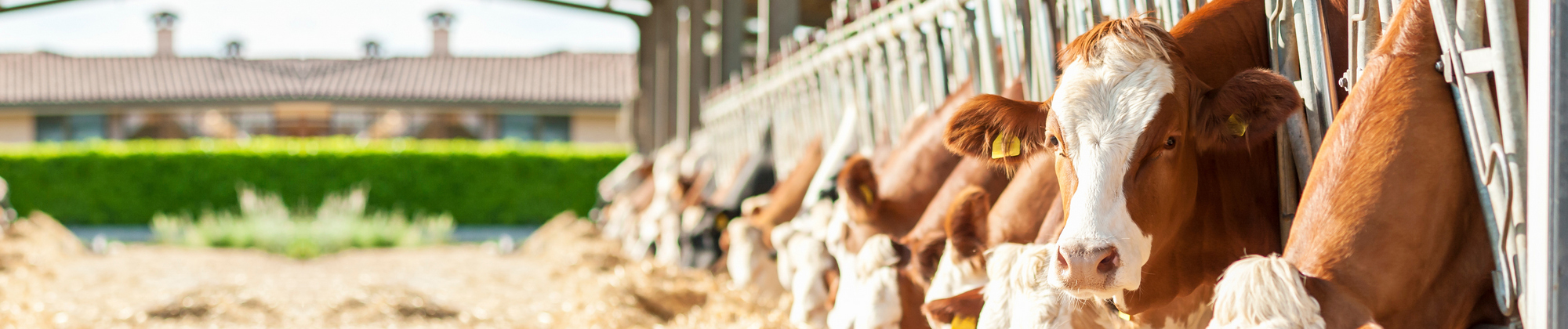





The program aims at training PhD students able to provide effective answers to the complex problems of the agro-food production chains by the optimization of production processes and the use of advanced technologies.
Find out more
The PhD program in Animal and Food Science offers excellent and stimulating working conditions and international collaborations. Thanks to its interdisciplinary core, the PhD program proposes research projects in different fields spacing from animal sciences and technologies to food sciences and technologies, agricultural microbiology, agricultural chemistry. The PhD program has strong cooperation with several Universities across the world, Italian and European organizations, private companies, and public institutions that allow students for joint research activities and internships in national and international projects.
Course objectives
The program aims at training PhD students able to provide effective answers to the complex problems of the agro-food production chains by the optimization of production processes and the use of advanced technologies coherently with Smart Agrifood. Graduated PhD will use their scientific approach in data management and analysis for big data and automated systems (Industry 4.0) to achieve different objectives like the improvement of genetic traits, feeding and rearing practices of farmed animals; increasing the value of farm production and product quality; implementation of sustainable practices; protection of animal welfare and biodiversity. They will be able to undertake positions related to the technical-scientific management and coordination, research and development, innovation, and applied research in private companies, public institutions, and Universities in Italy and abroad.
Educational activities
Training activities of each PhD student are planned and coordinated with his/her supervisor consistently with the Educational Offer of the PhD program in the Individual PhD Training program, which is submitted to the PhD Council for approval three months after the start of the Ph.D. program. The Educational Offer of the PhD program includes specific disciplinary training activities as well as cross-curricular training activities and soft skills. Each PhD students must get 13 ETCS out of the Educational Offer of the Course. The teaching activities are shared by the PhD Courses of the School of Agricultural Sciences and Veterinary Medicine of the University of Padova and are given in English by teachers from UNIPD and from abroad.
During the first year, the PhD students attend the teaching activities corresponding to the minimum ECTS requirements. During the second year, secondments abroad and presentation of preliminary results at national and international congresses are previewed. The third year is mainly addressed to the writing of scientific papers for indexes journals and writing the PhD thesis.
The research lines of the PhD Program are linked to those of the National Industrial Plan 4.0 as well as the National Research Plan and the National Resilience and Recovery Plan. They address the objectives European Green Deal and the Farm-to-Fork strategy. They directly and indirectly contribute to different Sustainable Development Goals of the United Nations Agenda 2030 (Goal 2: Zero Hunger; Goal 3: Good health and well-being; Goal 8: Decent work and economic growth; Goal 12: Responsible production and consumption; Goal 13: Climate action; Goal 14: Life below water; Goal 15: Life on land).
Research areas
The research areas of the PhD Programme are aligned with the key strategic directions of the National Industry 4.0 Plan, the National Research Programme, and the National Recovery and Resilience Plan. They are developed in coherence with the objectives of the European Union’s Green Deal and the Farm to Fork Strategy. They contribute, directly and indirectly, to several goals of the United Nations 2030 Agenda for Sustainable Development (Goal 2: Zero Hunger; Goal 3: Good Health and Well-being; Goal 8: Decent Work and Economic Growth; Goal 12: Responsible Consumption and Production; Goal 13: Climate Action; Goal 14: Life Below Water; Goal 15: Life on Land).
The research lines of the Programme address issues of public interest (such as environmental sustainability and animal welfare) as well as private-sector interests (such as animal genetic improvement and the quality of food products and production processes). These topics are relevant to a wide range of stakeholders, including small and medium-sized enterprises, also operating within associations or cooperatives, as well as larger companies. Research themes include the automation of production processes, the use of big data for the analysis of population data and/or data collected through automated devices and sensors, precision livestock farming, and the development of smart food products.
The Programme has an interdisciplinary nature, and its research activities span the fields of animal science and technology, food science and technology, as well as agricultural chemistry, microbiology, and genetics. All Programme activities are integrated through shared training programmes and collaborative initiatives across the different research lines.
Professional profile
The PhD program train professionals with the knowledge and competencies to be able to manage successfully complex production systems. Career opportunities are:
- As researchers in animal science and technologies, food science and technologies, agricultural microbiology and agricultural chemistry in Universities, national and international public and private research centres. The PhD of the Course recently graduated have been hired as researchers and/or professors at the Roslin Institute of Edinburgh, Guelph University in Canada, Denmark University, United States Department of Agriculture (USDA; North Carolina University), Mexico City University, Sylhet Agricultural University in Bangladesh, besides at the Universities of Firenze, Padova, and Parma in Italy;
- Professional positions as research managers in research centres of farmer associations; national and regional offices for the management of agro-environmental resources; international, national and regional institutions addressing agro-food and animal production development, besides environmental protection and management;
- Leading positions in private companies (feed producers, processing plants, cheese maker plants, large distribution, agro-food and wine companies), cooperatives, and corporations of producers;
- Private practitioners.
Contacts
Animal and Food Science
Dipartimento di Agronomia, Animali, Alimenti, Risorse naturali e Ambiente
Viale dell'Università 16, 35020 Legnaro
Angela Trocino (Coordinator)
angela.trocino@unipd.it
Administrative Contacts
phdanimalfood.dafnae@unipd.it
CONTACTS
Switchboard: +39 049 827 5111
Call Centre: +39 049 827 3131