
International Conference on Innovative Teaching 2023 - Program, speakers and materials
"People, Environments, Teaching: Towards an Integrated Model for Innovation"
Padova, 18 - 19 May 2023
Palazzo Bo / Botanical Garden
9.00 - Institutional greetings
9.30-11.00 - Session 1 - Digital transformation and a governance challenge
While predicting the future is best left to those with a crystal ball, this talk is anchored in future histories. The basic premise is that to craft a more equitable, sustainable, and socially-just post-digital world, we must look backwards to help envision our preferred futures. This point is illustrated by adopting a critical, wide-angle, multi-focal lens that zooms in and out and back and forward across three digital innovation horizons: past, present, and future. The presentation challenges traditional pedagogical mindsets and invites participants to chew on a sticky problem in rewilding digital education for better futures.
 Prof. Mark Brown- Professor and Director of the National Institute for Digital Learning , Dublin City University
Professor Mark Brown is Ireland's first Chair of Digital Learning and Director of the National Institute for Digital Learning (NIDL) at Dublin City University, Ireland. Mark is a Vice-President of EDEN Digital Learning Europe and is also a EDEN Senior Fellow. Additionally, Mark serves on the Supervisory Board of the European Association of Distance Teaching Universities (EADTU).
More information https://www.dcu.ie/nidl/director-nidl
The tumultuous expansion of quality digital educational offerings through MOOCs has reshaped the global educational landscape, creating new opportunities and new markets. European universities face organization and curricular challenges to avoid the risks of increasing colonization and marginalization.
 Prof. Mauro Calise - Honorary President, Federica Weblearning
Professor Emeritus of Political Science, University of Naples Federico II. Past-President, Italian Society of Political Science. Founder and Director (2005-2022), Federica Weblearning. Editor-in-chief, Journal of Digital Politics, Il Mulino Editore, Open Access. Author, with Theodore J. Lowi, Hyperpolitics. An Interactive Dictionary of Political Science Concepts, University of Chicago Press.
This speech reflects on the concepts of innovation and quality in university teaching by working on two ideas. The first one is that innovation consists in the ability to make teaching contemporary with respect to today's cultural challenges. The second is that we don't limit ourselves to thinking only about teaching on the teacher side, but also about the skills of the students. In conclusion, some opportunities and some obstacles to avoid are indicated.
 Prof. Piercesare Rivoltella - Catholic University of Milan is Chief of CREMIT
Professor at Catholic University of Milan is Chief of CREMIT (Centre of Research in Media, Innovation and Technology Education) and coordinator of the Nation PhD Program in Learning Sciences and Digital Technologies. Recently he published: New Alphabets (Scholé 2020), Distance Learning (Raffaello Cortina 2021), Algorithmic Pedagogy (with Chiara Panciroli, Scholé 2023).
11.30-13.00 - Session 2 - Evaluating the impact of Faculty Development actions: the use of data to enhance transformation
Teachers of the Teaching4Learning Monitoring Group @Unipd
The effect of the T4L project on the satisfaction of University of Padova students
Using administrative data from the University of Padova and very recent econometric models, we estimated the differences in teaching evaluations between 1) courses whose teachers have attended at least the basic T4L course and 2) courses whose teachers have not yet been exposed to T4L training. The results show a greater satisfaction of the students in the teachings of the first group, with a difference compared to the teachings of the second group positive and statistically significant.
 Prof. Lorenzo Rocco - Full Professor of Economic Policy
Lorenzo Rocco is an applied economist. His research interests are the economics of education and health, and his studies have been published in numerous international scientific journals.

Prof. Marco Bertoni
Associate Professor of Economic Policy at the Department of Economics and Business Sciences "Marco Fanno" at the University of Padova. His research focuses on the economics of work, education, and health.
 Prof. Juliana Raffaghelli
Researcher at the Department of Philosophy, Sociology, Pedagogy and Applied Psychology. Former Ramón y Cajal researcher at the Universitat Oberta de Catalunya (Spain) and associate researcher of the Edul@b group of the same university, as well as of the National University of Entre Rios (Argentina). Recent publications: "Data Cultures in Higher Education: Emergent Practices and the Challenge Ahead" (Springer), among other articles and contributions on data literacy and critical data literacy in the post-digital society.
The contribution aims to assess the effectiveness of the course unit and assessment training courses, launched with research in 2016 in Turin, progressively involving more than a third of the staff in service or newly hired. The essential features of the three-level IRIDI Programme and its significant outcomes will be illustrated.
 Prof. Cristina Coggi – Former Full Professor of Experimental Pedagogy and Docimology - University of Turin
He coordinated the IRIDI Project of Unito, aimed at developing a model for the training of university teachers in teaching and evaluation and to verify its effectiveness. He has conducted numerous studies and empirical research on the quality of course unit in Higher Education and on the enhancement of student achievement at various school levels (Fenix Program).
We will explain the monitoring process that is carried out in Catalonia, through the Quality Agency of the university system on university teaching activities. What are the dimensions that we evaluate, the criteria and indicators of this evaluation (selfreporting, professional development, academic managers and student satisfaction) in order to implement an innovative teaching activity.
 Prof. María Rosa Buxarrais - University of Barcelona. Director of the IDP-ICE
Professor of Pedagogy at the University of Barcelona. Lead researcher of the Research Group on Moral Education (GREM).
member of different evaluation agencies on research and the quality of university teaching. My research is focused on these main topics: ethics and moral education, family education, teacher training, participation of children and adolescents. mariarosabuxarrais.com
The presentation focuses on training and system interventions aimed at innovating teaching practice through the introduction of digital technologies.
 Prof. Chiara Panciroli - Full Professor of Didactics and Special Pedagogy
Chiara Panciroli teaches General Didactics and Educational Technologies at the University of Bologna. He is the contact person for the humanities area of the university's TLC. He is the scientific director of the "AI and Education" Unit of the Alma Interdepartmental Research Center for Human-Centered Artificial Intelligence and is a member of the Board of Directors of the Italian Society for Research on Media Education.
 Prof. Maria Ranieri - Full Professor of General Didactics and Special Pedagogy
Maria Ranieri teaches Didactics and Educational Technologies at the University of Florence, where she directs the Laboratory of Educational Technologies and the Master in New Digital Skills: Open Education, Social and Mobile Learning. She is Delegate for Digital Innovation in Teaching and is a member of the Board of Directors of the Italian Society for Research on Media Education.
 Prof. Valentina De Marchi
Valentina De Marchi, PhD, is interested in environmental innovations and sustainability, and how environmental upgrading can take place in a Global Value Chain context. He has published in journals such as Research Policy, Business Strategy & the Environment, Journal of Cleaner Production, European Planning Studies, International Journal of Production Economics. He teaches Strategy, Operational Management and Environmental Management at the dSEA of the University of Padova and at Esade Business School - Barcelona. Passionate about course unit and active learning, she has been an advisor for innovation in course unit and learning and is part of the University of Padova's team of change agents.
 Dr. Vera Dean - Digital Library Office – University Centre for Libraries
It manages the back office services of the Paduan Library System, including the online catalog, GalileoDiscovery, which allows users to search among the rich bibliographic collections made available by the University of Padova and its affiliated institutions. It participates in academic publication support activities for the University's professors and researchers.
14.30-16.00 - Session 3 - Planning for innovative teaching - first part
Valuable projects of the UNIPD Call for Improvement of Teaching
Illustration of the activities planned for students, which include both practical activity in biomedical research laboratories and two soft skills courses on communication and data analysis. Indices will be provided relating to the level of participation and feedback of students' satisfaction, and there will also be direct testimony from some participants.
 Prof. Christian Borgo - Researcher, Department of Biomedical Sciences
Researcher of the areas BIO/10 (Biochemistry) since 2019, whose main research area focuses on the analysis of cellular and molecular mechanisms with particular interest in physiological or deregulated signaling pathways, mediated by protein kinase activity. The teaching focuses on the teaching of biochemistry in the first years of health course units.
 Renato Muzzupappa – student, IV year-CdS in Medicine and Surgery, UNIPD
Of Apulian origins, always passionate about the world of medicine, I am a student of Medicine and Surgery in the fourth year at the University of Padova. I participated in the ABILITY 2 project, during which I had the opportunity to attend the molecular oncology laboratory of Prof. Ciminale.
Chemistry has a complex symbolic language made up of compact formulas and iconic one- or two-dimensional models. The molecules, however, are three-dimensional and therefore difficult to imagine. VIRTUAL represents an integrated approach to molecular representation, from minimal formula to three-dimensional structure, using a board-on-air (BoA) and direct lecturer interaction.
 Giulia Marina Licini - Full Professor at the Department of Chemical Sciences of the University of Padova. His research area is Organic Chemistry
The speech illustrates the activities carried out within the DODICI project for the virtualization of technological laboratories, through the specific creation of multi-media teaching tools.
 Prof. Andrea Gerosa - Professor of Electronics at DEI and Delegate for Orientation, Tutoring and Placement UNIPD
Andrea Gerosa received his degree in electronic engineering in 1995 and his PhD in electronic and telecommunications engineering in 1999, at the University of Padova, where he currently holds the position of associate professor. Since the first of October 2021 she has been the Rector's Delegate for Orientation, Tutoring and Placement.
 Prof. Franco Bonollo - Director of the UNIPD School of Engineering
Full Professor of Metallurgy, he has been Scientific Coordinator of Research and Development Projects at European level.
Head of the iNEST Innovation Ecosystem, he coordinates its activities in the field of Education. It also coordinates innovative educational projects funded by EIT-RM, also aimed at Lifelong Learning, and various innovative teaching projects managed by the School of Engineering.
 Prof. Maria Cristina Lavagnolo
PhD in Environmental Engineering, lecturer of Circular and Sustainable Waste Management, for the first-cycle/Bachelor's degree course in Environmental Engineering of which he is vice-president. Coordinator of the CEWMS-Center for Circular Economy Studies of UNIPD. The main research topics focus on the sustainable management of the material and waste cycle. Change Agent since 2019..
The presentation will focus on the design and implementation of the Observatory of Innovation in Higher Education at Isalud University, Argentina. The speaker will offer diverse approaches and reflections on the material, pedagogical and political dimensions that make innovation possible both at institutional and at classroom level.
 Prof. Mariana Ferrarelli - Coordinator of the Observatory of Innovation in Higher Education - Universidad Isalud, Argentina
MA in Scientific Research Methodology and lecturer in undergraduate and graduate programs. Techno-pedagogical consultant. Coordinator of the Observatory of Innovation in Higher Education (Universidad Isalud) and member of the Argentine Alfamed Network. Research focus: technologies in education, teacher training, and transmedia storytelling in education.
16.30 - 18.00 - Session 4 - Planning for innovative teaching - second part
The university classroom has historically been viewed as a place devoid of emotions, where engaging students feelings are considered off limits and pedagogical pleasure is incompatible with an intellectual activity. This is despite research that demonstrates emotions as inherently cognitive, operating as a unified system, where emotions play a significant role in fostering motivation, encouraging persistence, and increasing retention of what is being taught. In response this presentation will explore the science, power and challenges of targeting students' emotions.
 Prof. Edward Taylor - Professor Emeritus -Lifelong Learning and Adult Education Penn State University
As a professor Ed has written extensively on transformative learning theory and teaching strategies that help facilitate change. Recognizing the importance of these strategies for faculty in higher education, he has worked internationally and at various universities in Italy with faculty across the disciplines focusing on innovative teaching practices (active learning) that foster teaching for change.
Place-Based Education for Ocean Literacy, is an interdisciplinary project that saw the participation of students of the fourth year of the Master's Degree in Primary Education Sciences, external experts, teachers of a PRIN project of the Bicocca University of Milan. Among the results achieved, the implementation of a virtual map with video-documents produced by students in order to promote knowledge and emotional attachment to Italian coastal locations.
 Prof. Lorena Rocca - Associate Professor of Human Geography. DISSGEA – University of Padova
The relationship between training, education, learning for the development of geographical thinking is the core of his research in a constant effort to connect different methodologies, approaches and teaching strategies that all have the person at the center in an interspecies dialogue with places. Pedagogue and geographer of training, she teaches at the University of Padua and regularly carries out visiting experiences in particular at the Department of Education and Learning of the University of Applied Sciences and Arts of Southern Switzerland.
 Prof. Manlio Piva
Lecturer in Art Education and Media Education at the Single Cycle Master's Degree in Primary Education Sciences;
Lecturer in Audiovisual and Multimedia Didactics at the Master's Degree in Performing Arts and Multimedia Production.
His research interests include Media Literacy & Education, with numerous training projects in primary and secondary schools.
The intervention will present the progressive creation of an innovative teaching practice, which has combined the promotion of transversal skills (teamwork, problem-solving) with the ability to interact in an international environment. Started in 2021 as an online course, it then evolved in 2022 into the blended mode thanks to the BIP Erasmus funds, remaining focused on the PBL method.
 prof. Rudi Cassini
Rudi Cassini is an Associate Professor in Parasitology, with more than 15 years of research and teaching experience. He has numerous international collaborations and experiences and is the contact person for internationalization for Veterinary Medicine. In recent years he has trained and applied various innovative teaching techniques, promoting collaboration between colleagues in these initiatives.
The teaching and assessment method used in the three-year course of Medieval Archaeology since 2020 syllabus of course unit based on the structure of a MOOC (videos, readings, exercises, discussions) is presented. The lessons focus on the participation and involvement of students and on progressive learning, objectives that can be achieved thanks to the use of flipped lessons (the student arrives at class after watching videos or reading texts in relation to the contents) and an integrated use of the resources offered by the MOODLE platform, in particular with the 'padlet' applications. 'quizzes' and 'wooclaps' that allow a constant evaluation activity either individually, in pairs or groups or in the creation of participatory tools (timelines, site maps). The student ratings are excellent and the number of students (from 70 to 140) has doubled in 3 years.
 Prof. Alejandra Arnau Chavarria - Full Professor
Specialist in the archaeology of the medieval period (settlements, churches, cemeteries) he carries out teaching activities as a course holder in all the training cycles of the department of cultural heritage as well as numerous supplementary and laboratory activities applying innovative teaching methods and tools (he is also a change agent). She has been scientific director of numerous national and international research projects and currently coordinates the Padua unit of two ERAMUS + projects for the study and teaching of Mediterranean historical landscapes and for the teaching of history in middle schools. In recent years he has designed and coordinated three MOOC courses published on the FutureLearn platform that have been characterized by the high degree of student-lecturer interactivity and the creation of an active community of learners. He also participates in the wikipedia-unipd project to update the cultural section of the files relating to the municipalities of Monte Baldo, a territory in which he carries out an intense participatory research activity.
The intervention will describe the introduction of the PBL methodology in a three-year degree in vehicular language (Animal Care, University of Padova) emphasizing the motivations, objectives and project strategy and the effects on teachers and students involved in the project.
 Prof. Lieta Marinelli - Full professor at Department of Comparative Biomedicine and Nutrition - BCA, University of Padova
Graduated in Veterinary Medicine, she develops her scientific activity on various topics concerning the physiology and ethology of dogs. She has been interested in university teaching since 2007 when she founded an exchange project with Texas A&M University, which is still active. In 2017 she was the dean of the foundation of the three-year degree in Animal Care, of which she is currently the Coordinator.
Project "Humanitarian Medicine - Thinking Global, Acting Local" for enabling research-based teaching
Under the motto "For a more humane medicine", the course includes aspects of humanitarian medicine, humanism in health and human rights that were missing from the core-course track of the Integrated Master in Medicine. The knowledge and competences to acquire are required to act on a global and intercultural world, both at the doorstep within each one's health facility and in humanitarian missions nationally and abroad. The course encourages the acquisition of knowledge about diverse cultures to enhance students' ability to adapt their attitude, providing health care with equity according to the cultural singularities of each patient.
 Prof. Margarida Correia-Neves - School of Medicine – University of Minho
"Margarida Correia-Neves is presently Full Professor in Immunology and Microbiology at the School of Medicine, University of Minho, Braga, Portugal, Researcher at the Health Sciences Research Institute (ICVS) from the same university and Visiting Researcher at Karolinska Instituted (KI), Stockholm, Sweden. Present research activities mainly focuses on: 1) Tuberculosis and HIV/AIDS: immune response and methods to improve the diagnosis and reduce transmission; 2) Peripheral immune profile and thymic function on chronic infections (mycobacterial and HIV); 3) One Health concept on tuberculosis (human and animal interaction). Research activities are performed mainly at the ICVS and KI with long-term collaborations with colleagues in Mozambique.
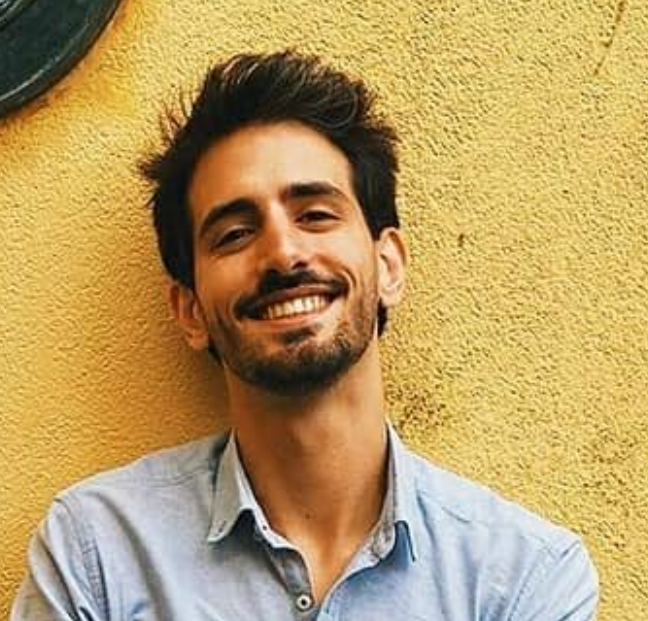 Dr. Duarte Baptista - School of Medicine – University of Minho
Duarte Baptista is a physician and accessory coordinator of the Curricular Unit Humanitarian Medicine at the School of Medicine of the University of Minho. As a student in the same School, he was one of the founders of volunteer association for volunteer work "Porta Nova". His academic passion lies in promoting empathy and understanding for patients from ethnic minorities, and he strives to create a more inclusive and equitable healthcare system for all.
Project "Fundamentals of Physical Education" for enabling students
The innovative nature of the developed project is found, mainly, in the three pillars on which it was built, which are very significant for the current students: fiction, social networks, and games (board or video games). For this, a gamification project was designed, taking advantage of the principles and motivational elements of games, and relying on social networks to increase students' motivation. Students are at the center of the proposal, providing them with decision-making capacity, autonomy, and the possibility to adapt the experience to their learning rhythms and needs (giving them, for example, freedom in regard to the formats of the challenges or the challenge's deadlines). To build the project's narrative (a key aspect in gamification) advantage of film reference, specifically, the popular TV show called "Money Heist" was taken. This led to the release of "La cárcel de papel (Paper Jail)", the educational sequel to the most successful Spanish series worldwide.
 Prof. Isaac José Pérez Lopez - Physical Education and Sport Department – University of Granada
Isaac J Pérez-López currently works at the Departamento de Educación Física y Deportiva, University of Granada. Isaac does research in promotion of healthy life habits, analysis the physical education in mass media, and gamification and education. Their current project is 'Gamificación en Educación'.
Prof. José Mora González - Physical Education and Sport Department – University of Granada 
José Mora González is an Assistant Professor currently working at the Department of Physical Education and Sports, University of Granada. His main research areas are: 1) Promotion of healthy life habits through physical activity and different teaching methodologies; 2) Benefits of physical activity and exercise for the brain and cognition through the lifespan.
9.00-10.30 - Session 5 - Innovative Teaching Ecosystem: Structures and Resources for Digital Training
Talking about didactic innovation means referring to a constantly evolving process that requires actions in four integrated directions: new pedagogical approaches; mature and emerging technologies; spaces; policies that guide processes in a sustainable and inclusive way
The new teaching learning centers are called upon to move competently along these four axes, contributing to the development of new educational technologists capable of transdisciplinarily integrating the processes of design, production and training in harmony with the specificities of the university context.
 Prof. Susanna Sancassani Managing Director METID Polimi
Susanna Sancassani is Managing Director of METID, the task force dedicated to educational and educational innovation of the POLITECNICO Interministerial Decree MILANO, where she is a lecturer of "Methodologies, strategies and teaching styles" at the Doctoral School and responsible for faculty development in the field of educational innovation. Having participated in the pioneers of digital learning in Italy, she is a member of the Board of Directors of the Italian Society of e-Learning (sieL).
The speech will illustrate the innovative aspects of the teaching offered as part of the IoT Academy organized by TIM and CNIT/WiLab, now in its second edition. In addition, the guidelines of the training coordination initiative under the RESTART syllabus "Telecommunications for the future" funded by the PNRR will be described.
 Prof. Roberto Verdone – Director of the National Laboratory of Wireless Communications, WiLab, of the National Interuniversity Consortium for Telecommunications
Prof. Roberto Verdone has been Full Professor of Telecommunications at the University of Bologna since 2001. Since 2020 he has been the director of the National Laboratory of Wireless Communications, WiLab, of CNIT, the National Interuniversity Consortium for Telecommunications. In this context, he is Scientific Director of the IoT Academy, organized by WiLab together with TIM; moreover, he is responsible for the Education & Training mission of the RESTART syllabus, funded by the PNRR, on the telecommunications of the future.
The theme of digital transition, in addition to being transversal to all the missions of the NRRP, is also the cornerstone of the transformation processes within the world of education and university education in particular. Innovation must be declined from a didactic perspective with the inclusion of technologies designed for learning and course unit but study spaces and places of student aggregation must also be rethought. Therefore, we can use the term ecosystem for learning, understood as an environment where all resources, human and technological, can operate in a synergistic way.
 Dr. Dario Da Re – Director of Digital Learning Office Unipd
Ph.D. in Social Research Methodology, she addresses the challenges of digital innovation by implementing organizational models and technological platforms capable of responding to the needs of training, research and work organization in the Public Administration.
Presentation of the process that led to the creation of the podcast, in particular how the design and implementation phases were approached. Reflections on
Advantages and criticalities of the chosen format.

Prof. Alessandro Alboresi - University of Padova
 Prof. Marco Toffanin – Head of the multimedia sector at the Digital Learning and Multimedia Office of the University of Padova and lecturer in multimedia communication
Specialist in digital content, he deals with the design and creation of multimedia content for teaching, research and communication.
11.00-12.30 - Session 6 - Designing environments for educational innovation
Education requires an expanding collection of ingredients for teaching & learning with technology and within classrooms. But without good recipes for how to integrate & manage the academic ingredients, the quality of learning will be unreliable and ineffective. FLEXspace provides institutions with a powerful free and open book of recipes for designing quality learning environments.
 Prof. Gerard L. Hanley – Director, CSULB Center for Usability in Design and Accessibility (CUDA), Executive Director, MERLOT – SkillsCommons, Professor Emeritus, Department of Psychology California State University, Long Beach
Gerry Hanley Ph.D. is the Executive Director of MERLOT (Multimedia Educational Resource for Learning and Online Teaching, www.merlot.org) and SkillsCommons (www.skillscommons.org) at California State University Long Beach. At CSULB, Gerry is also the Director of the Center for Usability in Design and Accessibility, Professor Emeritus of Psychology, and a founding partner of FLEXspace.
Presentation of some interventions for the technological and functional innovation of the University's teaching spaces: the design concerns both spaces subject to the constraint of protection and enhancement of the historical heritage, and new constructions.
 Ing. Mariachiara Mazzucato - Building Development Office, Building and Safety Area, University of Padova
Since 2014 the University Library has been transformed from a nice but very rigid environment to a creative jungle of different spaces and teaching rooms. Each of them with their special design and purpose. The presentation will show you pictures, tell you about the process – how did we manage to implement this and how does it function as study, teaching, event areas and relaxing rooms.
 Prof. Gitte Kolstrup - Library Director. University of Stavanger, Norway
Gitte Kolstrup has since 2014 been Library Director at the university of Stavanger. Before that she was head of library at the Social Science Faculty at the university of Copenhagen.
She has been the main motivator and driving force in changing the library environment and renewing the library services.
Smart Classroom Project is a group research focused on investigating how learning spaces should be in order to improve well-being and innovative methodologies during teaching and learning activities. The research and its interventions in the learning spaces are based on applying contrasted codesign processes, research findings and a variety of principles and factors which affect the configuration of the space and its quality.
 Prof. Guillermo Bautista Pérez - Senior Lecturer and researcher Universitat Oberta de Catalunya
PhD. at Universitat de Barcelona. Professor at the Faculty of Psychology and Educational Sciences at Universitat Oberta de Catalunya.
His research work is about relation between learning and innovative spaces and it has contributed to the improvement of different schools in the pedagogy, environmental and digital dimensions.
He is researcher in Smart Classroom Project
www.smartclassroomproject.com

Educational Offer Office
Teaching4Learning Project
Via Venezia 16 - Padova
Tel. 049 827 6316 - 1246 - 7160
Email: teaching4learning@unipd.it
Social network Teaching4learning
 Linkedin
 Instagram