
Innovative teaching projects - Science
 The project “Geomaterials: a real-virtual-digital experience”, developed between 2023 and 2024, formed part of a broader Innovative Teaching Project aimed at the digitalisation and accessibility of geological teaching collections in all their forms (from macro samples to thin sections) for students across various fields of study, from Earth sciences to natural sciences and archaeology. At this stage, a lithotheque of Italian ornamental stones used in antiquity was created, currently accessible and open to visitors at the Department of Geosciences, with samples ranging from slabs to thin sections, allowing a comprehensive analysis of the materials. At the same time, a GIS of quarries in north-eastern Italy and the Istrian peninsula active during the Roman period was developed, combining geological and archaeological data into a single teaching tool. The project actively involved students both in the collection and in the organisation of the data, thereby promoting participatory learning. The lithotheque and the GIS were conceived as teaching tools for university courses, orientation activities for lower and upper secondary schools, and teacher training courses, offering a multidisciplinary approach integrating geology, archaeology and ancient history.
 With the aim of promoting good Community Development practice, the Department of Mathematics “Tullio Levi-Civita” brought together a group of students, researchers, lecturer and technical-administrative staff who, under the guidance of Dott.ssa Elisa Gallo (expert in development and training for Capgemini), explored the theme of the community understood as a multiplier of ideas, energies, knowledge and time.
New working models embracing the economy of passion and commitment were examined.
The group also discussed future prospects and unanimously recognised that the Community represents:
- a tangible and virtual place in which to meet and create synergistic interaction
- an opportunity to transmit knowledge and a sense of shared responsibility
- an occasion to foster continuous learning by involving all the actors in the Department.
To find out what has been done or to join future activities, sign up here
Project manager: Alessandra Buratto
Keywords: mathematics, community development, lifelong learning, training, meeting
 The project “Maths goes blended” was carried out between 2023 and 2024 and involved the development of content, materials to support formative assessment, and an instructional design application to help lecturers deliver mathematics teaching in blended mode. Overleaf licences were purchased for the shared writing in Latex of theses or group work for the degree in mathematics. At the same time, three curricular MOOCs (no. 2 on Futurelearn and no. 1 on Federica) were created, two of which focused on blended teaching, together with their related trailers.

Teaching chemistry with passion! is the new volume in the Epistemology and Teaching of Disciplines series (scientific editor Prof. Walter Panciera), which collects the teaching experiences of some secondary school chemistry teachers. Of particular note is the project “MC4 - Molecules on the Computer: Calculations for Chemistry in the Classroom” funded by the University of Padua and carried out in collaboration with UniPD teachers. This volume also includes a contribution by Prof. Eric Scerri, an authoritative scientist in the field of the history, epistemology and teaching of chemistry. Here to read the volume
Project lead: Laura Orian
Keywords: chemistry, teaching, training, secondary school, publication
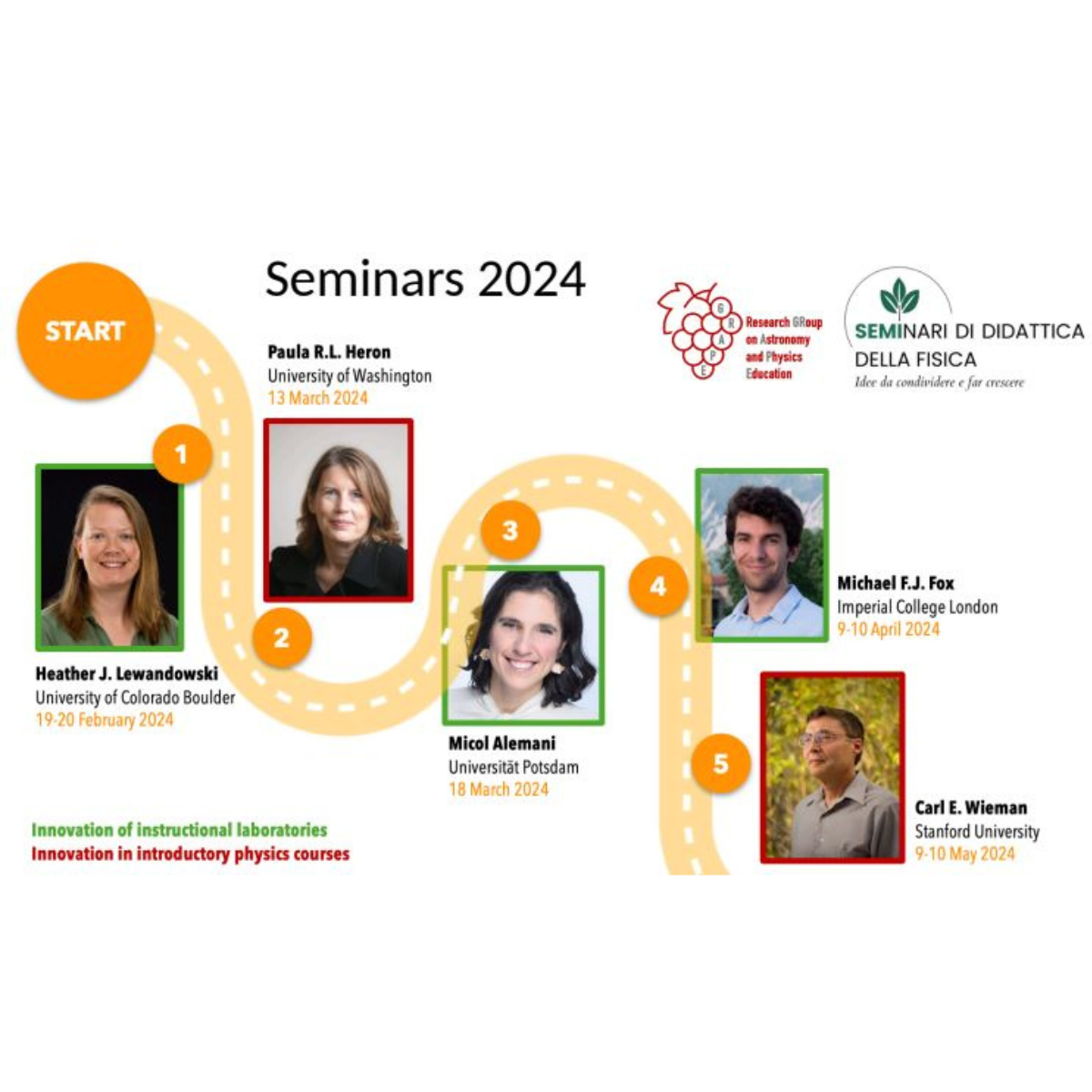 The project “Preparing for Societal Challenges through Active Learning”, developed between 2023 and 2024 and aimed at the Master's Degree Programme Physics of Data, addressed some of today’s challenges in an interdisciplinary way, such as those related to climate change, sustainable development and the impact of Artificial Intelligence, by developing scientific and technological skills. To support students, including international students, tutoring activities using active learning methodologies and intensive workshops with experts in inference models, data analysis and computing were organised. A series of seminars on university Physics teaching with international speakers was organised, promoting a faculty learning community. Analyses of students’ academic careers were carried out, together with a questionnaire to investigate their educational needs, motivations, difficulties and socio-motivational constructs. These initiatives aimed to offer all students equal opportunities to complete their university path successfully, fostering encounters with advanced research experiences and business applications.
Educational Offer Office
Teaching4Learning Project
Via Venezia 16 - Padua
Tel. 049 827 6316 - 1246 - 7160
Email: teaching4learning@unipd.it